
Key takeaways
- Hard floors around the hitting bays, the lobby and the food and beverage area are the main cleaning load, and they suit overnight runs.
- A floor cleaning robot can work after close, so evening sessions start on a freshly cleaned floor.
- Staff keep guest service, bay resets and spill response, while the robot takes the repetitive floor passes.
- Savings come from fewer floor care hours, and the ranges from other deployments are a test, not a promise.
- Each lease is quoted after a free site assessment, so the floor layout decides the fit.
See what a cleaning robot costsRun the numbers in the ROI calculator
Can cleaning robots for indoor golf centers handle the floor work?
Yes, for the large hard floor share of the work. Cleaning robots for indoor golf centers are most useful on the open floor that surrounds the hitting bays, the lobby and the food and beverage area, where traffic is heavy and the floor needs a fresh pass between busy evening sessions. A floor cleaning robot can run those routes after the last guest leaves, so the floor is clean when the next session starts.
It does not replace the people who run the venue. It takes repetitive floor passes off the shift so your team can handle bays, guests, spills and food service. The savings come from fewer hours spent on floor care, and the size of that saving depends on your floor area, your schedule and how your current cleaning is staffed.
Commercial robot leasing makes the change practical for a business that does not want to tie up its capital. We lease the robot through financing, and the lease is quoted after a free site assessment, so the numbers reflect your actual floor.
How big are indoor golf venues, and how many are there?
Indoor golf is a large and growing category in the US. According to an industry report on indoor golf in America, as reported in a press release dated July 13, 2026, there are about 3,849 indoor golf venues across all 50 states and 838 markets. That report is vendor-published, so treat the count as a guide to scale rather than an audited census.
Commercial golf simulator businesses have also grown quickly. According to the National Golf Foundation, as reported by TribLive, there were about 1,500 such businesses in 2025, up from 570 in 2022. That count is of businesses, not venues, so it should not be set beside the venue count as if they measured the same thing.
Venue size varies widely. One large branded venue reported in trade news covers about 65,000 square feet with 102 climate-controlled bays, and another reported about 105,000 square feet over four levels with 108 bays. A smaller center is far less. For a cleaning plan, the hard floor area matters more than the bay count, because the floor area is what decides how much the robot can cover in one night.
What problem do these venues have with floors today?
Evening demand is the pressure point. Guests arrive in waves, bays are booked back to back, and food and drink spill across the bar and lounge floors. The cleaning window is usually short, and it often falls on the same staff who are running check-in, food service and bay resets.
Hiring for this work is hard. According to the US Bureau of Labor Statistics, there were 2,447,700 janitor and building cleaner jobs in 2024, with a projected change of 47,800 from 2024 to 2034, which is 2% growth and slower than average. The same handbook projects about 351,300 openings per year on average, so much of the hiring is replacing people who leave.
Turnover makes floor routines fragile. When one person leaves, the nightly pass can slip for days, and a floor that goes uncleaned for a few sessions shows quickly to guests who arrive expecting a clean start.

What are the main benefits for an indoor golf center?
The first benefit is consistency. A floor cleaning robot runs the same route on the same schedule, and it does not skip the passes that get missed at closing. That keeps the floor in the condition you want for the first session of the next day.
The second is coverage without extra shifts. A robot can work through a large hard floor area in a single overnight window, which matters in a building where the floor is larger than one person can cover between sessions. In a warehouse deployment, one operator reported that the robots cleaned more than 3.5 million square feet between summer 2020 and April 2021 and saved more than 300 labor hours versus conventional cleaning, according to a trade publication.
The third is a calmer team. Staff spend less time on repetitive passes and more time on guests, bay resets and food service, which are the moments guests notice most.
How does the robot work day to day?
Deployment starts with a site assessment. We map the floor, mark the zones the robot should clean and set the no-go areas, such as stairs, open equipment and floors with loose mats. Then we run test cycles with your staff so the route, speed and stop points match how the venue is actually used.
In routine operation the robot runs its route after close, returns to its charging dock on its own and reports the job. Your manager can check the run the next morning. If a sensor flags a blocked path or a low battery, the robot stops and waits, and a person clears the path before it resumes.
Before evening sessions, a staff member should walk the floor at opening and look for anything the robot cannot clear, such as a dropped ball basket or a spill from the bar. A short walk-through at opening is a good habit, and it takes minutes rather than a shift.
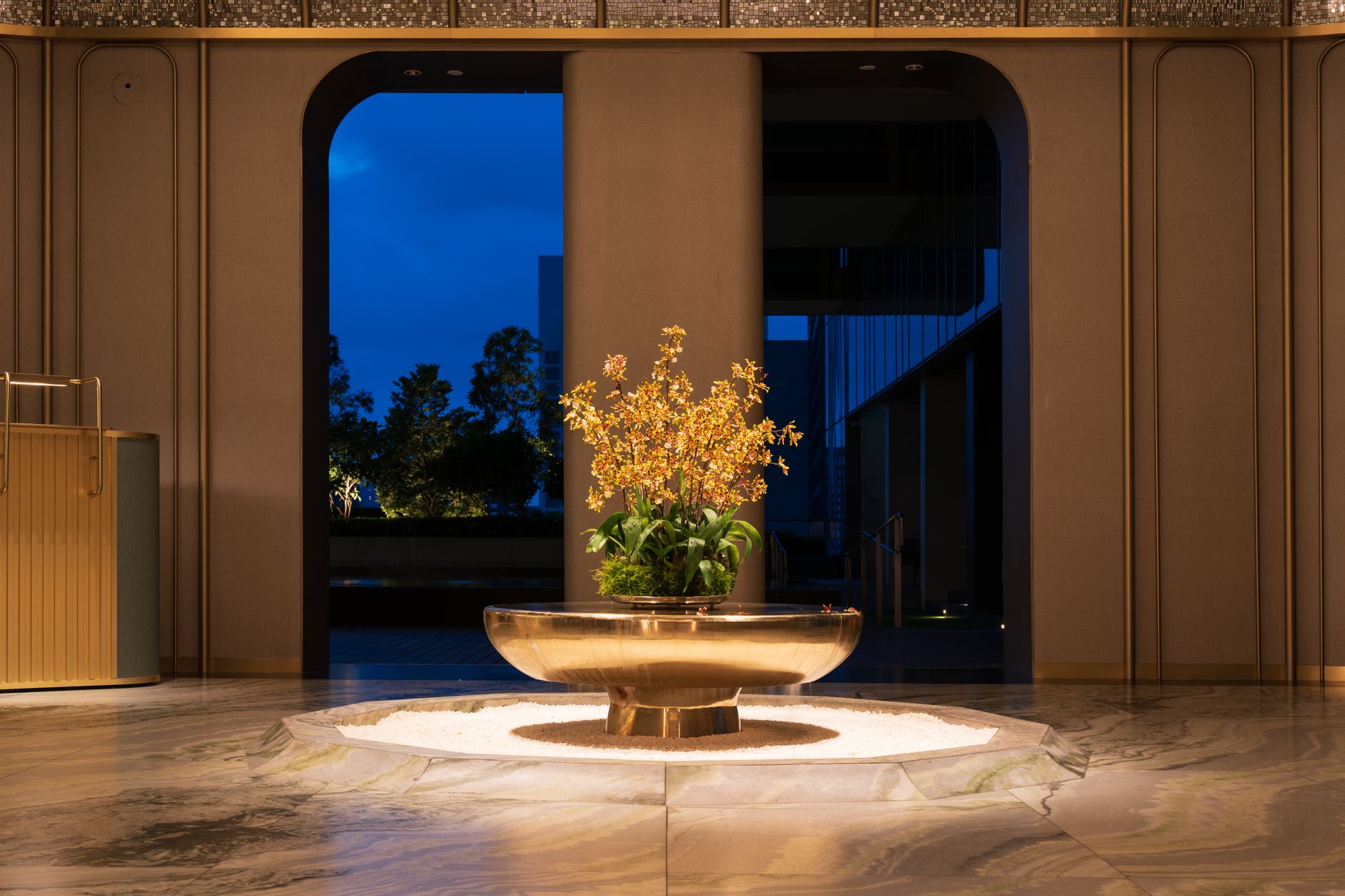
Which areas of an indoor golf center does the robot work in?
The best areas are the open hard floors that get heavy traffic and do not need hand work. Six areas tend to fit well, and the list below shows the ones we most often look at during a site assessment, along with what the robot does in each.
How does the robot work alongside existing staff?
A robot plus a smaller team is the normal model. A venue usually keeps the people who handle guests, bays, the bar and the kitchen, and assigns one person to supervise the robot, clear obstacles and do the spot work that needs hands. The robot takes the repetitive floor passes, and the team stays in place for everything that needs judgment.
Staffing change can be modest. One vendor-published case from a hospital network describes two floor scrubbing robots running overnight and reducing the floor care team from three people to two, with nightly labor falling from 16 hours to 5 hours. That is a different building, but it shows the pattern: the team shrinks at the edges, and the people who remain focus on work that needs judgment.
What drives the savings, and what do the ranges look like?
Savings come from fewer staff hours on floor care. The amount depends on floor area, the number of nights the robot runs and how the work is staffed today. The figures below come from other deployments, so treat them as ranges to test against your own numbers, not as promises.
- A warehouse operator reported more than 300 labor hours saved versus conventional cleaning, across robots that cleaned more than 3.5 million square feet between summer 2020 and April 2021, according to a trade publication.
- A hospital network reported nightly floor care labor falling from 16 hours to 5 hours after adding two overnight floor scrubbing robots, according to a vendor case study from 2023.
- A cleaning contractor reported 20 hours per week of typical autonomous cleaning time, with some weeks above 30 hours. That is runtime, not labor saved, but it shows how much floor work a robot can keep moving while staff are elsewhere, according to a vendor case study.
What can the robot not do?
It cannot do hand work. Deep scrubbing of stained areas, cleaning restrooms, wiping tables, handling a fresh spill or moving furniture still need people. Stairs, uneven thresholds, loose mats and some turf surfaces may sit outside its route, so the site assessment checks the floor before any plan is set.
It also cannot run without a person checking on it. A robot that stops on a blocked path or a low battery needs someone to clear the path, and a venue with no staff at all is not the right fit. Plan for a supervisor role, even if that role is part time, and keep the robot inside the hours your team is present.
How do we get started?
We start with a free site assessment. We look at the hard floor area, the surfaces, the traffic pattern, the power and charging locations and the hours when the floor is free. From that we recommend a robot that fits the floor and a plan for the overnight route.
The robot is leased through financing, so you do not need to put up the capital for the machine itself. The payment comes in a quote after the site assessment, and the quote sets out the lease terms, the deployment and the service plan, with maintenance included. A single leased unit is a sensible first step for a venue that wants to test the route on its own floor before expanding.
After the quote is signed, we deploy and integrate the robot, train your staff and provide go-live support. We service the robot nationwide, so a venue in any state has the same support path. Our role is to pick the right robot for the site, lease it, deploy and integrate it, train the people who work with it and keep it serviced.
Frequently asked questions
Want a cleaning robot at your indoor golf center?
Tell us about your site. We will recommend the robot, quote the lease, and keep it serviced.
Sources
- US Bureau of Labor Statistics, Occupational Outlook Handbook, Janitors and Building Cleaners
- Industry report on indoor golf in America, press release dated July 13, 2026
- TribLive, National Golf Foundation figures on commercial golf simulator businesses
- InterGame Online, coverage of a large branded golf venue
- GolfPass, coverage of a large branded golf venue
- Modern Materials Handling, warehouse floor scrubbing robot case
- Vendor case study, hospital network floor scrubbing robots, 2023
- Vendor case study, cleaning contractor autonomous scrubber