
The short answer
Drone ROI for roofing contractors comes mainly from crew hours that no longer go to ladders, roof walks and hand measurements on surveys and inspections. A drone measurement software vendor reported about 7.75 hours of work per manual order against about 1.4 hours with drone measurement, but the realistic return depends on survey volume and on how much of each job the drone can cover. A free site assessment turns those inputs into a savings range and a fixed lease quote.
Key takeaways
- Drone ROI for roofing contractors shows up first as crew hours not spent on ladders and steep pitches.
- Vendor-reported timings put drone measurement near 1.4 hours per order against about 7.75 hours by hand.
- The return rests on survey volume and on how much of each job the drone can realistically cover.
- Wind and rain ground flights, and grounded days cut the number more than many firms expect.
- A free site assessment converts these inputs into a savings range and a lease quote through financing.
Run the numbers for your site
Pick your city or state for a real regional number - we use the real BLS wage there. (On the live site this auto-detects from your location.)
What do you want to automate?
The unit runs the repetitive patrol and watch; guards handle the judgment calls.
What return can roofing contractors expect from drone ROI?
Drone ROI for roofing contractors comes mostly from crew hours. A survey that once meant a crew on a ladder, a walk across the roof and a tape measure can often be replaced by a short flight and a review of the imagery. The work does not disappear, but the people doing it spend less time at height.
The trade is large enough that the question matters. According to the Bureau of Labor Statistics Occupational Outlook Handbook, there were 166,700 roofer jobs in 2024, and the BLS projects 6 percent growth from 2024 to 2034, about 9,800 new jobs. An industry market research report counted 130,481 roofing and siding contractor businesses in the US in 2024, up 2.2 percent from 2023, although that category is broader than roofing contractors alone.
The research behind this page did not find a published crew size per roof survey. The planning figure of two people per survey used in this page is therefore an assumption, and you should replace it with your own roster before running the model.
How does the ROI math work for a roofing firm?
The basic model has four inputs: the number of roof surveys your firm runs each year, the hours each survey takes by hand, the share of those hours a drone can realistically take over, and the lease cost including service. The labor hours offset is the first two inputs multiplied together, then multiplied by that share. The lease cost is subtracted from that value to show what is left.
The calculator on this page is pre-filled for this industry and shows a savings range rather than a single figure. The survey hours are valued using the government wage data panel beside this text, which reports the Security Guards job from the BLS OEWS May 2024 national data. That job is the closest published proxy for the kind of hourly labor the calculator counts, so the result is a labor hours proxy and not a roofer pay rate. Roofer time is not priced in this model.
A range is more honest than a point estimate. Two firms with the same survey count can land at different ends of the range, because one runs long low-pitch roofs that are quick by hand and another runs steep, complex roofs where the crew spends most of the day at height.
Median hourly wage, Security Guards
$4,317
Monthly cost of one full-time worker, at the median wage plus payroll costs (an estimate, not a quote).
Where do the hours actually come from on a roof job?
A manual roof measurement involves setup, a roof walk or ladder work, measuring and sketching, and then office drafting. A drone measurement software vendor published an illustrative comparison of about 7.75 hours of work per order for manual measurement against about 1.4 hours with drone-based measurement. That source is vendor-reported and its baseline is a worked example, so use it to frame your own timing, not as proof.
Flight time itself is short. The same vendor states that a drone survey can take under 5 minutes of flight time. A drone retailer, which cites no underlying study, says a detailed inspection takes 5 to 20 minutes and is about three times faster than traditional methods. Both figures are vendor-reported.
Flight is only part of the job. Image processing, model review and checking edges and low spots still take staff time, and that review belongs on the labor side of the model. Leave it out and the offset will look larger than it is.
Does safety change the return on a drone?
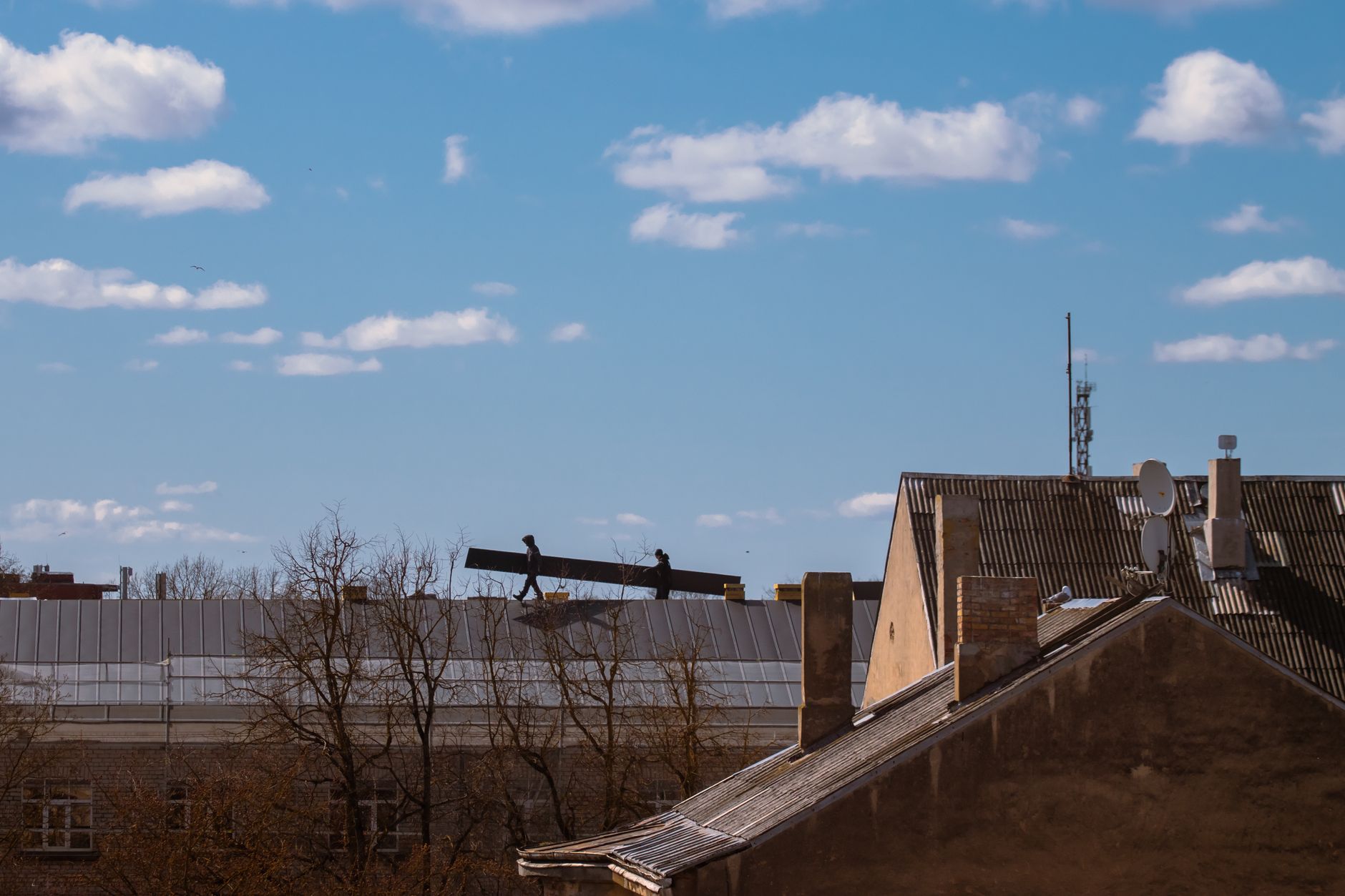
Safety is a large part of the case, and it shows up as risk avoided rather than hours counted. Under 29 CFR 1926.501(b)(13), residential construction workers six feet or more above lower levels must be protected by guardrails, safety nets or personal fall arrest systems. OSHA's residential guidance states that falls are the leading cause of work-related deaths among residential construction workers.
The industry numbers are sobering. A roofing trade magazine article, citing BLS census data, reported 134 workplace fatalities in the roofing industry in 2023, up 8 percent from 124 in 2022. A state business data site, citing BLS CFOI data, says roofers had the highest 2024 fatal injury rate among large construction and outdoor trades, at 48.7 per 100,000 full-time workers, and that roofing contractors recorded 96 falls out of 120 worker deaths in 2024. Both are secondary sources, so check the BLS releases before quoting them to a client.
A drone does not remove fall protection duties. Crews still walk roofs for repairs, tear-offs and installs, so the drone reduces exposure on survey work only. Count the roof trips it removes, not the total fall risk on the job.
What changes the number up or down?
Survey volume matters most. A firm that runs a few surveys a year has few hours to offset, while a firm running steady estimates across many properties has a large pool. Pitch and roof complexity come next, because steep roofs, many hips and valleys, and detached structures raise the hours a crew spends by hand.
Weather and access reduce the number. Wind and rain ground flights, and grounded days push surveys back onto crews or delay quotes. Airspace rules and property access limit where a drone can fly on a given job, and each refused flight removes hours the model may have counted.
Imagery acceptance matters too. If clients or insurers will not accept drone measurements for a job type, the crew still goes on the roof, and the offset for that work falls to zero.
What are the risks to the return and how do you avoid them?
The biggest risk is an overestimated share. If the drone covers only part of a job, the crew still goes on the roof and the hours saved shrink. Start with the job types where clients and insurers accept imagery, and keep a roof walk on the list for any job that needs close inspection of damage.
The second risk is underuse. A drone that flies twice in a few weeks cannot pay back the way one used every week can, and a lease with little flying becomes plain overhead. Set a target number of flights per week, track it through the first quarter, and keep a fallback crew for grounded days so quotes do not slip.
The third risk is skipping training. Someone on your team has to fly the drone and review the imagery, and untrained staff can leave gaps in the imagery that send crews back onto the roof. Training time belongs in the first month of the model.
We work as a vendor neutral robot integrator. We pick the right robot for the site, lease it through financing, deploy and integrate it, train the staff and service it nationwide. That covers the flight plan, the training and the service calls that keep the return from slipping.
How long does it take to reach payback?
A realistic timeline has four stages, listed below. The pilot should be long enough to cover several survey types and at least one stretch of grounded weather. The review uses your own job records, not a vendor time study.
A vendor customer case reported an 80 percent time saving on roof measurements and a 4-month ROI, according to a drone software vendor's success story. That is one self-reported result from a single firm and should not be read as typical. Another vendor blog claims up to 90 percent less time for inspections, but its baseline is a generic estimate, so treat it as a ceiling rather than a forecast.
- Free site assessment, with survey records, roof mix and grounded-day history gathered before the visit
- Deployment, integration and training of the staff who fly and review imagery
- Pilot on real jobs, long enough to cover several survey types and a stretch of bad weather
- Review of hours against the model, then a decision on the full lease or an adjusted share of work
- Speed on a standard survey
Drone
Short flight, then imagery review at a desk
Staff
Roof walk, measuring and sketching on site
- Roof access
Drone
No roof walk needed for the surveyed surface
Staff
Needs access, a harness and fall protection on steep pitches
- Close inspection of damage
Drone
Good for overall surface and edge views in imagery
Staff
Better for hands-on checks of flashing, soft spots and fasteners
- Weather
Drone
Grounded in wind and rain
Staff
Also stops in unsafe conditions, and roof work is often rescheduled
- Judgment and client conversation
Drone
Produces imagery and measurements only
Staff
Explains findings and handles the customer
Is drone ROI for roofing contractors worth it for a small firm?
Small firms can reach payback, but the math is tighter. A firm running a few surveys each week has fewer hours to offset than a larger estimating team, so the lease cost has to be covered by a smaller pool of saved time.
The base of firms is large. A roofing industry statistics report counted 96,474 US roofing contractors registered in 2023, up 0.6 percent from 2022. A base that large means estimate speed can be a competitive lever, but the report does not measure survey volume or drone use, so the return still depends on your own firm's survey count.
How do you get a precise figure from a free site assessment?

Bring a year of survey and inspection records, the typical roof pitch and size mix, your average crew size on those jobs, and the number of grounded days you saw in the last year. With those inputs, the assessment team can set the share of work the drone realistically covers and the staff hours the workflow needs.
The assessment also covers the site and workflow, the flight plan, airspace and access checks, training needs and service coverage. The lease is quoted after the site assessment through financing, with the fixed lease payment and service terms in writing, so the savings range on this page becomes a figure tied to your own jobs. Ask for the hours assumption in writing and check it against your own timesheets.
Frequently asked questions
Want a drone at your roofing contractor?
Tell us about your site. We will recommend the robot, quote the lease, and keep it serviced.
Sources
- US Bureau of Labor Statistics, Occupational Employment and Wage Statistics (OEWS May 2024)
- Bureau of Labor Statistics Occupational Outlook Handbook, roofers
- Industry market research report on roofing and siding contractor businesses
- Roofing trade magazine article citing BLS census data
- State business data site citing BLS CFOI data
- OSHA residential fall protection guidance
- Drone measurement software vendor workflow comparison (vendor-reported)
- Drone retailer roofing inspection page (vendor-reported)
- Roofing industry statistics report on contractor registrations