
The short answer
Cobot ROI for mattress manufacturers comes from taking repetitive packing and palletizing hours off the line, priced at the labor hours the robot actually completes. The savings range depends on the share of that work a collaborative robot can realistically do beside staff, less the fixed robot lease payment and the staff time still needed around the cell. A free site assessment narrows that range to a figure your plant can check against its own shift records.
Key takeaways
- The return is labor hours offset on packing and palletizing, not a flat headcount cut.
- Savings are a range that moves with how much of each shift the robot can realistically take.
- With shipments down 13.2 percent in 2025 according to ISPA data, the case must rest on hours per unit.
- Lease terms, downtime cover and crew training decide whether the payback holds.
- A free site assessment is the route to a precise figure for your own plant.
Run the numbers for your site
Pick your city or state for a real regional number - we use the real BLS wage there. (On the live site this auto-detects from your location.)
What do you want to automate?
The cobot stacks the repetitive end-of-line pallets; your team handles changeover and QA.
What is cobot ROI for mattress manufacturers?
Cobot ROI for mattress manufacturers is the return on placing a collaborative robot arm beside packing and palletizing staff, measured as the labor hours it takes over compared with what the cell costs to run. A cobot is built to work near people, so it fits a workstation rather than requiring a separate caged island. The planning question is narrow: how many hours of repetitive handling does the robot complete, and how does that compare with the fixed robot lease payment and the staff time still needed around it.
The industry context shapes how cautious the estimate should be. According to IBISWorld, US mattress manufacturing employed 22,429 people in 2025, a decline of 0.1 percent from the year before, across 319 businesses. Those are IBISWorld estimates, not an official count. The average of about 71 employees per business suggests most plants are mid-sized, and the packing and palletizing crew is only part of that total, so a plant's own headcount on those stations is the number to measure.
Where does the return come from on a mattress line?
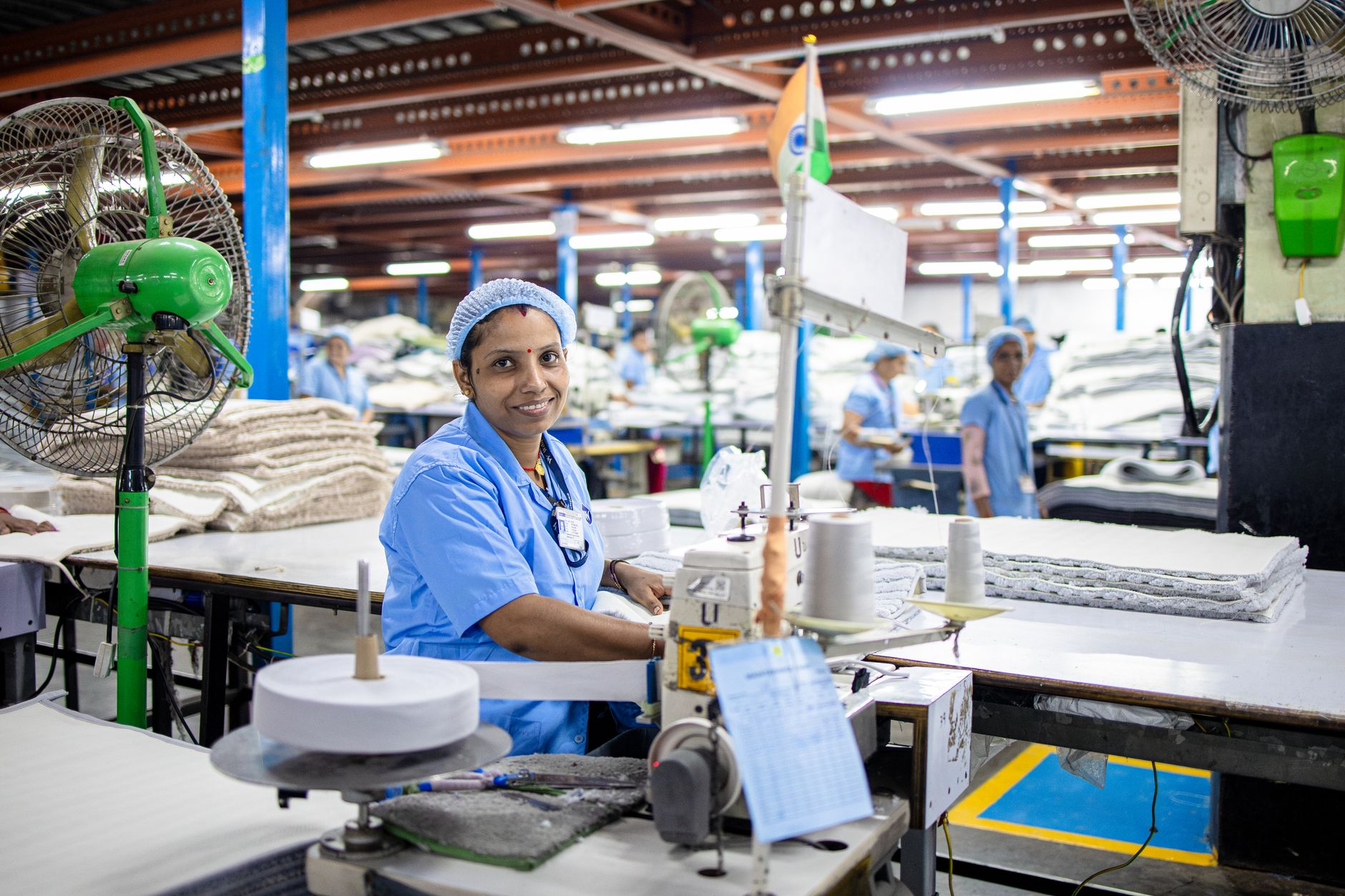
On a mattress line the return comes from handling work that is repetitive, physical and easy to time. Placing finished units into cases or bags, stacking cases on pallets and building a set pattern are the cycles a cobot can repeat for long stretches at a steady pace. The hours it takes over are priced against the government wage data on this page for laborers and freight, stock and material movers, hand, which is the kind of work the robot takes off the line.
Cobots do not run the whole plant. Foam and spring handling, cutting, quality judgment and changeover decisions stay with people, and the staff who remain often move onto that work. According to A3, 7,212 collaborative robots were ordered in North America in full-year 2025, equal to 19.6 percent of total robot units ordered. According to A3 data published by Automate, cobots were 28.6 percent of all robots ordered in the fourth quarter of 2025, which shows packing and palletizing cells are now a familiar kind of project to scope.
Median hourly wage, Laborers and Freight, Stock, and Material Movers, Hand
$4,380
Monthly cost of one full-time worker, at the median wage plus payroll costs (an estimate, not a quote).
How do you work out the labor hours a cobot offsets?
Start with a time study across a normal week, not a single shift. Record how long each station spends on the handling cycle, how many units or pallets pass through it, and how many shifts the line runs. Multiplying those figures gives the handling hours in the building. Only after that total is clear should you decide what share a cobot can realistically take.
The share is where most estimates go wrong. A cobot can usually take a defined, repeatable cycle, such as placing units into a case or stacking a set pattern, but it will not take a whole line. Net hours offset is the share of handling hours the robot completes, minus the staff time still needed for loading, clearing faults, changeovers and checks. Build the breakdown station by station, as the table below shows, and leave out any cycle that changes too often to repeat.
How does the lease cost affect payback?
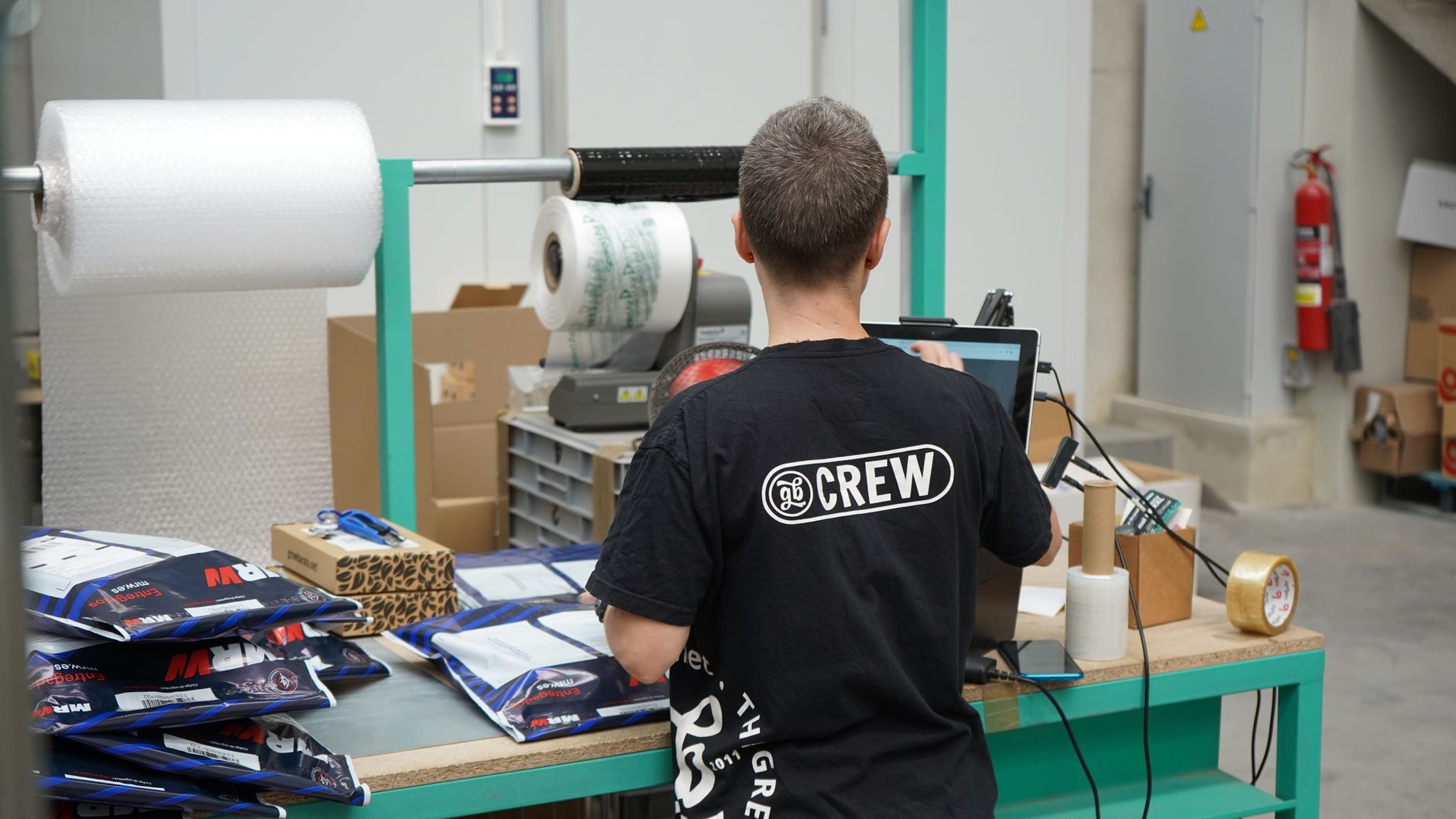
The cost side is a fixed robot lease payment set by the financing terms and the equipment chosen for the cell. That payment is quoted after a free site assessment rather than listed in advance, because it depends on the station layout and the service plan. Compare it with the net hours offset valued against the government wage data on this page, after subtracting the staff time that supervises the cell. Because the payment is fixed, most of the movement in the savings range comes from hours offset, not from the lease.
Service terms decide whether the payment stays predictable. A lease with maintenance included, on-site dispatch and spare-unit coverage keeps downtime from wiping out planned offset hours. Ask whether the quote covers repairs, software updates and a replacement unit during a stoppage. An idle cell removes the offset for every day it is down, so a lease with fast response often protects the return better than one with slow repair.
What changes the savings range up or down?
The biggest upward driver is how much of the packing and palletizing cycle is repeatable. A steady mix of case sizes and pallet patterns gives the robot more hours to work, while frequent changeovers across many mattress sizes and foam configurations cut them. Line speed matters too. A cell that must keep pace with a fast line may need a second robot or added staff, and that changes the economics of a single unit.
Demand changes the math as well. ISPA data reported in trade press shows US mattress shipments fell 13.2 percent in 2025, and total market value fell 6.5 percent. Fewer units mean fewer packing hours to offset, so the case rests more on cutting hours per unit than on growing output. In the first quarter of 2025, ISPA reported unit sales down 11.2 percent year over year, which points in the same direction of pressure.
What are the risks to the return and how do you avoid them?

The first risk is over-counting hours. A time study taken during a peak week, or one that treats every packing minute as robot work, inflates the savings range. Sample several weeks and count only the cycles the robot will realistically complete. The second risk is downtime. If the cell stops and staff cover the work by hand, the offset disappears for that period, so the lease needs a clear response plan and a spare unit option.
The third risk is the crew. Staff who understand the cell and can clear faults quickly keep it running, while untrained staff will stop it for every small alert. Plan training and a trained backup for each station before go live. Check the safety side honestly as well. The BLS rate for all manufacturing in 2024 was 2.7 cases per 100 full-time workers. A BLS table of highest-incidence industries, using 2015 data, listed mattress manufacturing at 6.1 cases with days away, restricted work or job transfer. That 2015 figure is dated, so use your own recent injury logs as the baseline.
How long does it take from assessment to payback?
The path runs from a site assessment to a working cell in a sequence of steps, and the early steps take the most care. We map the station, confirm the handling cycle with your staff, pick the robot that fits the floor and quote the fixed robot lease payment. After that comes deployment, integration with the line controls, training of the crew and go live support. Delays usually trace back to gaps in the assessment data, so a complete time study shortens the whole path.
Payback follows the same arc. The first weeks after go live are slower while staff learn the cell and setup settles, so the hours offset ramps up rather than starting at full value. Once steady, the net offset covers the lease payment, and the remaining hours are the return. A phased start, with one leased unit before adding more, lets a plant check the numbers on its own floor before committing to the full line. The payback date is set in the quote, not promised in advance.
Cobot or person: where each one wins
A cobot is the better choice for a steady, repeatable cycle at one station over long runs. It does not tire, it holds the same pace through a shift, and its cycles are easy to count. A person is better when the work changes often, needs judgment or involves items that vary from unit to unit. Staff also move through a new size without any setup, which a robot cannot match.
Neither replaces the other across the whole line. The useful question is which cycles to hand to the robot and which to keep with staff. The table below shows the honest split, including the points where the person wins.
- Repetitive packing cycle
Cobot
Repeats the same motion through a full shift at a steady pace
Staff
Slows over a long shift and needs breaks
- Switching between sizes
Cobot
Needs setup or reprogramming for each new pattern
Staff
Adapts to a new size without setup
- Spotting unusual defects
Cobot
Limited to what its sensors and setup can detect
Staff
Notices odd defects and makes the call
- Handling varied items
Cobot
Works within reach and payload at a fixed station
Staff
Moves around the floor and handles odd items
- Recording cycles
Cobot
Cycle counts are easy to log for the study
Staff
Hours depend on attendance and manual records
- Covering an absence
Cobot
Runs without a break but stops for faults that need a person
Staff
Can be replaced by a trained colleague
How do you get a precise figure from a free site assessment?
Ask for a free site assessment before deciding anything. We map the packing and palletizing stations, time the handling cycles with your staff across several shifts, and identify the share a cobot can realistically take. The output is a savings range built on your hours and your line, with the assumptions written out, plus a fixed robot lease payment quoted for the robot and service we recommend.
Bring shift records, units or pallets per shift, your changeover log and any downtime history. Those inputs move the range more than any general industry figure. We are a US commercial robot integrator, so we pick the robot that fits your site, lease it through financing, deploy and integrate it, train staff and service it nationwide. Ask for the range in writing and test each assumption against your own records.
Frequently asked questions
Upcoming manufacturing events
- Trade showBrats & RobotsNov 10, 2026Alliant Energy Center Exhibition Hall, Madison, WI
- Trade showMATE Farm & Ranch ShowFeb 11 to 13, 2027MetraPark, Billings, MT
- ExpoPFMA Expo 2027Feb 17 to 18, 2027Washington County Fair Park, West Bend, WI
- ExpoLouisville Facilities Maintenance ExpoApr 15, 2027Mellwood Art Center, Louisville, KY
Want a cobot at your mattress manufacturer?
Tell us about your site. We will recommend the robot, quote the lease, and keep it serviced.
Sources
- US Bureau of Labor Statistics, Occupational Employment and Wage Statistics (OEWS May 2024)
- IBISWorld, mattress manufacturing employment
- Interior Daily, ISPA data on US mattress shipments in 2025
- BLS, nonfatal injury and illness rates by industry, 2024
- BLS, highest-incidence industries table (2015 data)
- The Robot Report, A3 North American robot orders 2025
- Automate, robot orders in 2025 (A3 data)
- ISPA, labor market and mattress industry, August 2025