
The short answer
Cobot ROI for HVAC equipment manufacturers comes from keeping a machining cell loaded and unloaded when operator positions sit empty, not from removing a shift. The return is the labor hours the arm takes over, priced on the government wage data for the laborers and freight, stock, and material movers, hand type of work, then weighed against a fixed lease payment quoted after a free site assessment. Savings are ranges that move with how many hours the cell actually runs and how much of that work the arm can realistically take.
Key takeaways
- The return comes from keeping a cell running when operator positions are open, not from cutting a crew.
- Only the loading, unloading and staging share of the work belongs to the arm.
- The savings range is priced on measured handling hours and the government wage data for the work the arm takes over.
- Lease cost is quoted after a free site assessment, so measure the cell before comparing numbers.
- Payback starts when the cell runs reliably on the pilot part family, not on the day the arm is switched on.
Run the numbers for your site
Pick your city or state for a real regional number - we use the real BLS wage there. (On the live site this auto-detects from your location.)
What do you want to automate?
The cobot stacks the repetitive end-of-line pallets; your team handles changeover and QA.
Cobot ROI for HVAC equipment manufacturers: where the return comes from
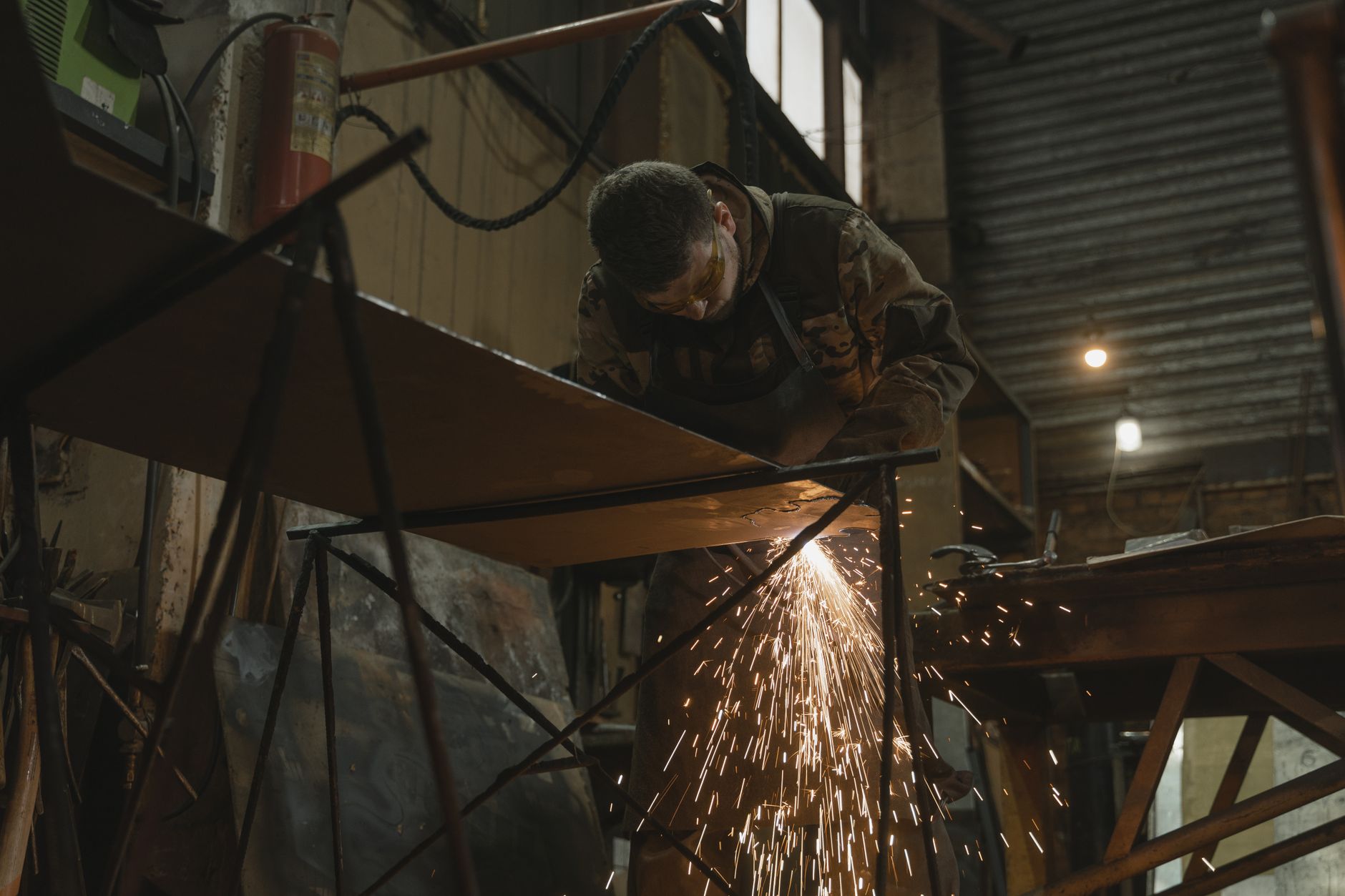
HVAC equipment makers build furnaces, air handlers, condensers, coil housings and the frames around them. A large share of that metal passes through machining cells, press brakes and punch lines, where a part is loaded, cycled and removed many times in a shift. A collaborative robot arm placed beside an existing cell takes the load and unload steps, so the machine keeps cutting while the plant covers the positions that are open.
The return is mostly run time, not a smaller crew. A cell that waits for a person to reload it loses minutes at every cycle, and when no one is free for that station, the cell idles or runs short on parts. Cobot ROI for HVAC equipment manufacturers therefore depends on three things: how many hours of loading and unloading the cell needs, how many of those hours go unstaffed, and how much of that handling an arm can take without changing the process.
How many plants and people are in this sector?
According to IBISWorld's 2025 industry profile for heating and air conditioning equipment manufacturing, the sector had about 151,000 employees across 1,367 businesses. A FRED series built from BLS data puts employment in the broader NAICS 3334 group at about 112,400 in 2024. The two figures use different methods and years, so read them as a range rather than a single count.
Dividing that employee range by the business count gives roughly 80 to 110 people per business. That is our own derived estimate from two sources, not a sourced figure. The typical headcount on this page, five people doing this kind of work at one site, is also an estimate from that range, because no verified per-site count was available. Confirm the number on your own floor before using it for a cell plan.
Adoption is climbing. According to the International Federation of Robotics president's report, cobot installations reached 66,000 units in 2025, or 11 percent of all industrial robot installations. Engineering News, reporting on IFR data, put total industrial robot installations at 603,000 in 2025, up 11 percent and the first year above 600,000.
Median hourly wage, Laborers and Freight, Stock, and Material Movers, Hand
$4,380
Monthly cost of one full-time worker, at the median wage plus payroll costs (an estimate, not a quote).
What is machine tending, and which hours does an arm take?
Machine tending means feeding a machine tool and clearing its output: placing a blank or casting in the fixture, starting the cycle, removing the finished part and setting it down for the next step. In HVAC work that often covers sheet blanks, brackets, housings and machined fittings. The arm takes the handling. Programming, setup, tooling changes and first article inspection stay with people.
Frame this labor as the laborers and freight, stock, and material movers, hand type of work. That is the job the arm takes off the cell's load and unload steps. The government wage data for that occupation is shown in the panel beside this text, and the savings math applies it only to the hours of that work the arm takes over. According to the BLS Occupational Outlook Handbook, the broader hand laborers and material movers group held about 7.0 million jobs in 2024. The people who usually run the cell are machinists or setup technicians, and this page does not price their time.
How does the lease math work?
The calculation has four parts. The first is the hours of loading and unloading the cell needs each week. The second is the share of those hours an arm can realistically take, which is less than the full shift because the arm still needs a person for setup, fixture changes and exceptions. The third is the government wage data for the laborers and freight, stock, and material movers, hand work, which prices each offset hour. The fourth is the fixed lease payment, which is quoted after a free site assessment.
Savings are the priced hours, less the lease payment and less the time an operator spends supervising and resetting the arm. The result is a range because the hours and the share are estimates until the cell has run long enough to measure them. The calculator shows that range, not a promise. A plant with open positions gets more value per hour than one that already staffs the cell, because the arm covers hours that would otherwise go unworked.
What changes the number up or down?
The number moves up when the cell has long run times, several shifts with open operator positions, and part families that repeat often enough to justify a dedicated fixture. It moves down when the shop changes parts many times a day, when a part needs a person to inspect it between cycles, or when the floor cannot take an arm and its guarding without moving equipment.
Two inputs carry the most weight. One is measured handling time, which should come from timing one full shift on the cell rather than an estimate. The other is the count of open positions per shift, because the return is largest where the cell would otherwise sit idle. Check both before you compare any two quotes.
What are the main risks to the return, and how do you avoid them?
The first risk is that the cell is not short of labor. If the shop staffs the cell on every shift with the same people, the arm adds some cycle time but little new output. Measure the unfilled hours first, then decide.
The second is part variety. Frequent changeovers, tight tolerances that need inspection between cycles, and parts that vary in shape or weight all reduce the share of work an arm can take. A pilot on one part family, with a fixture built for it, usually shows whether the process holds before the plant commits to more cells.
The third is integration and safety. A collaborative arm works near people, but the site's risk assessment still decides guarding, zones and training, and those steps must be finished before go-live. Our integration work covers layout, programming, safety setup and operator training, and it is tested on one cell before any expansion.
What is a realistic timeline from assessment to payback?
A typical path runs through a site assessment, then a quote, then installation and integration, then operator training, then a pilot on one part family, then expansion to the rest of the cell's handling work. Payback starts when the cell runs reliably on the pilot family, not on the day the arm is switched on.
The length depends on the cell, the parts, how fast the shop can clear floor space, and how long the safety review takes. Ask for the timeline in writing with the quote, and ask which milestone the payback estimate assumes. A payback estimate that does not name its milestone cannot be compared across quotes.
Expect the first months to be learning time. Operators need to learn fault clearing and the handover routine, and programs need tuning for real parts. Most of the measurable return shows up once those routines are stable.
How do you get a precise figure from a free site assessment?
Bring the cell's real numbers. A site assessment works from actual cycle time, the shift schedule, the count of open operator positions, the changeover frequency, and the part drawings and weights. Our team then selects the arm for the site, maps the cell, and builds the lease quote from that plan.
We lease the equipment through financing, deploy and integrate it, train your staff and service it nationwide. Support after go-live is part of the program, so the quote covers what you will need once the cell is running, not only the arm itself.
- Cycle time for each part family
- Shift schedule and open operator positions
- Changeovers per week
- Part drawings, weights and tolerances
- Cell footprint, power and guarding
Why do injury and turnover figures belong in the case?
According to a summary of BLS injury data, manufacturing recorded 2.7 cases per 100 full-time workers in 2024, compared with 2.3 for all private industry. Repetitive lifting and handling at machine cells is part of that exposure, so a cell that takes the handling off people supports the safety case. It does not remove all risk, and guarding and training still matter.
The national BLS release for 2024 reported 2.5 million injury and illness cases in private industry, down 3.1 percent from 2023. Comparisons with earlier years need care because the 2023 and 2024 data use an updated classification.
On turnover, the BLS JOLTS release reports a total separations rate of 3.3 percent for the 2025 annual average, with quits at 2.0 percent. Nationally that is low, so the case for an arm should rest on specific unfilled shifts, not on a general churn claim. Some aggregators cite much higher manufacturing turnover, but their methods are unclear and they do not match BLS.
Frequently asked questions
Upcoming manufacturing events
- Trade showBrats & RobotsNov 10, 2026Alliant Energy Center Exhibition Hall, Madison, WI
- Trade showMATE Farm & Ranch ShowFeb 11 to 13, 2027MetraPark, Billings, MT
- ExpoPFMA Expo 2027Feb 17 to 18, 2027Washington County Fair Park, West Bend, WI
- ExpoLouisville Facilities Maintenance ExpoApr 15, 2027Mellwood Art Center, Louisville, KY
Want a cobot at your HVAC equipment manufacturer?
Tell us about your site. We will recommend the robot, quote the lease, and keep it serviced.
Sources
- US Bureau of Labor Statistics, Occupational Employment and Wage Statistics (OEWS May 2024)
- Manufacturing Lead Generation, summary of BLS injury data
- BLS, national injury and illness release (2024 data)
- IBISWorld, heating and air conditioning equipment manufacturing
- FRED, BLS-based employment series for NAICS 3334
- BLS JOLTS release
- International Federation of Robotics, president's report
- Engineering News, reporting on IFR data
- BLS Occupational Outlook Handbook, hand laborers and material movers