
The short answer
Cobot ROI for bicycle manufacturers comes mainly from repetitive fastening and part handling hours that a collaborative robot takes over at a station it shares with a person. The savings range depends on how much of each station's cycle is repeatable, how many shifts run, and the lease and service cost, and it is confirmed only by a free site assessment.
Key takeaways
- The return comes from repetitive fastening and part handling hours, not from removing the station.
- The savings range moves with the share of each cycle that is repeatable and the number of shifts run.
- Most bicycle makers are small operations: IBISWorld counts 55 US businesses in its 2025 estimate.
- Cobot installations reached 66,000 units globally in 2025, according to the International Federation of Robotics.
- Measured hours from a free site assessment set the lease quote and the payback timing.
Run the numbers for your site
Pick your city or state for a real regional number - we use the real BLS wage there. (On the live site this auto-detects from your location.)
What do you want to automate?
The cobot stacks the repetitive end-of-line pallets; your team handles changeover and QA.
What return can bicycle manufacturers expect from cobots?
Cobot ROI for bicycle manufacturers comes from a narrow set of hours: repetitive fastening, part presentation, and carrying at assembly stations where a collaborative robot and a person work side by side. The return is a range, not a promise. It depends on how much of each station's cycle is repeatable, how many shifts run, and what the lease and service cost over the term. This page explains where those hours sit, how the math works, what moves the number, and how to get a precise figure from a free site assessment.
For the person who signs off, the useful question is not whether cobots are impressive. It is whether the hours at your stations are steady enough to measure. Where every bicycle is a new build, the return shrinks. Where the same fastening cycle repeats all shift with parts arriving in the same position, the return is easiest to defend. The government wage data shown on this page sets the value of those hours, so count the hours first and do the finance math second.
How big is the US bicycle manufacturing base?
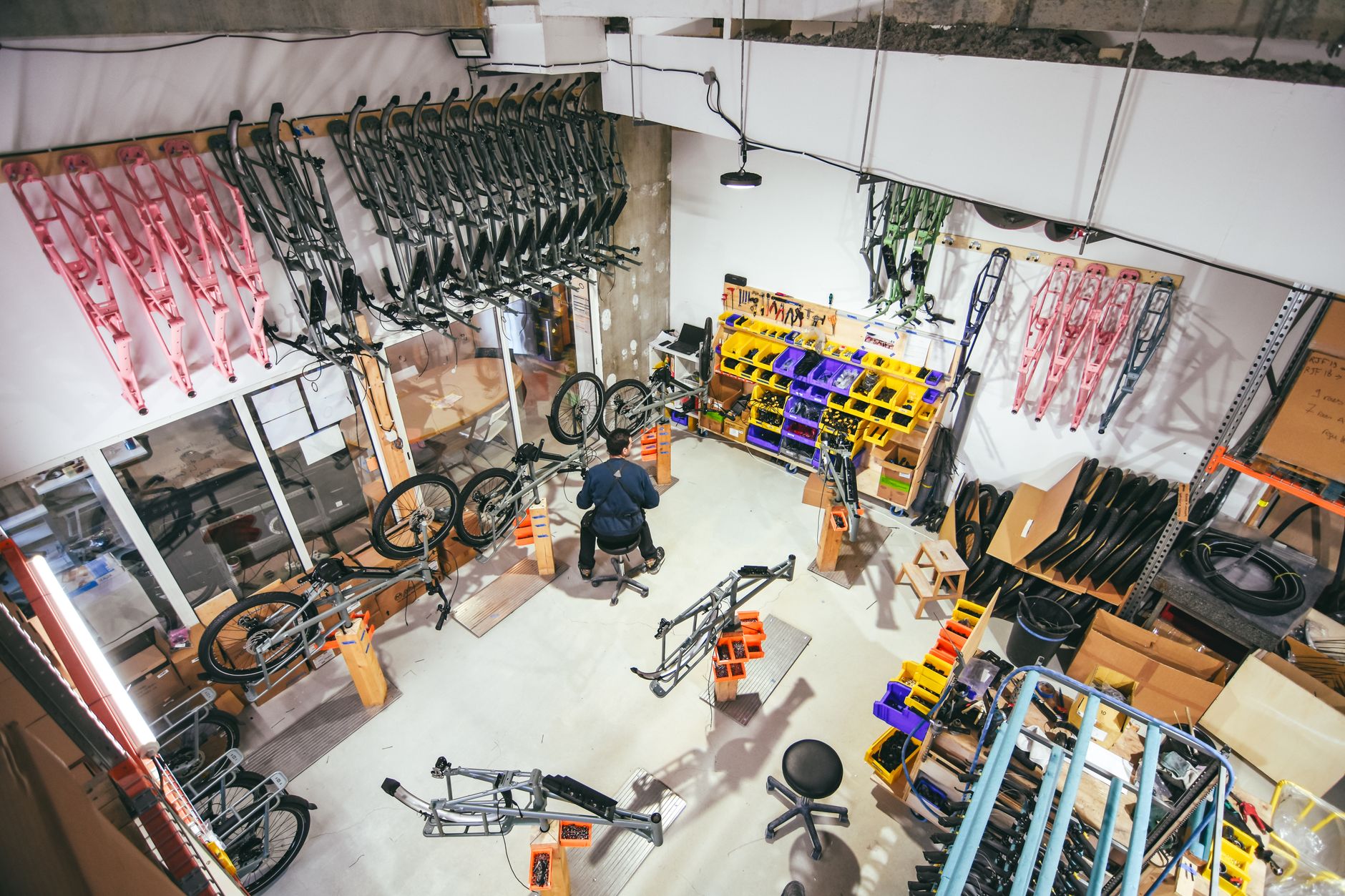
The industry is small by business count. According to IBISWorld, the US bicycle manufacturing industry had 55 businesses and 2,902 employees in its 2025 estimate, which works out to about 53 employees per business. That is an average across firms of very different size, and IBISWorld presents it as an estimate, not a per-site headcount. Read it as a sense of scale: most bicycle makers are small operations, so one station of repetitive work can be a large share of a plant's labor.
Market volume is large and mostly imported. Gminsights puts the US bicycle market at 21.99 million units in 2025, and reports that US bicycle imports fell from more than 19 million units in 2021 to about 11.1 million in 2024. Renub gives the 2025 import figure as 8.54 million units, 21% below 2024. Falling imports change the pressure on domestic lines, which compete on consistency and turnaround rather than on sheer volume, and that is where a repeatable cobot cell gets tested.

Median hourly wage, Laborers and Freight, Stock, and Material Movers, Hand
$4,380
Monthly cost of one full-time worker, at the median wage plus payroll costs (an estimate, not a quote).
How many people work at a bicycle plant, and what do they do?
Census data, as summarized by Vantage Insights for 2023, lists 429 establishments and 8,445 employees under NAICS 336991, the motorcycle, bicycle and parts manufacturing code. That code also covers motorcycles, so it overstates bicycle-only staffing, but dividing the two gives about 20 employees per establishment across all roles. That is the typical headcount this page uses. The share of those people doing repetitive fastening and handling at one station is much smaller, because frame, wheel, drivetrain, and packing work sit in separate areas.
Chalmers University of Technology researchers, in their paper on sustainable human-robot co-production for the bicycle industry, state that bicycle production is still performed mainly by manual labor in mass production. They also argue that human-robot co-production can support smaller batches. That matters for a mid-sized maker, because the repetitive work sits at specific stations, and those stations are where a shared cell fits. The paper is research, not a measured return, so use it to frame the question rather than to answer it. The site assessment counts people by station and shift instead of relying on the average above.
Where does the labor hour return come from?
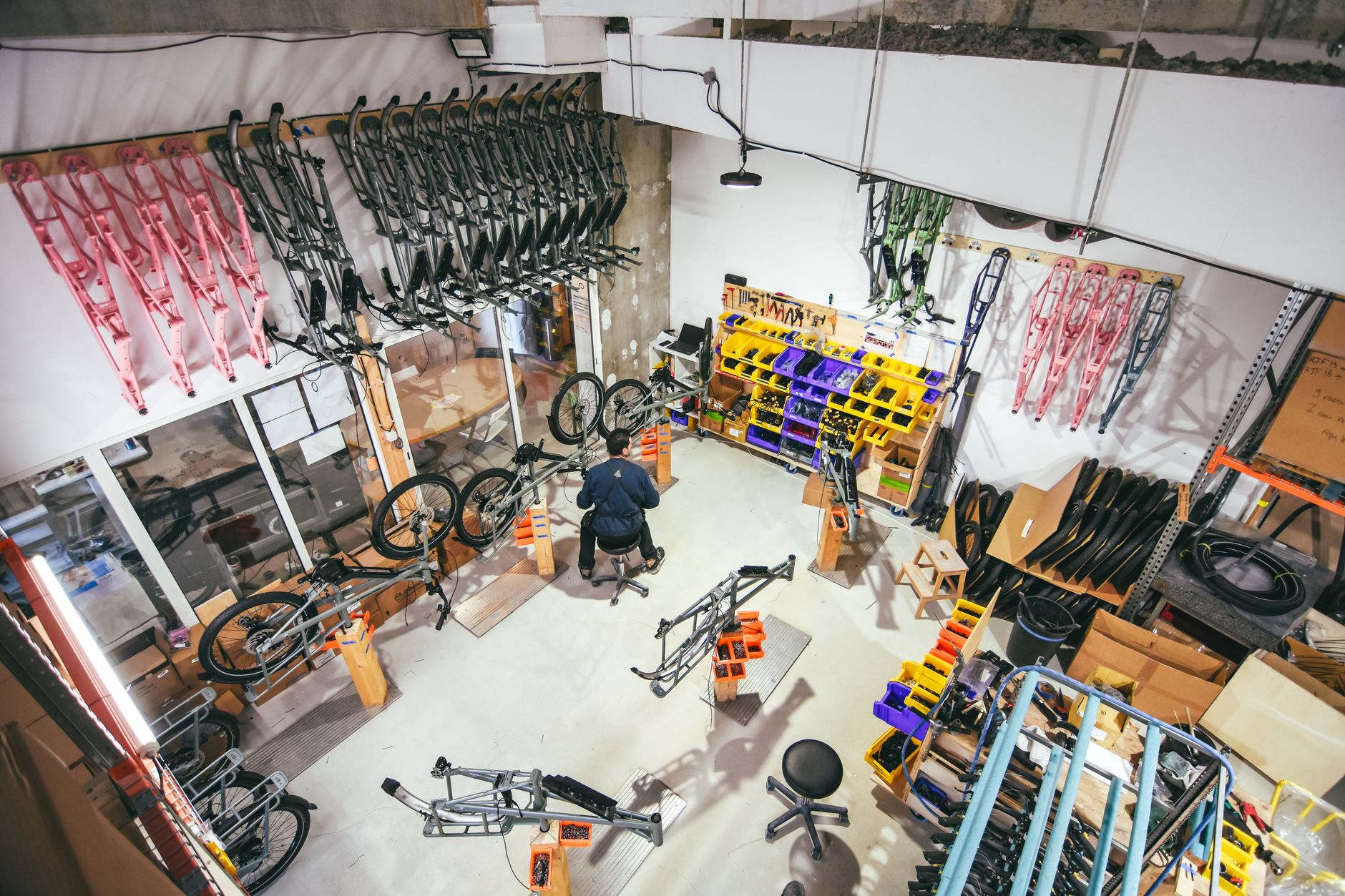
The return comes from hours of repetitive work that a cobot takes over at a station it shares with a person. In bicycle assembly that usually means repeated fastening of frame, fork, and component hardware, fetching and presenting small parts, and carrying kits to the bench. The labor side is priced on the hours of Laborers and Freight, Stock, and Material Movers, Hand type work the robot takes off the station, using the government wage data on this page. Those are the hours to measure.
Fastening checks are a second, smaller source. Many cobot screwdriving tools can hold a separate program for each bolt position and log each cycle, which removes hand recording and reduces rework at the station. That is a quality benefit, and it also takes manual logging time out of the shift. Count it as a secondary offset unless your station already logs by hand, because a gain that does not show up on the labor line alone is easy to overstate.
Handling is where the hours hide. A person who walks to a bin, picks, and carries a kit to the bench spends time that a fixture and a cobot pick cycle can cover. Measure that walk and pick time, because people describing their own work tend to leave it out.
How does the ROI math work?
The math has three parts. First, count the repeatable hours per shift at each station, meaning fastening cycles, part presentation, and carrying work that does not need a person's judgment. Second, apply the share of that work the cobot realistically takes. That share is almost never all of it, because changeovers, misfeeds, and inspection stay with people. Third, value the hours taken at the government wage data for the job, and subtract the lease payment and service cost over the lease term.
Written out, net return equals repeatable hours taken, times shifts run, times the wage value, minus the lease payment and service cost. The lease payment is set in a quote after the site assessment, so the variable that moves the result most is the hours side. A station that runs more shifts with steady part flow returns more on the same unit than a single shift line with frequent model changes. Two stations with the same cycle time can have very different returns if one of them sees constant changeovers.
The calculator on this page is pre-filled for this industry and shows a savings range next to this text. Treat that range as a planning band, not a forecast. The site assessment replaces assumed hours with measured hours, and the range narrows once those measurements exist. Cobot ROI for bicycle manufacturers is only as good as the hour counts behind it.
What changes the number up or down?
Repetition and flow matter most. The more cycles a station repeats with the same parts in the same position, the more hours a cobot can take. Batch size comes next. Long runs of one model give the cobot stable programs, while frequent changeovers add setup and reprogramming time that eats into the savings. Shift count multiplies the result, so a second or third shift at a station that already works well raises the return without changing the lease structure.
Industry trend is context, not a driver of your own numbers. According to the International Federation of Robotics, cobot installations reached 66,000 units globally in 2025, or 11% of all industrial robot installations. Cobot growth of 7% fell below overall market growth for the first time since the federation began tracking cobots. Adoption is maturing, so the tool itself is not the scarce part. The process you set up around it is.
What are the risks to the return, and how do you avoid them?
The main risk is overestimating the repeatable share. If parts arrive in varied positions, the cobot spends its time waiting or recovering from misfeeds, and the hours it was supposed to take stay with people. Avoid this by measuring cycle variation during the site assessment and designing fixtures so every part arrives in the same position. If the variation cannot be designed out, that station may be a poor first candidate.
The second risk is downtime. A cell that stops for a fault stalls the station, so service response and a spare unit plan belong in the lease from the start. We handle this through on-site dispatch, remote triage, and nationwide service, and the plan is confirmed before the lease is signed. Ask any integrator what happens on the day a cell faults, and get the answer in writing.
Injury data supports taking repetitive work off people, but it does not promise savings. According to Business Insurance, citing BLS data, the total recordable case rate for private industry was 2.3 per 100 full-time equivalent workers in 2024, down from 2.4 in 2023. Older BLS data for 2005, in an archived report, put repetitive motion cases with days away from work in manufacturing at 10.7 per 10,000 full-time workers, the highest of any sector that year, with transportation equipment manufacturing holding 14% of those cases. Those figures are background, not a bicycle-specific rate.
- Repeatability
Cobot
Runs the same fastening cycle at a steady pace with the same fixture
Staff
Pace varies over a shift, and fatigue can affect consistency
- Judgment and exceptions
Cobot
Needs parts in position and stops on a misfeed or fault
Staff
Spots misaligned parts, clears misfeeds, and makes fit calls
- Changeovers and small batches
Cobot
Needs reprogramming and fixture changes for each new model
Staff
Adapts to a new model quickly without a reprogram step
- Shift coverage
Cobot
Keeps cycling through the shift when staffed and supplied
Staff
Needs breaks, scheduling, and cover for absences
- Repetitive strain exposure
Cobot
Takes the repeated motion share off the person
Staff
Still does the non-repetitive work, which keeps some exposure at the station
- Cost basis
Cobot
Lease payment plus service over the lease term
Staff
Labor valued at the government wage data for the job on this page
What is a realistic timeline from assessment to payback?
A typical path starts with a free site assessment that maps the stations, counts repeatable hours by shift, and tests part flow. A lease quote follows, with the payment set for the site and the service plan included. Deployment and integration come next, then staff training and a go live period in which hours are measured against the assessment. Payback is judged on those measured hours, not on the first days after startup, when the team is still tuning programs.
Start with one station. Phased deployment lets the rest of the line keep running while the first cell proves its hours, and it gives you a measured baseline before any expansion decision. Expanding to a second station is a much easier conversation once the first station's hours are on paper. Ask for the stages in writing so you can check progress against them, because the timeline is set by the site and not by a standard calendar.
How do you get a precise figure from a free site assessment?
Bring the shift schedule, station list, batch sizes, changeover frequency, and a sense of how often parts arrive out of position. The assessment measures cycle time and variation at each candidate station, maps the floor layout and reach, and identifies which steps the cobot takes. The result is a lease quote and a savings range built on measured hours, not on industry averages. Ask for the assumed hours and the share of work taken to be written out, so the finance math can be checked line by line.
We are a US commercial robot integrator. We select the robot for your site, lease it through financing, deploy and integrate it, train your staff, and service it nationwide. Because one team handles selection, lease, deployment, and service, you have one contact from the first assessment through go live and after. The lease payment comes in the quote after the free site assessment, and the savings range shown here is a planning estimate until then.
Frequently asked questions
Upcoming manufacturing events
- Trade showBrats & RobotsNov 10, 2026Alliant Energy Center Exhibition Hall, Madison, WI
- Trade showMATE Farm & Ranch ShowFeb 11 to 13, 2027MetraPark, Billings, MT
- ExpoPFMA Expo 2027Feb 17 to 18, 2027Washington County Fair Park, West Bend, WI
- ExpoLouisville Facilities Maintenance ExpoApr 15, 2027Mellwood Art Center, Louisville, KY
Want a cobot at your bicycle manufacturer?
Tell us about your site. We will recommend the robot, quote the lease, and keep it serviced.
Sources
- US Bureau of Labor Statistics, Occupational Employment and Wage Statistics (OEWS May 2024)
- IBISWorld, US bicycle manufacturing industry
- Vantage Insights, NAICS 336991 (citing Census County Business Patterns 2023)
- Gminsights, US bicycle market
- Renub, US bicycle market
- International Federation of Robotics, President's Report 2026
- Chalmers University of Technology, Sustainable human-robot co-production for the bicycle industry
- Business Insurance, citing BLS 2024 workplace injury data
- BLS 2005 data, archived report on repetitive motion cases