
The short answer
Cleaning robot ROI for convenience stores comes mainly from clerk time returned to the register and the sales floor, not from cutting staff. The savings range depends on how many hours of janitorial work the robot takes over during low-traffic hours, the fixed robot lease payment, and how clear the aisles and back room are at closing. A lease quote follows a free site assessment that measures those hours on your floor.
See what a cleaning robot costsRun the numbers in the ROI calculator
Key takeaways
- Convenience store floor work is mostly clear aisles, so a floor scrubber can cover much of it in low-traffic hours.
- The return is clerk time returned to the counter and customers, and the labor offset is priced on the government wage data for janitors and building cleaners.
- The number moves with store hours, back room clutter, and how much of the cleaning is spill response.
- Annual turnover above 108 percent for full-time sales associates means training has to repeat, so plan for it.
- Only a site assessment produces a lease quote and a precise savings range for one store.
Run the numbers for your site
Pick your city or state for a real regional number - we use the real BLS wage there. (On the live site this auto-detects from your location.)
What do you want to automate?
The robot runs the open floor overnight; your crew keeps detail and edges.
What is cleaning robot ROI for convenience stores?
Cleaning robot ROI for convenience stores is the return a store gets when an autonomous floor scrubber takes over cleaning hours that clerks would otherwise spend away from the register and customers. The return shows up in two places. The first is the direct labor offset: hours of janitorial work the store no longer needs a person to perform during its shifts. The second is sales-side time: a clerk who is not pushing a scrubber can stay at the counter, restock the cooler and answer questions.
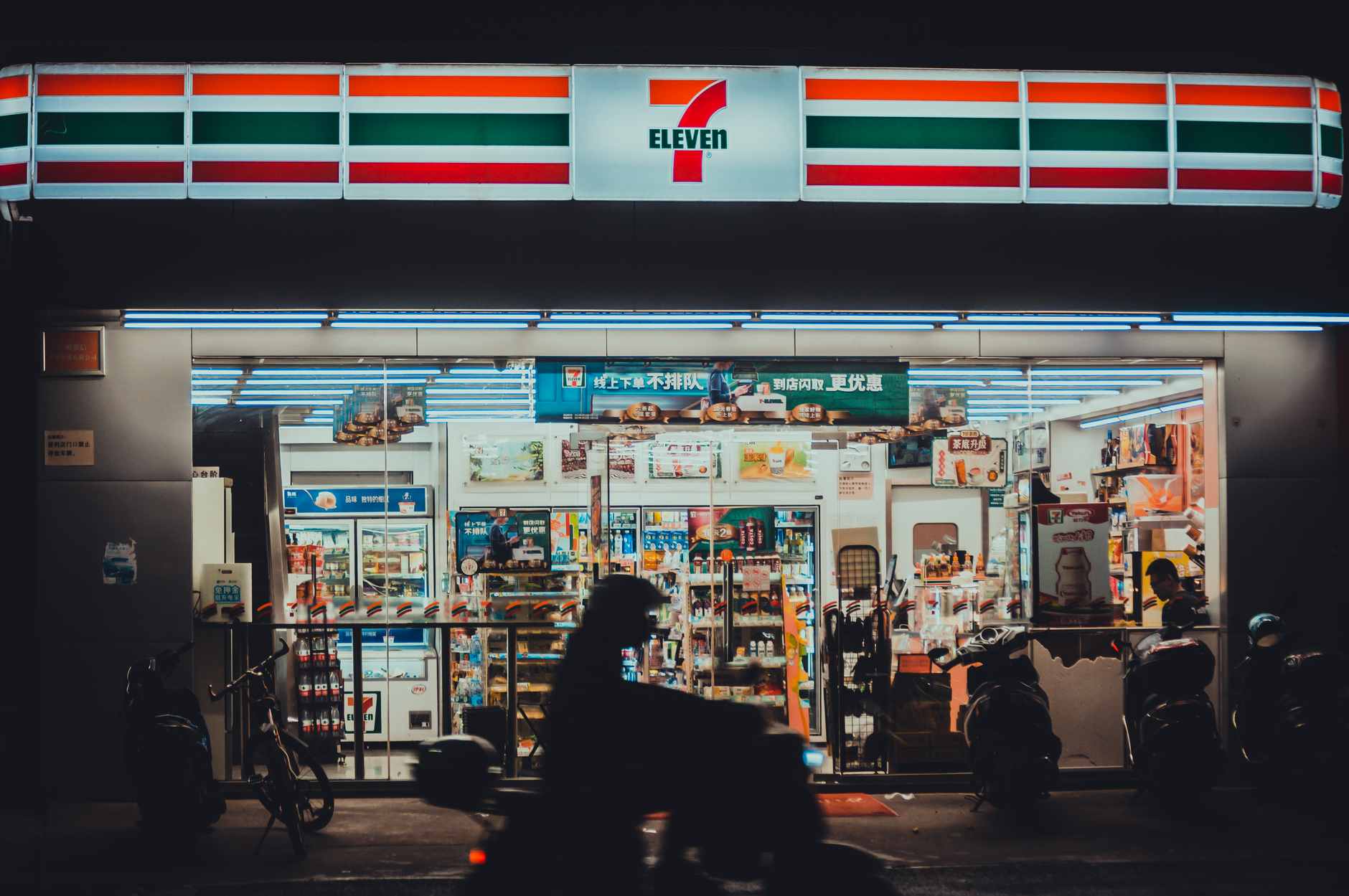
The category is large and concentrated in small operators. According to Chain Store Age, citing the NACS and NIQ TDLinx count, 151,975 convenience stores operated in the U.S. as of Dec. 31, 2025. The same report says 95,672 stores, or 63 percent of the total, are owned by a company with 10 or fewer stores. That ownership pattern matters here, because when the operator is small, floor work is more likely to fall to the clerks on shift than to a separate cleaning crew.
How many convenience stores are in the US, and how many sell fuel?
Store counts move slowly, which helps with planning. NACS reported 152,255 stores as of Dec. 31, 2024. The Chain Store Age figure for Dec. 31, 2025 is 151,975, a drop of 280 stores, or 0.2 percent. A base that changes this little lets a multi-store operator plan a pilot across a region without chasing a moving number.
Fuel sales matter for the floor because they bring more customers through the door, and more traffic usually means more floor mess near the entrance. According to Chain Store Age, 122,620 stores sold fuel as of Dec. 31, 2025, the highest count in eight years. Texas has the most stores, 16,504, so a state with that density is a natural place for a cluster of deployments.
Median hourly wage, Janitors and Building Cleaners
$4,041
Monthly cost of one full-time worker, at the median wage plus payroll costs (an estimate, not a quote).
How much floor work does a convenience store generate?
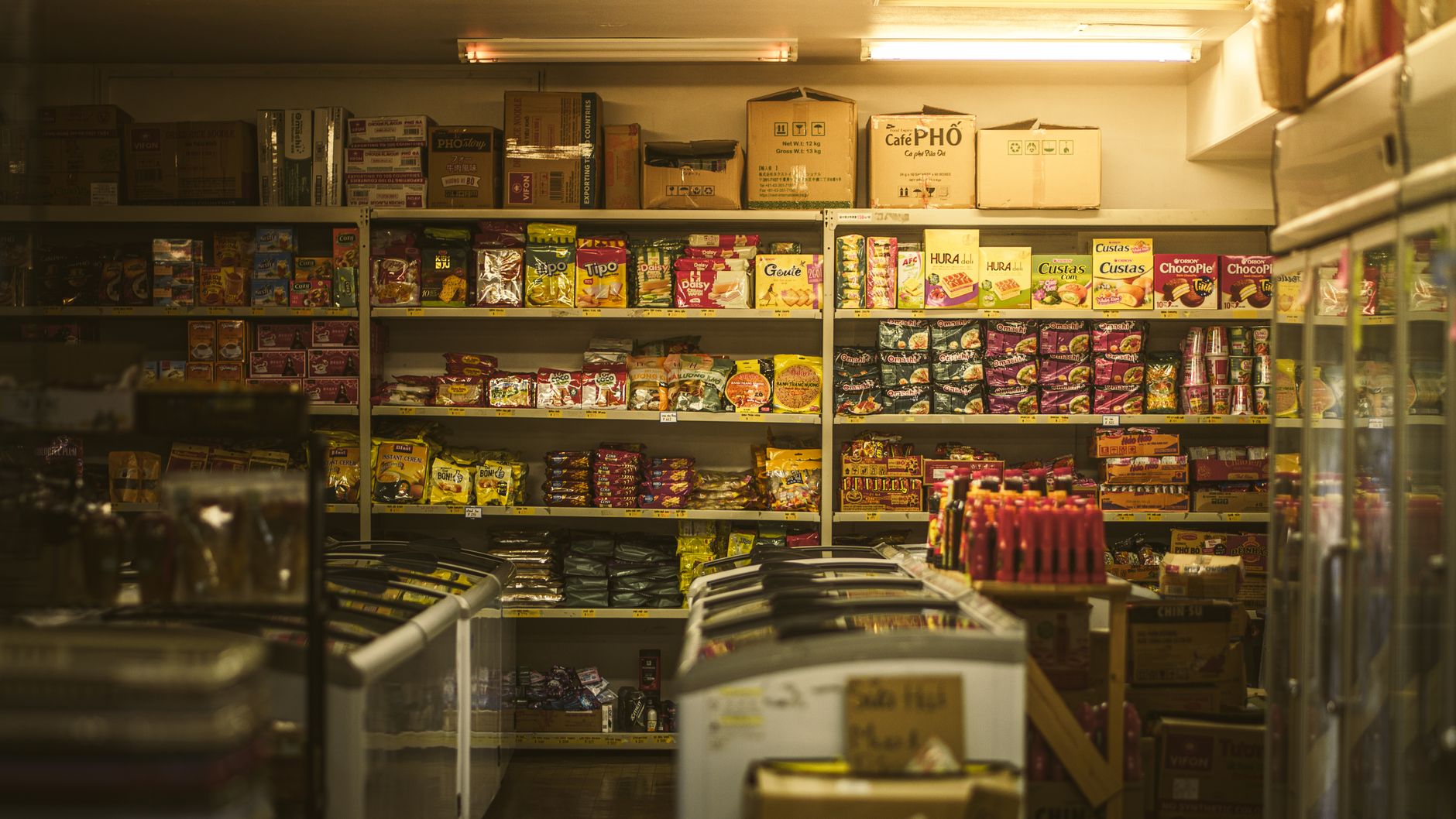
Public data does not publish a cleaning-hours figure for convenience stores, so this page does not quote one. That gap is why the site assessment measures the work on the floor rather than estimating it. What can be described is the kind of work involved: sweeping and scrubbing sales-floor aisles, mopping the cooler area, cleaning the back room and stockroom, and clearing the entry and checkout zones when weather brings mud and water inside.
Store hours shape how the work is spread across a day. A store open around the clock still has a low-traffic window, and that window is where a floor robot fits. The aisles are empty, the route is clear, and the robot can run without customers in its path.
What labor hours does the robot take over?

The labor offset is measured in hours of the kind of work janitors and building cleaners do. The Bureau of Labor Statistics Occupational Outlook Handbook projects employment of janitors and building cleaners to grow 2 percent from 2024 to 2034, which is slower than the average for all occupations. It also projects about 351,300 openings a year on average, and most of those come from replacement demand, meaning people leaving the work rather than new jobs being added. The work recurs every shift, which is why hours taken off the schedule have steady value.
The panel beside this text shows the government wage data for janitors and building cleaners, and that is the rate used to price the hours the robot takes over. The time of clerks, cashiers and managers is not priced as janitorial time. When a clerk stops cleaning and returns to the register, that benefit is time back on the counter. This page treats it as a separate effect and does not add it to the labor offset.
How does the savings math work?
The math has four inputs. The first is the weekly hours of janitorial work at the store, measured on site. The second is the share of those hours a floor robot realistically takes over, which is less than the full total because spills, restrooms, odd corners and customer-area messes still need a person. The third is the value of those hours at the local wage for this job. The fourth is the fixed robot lease payment and service cost, quoted after the site assessment.
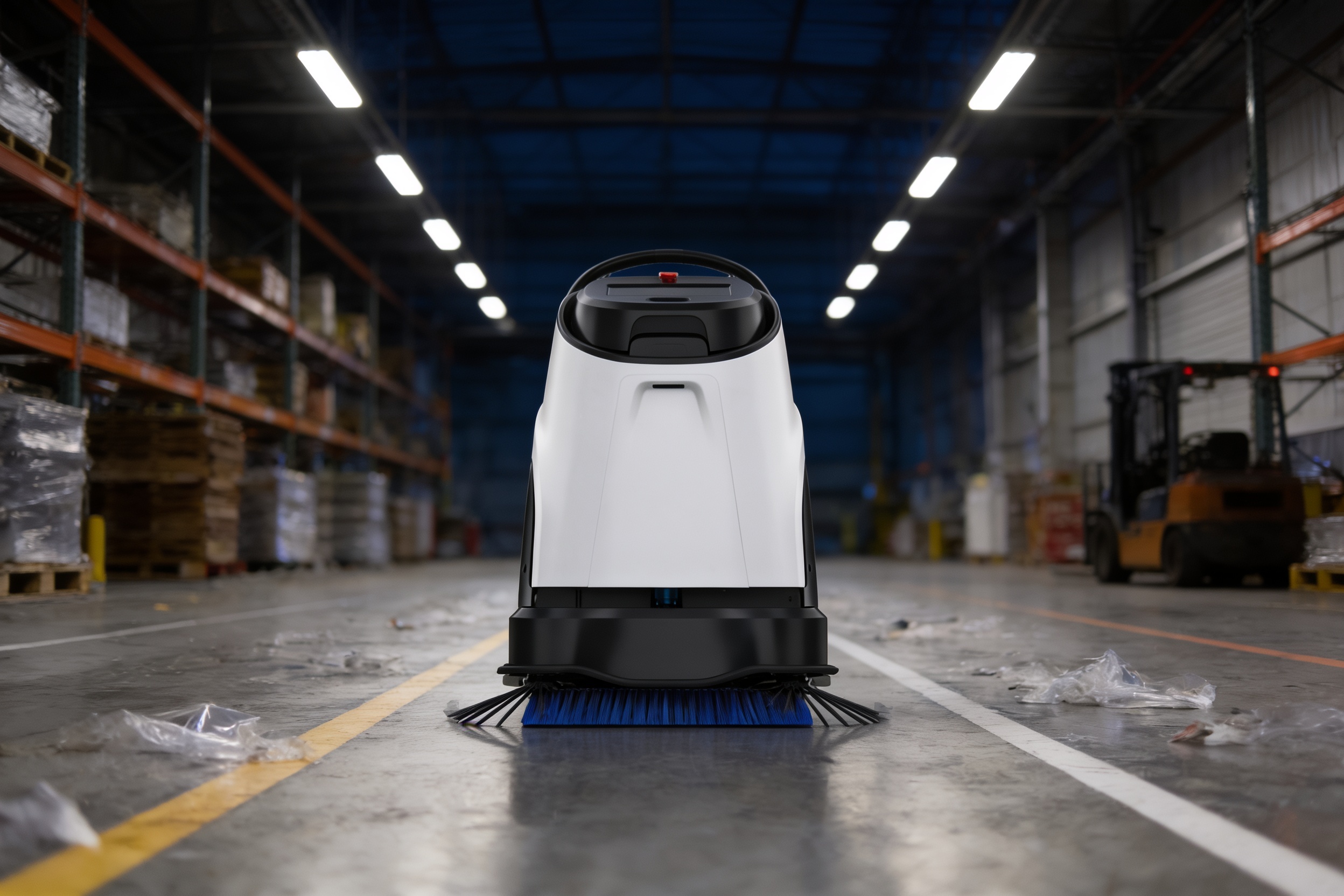
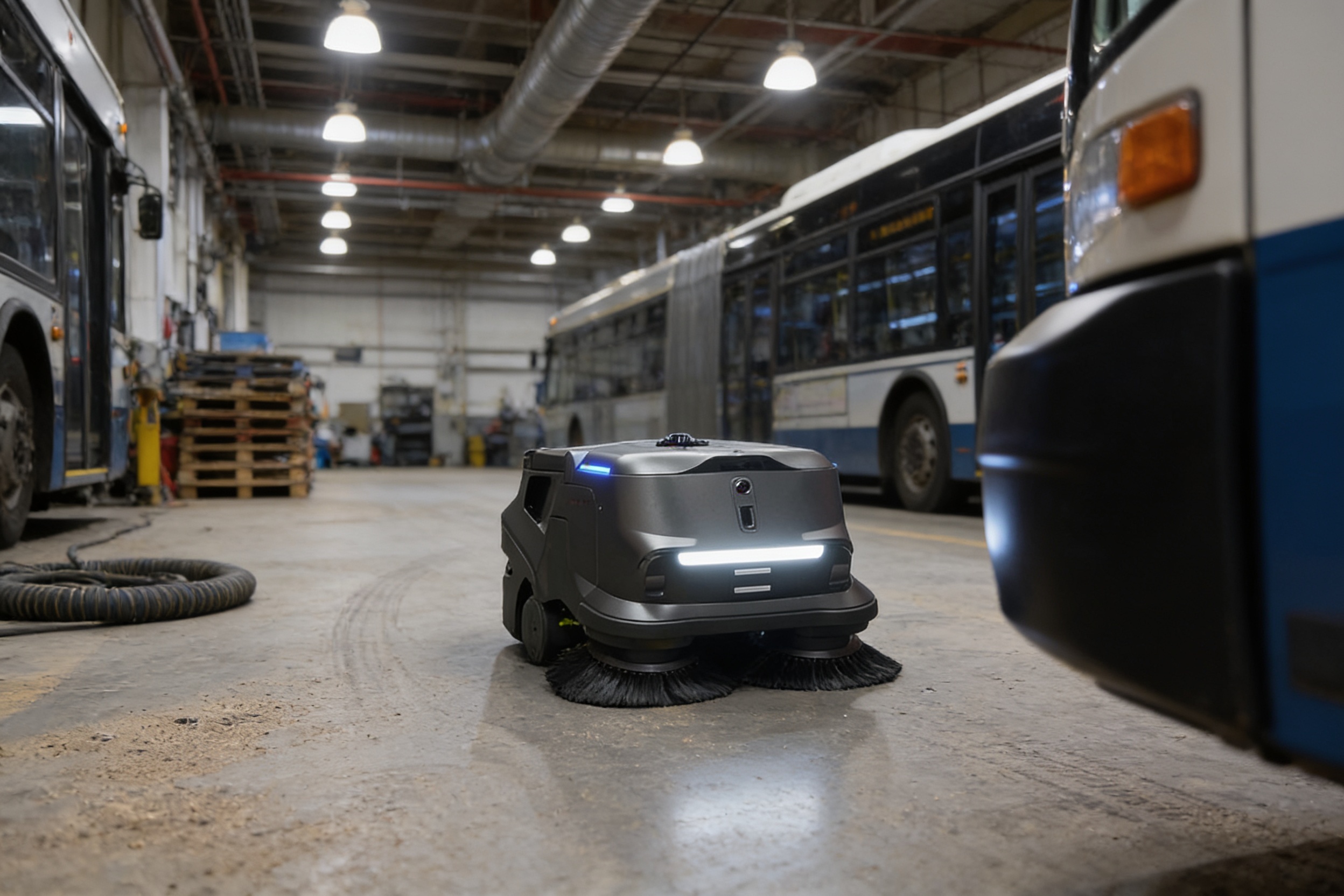
The savings range comes from running those inputs as a range, not a single point. A store with a clear back room and a long low-traffic window lands near the top. A store with stock in the aisles or frequent spills lands lower. The calculator on this page is pre-filled for convenience stores so the first estimate reflects the setting. We are a commercial robot integrator. We pick the robot for the site, lease it through financing, deploy and integrate it, train the staff who run it, and service it nationwide. The lease covers that full scope, which is why the payment comes as one figure in the quote rather than being built from parts.

Which parts of a convenience store can a cleaning robot clean?
The best candidates are zones with clear, open floor. Sales-floor aisles and main walkways are the classic case, since the layout is fixed and the path is predictable. Back rooms and stockrooms often work well too, as long as pallets and boxes are kept off the floor during the cleaning window. The cooler area needs a case-by-case check. The open floor can be scrubbed, but the approach to the cases and the staging areas often need stock moved first.
Some areas stay with people. Restrooms need hands and inspection, the food service area follows its own food safety routine, and fresh spills near the entrance need an immediate response. A robot does not handle a spill that happens in front of a customer. It handles the scheduled sweep that a clerk would otherwise squeeze in between transactions.
- Low-traffic coverage
Cleaning Robot
Runs a set route with no customers present
Staff
Can cover it, but takes clerk time from the register
- Consistency of the route
Cleaning Robot
Same path every run if the floor is clear
Staff
Varies with what is on the floor and how busy the shift is
- Spill response
Cleaning Robot
Not suited, since a spill needs a person at once
Staff
Wins: responds immediately and judges the hazard
- Customer interaction
Cleaning Robot
None, which is the point of running it in low traffic
Staff
Wins: answers questions, handles returns and checks IDs
- Restrooms and food service areas
Cleaning Robot
Not the intended task
Staff
Wins: inspection and hygiene steps need hands
- Setup effort
Cleaning Robot
Needs floor mapping and clearance rules up front
Staff
No setup, but needs a clear routine each shift
What changes the savings number up or down?
Four things move the number most. The first is the length of the low-traffic window, because a longer window lets the robot run more of the scheduled work without customers in the way. The second is how clear the floor is. Pallets, displays and carts left in the aisles cost the robot route time and cost the store the benefit. The third is the mix of work. A store where most of the labor is spill response and restroom cleaning gets less from a floor robot than one where scheduled sweeps dominate. The fourth is turnover, which changes the training load.
Store count and fuel volume do not move the number for a single site, because they describe the market rather than one store's floor. What moves the number at one site is the measured hours of work, the clearance and the shift pattern. The checklist below lists what to confirm before requesting a lease quote.
What are the risks to the return, and how do you avoid them?
The first risk is an incomplete plan. A robot that hits a clutter pile or a blocked aisle finishes less of its route, and the store keeps paying the lease without getting the hours back. The fix is a site map and a clearance rule, set during the assessment and enforced at closing. The second risk is injury. The Bureau of Labor Statistics reported 3.5 cases per 100 full-time workers in retail trade in 2018, the most recent national retail rate found for this page. CPA Practice Advisor reports 2.3 recordable cases per 100 full-time-equivalent workers for private industry in 2024, while that article's own headline says 2.2, so the two figures conflict. Floor robots do not remove slip risk from spills, so spill response stays with staff.
The third risk is turnover. According to NACS, citing its Talent Insights data in a January 2026 article, over 27 percent of full-time sales associates leave within their first 30 days, and over 108 percent leave in a year. A store that trains a robot operator once and moves on loses the setup knowledge, so the return depends on repeated training and a written routine that any shift lead can run. Adoption is still early in the wider cleaning market. An ISSA survey from 2019 found 69 percent of facility and property managers had not used autonomous cleaning equipment, and about one third of non-adopters said they were somewhat likely to adopt within a year. That survey covers facility managers rather than store operators, so treat it as market context, not a store benchmark.
How long until a cleaning robot pays back, and how do I get an exact figure?
The timeline runs in stages. It starts with a free site assessment, where the floor is mapped, the hours of work are measured and the clearance rules are set. Next comes the lease quote, built from the fixed robot lease payment and the service plan. After signing, the robot is deployed and integrated with the store's routine, staff are trained, and go-live support covers the first runs. Payback is measured against the hours recovered in those runs, so the first review should be scheduled in advance rather than estimated from memory.
We are a commercial robot integrator, and we do the site assessment before any quote is issued. The assessment is free and is where the precise savings range comes from. Bring the store's operating hours, a current floor plan and the staffing pattern for a typical week, and the assessment turns those into a range you can check against your own records.
Frequently asked questions
Want a cleaning robot at your convenience store?
Tell us about your site. We will recommend the robot, quote the lease, and keep it serviced.
Sources
- US Bureau of Labor Statistics, Occupational Employment and Wage Statistics (OEWS May 2024)
- Chain Store Age, citing NACS and NIQ TDLinx store count
- NACS press release, U.S. Convenience Store Count Stands at 152,255
- NACS Magazine, The convenience industry's 2023 highlight reel
- NACS, 3 key metrics for c-store employee retention
- BLS Occupational Outlook Handbook, Janitors and Building Cleaners
- BLS The Economics Daily, retail trade injury rate 2018
- CPA Practice Advisor, workplace injury rate 2024
- ISSA, autonomous cleaning survey