
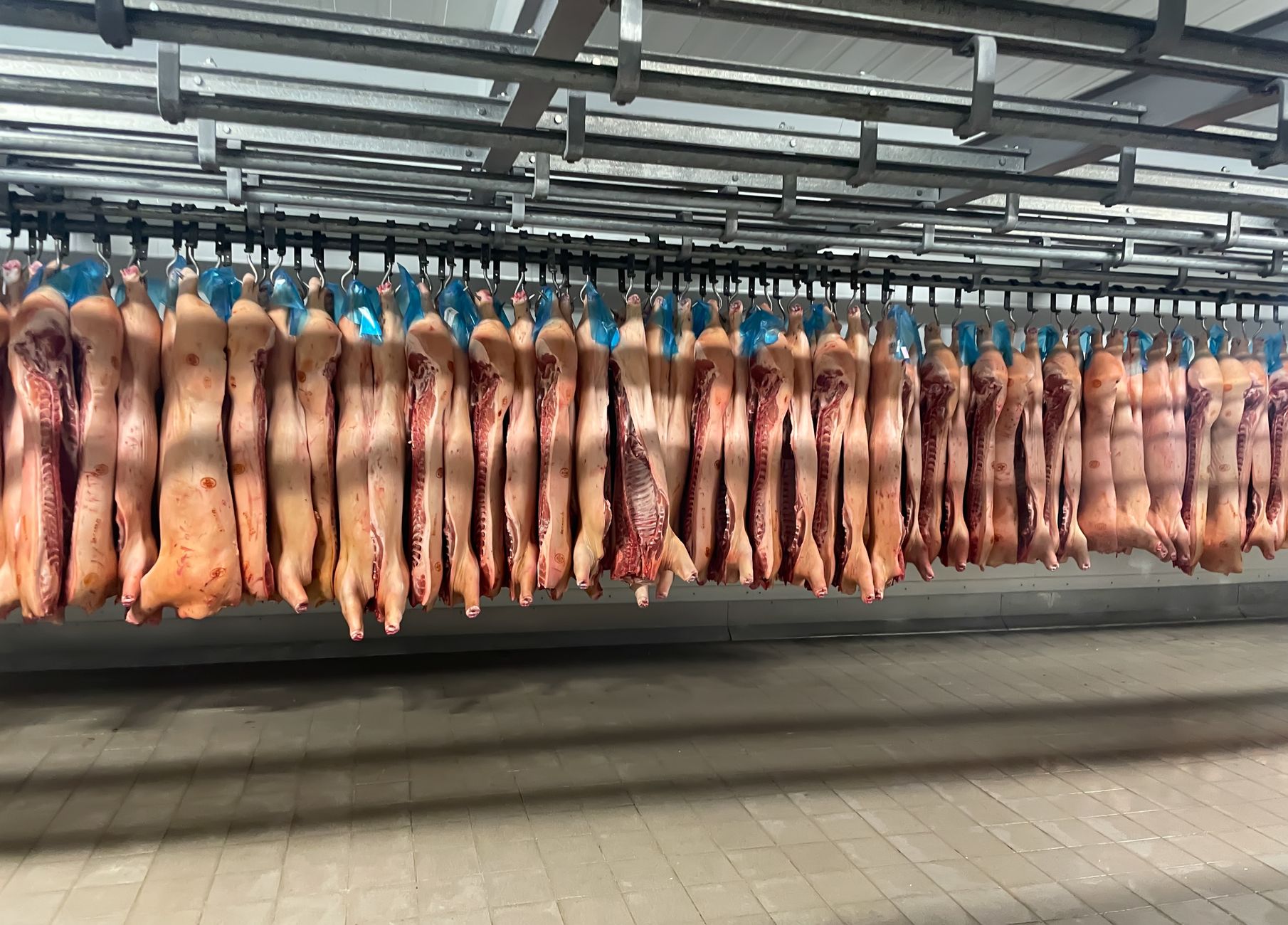
The short answer
Autonomous forklift ROI for meat distributors comes mainly from repeatable pallet runs that keep moving when forklift shifts go unfilled. The savings are a range, not a promise: the labor hours a leased unit offsets are valued at the local wage for this job, and that offset is set against a fixed robot lease payment. The width of the range depends on how many of those moves the unit can take, how often shifts stay open, and what the site's aisles and cold zones allow, so a free site assessment is where the number gets pinned down.
See what a autonomous forklift costsRun the numbers in the ROI calculator
Key takeaways
- Most of the return comes from repeatable pallet runs, not from cutting a full crew.
- The savings figure is a range set by move volume, the share of moves the unit takes, and the fixed lease payment.
- Forklift roles are among the hardest to fill, so the labor offset is worth most where shifts stay open.
- Exceptions, mixed loads and dock work stay with people, and the range should reflect that split.
- A free site assessment turns the generic range into a figure you can check against your own move logs.
Run the numbers for your site
Pick your city or state for a real regional number - we use the real BLS wage there. (On the live site this auto-detects from your location.)
What do you want to automate?
The robot takes the repetitive cart and pallet moves off the heaviest motion.
Autonomous forklift ROI for meat distributors: what the return looks like
Autonomous forklift ROI for meat distributors comes mainly from repeatable pallet runs that keep moving when forklift shifts go unfilled. A leased unit takes a share of those runs, and the labor hours it offsets are valued at the local wage for this job shown in the government wage data panel on this page. The return is a savings range, not a promise.
The width of that range depends on three things: how many repeatable moves the site runs in a shift, how many of those the unit can take without staff, and what the fixed robot lease payment costs against those hours. Two sites with the same staff can land far apart if one runs long, uniform pallet moves through straight aisles and the other runs mixed loads through tight freezer doorways.
We do not put a savings figure on the table before we see the floor. A free site assessment measures the moves, the aisles and the shifts that are hard to fill, then produces a range you can check against your own records.
Why do cold storage floors suit pallet automation?
The USDA refrigerated warehouse report, with data as of October 1, 2025, counted 931 refrigerated warehouses in the US, up from 900 in 2023. Of those, 476 are public and 455 are private or semi-private, so the sector spans operators who store goods for outside customers and operators who run their own product.
The same report gives gross refrigerated capacity of 3.99 billion cubic feet, with usable space at about 82% of gross. For a forklift, usable space matters more than the headline figure, since aisles, dock doors and equipment rooms are not pallet positions, and the robot only works where the layout lets it run.
According to an International Institute of Refrigeration summary of the USDA data, US refrigerated warehouse capacity rose 8% in 2025. More capacity means more pallet positions to fill and more moves to run each week, so the repeatable workload grows with it.
Median hourly wage, Laborers and Freight, Stock, and Material Movers, Hand
$4,380
Monthly cost of one full-time worker, at the median wage plus payroll costs (an estimate, not a quote).
Where does the labor return come from?
Forklift work is hard to staff. The 2025 State of Warehouse Labor report, a survey run by a staffing vendor and not a representative sample, names forklift operators among the hardest roles to fill, alongside pick and pack workers and shift leads. An unfilled shift does not stop the freight, so the work moves to overtime, a short crew or a delayed dock.
Turnover is the other side of the picture. A warehouse turnover survey reported in a trade article, with the date not confirmed, found that 39.2% of respondents had annual turnover below 10%. The rest were at or above that level, so for most respondents replacing people is a recurring cost rather than a one-off.
The occupation is large. The BLS Occupational Outlook Handbook counts about 2,988,900 hand laborers and material movers jobs in 2024, using the employment projections base year rather than the May 2024 wage survey. That occupation covers far more than cold storage, so the calculator values only the hours on your floor.
A count of the sector itself helps with context. A data aggregator's count of meat and meat product merchant wholesalers, year not stated and not the Census release, shows 2,198 establishments with 47,823 employees. That works out to about 22 employees of all kinds per establishment, and it does not break out forklift or material mover roles, so it is a context figure, not a staffing plan for one site.
How is the ROI math worked out?
The arithmetic has three inputs. The first is the weekly hours of repeatable pallet work the robot can take over, counted from your own move logs or time records. The second is the share of those hours a unit can realistically run without staff, which is lower than the total because exceptions, damaged pallets and temperature holds stay with people. The third is the fixed robot lease payment plus service, set against the labor hours offset.
A simple version runs like this. Take the weekly repeatable hours, multiply by the share the robot takes, value those hours at the local wage for this job from the government wage data on this page, and subtract the lease and service cost for the same weeks. The difference is the return. The calculator runs a low case and a high case at each step, so the output is a band, not a single line.
Two details trip up first-time evaluations. Count hours from the shifts when the robot would run, not from an average day, because the offset is strongest where staff are short. Leave out hours the robot cannot physically do, such as loading mixed trucks at the dock, since counting them inflates the range.
| Task | Today | With a robot |
|---|---|---|
| Pallet runs from receiving dock to cold storage | logged hours per shift from your move records | robot takes the repeatable share, staff watch the exceptions |
| Outbound staging to dock doors | hours per shift from the same crew | robot runs scheduled staged pallets while staff are short |
| Damaged, mislabeled or mixed pallets | staff time, not offset | stays with people |
| Open slots on the shift | overtime or a short crew | repeatable runs keep moving |
Hour figures come from your own move logs and time records, collected during the site assessment. We did not find a published hours per shift figure for this task, so this page gives none.
What does the lease cost, and how is the savings range shown?
Units are leased through financing, and the fixed robot lease payment is quoted after a free site assessment. The payment depends on the floor, the move volume, the term and the service terms, so no general figure would hold for one site. The quote should list what is included, in writing.
Ask every provider you compare for the same inputs. A fair quote should show the items below, because each one changes where the savings range lands.
- Share of repeatable moves assumed for the unit
- Wage basis used for the labor hours offset
- What the fixed lease payment includes
- Service, on-site dispatch and response terms
- Downtime and spare unit assumptions
What safety risks change the return?
The National Safety Council, citing BLS data, reported 84 work-related deaths from forklifts in 2024. For 2023 to 2024 it counted 25,110 DART cases for forklifts, meaning days away, restricted or transferred, including 15,460 DAFW cases, which are days away from work.
OSHA, citing BLS Table A-5, reported 30 fatal injuries among industrial truck and tractor operators in 2024. That figure counts an occupation rather than forklift events, so it cannot be set against the 84 deaths. The OSHA directive also states that pedestrians struck by forklifts are the leading cause of lift-truck work fatalities, a long-run finding rather than a 2024 figure.
For the return, a robot that takes pallet runs away from people in the traffic lanes means fewer pallet runs done by people there, but it does not remove the need for separated lanes, a mapped path and clear pedestrian rules. A safety stoppage halts the offset for as long as it lasts, so the path plan is checked before the numbers are.
- Shift coverage
Autonomous Forklift
Repeatable runs keep moving when a shift is short, within the hours the site enables
Staff
Covers the full range of tasks, but the shift has to be filled, and forklift roles are among the hardest to fill
- Exception handling
Autonomous Forklift
Stops or hands off when a path or pallet is unclear
Staff
Judges damaged, mislabeled or mixed loads
- Consistency on repeat runs
Autonomous Forklift
Same route and timing on each run
Staff
Varies with the shift, the crew and the day
- Cost driver
Autonomous Forklift
Fixed lease payment plus service, set against the labor hours offset
Staff
The local wage for this job, plus overtime, training and turnover
- Dock and truck work
Autonomous Forklift
Limited to the zones it is set up for
Staff
Loads and unloads mixed freight across the dock
- Work around people
Autonomous Forklift
Needs separated lanes and a mapped path
Staff
Works in shared space and reads the situation
What changes the number up or down?
Move volume and repeatability come first. A site with long, uniform pallet runs has more hours to offset than one with many short, one-off moves. Aisle layout comes second: straight, clear aisles with mapped paths let the unit run more of the shift, while tight turns and crowded staging limit it.
Staffing is the third driver, and it works in both directions. A site that cannot fill its forklift slots has a real offset to capture, while a fully staffed site with steady crews has a smaller one. The exception rate is the fourth: the more of the day that stays with people, the smaller the return.
Temperature is a condition to confirm in writing rather than a number to assume, and it should be checked against the cold zones on your floor before the range is final. Dock work is a boundary, not a feature, so keep it in the staffing plan.
What are the risks to the return, and how do you avoid them?
The biggest risk is an overstated share. If the plan assumes the unit takes every repeatable move, the range looks better than the floor will allow. Take the share from a trial on the actual floor and compare it with the logs before the range is final.
The second risk is downtime. A unit that sits idle during a shift removes the offset and leaves the crew short. Put response terms, on-site dispatch and a spare unit plan into the quote, and confirm that remote triage comes first, with on-site dispatch when it cannot fix the problem.
The third is scope creep: asking for dock loading, mixed freight or tasks outside the mapped zones. Start with one repeatable run, measure it for several weeks, then extend. A phased rollout also keeps the operation running while the layout is tuned.
How long does it take from assessment to payback?
The sequence runs from the free site assessment, which maps the floor and measures the moves, to a quote with the savings range and its assumptions. After the quote comes integration, staff training and go live support. Timing depends on the floor, the cold zones and internal approvals, so the quote carries a dated plan rather than a generic one.
Payback is the point where cumulative labor hours offset, valued at the local wage for this job, cover the lease and service cost. The first months after go live show whether the offset is real. Compare the logs against the range each month to see whether the share of moves the unit takes matches the plan.
Plan a trial period before expanding to a second unit or a second zone. One well measured run gives a truer payback than a broad rollout that starts from assumptions.
How do you get an exact figure from a free site assessment?
Make the move records, shift schedules, open-slot history and layout drawings available before the visit. The assessment turns them into a site-specific range, which replaces the generic one on this page.
We walk the aisles, dock doors and cold zones, map a candidate path, test the repeatable runs against the zones the unit can enter, and measure how often shifts go unfilled. The output is the savings range with its inputs, and a fixed robot lease payment quoted after that step, with what is included listed.
As a vendor neutral integrator, we choose the unit that fits the floor, lease it through financing, deploy and integrate it, train your staff and service it nationwide. Compare quotes on the same inputs, including the share of moves, the wage basis and the service terms, and rerun the math with your own figures before you decide.
Frequently asked questions
Upcoming warehouses & 3pl events
Want an autonomous forklift at your meat distributor?
Tell us about your site. We will recommend the robot, quote the lease, and keep it serviced.
Sources
- US Bureau of Labor Statistics, Occupational Employment and Wage Statistics (OEWS May 2024)
- BLS Occupational Outlook Handbook, hand laborers and material movers
- USDA Refrigerated Warehouses report, February 2026
- International Institute of Refrigeration summary of USDA capacity data
- National Safety Council, forklift injury facts
- OSHA enforcement directive citing BLS Table A-5
- 2025 State of Warehouse Labor report (staffing vendor survey)
- Warehouse turnover survey, trade article (date not confirmed)
- Data aggregator count, NAICS 42447 wholesalers (year not stated)