
The short answer
Autonomous forklift ROI for e-commerce fulfillment centers comes mainly from pallet hours. The return is the labor offset from repeat moves between receiving, reserve storage and outbound docks, priced at the local wage for this job from the government wage data on this page, minus the fixed lease payment. The savings range is a planning range, not a promise, and it becomes a firm figure after a free site assessment.
Key takeaways
- Most of the return comes from repeat pallet moves on the night shift, not from cutting day staff.
- The savings range rises or falls with the share of moves the robot can take on fixed lanes.
- The lease payment is fixed and quoted after a free site assessment, which turns the range into a number.
- Overestimating the robot share and under-briefing the crew are the two risks that most often erode the return.
- Ask for the payback milestone in writing and tie it to measured results on the floor.
Run the numbers for your site
Pick your city or state for a real regional number - we use the real BLS wage there. (On the live site this auto-detects from your location.)
What do you want to automate?
The robot takes the repetitive cart and pallet moves off the heaviest motion.
What return can an e-commerce fulfillment center expect from an autonomous forklift?
Autonomous forklift ROI for e-commerce fulfillment centers comes mainly from hours. The question is how many hours of pallet movement a robot takes over, and what those hours are worth at the local wage for this job, shown in the government wage data on this page. The lease cost sits against that offset, and the difference is the savings range.
Three inputs drive the answer: the number of moves that repeat along fixed lanes, the share of those moves a robot can realistically take, and the fixed lease payment over the term. Convert the moves into labor hours, price those hours, and subtract the lease. The result is a range, because the share is never known until the floor is measured.
Adoption context is worth knowing too. A warehouse automation survey reported in a trade publication found more than 70 percent of respondents have adopted or plan to adopt AMRs or AGVs, though that survey is vendor-run and covers mobile robots broadly rather than forklifts. A separate trade article, citing a report, puts full warehouse automation at around 3 to 5 percent of warehouses. Most buildings are not fully automated, so the return depends on your building rather than the trend.
Where does the return come from on the night shift?
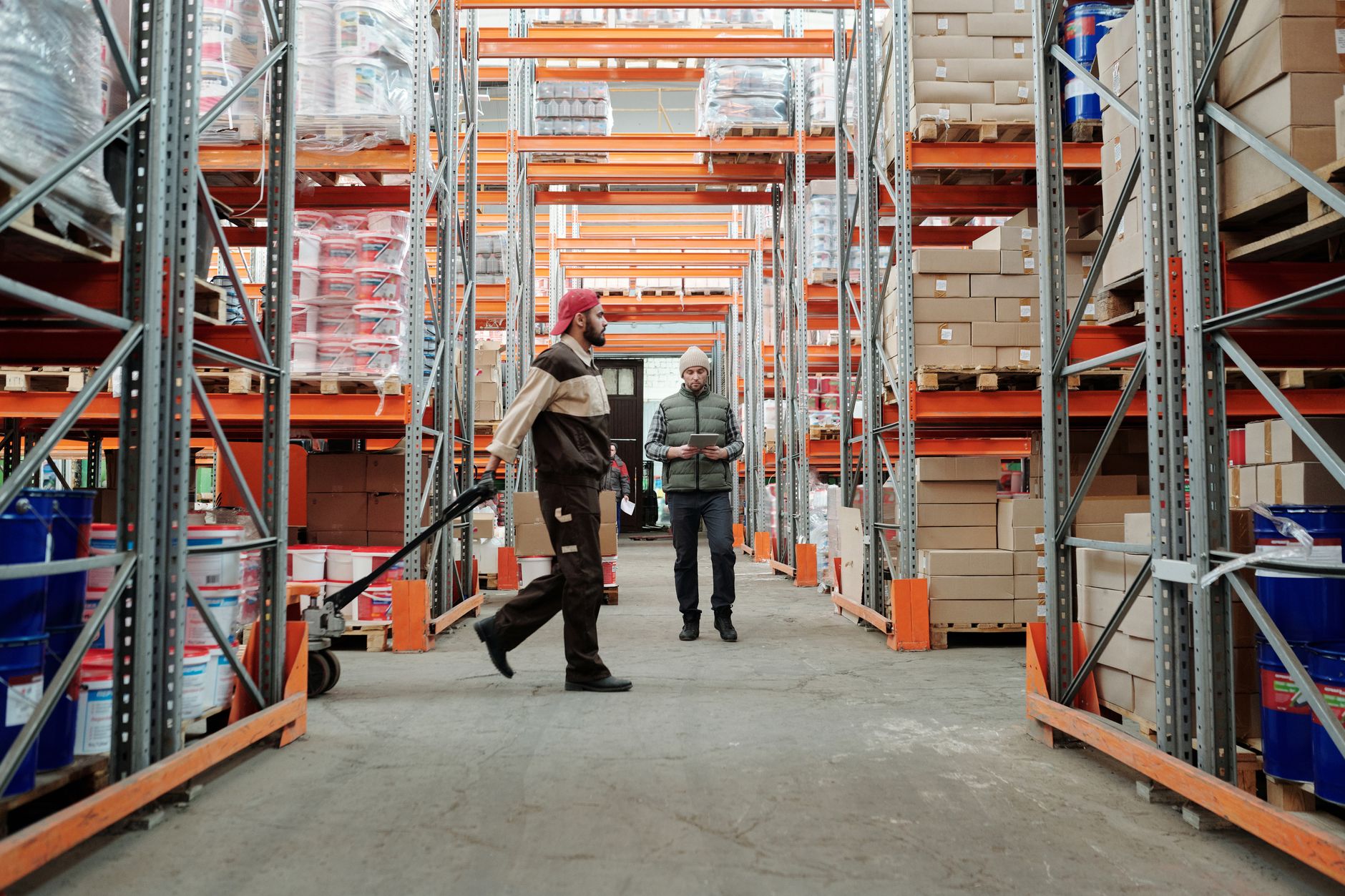
Night shifts are where pallet work piles up. Inbound trailers unload, product goes to reserve racks, replenishment feeds pick faces, and outbound lanes stage pallets for early dock doors. Much of this is the same route repeated many times a shift, which is the kind of work an autonomous forklift runs well. Today a crew of forklift operators and material handlers does this work, and the robot takes the laborers and freight, stock, and material movers, hand type of work off that crew.
The return shows up in three places. The first is fewer hours of this work on the night schedule. The second is fewer open shifts to fill in a tight labor market, which is hard to measure but often the bigger problem. The third is steadier moves when the crew is short, because the robot keeps its route running while people handle exceptions. A 2020 labor turnover survey from the IARW and GCCA, covering cold storage warehouses, reported average turnover of 32.6 percent in 2019. It is an older figure from a related segment, but it shows how hard these crews are to keep.
Published staffing data is thin at the level of one building. The Department of Labor's national occupation trends page reports 2,988,900 employees in this occupation in 2024 and projects 3,033,100 by 2034. No authoritative national count of e-commerce fulfillment centers was found, and no published source gives the typical crew size at one site, so use your own roster for that number. The return is rarely about cutting day staff. Most sites put the robot on the night shift first, where open hours and overtime cost the most and supervision is thinnest.
Median hourly wage, Laborers and Freight, Stock, and Material Movers, Hand
$4,380
Monthly cost of one full-time worker, at the median wage plus payroll costs (an estimate, not a quote).
How does the savings math work?
The math has four parts. The labor offset is the hours of pallet moves the robot takes over, priced at the local wage for this job from the government wage data on this page, with overtime counted at the premium you actually pay. The share is the portion of those moves that fit the robot's lanes and load rules, not every move in the building. The lease cost is the fixed payment over the term, quoted after a site assessment. The savings range is the labor offset minus the lease, less any one-time setup costs we agree on in the quote.
Here is the logic in words. Take your move count per night on fixed lanes, multiply by the share the robot can realistically take, and convert that into hours using the time a move takes on your floor. Those hours, priced at the wage, form the offset. Two sites with the same total moves can land far apart, because one has long repeat lanes and the other has scattered one-off loads.
Measure the inputs, do not estimate them. Count moves from the warehouse system or from a timed sample across several weeks, and split moves that repeat from moves that need a human judgment call. A range built this way holds up when someone asks where the number came from, and it shows which input to improve if the result is weak.
What changes the number up or down?
Route repeatability moves the number more than anything else. Dense, fixed lanes between receiving, reserve and outbound let the robot run long stretches without help. Frequent slotting changes, one-off loads and mixed pallet heights cut the share it can take and push more work back to people.
Labor rates and overtime matter, but they are one part of the picture. Hard-to-fill night shifts and regular overtime raise the value of the hours the robot covers, while a fully staffed night with little overtime lowers it. The government wage data on this page gives the baseline, and your actual premium pay is the adjustment.
Site conditions set the ceiling. Aisle width, floor condition, racking clearance, dock door layout and staging space all decide how many lanes the robot can run. Turnover pressure changes the value too: a robot that covers an open shift is worth more than one that trims a full shift.
How safe is forklift work, and how does that affect the return?
Forklift work carries real risk, and the numbers are worth knowing before you set the return. An OSHA directive, as cited in a forklift incident statistics summary, estimates 97,000 forklift injuries a year, including 35,000 serious ones. The same summary reports 32 occupational fatalities in warehousing and storage in 2024. That is a secondary figure, so check it against the original source before it goes into a board document.
Transportation and warehousing accounted for 285 OSHA severe injury reports across 2022 and 2023, or 26 percent of forklift-related severe injuries, according to a second forklift accident statistics summary. Those are sector-wide numbers, not a measure of your building, but they show where the exposure sits: the places where people and powered trucks share aisles and docks.
For the return, safety is a cost line you can reduce, not a reason to skip the project. Physical separation between people and robot lanes, speed limits in congested zones and a clear rule for when people may enter a lane all lower the exposure. Ask any integrator how lanes are fenced, how the robot stops, and how the crew is trained before go-live.
What are the main risks to the return, and how do you avoid them?
The biggest risk is overestimating the robot share. Teams plan for every pallet move on the night shift, then discover that a meaningful part of the work involves exceptions, layout changes or loads outside the rules. Measure the share from a timed sample, plan on the lower number, and let the results raise it.
The second risk is the people side. A robot that runs well but is not trusted by the night crew gets stopped and driven around by hand, which erases the offset. Brief the crew before go-live, name who handles exceptions, and write down what happens when the robot stops.
The third risk is downtime. One unit out of service can leave a lane unserved for a shift. Ask whether the lease includes service that covers your night hours, on-site dispatch, remote triage and a spare or backup unit, and get those terms in the quote so they are not left to goodwill.
How long does it take to get from assessment to payback?
A realistic path runs in phases. The site assessment and mapping come first, then the quote, then a pilot on one lane or one shift. Expansion follows once move counts and the exception rate are measured on the floor. Phased deployment usually keeps the building running, so the robot works alongside the existing crew rather than replacing it on day one.
Payback follows the ramp. The early weeks cover setup, training and route tuning, so the return is small at first. The offset grows as lanes run steadily and the crew trusts the process, and payback arrives when steady running confirms the share the assessment planned for.
Ask for the timeline in writing, with the milestone that starts the payback clock. A useful one is the first full night on the planned route with no manual driving and an exception rate the crew can handle. Tie the milestone to measured results, not calendar dates alone.
How do I get a precise figure from a free site assessment?
A free site assessment turns the range into a number. We map the floor, record the lanes and dock doors, count the pallet moves that repeat, and talk with the night supervisor about exceptions. We pick the robot that fits the floor, not the other way around.
We are a US commercial robot integrator. We pick the right robot for the site, lease it through financing, deploy and integrate it, train the staff and service it nationwide. The lease payment is quoted after the assessment, once the lanes and move counts are known, so the figure reflects your building.
Bring your last few weeks of move data, the night shift schedule, vacancy and overtime records, the latest floor plan, the dock door schedule and any load rules. The more you bring, the tighter the range, and the more useful the first pilot will be.
Where do people still win, and what does the robot not replace?
A robot does not replace the judgment a forklift operator brings to damaged pallets, mixed loads and tight spaces. People also handle unplanned work and the safety call on the floor. The robot takes the repeat hours of pallet moves, so the crew can spend the rest of the shift on work that needs a person.
Keep people on the schedule for the work the robot cannot judge. The comparison below shows where each side wins, so the staffing plan is settled before the first lane goes live.
- Repeat pallet moves on fixed lanes
Autonomous Forklift
Runs the same route all shift without tiring
Staff
Slower on repeat work and tires over a long shift
- Unusual or damaged loads
Autonomous Forklift
Stops and calls for help
Staff
Judges the load and decides what to do
- Changing layouts and new slotting
Autonomous Forklift
Needs the map updated and routes reset
Staff
Adapts on the spot
- Night coverage with one supervisor
Autonomous Forklift
Runs its route while a supervisor watches the lanes
Staff
Needs the shift staffed, paid and scheduled
- Covering open shifts
Autonomous Forklift
Takes over the scheduled moves it can handle
Staff
Covers the full shift once someone is hired and trained
- Cost to add capacity
Autonomous Forklift
Fixed lease payment, quoted after a site assessment
Staff
Wages, overtime, hiring and training
- Judgment in a safety call
Autonomous Forklift
Follows its rules and stops for people
Staff
Makes the call and owns the outcome
Frequently asked questions
Want an autonomous forklift at your e-commerce fulfillment center?
Tell us about your site. We will recommend the robot, quote the lease, and keep it serviced.
Sources
- US Bureau of Labor Statistics, Occupational Employment and Wage Statistics (OEWS May 2024)
- Department of Labor national occupation trends page, Laborers and Freight, Stock, and Material Movers, Hand
- Bureau of Labor Statistics Occupational Outlook Handbook, hand laborers and material movers
- IARW and GCCA 2020 Warehouse Facility Labor Turnover Survey Report
- Forklift incident statistics summary citing OSHA data (secondary)
- Forklift accident statistics summary citing OSHA severe injury reports (secondary)
- Warehouse automation trade article, 2026 (secondary)
- Warehouse automation survey coverage in a trade publication (vendor-run survey)