
The short answer
Autonomous forklift ROI for cross-dock terminals comes mainly from moving pallets between inbound and outbound trailers on time, without waiting for an operator to be free. The savings range is the hours of laborers, freight, stock, and material movers, hand type work the robot takes over, priced at the local wage for that job, minus the fixed robot lease payment and service. A free site assessment turns that range into a figure for your own docks.
Key takeaways
- The return comes from on-time pallet moves between trailers, not from cutting a single job.
- Savings are a range set by the share of moves a robot realistically takes on fixed paths.
- Lease cost is quoted only after a free site assessment of your docks and traffic.
- Foot traffic, door changes and shift coverage are the main threats to the return.
- Payback is measured on live lanes after a pilot, not promised before go live.
Run the numbers for your site
Pick your city or state for a real regional number - we use the real BLS wage there. (On the live site this auto-detects from your location.)
What do you want to automate?
The robot takes the repetitive cart and pallet moves off the heaviest motion.
Autonomous forklift ROI for cross-dock terminals: what to expect
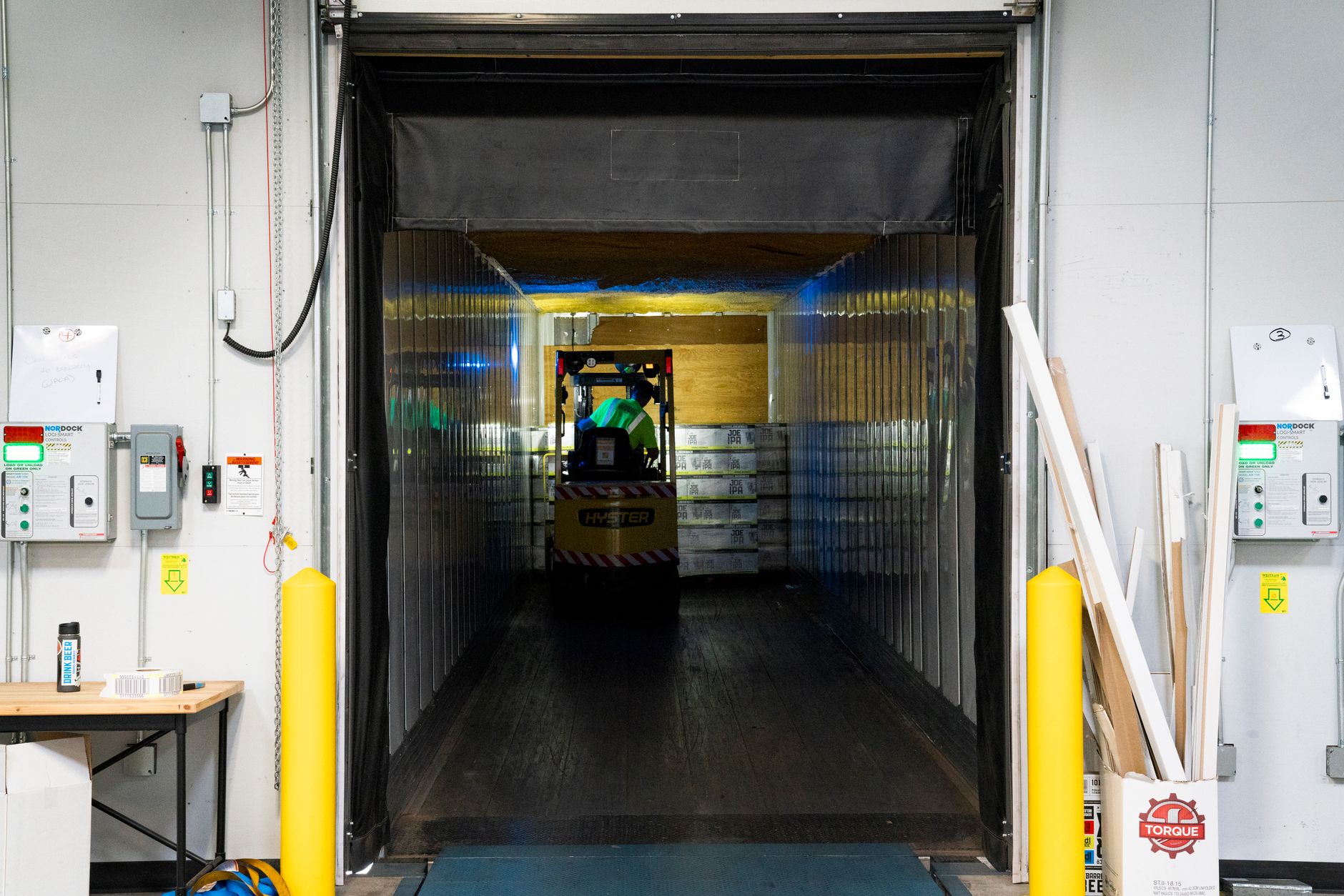
A cross-dock terminal earns its return by keeping inbound trailers unloaded and outbound trailers loaded inside tight windows. An autonomous forklift helps most when pallets move on the same paths every shift, between a few dock doors and staging lanes. The return shows up as trailers leaving on time and fewer hours lost waiting for a forklift operator to be free, not as a headcount cut on paper.
Expect a range, not a fixed figure. The spread moves with how many pallets cross the floor, how much of that flow runs on repeatable paths, and how many shifts the terminal runs. Steady inbound volume with gaps in operator coverage usually gives the clearest result. Irregular trailers and frequent layout changes give a narrower range until the paths settle.
Why do cross-docks suit autonomous forklifts?
Warehousing and storage is a large employment base. According to FRED, the St. Louis Fed's data service that republishes BLS figures, warehousing and storage employment was 1,836.2 thousand (seasonally adjusted) in December 2025. The Bureau of Labor Statistics reports 23,539 private-industry establishments in the sector for Q3 2025, a preliminary figure, up from 22,929 in Q4 2024. Dividing the one count by the other gives roughly 78 warehousing workers per establishment, a rough average of our own arithmetic across all warehousing and not a cross-dock count.
The BLS Occupational Outlook Handbook says that laborers and freight, stock, and material movers, hand workers learn on the job and move materials to and from loading docks and delivery trucks. That is the work an autonomous forklift takes over on a cross-dock. Repetitive pallet moves tie up an operator's shift, and when no operator is free the trailer waits at the door.
Injury rates point the same way. According to a BLS spotlight, transportation and warehousing had 4.8 nonfatal injury and illness cases per 100 full-time equivalent workers in 2022, against a national rate of 3.0. Couriers and messengers, within the same sector, had 9.4 cases per 100 workers that year. Taking pallet moves off people's shifts reduces their exposure to that work, but the site's own injury logs are the right way to measure the change.
Median hourly wage, Laborers and Freight, Stock, and Material Movers, Hand
$4,380
Monthly cost of one full-time worker, at the median wage plus payroll costs (an estimate, not a quote).
How does the savings range get calculated?
The math has four parts. First, count the weekly hours of laborers and freight, stock, and material movers, hand type work on the trailers the robot would cover, including the forklift time spent on pallet moves. Second, estimate the share of those hours a robot can realistically take on repeatable paths. That share is never one hundred percent, because some moves still need a person.
Third, price those hours at the local wage for this job, using the government wage data shown on this page. Fourth, subtract the fixed robot lease payment, the service plan and any added supervision time. The gap between the low and high ends of the range comes mostly from the share in step two, so that is the number to test first in the site assessment.
Keep the math honest about what the robot does not do. It does not remove the need for a person on exceptions, so the hours it takes over are the moves it completes, not the full shift of an operator. Count only moves the robot finishes without help, and treat assisted moves as partial credit.
What changes the number up or down?
Volume and regularity move the number most. A terminal with steady trailer arrivals on the same door pairs has more moves a robot can take than one that rebuilds its door plan every week. Shift coverage matters too. A robot lane that runs when operators are hard to schedule adds hours that would otherwise go unstaffed.
Layout and traffic come next. Clear aisles, marked lanes and predictable staging cut the time the robot waits and the share of moves a person must still handle. A crowded dock apron, mixed foot traffic and frequent door changes push the number down until the flow is fixed, so fix the flow first when you can.
Trailer size and pallet weight also matter. Heavier or irregular loads can narrow the set of moves a robot takes, and the assessment checks load profiles against the robot's handling limits. A terminal that handles mostly standard pallets on steady trailers sits at the favorable end of the range.
Where can an autonomous forklift work on a cross-dock floor?
A cross-dock floor has a few distinct zones, and each suits a different level of automation. The inbound dock and staging lanes are usually the strongest fit, because pallets move along set lines. The outbound dock comes next, where staged pallets go to the assigned trailer. Load checks and damaged freight usually stay with a person.
The six zones below cover the areas the site assessment maps. Treat them as a starting point. The assessment marks the paths, flags crossings and decides which lanes the robot takes first.
Robot or person: where each one wins
A robot wins on repeatable, long-running moves with no judgment calls. It does not tire in the last hour of a shift, and it can run when the operator pool is thin. People still win on work that needs judgment: a damaged pallet, a mislabeled load, a trailer that arrives at the wrong door, or a pallet that needs restacking before it can move.
The table compares the two point by point. The strongest results usually pair them, with the robot running fixed paths and a person covering exceptions. That split keeps the robot on the work it does well and keeps the trailer moving when something goes off plan.
- Repeatable pallet moves on fixed paths
Autonomous Forklift
Strong fit once the path is mapped and tested
Staff
Works well, but ties up an operator for each move
- Shift coverage when operators are scarce
Autonomous Forklift
Runs on the shifts set in the site plan, within the safety rules
Staff
Needs scheduling, breaks, and cover for absences
- Damaged freight and mislabeled loads
Autonomous Forklift
Stops or waits for a person to clear the issue
Staff
Strong; judges the problem and fixes it on the spot
- Changing door assignments
Autonomous Forklift
Needs the route remapped or a new path set
Staff
Adjusts on the fly from the dock lead's instruction
- Adding hours to cover a peak
Autonomous Forklift
Fixed lease payment set after the site assessment
Staff
Hourly labor priced on the local wage for this job
- Safety around foot traffic
Autonomous Forklift
Depends on separated paths and sensors tuned to the dock
Staff
Stays alert to people and changing conditions, with training
What risks threaten the return, and how do you avoid them?
The biggest risk is a mismatch between robot lanes and the trailer schedule. If the robot covers paths that carry few pallets, the hours offset shrinks while the fixed lease payment stays the same. Scope the lanes to the flow the assessment measured, then add lanes as the paths prove out.
Foot traffic is the second risk. Dock aprons often mix lift trucks, yard tractors, trucks and people on foot, and pedestrians struck by lift trucks are described as a leading cause of lift-truck deaths. Keep robot paths apart from walking routes, mark crossings, and train everyone on the new traffic pattern before go live. The powered industrial truck standard is the reference point for the site's safety program.
Change management is the third risk. If shift leads do not trust the robot, exceptions pile up and people end up doing the moves by hand, which erases the gain. Train the people who work alongside the robot, and name who clears exceptions on each shift so no trailer waits for a decision.
What does the timeline from assessment to payback look like?
The sequence runs in stages. The site assessment comes first, where our team maps the docks, counts trailers and measures the flow. A lease quote follows, built from that scope and the lease terms. Installation and integration come next, with staff training and a pilot on one lane before the rest of the floor goes live, followed by go live support.
Payback is measured on live lanes, not on the calculator. Track on-time trailer departures, forklift hours and the share of moves the robot completed. Starting with one leased unit lets the pilot produce a measured number before the fixed lease payment covers more of the floor. Our team leases the robot through financing, deploys and integrates it, trains the staff and services it nationwide, so one partner handles the whole path.
Expect the early weeks after go live to show the most change in exceptions. Keep a daily review of stopped moves and reroutes for the first stretch, and adjust lanes before widening coverage. Widening too early is the easiest way to lose the team's trust in the numbers.
How do I get a precise figure from a free site assessment?
The free site assessment turns the range into a figure for your docks. Bring recent trailer arrival logs, door assignments, shift schedules and forklift move records. Our team walks the floor, maps the paths, flags pedestrian crossings and fills in the hour figures for each task in the hours table on this page.
The output is a savings range with each assumption shown, plus a lease quote for the robot and service the site needs. The quote comes only after that assessment, so it reflects your docks and not a guess. If the numbers do not justify a robot on a given lane, the assessment should say so.
Is the technology proven for cross-dock and warehouse work?
Adoption is growing but uneven. A financial news summary of a warehouse automation survey reports that 39% of warehouse facilities use mobile robots today, and 52% plan to. A commercial real estate news article estimates AMR and AGV presence at roughly 10 to 15% of facilities, with full automation at about 3 to 5% of warehouses. That is an article estimate, not a survey, and the two figures use different definitions, so they are not directly comparable.
A January 2025 survey of 217 professionals directly involved with robotic automation, reported by a materials handling trade publication, adds context. It is a specialist sample, so treat it as context, not a benchmark. The better test is your own trailer data, measured in the assessment and confirmed on live lanes.
For a cross-dock, the practical question is the same one any operator asks about new equipment: does the flow repeat often enough to keep the robot busy on the work it does well?
Frequently asked questions
Want an autonomous forklift at your cross-dock terminal?
Tell us about your site. We will recommend the robot, quote the lease, and keep it serviced.
Sources
- US Bureau of Labor Statistics, Occupational Employment and Wage Statistics (OEWS May 2024)
- FRED, Federal Reserve Bank of St. Louis: warehousing and storage employment
- BLS Industry at a Glance: Warehousing and Storage
- BLS Spotlight: Keeping America Moving, employment in transportation and warehousing
- BLS Occupational Outlook Handbook: Laborers and Freight, Stock, and Material Movers, Hand
- Financial news summary of a warehouse automation survey
- GlobeSt article on warehouse automation, March 2026
- Material Handling 247: warehouse robotics adoption trends 2025
- Trade summary of OSHA forklift accident data