
The short answer
The autonomous mobile robot cost for airport cargo terminals is set by the work around the robot as much as by the robot itself: the distance freight travels between docks, sort areas and staging zones, the shift count, floor and traffic conditions, and the mapping, integration and service the site needs. No single figure fits every terminal, so the lease quote is set after a free site assessment that times the actual transfer routes.
See what a autonomous mobile robot costsRun the numbers in the ROI calculator
Key takeaways
- Route length, shift count and floor condition set most of the cost at a cargo terminal.
- Site mapping and software integration are hidden costs that a quote can leave out.
- Transfer hours vary by terminal, so the hour count should come from a timed site assessment.
- Leasing through financing replaces a large up front outlay with a fixed payment quoted after assessment.
- Robots take over repetitive transfers, while staff still handle loading, exceptions and judgment calls.
What does the autonomous mobile robot cost for airport cargo terminals depend on?
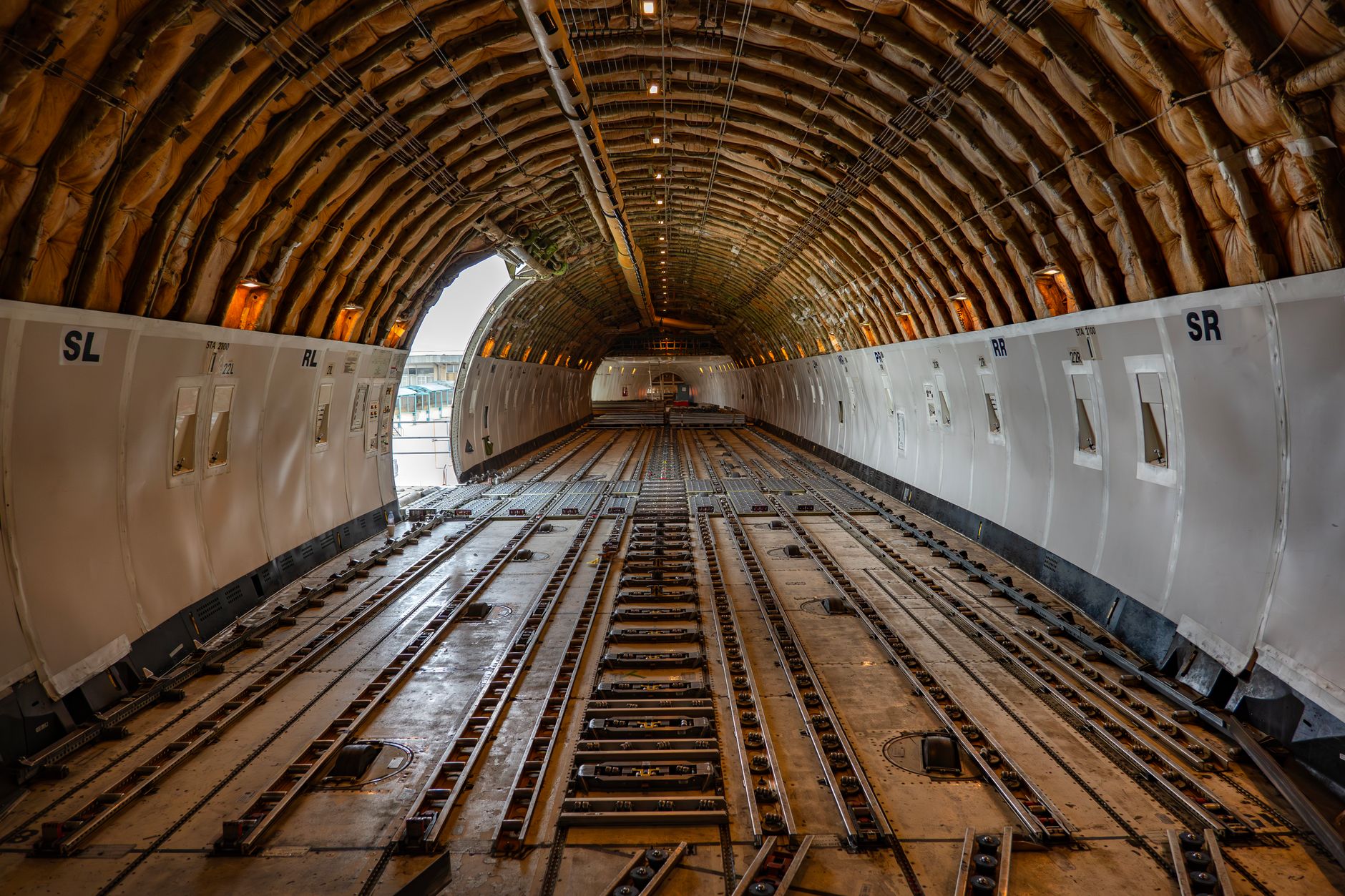
The autonomous mobile robot cost for airport cargo terminals is set by the work around the robot as much as by the robot itself. A cargo terminal moves freight between docks, sort areas and staging zones, and the length and number of those routes decide how much robot capacity a site needs. Shift count, floor condition, shared traffic, mapping, software links and service coverage then shape the lease quote.
Freight volume sets the pressure on those routes. According to ACI-NA, its 2025 North American airport traffic rankings cover 290 airports, and overall air cargo traffic fell 0.3% that year, with domestic freight down 7.6% and international freight up 3.5%. A terminal whose freight mix shifts between lanes may see its routes change over the year, and that should be raised during the site review rather than assumed away.
Staffing is the other half of the picture. According to VACAD, its German members handled 456,929 tons of air freight in Q3 2026, up 0.6% from Q2, while employee headcount fell 1.5%. When freight holds up and headcount falls, transfer work waits longer, and that gap is the operating problem a leased robot is meant to address. Read any quote against that gap, not against a generic list figure.
Which factors move the cost up or down at a cargo terminal?
Six factors do most of the work. Route length and stop count come first, because they set how far each unit travels per cycle and how many units a route needs. A longer loop with more handover points costs more to cover than a short run between two adjacent docks.
Shift pattern comes next. A unit that runs two or three shifts needs more charging windows and more cover for downtime than one that runs a single day shift. Shift timing also changes the traffic picture, so the assessment should time the routes at the hours they will actually run.
Floor surfaces and ramps come next. Smooth, clear lanes keep speeds steady and simplify mapping. Ramps, metal plates, uneven staging areas and worn floor markings can cut speed or add setup work, and each adds time to the mapping phase.
Traffic from shared equipment matters too. Tugs, forklifts, aircraft ground equipment and staff on foot often share dock and apron space. Each shared zone needs clear rules, slower safe speeds or separate lanes, and those rules add mapping and testing work.
Integration and fleet size set the rest. Linking to the system that tracks pallet and unit locations adds configuration and testing, while a standalone route set is cheaper to start. The number of units and the level of service coverage set the fixed and recurring parts of the quote. The panel below shows how each factor moves it.
Why does dock labor make this a cost question?
Labor is the cost the robot is meant to change, so the quote has to be read against it. According to the BLS Occupational Outlook Handbook, hand laborers and material movers held about 6.9 million jobs in 2025, with a projected change of 288,900 over 2025 to 2035. That is a broad group, and BLS does not report airport cargo handlers as a separate occupation, so use the figure for context only.
Turnover is where the cost bites hardest. A CBC report on a large Canadian airport says one ground handling company's 2024 turnover rate for baggage handlers was 160 per cent, and that a second ground handling company lost 400 of its 500 ramp workers in the same year. These are company-reported figures from one airport, not a national measure, but they show how quickly dock staffing can break down.
Injury exposure belongs in the same calculation. According to Human Resources Online, citing BLS data, transportation and warehousing recorded 4.5 nonfatal injuries and illnesses per 100 full-time workers in 2023, ranked first of 19 industries. That is a sector average, not a terminal rate, but repetitive manual transfers are where a site review should look first for strain and lost time.

How many hours does the robot take over from transfer work?
The research gathered for this page does not include a verified hours-per-shift figure for cargo dock transfers, and no published hour count for airport cargo transfer work was found. This page therefore does not put a number on the hours. The table below names each transfer task and explains how it is measured on your site.
During the assessment we time the walk and the handling for each route. We count trips per shift, the minutes staff spend at each handover point, and the gaps when a dock runs short. Those timings size the quote, and they are your own operating numbers rather than an industry average.
Where a robot takes a route, staff time shifts from walking freight to supervising the dock, clearing exceptions and handling loads that need judgment. Hours saved are only real if people are reassigned to that work, or if a shift can run with fewer people during a gap. Decide which of those applies before the lease starts, not after.
Is leasing a robot worth it compared with adding shifts?
Whether an autonomous mobile robot cost for airport cargo terminals is worth it depends on the gap you are trying to close. If freight waits because a dock lacks staff at certain hours, the question is whether a fixed lease payment costs less than covering those hours with people, including recruiting and turnover. Turnover figures in air cargo are high enough that the comparison should not assume stable staffing.
Compare on a like-for-like basis: the same routes, the same shifts, the same service coverage and the same integration. A quote that omits mapping or software links will look cheaper than it is. Ask the provider to show what the lease covers and what the site must supply.
Payback is not the only test. Some terminals gain more from freeing staff for loading and exceptions than from a headcount reduction. A pilot on one route can show that before any wider commitment, and it gives both sides a measured basis for the next decision.
How does leasing through financing work and what does the quote include?
A lease through financing lets a terminal put a robot into service without funding the full equipment outlay at the start. The terminal pays a fixed payment over the lease term, and the quote shows that payment next to the scope it covers. We quote after a free site assessment, so the payment reflects your routes, shifts and floor rather than a template.
The quote lists the units and their roles, the mapping and integration work, staff training and the service plan, including on-site dispatch and remote triage nationwide. It also states what the site must supply, such as network coverage and charging positions. Anything left out should be named as an exclusion so the comparison stays honest.
Lease terms and approvals depend on each customer's situation, so we confirm them in writing before deployment begins. Ask for the term, the included service and the exclusions in the same document.
What can an autonomous mobile robot not do at a cargo terminal?
The robot is strong at fixed-route repetition and weak at judgment. It does not replace the people who load and unload aircraft, inspect freight, or decide what moves next when a flight is late. A route that is not mapped, or a floor that has changed a lot, needs re-mapping before the robot can work it safely.
Expect these limits and plan around them:
- Load or unload aircraft, or handle freight that needs a person to inspect it
- Manage damaged, oversized or hazardous freight without staff
- Run outside mapped routes or through areas that change without a re-map
- Replace the dock lead who sets priorities during a peak
- Work through a dock that has no network coverage or charging position
How do I get a lease quote after a free site assessment?
Start with a free site assessment. We walk the terminal with your operations lead, time the transfer routes, check floors and traffic, and confirm the shift pattern and peak windows. We also check where the robot would connect to your systems and where charging and network coverage sit.
After the assessment we size the number of units and set the lease payment through financing. The quote states the scope, the exclusions and the service plan, so you can compare it with your own hours and with staffing options. We choose the robot for the site, deploy and integrate it, train staff and service it nationwide, and you work with one contact throughout.
Use the assessment to decide whether one route is the right first step. A phased start on one route shows the timing, the staff effect and the service response before any wider commitment.
Frequently asked questions
Upcoming airports & transit events
Want a warehouse robot at your airport cargo terminal?
Tell us about your site. We will recommend the robot, quote the lease, and keep it serviced.
Sources
- Logistik Heute, VACAD air freight handling Q3 2026 press release
- CBC, Toronto Pearson ground handling turnover report
- U.S. Bureau of Labor Statistics, Occupational Outlook Handbook, hand laborers and material movers
- Human Resources Online, ranking of most injury-prone industries of 2025 (BLS data)
- Airports Council International North America, 2025 North American airport traffic rankings
- Upply, air cargo 2025 ranking of the world's main airports
- Automation Inside, total cost of ownership for robots and AMRs
- The Robot Report, the hidden costs of autonomous mobile robots and how to avoid them