
The short answer
For a delivery robot vs food runner in Philadelphia decision, the robot makes sense when a restaurant runs the same few routes all service long, the aisles are clear and mostly level, and runs arrive steadily. A food runner stays the better choice where work spreads across many stops, plates need hands-on handling, or the room changes layout through the night. Either way, the robot should join a staffed team, since it cannot greet guests, handle a spill, or cover a missed shift.
See what a delivery robot costsRun the numbers in the ROI calculator
Key takeaways
- A robot fits repeat trips on a fixed, clear route, not the whole runner job.
- Plan every site as a robot plus staff, never a robot alone.
- Pull your own time records before deciding, since public data does not give runner hours.
- Start with one leased unit on one route, then decide on more using the data you collected.
Delivery robot vs food runner in Philadelphia: when does the robot make sense?
The question usually turns on route shape. A robot makes sense when the same few paths repeat through the whole service, such as a kitchen pass to a fixed group of tables, a bar, or a patio on the same level. It works best when the route stays clear for most of the shift and run volume is steady enough that the robot is busy rather than idle between rushes. A food runner still wins when the work spreads across many stops, when plates need to be placed and explained, and when the room changes layout as the night goes on.
Our position is simple. The robot should be added to a team, never used to replace the whole floor. Restaurants that try to run service with a robot and no staff usually find the robot stalled in a blocked lane, a guest request left unanswered, or a server pulled off tables to fix it. We plan every site as a robot plus staff, and the headcount decision stays with the operator.
- Long, repeated runs between one kitchen pass and one dining area
- A floor plan with clear, mostly level aisles and few steps
- Steady run volume across the shift, not one or two peak minutes
- Staff still on the floor during service, which the plan requires
What does a food runner actually do during a Philadelphia restaurant shift?
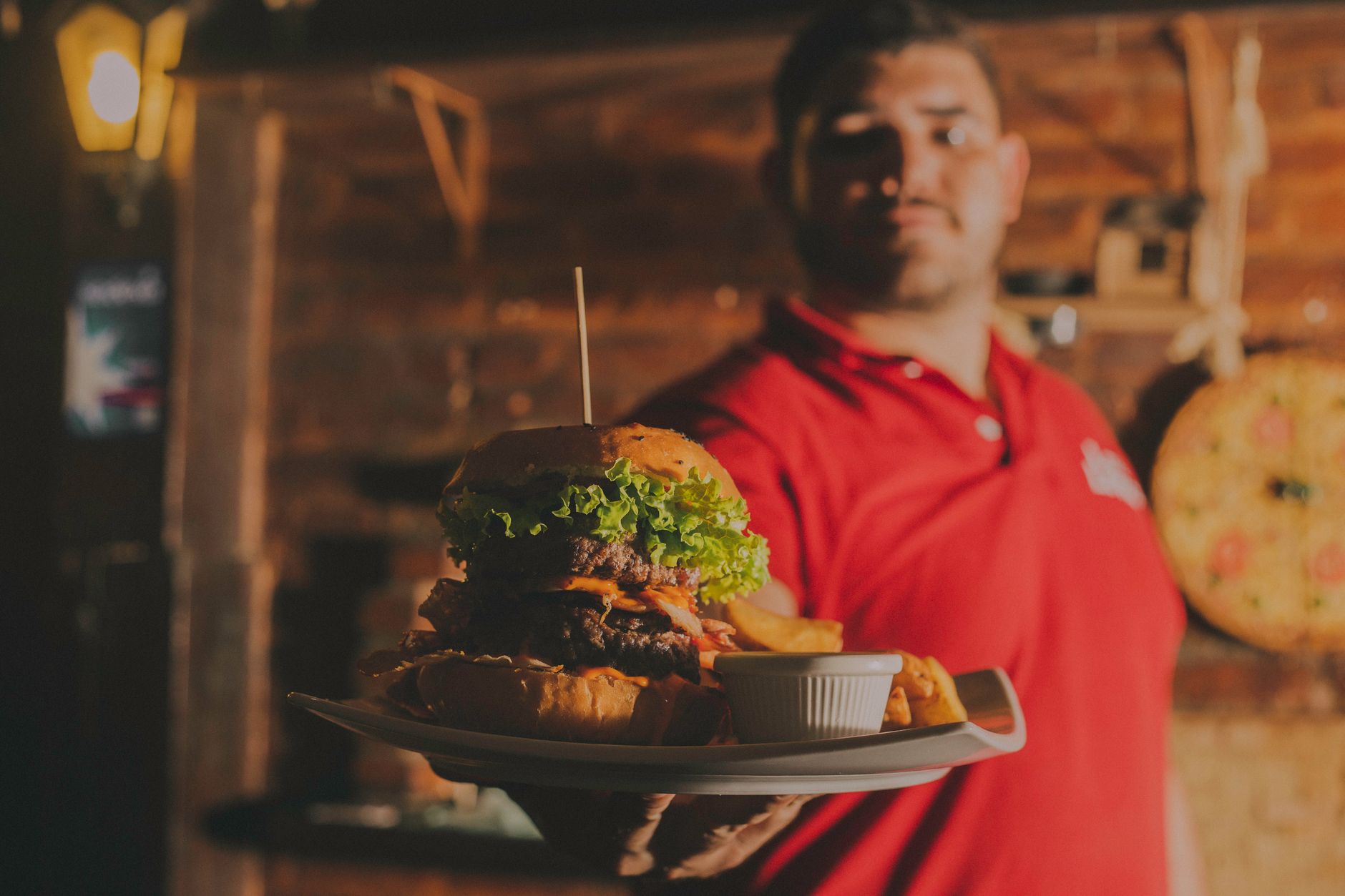
A food runner works the pass and the floor at the same time. The shift starts with checking the expo window for plates that are up, matching tickets to tables, and carrying loaded trays through the room. Between trips the runner clears used plates and glassware, resets tables, brings bread, condiments and refills, and passes messages between the kitchen and the servers. Most of the job is walking with weight, so the common errors are a wrong table, food that has gone cold, and a dropped tray.
The same person often covers a section in slow periods and becomes the extra pair of hands in a rush, which is why a runner is hard to replace with a single-purpose machine. The physical load is real. The Bureau of Labor Statistics reported 73.1 days-away-from-work cases per 10,000 full-time equivalent workers at full-service restaurants in 2018, according to its fact sheet on the sector. That is an older year, but it is the sector-specific federal rate we could confirm, and it is one reason to cut repeated carrying where a route allows.
Median hourly wage, Waiters and Waitresses
$4,039
Monthly cost of one full-time worker in Philadelphia, PA, at the median wage plus payroll costs (an estimate, not a quote).
Which parts of the food runner job can a delivery robot take over?
A delivery robot is strongest on the repeated middle of the run. It can carry a loaded tray or set of plates along a mapped route from the pass to a fixed table group, bar or patio, then return to its charging point. It can also move empty dishes and glassware from a table cluster back to the dish area, and carry supplies such as napkins, bread or bottled water from storage to a floor station. On a route that repeats, the robot does not tire, does not stop to talk, and does not need a break in the middle of a rush.
The robot cannot take the parts that need judgment. It cannot read a table, notice a guest who is ready for the check, place a plate with care, check that a dish is right, or fix a wrong order. It cannot clean a spill, carry a hot pan through a crowded aisle, or move a chair out of its lane. Treat it as a way to take the repeat trips off the runner, not a way to take over the runner's role.
- Repeat trips on a fixed route
Delivery Robot
Runs the same path without breaks or fatigue
Food Runner
Adjusts when a route is blocked or changed
- Guest contact
Delivery Robot
None
Food Runner
Greets, checks and resolves problems
- Heavy loads through a crowded room
Delivery Robot
Limited to clear, mapped aisles
Food Runner
Can move through tight, changing spaces
- Spills and breakage
Delivery Robot
Cannot clean or handle them
Food Runner
Responds immediately
- Sick days and call-outs
Delivery Robot
Does not call out
Food Runner
Calls out and needs cover
- Night coverage
Delivery Robot
Keeps repeat trips moving with a staffed floor
Food Runner
Covers many irregular stops when on shift
What do national and Philadelphia labor figures say about hiring runners?
The federal data shows a sector with high churn, though the specific numbers need careful reading. According to the Bureau of Labor Statistics, the quits rate in accommodation and food services was 3.5 percent in August 2026 (preliminary), down from 3.9 percent in August 2025, against 2.1 percent for all private industries. Quits alone do not capture every exit from a floor team.
Openings are the other side of that churn. The Bureau of Labor Statistics reported that the job openings rate in accommodation and food services was 5.5 percent in March 2026, the highest of any industry that month, with health care and social assistance next at 5.4 percent. For a manager, that means a short-handed team can be stretched quickly, which makes a robot worth testing as cover for the repeat trips that a thin crew cannot run.
For the local side, the government wage data on this page covers this job in Philadelphia. Philadelphia's own tipped-wage notice for fiscal 2026 is based on May 2024 rates for Philadelphia County, the same reference period as the wage panel, so read the two together when you model staffing. The Bureau of Labor Statistics also counted about 42,350 waiters and waitresses employed in the Philadelphia-Camden-Wilmington metro in May 2023, a year older than the panel, which shows the size of the local pool.
How many hours does the job take, and what about overtime, nights and sick days?
The research we could confirm does not give runner hours per shift, overtime use, night-shift staffing or sick-day rates for Philadelphia restaurants. Public national data reports turnover and openings, not how long each task takes at a given site. That gap matters, because the case for a robot rests on the hours it takes off the runner's schedule, and those hours are in your own records.
Pull the last several months of time records for runners and servers, split by daypart. Look at which shifts carry overtime, which close late, and how often a runner is called out. Then sort those hours into repeat trips on a fixed route, which a robot can take, and guest contact, plate checks and cleanup, which it cannot. The second pile is the one that tells you how many people must stay on the floor.
Night and late shifts are where a robot changes the schedule most. A closing crew that is short a runner is often the first to lose coverage, and a robot on a fixed route can keep repeat trips moving while the team handles guests. Keep the staffing change modest at first, and measure coverage for a full cycle before cutting any hours.
How does a team work with a delivery robot on the floor?
A working setup keeps the same people and changes what they spend time on. Runners stop being the default for every repeat trip, and instead load the robot, watch the route, and handle guests, plates and spills. Servers keep their tables. A host or floor lead owns the robot's status, its charging point, and the stop when a path is blocked.
Our standard is a robot plus fewer staff, never zero staff. Someone has to be on the floor for guests, for accidents and for the moments when the robot cannot continue. We train the team on loading, the stop control, what to do when the robot pauses, and how to clear its route, then stay available through the first weeks so the staff know who to call.
What can a delivery robot not do in a Philadelphia restaurant?
A delivery robot cannot do the human parts of service, and some diners are uneasy about it. A Restaurant Dive report headline says about one-third of diners do not want robots to prepare their food. That is about preparation rather than delivery, but it means the robot's presence should be explained and kept out of the guest's path.
Physical limits matter more than attitudes. Restaurants in older buildings often have narrow doorways, thresholds, uneven floors, changes in level and patio edges, and a route that runs into any of these needs a layout change or a different plan. The robot also needs a clear path. A coat rack in the wrong place, a chair pushed into a lane or a crowd at the bar can stop it, and a stopped robot in an aisle is a hazard rather than a convenience.
Expect it to reduce some work, not all of it. A robot does not stock a station, calm an unhappy table, or step in when a runner calls out sick. It takes over the repeated trips, which is useful, but the rest of the job stays with people.
How do we get started with a delivery robot in Philadelphia?
Start with a free site assessment. We walk the route, measure aisles and doorways, note thresholds, stairs and any elevator use, and map the path the robot would take at the busiest hour, not the quietest. The lease quote comes after that assessment, because the route, the number of units and the service plan depend on what we find there.
We lease robots through financing, deploy and integrate them, train staff and service them nationwide. For a first site, a sensible route is one leased unit on one route for a defined period, then a decision on a second unit or second route using the timecard and coverage data you collected. That keeps the decision reversible. A spare unit and on-site dispatch cover the periods when a unit needs attention.
Before the assessment, pull your schedule data, sketch the floor plan with the routes you run most often, and note the hours when runners are most stretched. Bring those notes to the first call, and the assessment will be shorter and more useful.

Frequently asked questions
Upcoming events in Philadelphia, PA
Put a robot to work in Philadelphia.
We walk your site, learn the job, and recommend the unit that fits. Then we quote the lease, deploy it, and keep it serviced.
Sources
- US Bureau of Labor Statistics, Occupational Employment and Wage Statistics (OEWS May 2024)
- BLS JOLTS quits rate, accommodation and food services, August 2026
- BLS job openings rate, accommodation and food services, March 2026
- National Restaurant Association SOI 2025 Pocket Guide
- Philadelphia Fair Workweek tipped wage notice, FY2026
- BLS OEWS May 2023, Philadelphia-Camden-Wilmington metro
- BLS fact sheet, full-service restaurants 2018
- Restaurant Dive report on diners and robot food preparation