
The short answer
Delivery robot vs food runner in New Orleans comes down to route repetition: a robot makes sense when the same kitchen-to-table trips repeat all shift on a level floor, while a food runner still wins for table-side service, bussing, patios and rooms that change layout. A robot never replaces the team; it takes repeat trips so the people you keep can focus on guests.
See what a delivery robot costsRun the numbers in the ROI calculator
Key takeaways
- A robot fits repeat, level, predictable routes, while a food runner covers table-side service, patios and changing rooms.
- Compare nightly trip counts and turnover against the government wage data on this page, not the wage alone.
- Restaurant turnover is high, so each departure adds training time that a robot will not remove for the staff who stay.
- Plan a robot plus fewer staff, never zero staff, with one named person owning the unit at each service.
- The lease is quoted only after a free site assessment of your own floor plan and service pattern.
Delivery robot vs food runner in New Orleans: which makes sense?
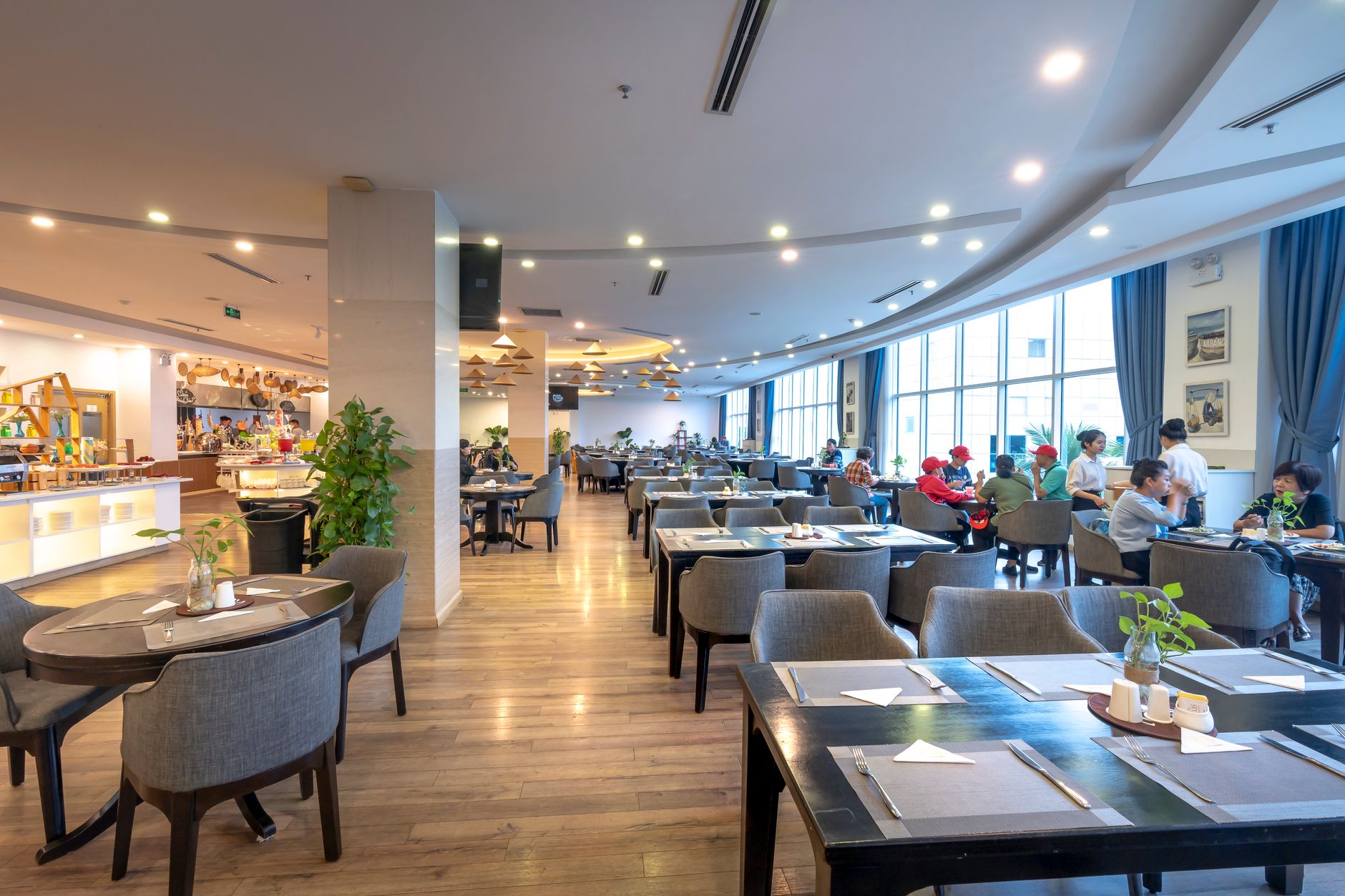
A delivery robot makes sense in a New Orleans dining room when the work is repetitive and the layout is predictable. Look for a kitchen pass that sits a short, level trip from a cluster of tables, with the same runs repeating through each service. Those conditions let a robot carry plates, drinks and bus tubs on steady routes, so a person is not walking the same path again and again through the night.
A robot does not make sense when the job is mostly table-side service, when runs cross patios with uneven surfaces, or when the room changes shape with events and seasonal seating. A food runner also handles problems a robot cannot, such as a guest who needs a second look at an order, a spill on the floor, or a birthday tray that needs a hand. If your team spends most of its time talking with guests rather than walking, a robot will change little.
Decide on route counts and staffing gaps, not on how novel the machine looks. Bring us your floor plan, your service pattern and your turnover history, and we will tell you whether a robot fits before any lease discussion starts. The lease is quoted only after a free site assessment, so the terms reflect your room.
What does a food runner actually do in a New Orleans shift?
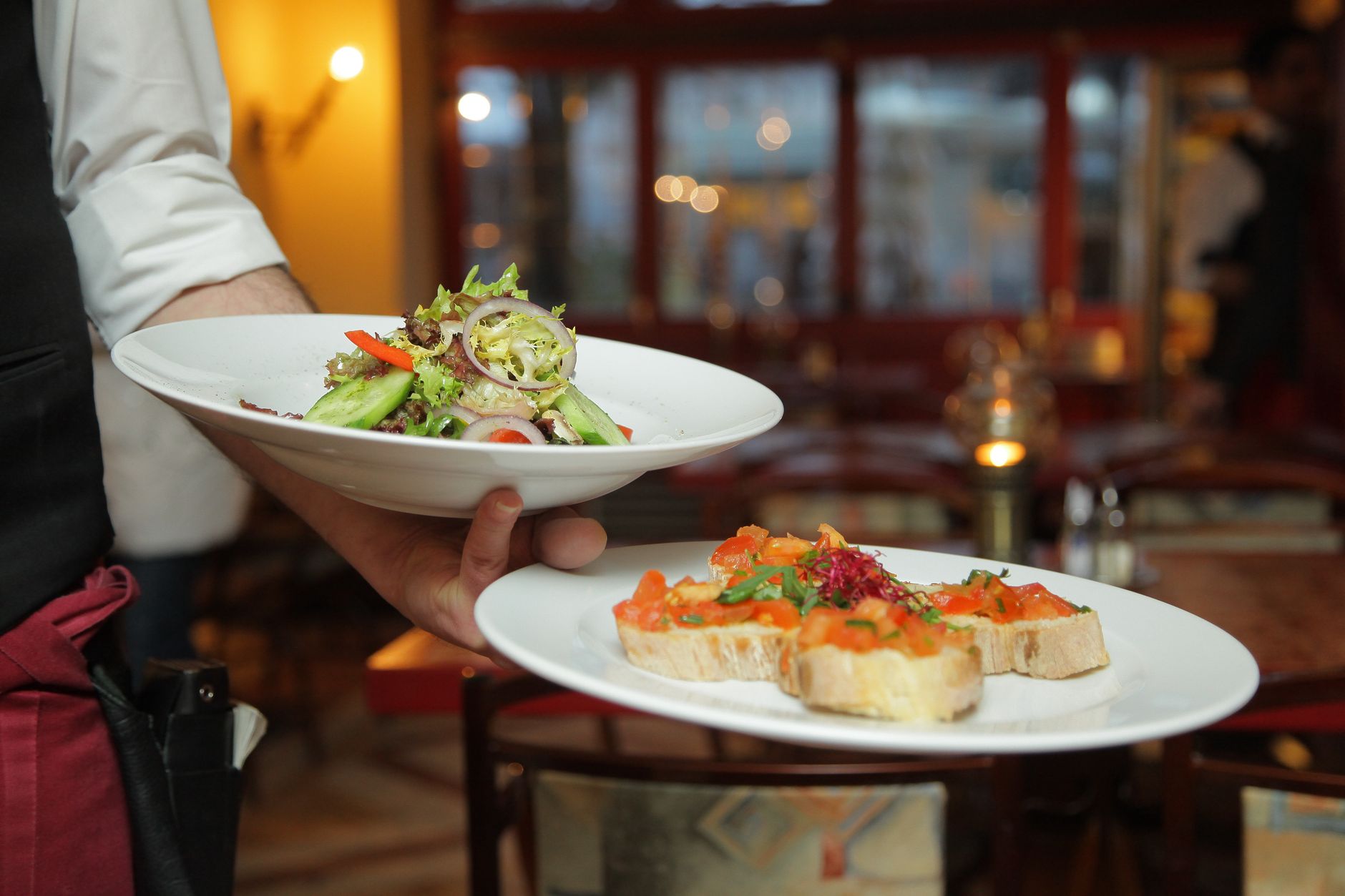
A food runner moves food and dishes between the kitchen pass, the service stations and the tables, and the job rarely stays in one place. The runner watches for plates up at the pass, checks which tables are waiting, carries mixed loads, restocks the station and clears used glassware. In a busy room these trips happen all through service rather than in one block, which is why the job is hard to measure from the floor.
The job also carries judgment that a route cannot capture. A good runner notices a table that has waited too long, sees a guest who needs a refill before they ask, and catches a wrong dish before it reaches the table. Those small calls are work, not walking, and any comparison that counts only steps will undervalue them.
The local wage for this job is in the government wage data on this page. Treat that as the hourly side of the comparison, then count the trips your room actually generates on a typical night. The wage tells you what an hour of a person costs, while the trip count tells you how many hours there are to cover.
Median hourly wage, Waiters and Waitresses
$2,069
Monthly cost of one full-time worker in New Orleans, LA, at the median wage plus payroll costs (an estimate, not a quote).
Which parts of a food runner's job can a robot take?
A robot is good at the parts of the job that repeat without variation. The clearest candidates are trips from one fixed point to another on a mapped route, especially the trips your team currently makes in the same direction all night. When the route changes, the robot needs a new map and a test run before it returns to service.
Each of these only works when the route is level, clear and stable. A chair pushed into the aisle, a wet floor or a moved kitchen door can stop a route until someone resets it. Count how many of your trips meet that test before you assume the robot takes them.
The robot does not take the parts that depend on people: taking orders, answering questions, reading a table's mood or deciding what to clear first. Those belong to the staff who stay on the floor, and they are the parts guests notice most.
- Carrying plated food from the pass to a fixed station or table cluster on a mapped route.
- Returning used dishes, glassware and bus tubs to the dish area on a set schedule.
- Moving stock between the storeroom, the bar and a service station during the shift.
- Running a loop between two points while the people on the floor stay with guests.
- Repeat trips on fixed routes
Delivery Robot
Runs the same mapped route all shift once the path is tested
Food Runner
Can vary the route and adjust to the room as it changes
- Table-side service
Delivery Robot
Drops off at a station or table cluster and does not take questions
Food Runner
Greets guests, takes requests and checks in during the meal
- Stairs, patios and changing layouts
Delivery Robot
Needs a level, mapped path with clear sightlines
Food Runner
Adapts on the move and steps around obstacles
- A spill, a wrong dish or a stopped unit
Delivery Robot
Stops and waits for a person to clear the problem
Food Runner
Fixes the problem on the spot and keeps service moving
- Covering a short crew
Delivery Robot
Still needs someone to load it and watch the route
Food Runner
Needs a body on shift, which turnover makes hard to guarantee
- Pace on quiet nights
Delivery Robot
Runs on the schedule you set, with no extra tasks
Food Runner
Can pick up bussing, restocking and side work at once
What do the New Orleans labor numbers show?
According to the U.S. Bureau of Labor Statistics, waiters and waitresses were employed in the New Orleans-Metairie metro at 1.52 times the U.S. average rate in May 2024. That figure is a location quotient, which compares concentration with the nation, so it shows how much the job clusters here rather than how many people hold it. The metro spans seven parishes, so the hiring pool for a New Orleans restaurant reaches well beyond the city limits.
The same BLS release says its May 2024 survey covered 3,170 establishments with a 54 percent response rate, which is worth knowing before you lean on any single local figure. The May 2025 release shows the metro's mean hourly wage for all workers below the national mean, the same direction as the year before. Use these figures to frame the question, then pull the metro table for headcounts before sizing any fleet.
The public figures for this metro do not break out overtime, night shifts or sick days for this job. Those hours decide much of the case, so pull them from your own payroll records and from the staffing history of the last year. A robot changes which hours your team must cover, and only your own numbers can show how much.
How much does turnover change the decision?
Turnover in restaurants is high, and it shapes the staffing math as much as the wage does. A turnover roundup citing industry data puts annual restaurant turnover around 75 percent, with front-of-house roles near 41 percent, back-of-house near 43 percent and managers near 28 percent. Because that roundup is an aggregator, use the figures as direction rather than as a benchmark for your room.
The same roundup notes that a separate analysis argues the 75 percent figure mixes firings and seasonal exits with voluntary quits, which means it overstates the share of people who choose to leave. The national data shows the same movement. According to the U.S. Bureau of Labor Statistics JOLTS release for November 2025, quits in accommodation and food services rose by 208,000 that month, while the overall quits rate was 2.0 percent.
Every departure brings training, scheduling gaps and a slower week for the people left behind. A robot does not remove that cycle for the staff who stay, but it can take the repeat trips during the weeks when the crew is short-handed. That gives the remaining team room to keep guest service steady until a new hire is ready.
How does a team work with a robot?
The working model is a robot plus fewer staff, never zero staff. The robot takes the repeat trips on fixed routes, and the people keep the table work, the judgment calls and the guest contact. A room that tries to run with no one on the floor will stall at the first unusual order, the first spill or the first blocked route.
Adoption is growing but uneven. An industry survey cited in a food distributor's trend article found that half of U.S. restaurants planned to adopt some automation within two to three years, though that figure covers automation broadly, not delivery robots specifically. A restaurant trade publication also reported that 32 percent of diners would rather not watch robots prepare their food, which concerns the kitchen rather than delivery, but it shows that how a robot appears in the room matters to guests.
The injury data does not split by task, so it cannot tell you whether a robot would reduce strains on your floor. According to the BLS chart for accommodation and food services, the sector recorded 234.8 thousand injury and illness cases, at a rate of 2.6 per 100 full-time workers, although the chart does not state the year clearly. Treat that as context, and check your own incident log before deciding what the robot changes.
What can a delivery robot not do in a New Orleans dining room?
A robot cannot take a table order, read a guest's mood or repair a bad moment at the table. It cannot manage a crowded bar at the height of a rush, recover a dropped tray in a busy aisle, or judge a plate a guest has already touched. These are the moments that shape tips and repeat visits, so they stay with your staff.
Layout is the other limit. Route mapping needs a level path and clear sightlines, and a room that rearranges tables for events, has mixed floor surfaces or has steps will need a redesigned route or a person on that stretch. Patios and outdoor seating often fail this test, so check them as a separate zone rather than assuming the main room's result carries over.
A robot also depends on people when things go wrong. If a route is blocked, a plate is misloaded or the unit stops, someone must clear the path, reset the stop and call for help. That is why we plan for fewer staff, not no staff, and why the people who remain need a clear role at each service.
What does a robot shift look like in a New Orleans restaurant?
The robot's day follows the kitchen's rhythm more than the clock. It starts when the prep team stages the first items for service and stops when the last course clears. Between those points, a person loads and unloads it, and someone watches the route rather than leaving the unit to run alone.
Most of the planning happens before and after the robot runs. Setup means mapping the route, testing it empty, agreeing on stop points and training the people who load it. The robot is only as useful as the handoff at each end of its route.
The timeline below shows one typical sequence. Name one person who owns the robot at each service, and give that person the route map and the stop list before the first run, so the robot does not wait on a decision.

How do I get started with a robot lease in New Orleans?
Start with a free site assessment of your actual floor plan, routes and service pattern. We look at the distance from the pass to each station, the floor surface, the sightlines and where staff stand during the rush. The lease is quoted after that assessment, so the terms reflect your room rather than a generic offer.
We pick the robot for the site, lease it through financing, deploy and integrate it, train the staff and service it nationwide. One partner handles service calls, so the team in New Orleans has a single point of contact rather than a chain of vendors. A pilot with one leased unit on one route lets you test the trip count before you commit to more.
Bring three things to that first conversation: the route counts for a typical night, your front-of-house turnover history, and the parts of the floor that will always stay with people. With those in hand, the decision becomes a question about hours and staffing, and the government wage data on this page gives you the local frame for it.
Frequently asked questions
Upcoming events in New Orleans, LA
Put a robot to work in New Orleans.
We walk your site, learn the job, and recommend the unit that fits. Then we quote the lease, deploy it, and keep it serviced.
Sources
- US Bureau of Labor Statistics, Occupational Employment and Wage Statistics (OEWS May 2024)
- U.S. Bureau of Labor Statistics, New Orleans-Metairie occupational employment and wages, May 2024
- U.S. Bureau of Labor Statistics, occupational employment table for New Orleans-Metairie
- National Restaurant Association, Louisiana state fact sheet 2025
- U.S. Bureau of Labor Statistics, nonfatal injuries and illnesses by industry chart
- U.S. Bureau of Labor Statistics, JOLTS release published January 2026
- Restaurant staffing statistics roundup
- Food distributor trend article on restaurant automation
- Trade publication report on diner attitudes toward robots