
The short answer
Cobot vs sanding operator at a furniture factory comes down to part mix and finish standard. A cobot makes sense for repeat passes on simple flat or gently curved parts held to a finish standard that can be checked, and it does not make sense when every shift brings new shapes or the finish depends on hand judgment on each surface. For most plants the practical answer is one cobot cell working alongside fewer sanding operators, not a cell that replaces the whole team.
Key takeaways
- Cobot vs sanding operator is a question of part mix and finish standard, not the sanding itself.
- Cobots take repeat passes on simple parts. People keep complex pieces, finish judgment and inspection.
- Dust and repetitive hand work are real hazards, and extraction and respirator programs stay necessary with a cobot.
- Check your own turnover, overtime and absence for sanding roles before relying on any public labor figure.
- Plan for a cobot plus fewer staff, never a cell that runs with zero staff.
Should a furniture factory use a cobot or a sanding operator?
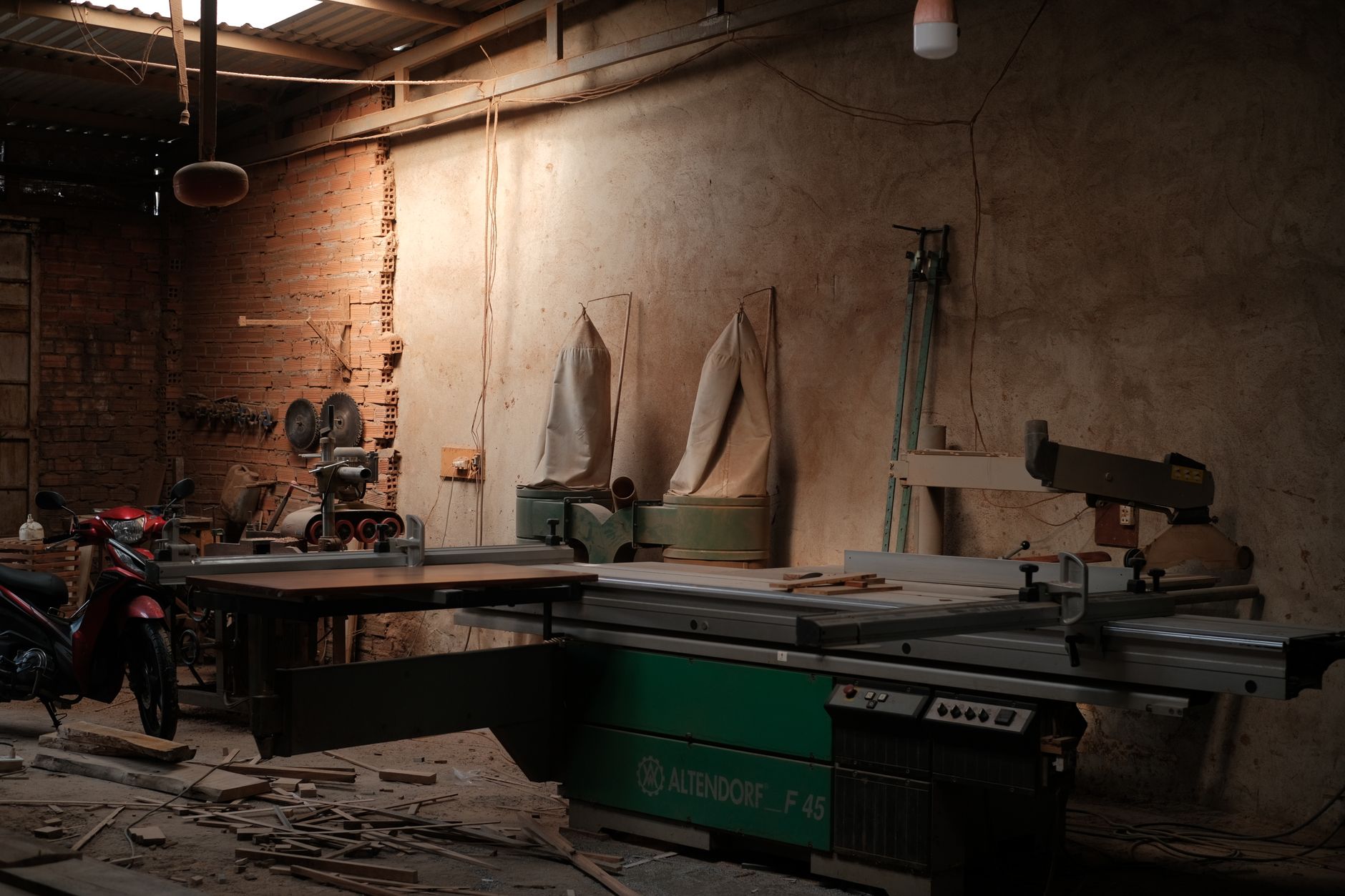
The short answer depends on the part mix and the finish standard more than on the sanding itself. A cobot is a collaborative robot arm that can repeat the same sanding path on many parts, and once the program is set right it holds the same path, pressure and pass count from piece to piece. A sanding operator brings judgment and reach, and can change a pass around a knot, a glue line or a bad edge, which a fixed program does not handle well.
Where a cobot earns its place is on simple flat panels, table tops, drawer fronts and other parts with predictable geometry, sanded to a finish that can be written down as a standard. Where it does not earn its place is on carved, heavily contoured or mixed-material pieces, or in shops that change part families several times a shift. In those cases the operator still does the work, and a cobot adds setup time without saving hands.
Most plants that get value from this are not replacing a crew. They take the repeat passes off one or two people, reduce hand fatigue and dust contact on those passes, and keep experienced operators on the work that needs them.
- Repeat passes on flat parts
Cobot
Holds the same path, pressure and pass count from piece to piece once the program is set
Sanding Operator
Varies pressure and pass count, and tires over a long shift
- Complex or curved parts
Cobot
Needs a new program for each profile, and each profile adds setup
Sanding Operator
Reads the shape and adjusts as the pass goes
- Finish judgment
Cobot
Runs the path but does not see a defect it was not programmed to find
Sanding Operator
Spots stain blotches, raised grain and scratches under finish
- Dust contact at the sanding head
Cobot
Can work behind a fixed hood position, so no person is at the head during the pass
Sanding Operator
Works close to the dust source unless the hood and respirator plan are in place
- Changes in part mix
Cobot
Slow to change over, and best with few part families
Sanding Operator
Switches between part types within a shift
- Coverage of a full shift
Cobot
Runs repeat parts for stretches, but still waits on staging and fault recovery
Sanding Operator
Covers staging, cleanup, faults and inspection
What does a sanding operator actually do in a shift?
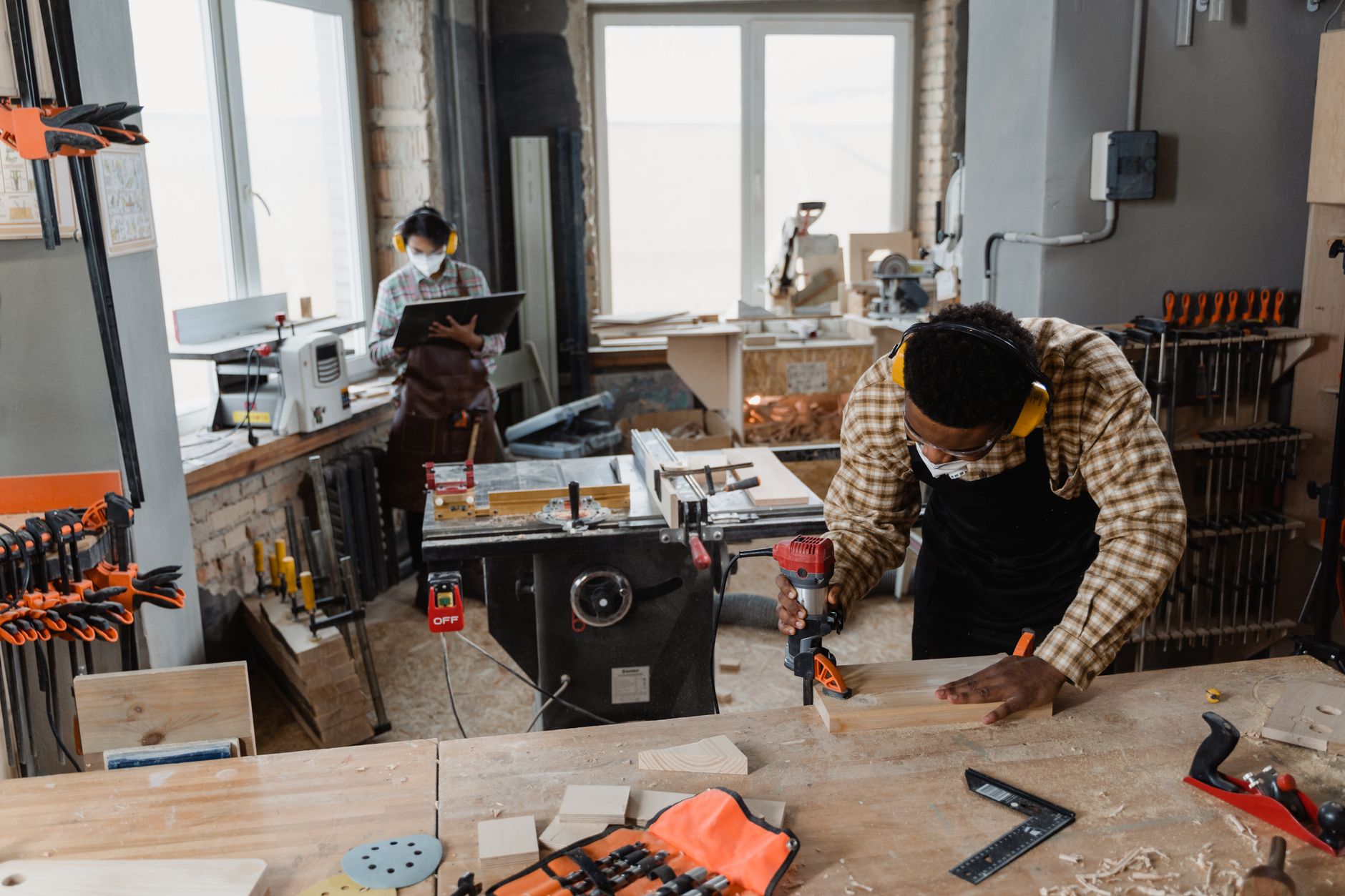
A sanding operator at a furniture plant usually moves parts from a staging table or rack to a sanding station, works the surface through one or more grits, checks the result against a sample or a tactile standard, and sets aside pieces that need rework. Much of the shift is repetitive pushing and wiping across similar surfaces, with frequent stops to clear dust from the pad, the part and the nearby air.
The physical load is specific. The arms, shoulders and wrists repeat the same motion for long stretches, and the hands hold tools that vibrate. The respiratory side matters most for planning. According to the HSE blog summary on wood dust exposure, the controls cited are local exhaust, reducing settled dust that gets resuspended, and respirators within a respiratory protection program. The same summary links hardwood dust to nasal cancer and red cedar dust to asthma.
A shift also includes work that never appears on a sanding log: loading parts, changing abrasives, cleaning the table and handing finished work to the next station. These tasks matter for any cobot decision, because a cobot removes only the part of the job that is pure repeat motion.
Which furniture parts can a cobot sand, and which can't it?
A cobot does well on parts with a fixed shape that a program can follow: flat panels, rails, table tops and simple profiles with the same radius from piece to piece. The gain is in the repetition. A consistent path, pressure and pass count produce a finish that varies less from piece to piece than hand sanding usually does late in a long shift.
It does poorly where the geometry shifts. Carved details, turned legs with changing diameter, joinery corners and pieces with glue lines or grain reversals each need a judgment call. A program can be written for some of these, but each new profile adds setup time and a new inspection step. The useful question is how many part numbers run in a typical week, not how many parts leave the building.
Upholstered and mixed-material pieces add another limit. Foam, fabric and hardware are not sanding jobs, and any surface that was edge-finished by hand usually still needs a person to confirm it. Build the cell around the part family that repeats most often, and keep the rest on the bench.
What do the labor and injury numbers say?
Public data on this exact job is thin, so read any claim about it with care. The Bureau of Labor Statistics series for furniture and related product manufacturing, NAICS 337, shows about 405,500 average annual jobs in 2022 and about 365,800 in 2024, according to the BLS data published on FRED. A shrinking headcount in the sector makes it harder to assume a steady supply of new sanding hires each year.
We did not find verified BLS figures for sanding turnover, overtime, night shifts or sick days for this occupation. The Data USA profile for the sanding and woodworking occupation, SOC 51-7042, lists about 17,344 people employed in 2024, with 78.1 percent men and 21.9 percent women. That figure is third party and was not checked against the BLS occupational table. Before you set a labor target, pull turnover and absence for the sanding roles from your own payroll.
On injuries, the BLS industry page for NAICS 337 lists total recordable cases at 3.5 per 100 full-time workers, cases with days away, restriction or transfer at 2.1, and cases with days away at 1.1. The reference year was not confirmed in our pull, so check the current table before you quote it. For all manufacturing, the BLS nonfatal injury chart reports 332.6 thousand cases and a rate of 2.7 per 100 full-time workers in 2024.
| Task | Today | With a robot |
|---|---|---|
| Repeat passes on simple flat panels | Measure hours per shift from your own time study | Cobot runs the pass while a person stages the next batch |
| Edge and corner passes | Measure hours per shift from your own time study | Stays with the person at the bench |
| Loading and unloading the jig | Measure hours per shift from your own time study | Still done by a person, usually at a steady pace |
| Finish inspection | Measure hours per shift from your own time study | Still done by a person against the written standard |
| Changeover and program edits | Usually none, unless part mix changes | Added for each part family and set with the integrator |
We did not verify hour figures for sanding per shift in this research, so fill the today column from your own time study. The employment and injury figures in the text come from the BLS series and the Data USA profile named there.
How does a team work alongside a cobot?
The working model is always a cobot plus people, never a cobot alone. In a sanding cell a person still loads the first batch, checks the program against the part, pulls out pieces that fall outside the profile, handles finish inspection and manages changeovers. The cobot takes the repeat passes on the parts it can handle, and the operator's time shifts from hand fatigue to the work that needs a hand.
Staffing usually changes in one of two ways. Some plants keep the same number of people and move them to finishing and inspection. Others reduce sanding headcount through attrition, which is slower and works only when the remaining bench work is well defined. Either way, the cell needs a named owner who can change a program and call for service.
Training is short but specific. Operators need to start and stop the cell safely, clear a fault, read the finish standard and know when to stop the cell and pull a part. Our team handles that training during deployment, then services the cell after go-live.
What can a cobot not do in a sanding cell?
A cobot cannot judge a finish on a surface it was not programmed to inspect. It can run a path, but it does not see a dark spot under stain, a raised grain patch or a scratch that will show under a clear coat. That judgment stays with a person or with an inspection step.
It cannot cover a shift on its own. Someone must stage parts, change abrasives, clear dust and restart after a fault. A cell that runs unattended for long stretches needs a plan for part supply and fault recovery, or the robot simply waits. It also cannot fix an upstream problem. If panels arrive with uneven thickness or cupping, the cobot sands the problem consistently instead of correcting it.
Finally, it does not remove the dust. The cell still needs extraction, filters and a cleaning routine, and the hazard stays in the room even when fewer people stand at the bench.
How do dust rules and safety standards affect the decision?
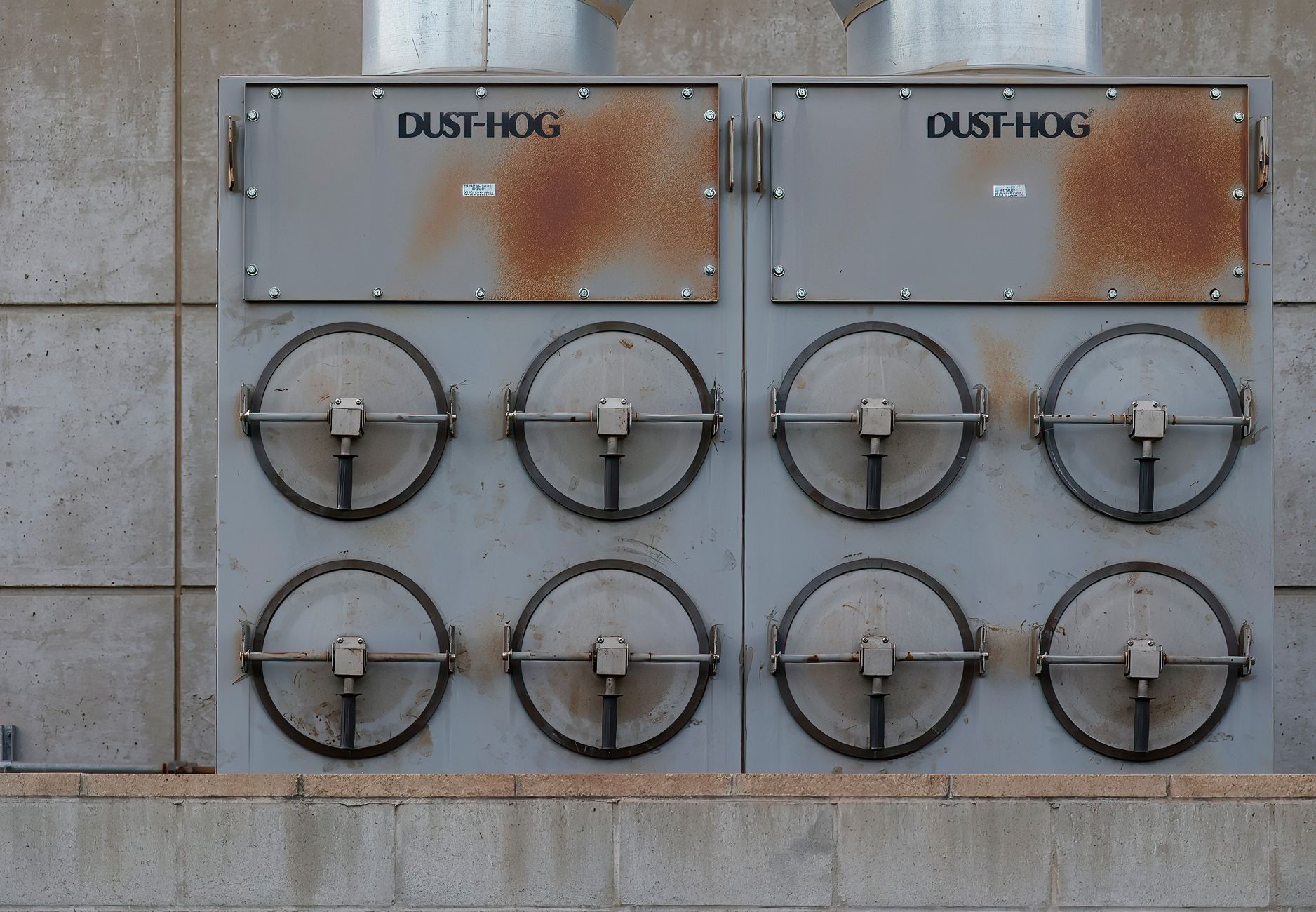
Dust drives the layout more than any other factor. Cal/OSHA tightened wood dust limits effective July 1, 2017, cutting the permissible exposure limit by 50 to 80 percent, and set a stricter 0.5 mg/m3 eight-hour limit for western red cedar. A petition before the state board proposes 1 mg/m3 for all species, according to the Cal/OSHA petition document. That is a proposal, not an adopted rule, so plan around the current limit and watch the docket.
Federal wood dust limits appear in several sources with different values, so verify the current federal table before you write an exposure target. The layout should follow the control order: capture the dust at the sanding head, manage settled dust, then rely on respirators within a formal program. A repeatable path also makes a fixed hood position easier to plan, but the cobot does not replace the hood.
Sirris, a Belgian research organization, has run a survey on automated sanding, deburring and polishing. We did not retrieve its results, so treat it as a lead to read rather than evidence for this decision.
What does a cobot sanding cell cost to lease, and how is it quoted?
The honest answer is that the quote depends on the cell, not on a catalog figure. The inputs are the number of part families, the extraction you already have, floor space and power, how the cell connects to your staging and conveyors, and how much service coverage you need. We lease robots through financing, and the fixed lease payment comes in a quote that follows a free site assessment, which is where those inputs get measured.
Compare any quote with the labor it changes, not with the robot alone. Use your own payroll data for sanding roles, the overtime you actually pay, the absence you actually see and the turnover you actually record. Public data gives sector context, but the case has to come from your floor.
Market research on wood sanding machines puts furniture at 46.2 percent of demand, according to a secondary report that does not name the study behind the figure. Vendor-reported gains in furniture sanding are often large, but we did not independently verify them, so ask for a trial on your own parts before deciding the scale.
How do you get started with a cobot for sanding?
Start with the part list, not the robot. Pull a month of sanding work orders, count the part families and mark which pieces repeat across several runs and which always need a hand. That list shows whether a cell is worth a site visit.
Next, book a site assessment. We measure the floor, the dust path, power and staging, and test the program on a sample of your parts. From there you get a quote for a lease with financing, plus a plan for deployment, integration, go-live support and service. A single cell is a sensible first step, with expansion only after it holds the finish standard for a sustained period.
Keep the first decision narrow. Pick the part family with the most repetition, set a finish standard a person can check, and decide ahead of time what success means in rework rate and staff time. That gives you a clear answer whichever way it goes.
Frequently asked questions
Upcoming manufacturing events
- Trade showBrats & RobotsNov 10, 2026Alliant Energy Center Exhibition Hall, Madison, WI
- Trade showMATE Farm & Ranch ShowFeb 11 to 13, 2027MetraPark, Billings, MT
- ExpoPFMA Expo 2027Feb 17 to 18, 2027Washington County Fair Park, West Bend, WI
- ExpoLouisville Facilities Maintenance ExpoApr 15, 2027Mellwood Art Center, Louisville, KY
Want a cobot at your furniture factory?
Tell us about your site. We will recommend the robot, quote the lease, and keep it serviced.
Sources
- BLS employment for furniture manufacturing via FRED
- BLS industry injury and illness data, NAICS 337
- BLS nonfatal injury and illness chart by industry
- Cal/OSHA wood dust petition 619
- HSE blog summary on wood dust exposure
- Data USA profile for SOC 51-7042
- Sirris survey on automated sanding, deburring and polishing