
The short answer
For most commercial bakeries, the cobot vs manual packer decision favors the cobot when finished baked goods go into cases in the same repeatable pattern on a steady line, especially where packing shifts are hard to fill. The robot takes the repetitive placing, while line staff still handle changeovers, rejects, quality checks and cover for absences, so the model is a robot plus fewer staff, not zero staff. A manual packer still makes more sense when case output swings widely or the product is irregular and fragile.
Key takeaways
- A cobot fits the repeat pick and place into cases, not the whole packing job.
- The best candidates have steady case output and packing shifts that are hard to staff.
- Irregular or fragile product and frequent format changes favor a manual packer.
- Plan for a robot plus fewer staff, with a trained person on every shift.
- Measure your own shift hours and start with a free site assessment before deciding.
Is a cobot or a manual packer the better choice for a commercial bakery?
For most commercial bakeries, a collaborative robot makes sense for one specific job: picking finished baked goods off a discharge point and placing them into cases in a repeatable pattern. It fits best where case output is steady and the packing position is the part of the line that is hardest to staff. The cobot vs manual packer question usually turns on whether the work is the same motion, repeated at a predictable pace, for the whole shift.
It does not make sense as a full replacement for the crew. A bakery packing station still needs people to load and clear cases, change packaging formats, pull rejects, check fill and seal, and step in when a jam or a misshapen item stops the flow. The honest model is a robot plus fewer staff on the line, never zero staff.
A manual packer is the better answer when output swings widely from day to day, when the product mix changes many times in a shift, or when most items are delicate, irregular or hand-finished. In those cases the flexibility of a person is worth more than the steadiness of a machine.
What does a manual packer actually do during a bakery shift?
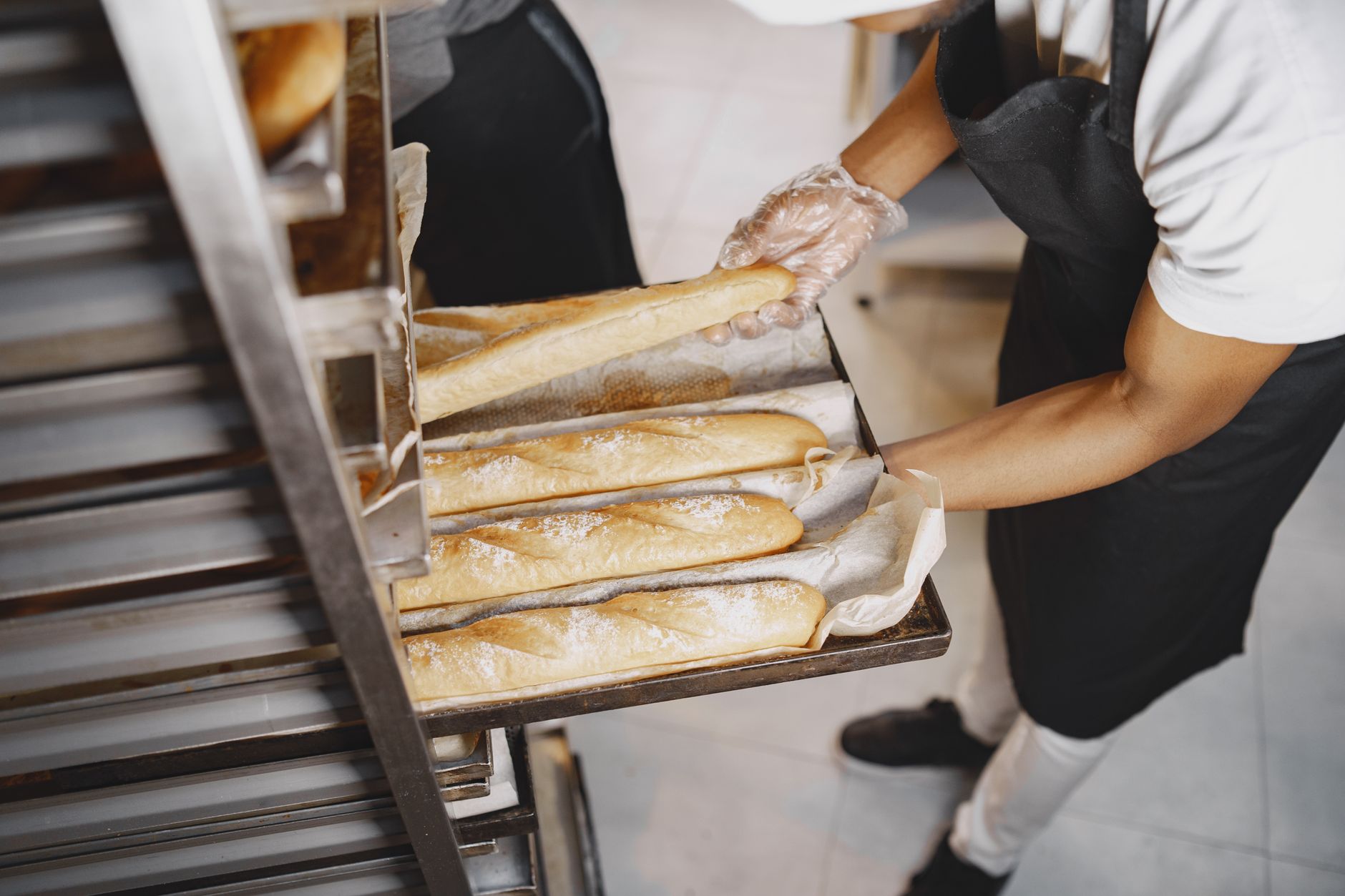
Packing at a commercial bakery is a chain of small tasks rather than one motion. A packer takes cooled product off the conveyor, checks it for shape and color, places it into trays or bags, lays it into a case in a set pattern, and moves the filled case toward sealing and palletizing. Each cycle is short, and the pace has to match the oven and slicing side or the line starts to back up.
Much of the attention goes to things that are not the placing itself. Packers pull broken or underbaked items, notice when a tray runs short, and reset the pattern when the case size changes. They also rotate between stations to cover breaks and absences, which is why one missing packer on a shift can ripple into the whole line.
Federal occupational data does not break out bakery packers on their own, so the staffing figures later in this page cover the wider packaging operator group. The job itself tells the rest of the story: a manual packer's value lies in judgment and flexibility as much as in speed.
- Repeat placing of uniform goods
Cobot
Same motion every cycle at a steady pace
Manual Packer
Consistent, but tires over a long shift
- Irregular or fragile product
Cobot
Needs a different end tool or a person
Manual Packer
Reads the item and handles it gently
- Shift coverage
Cobot
Keeps running while a trained person supervises
Manual Packer
Needs breaks and a replacement when out
- Changeovers between formats
Cobot
Needs a trained reset and a verification cycle
Manual Packer
Adjusts quickly by eye and by feel
- Quality judgment
Cobot
Limited to set checks and sensors
Manual Packer
Checks appearance, seal and fill by sight
- Absence cover
Cobot
Keeps cycling while the crew covers exceptions
Manual Packer
Needs someone to rotate in from another station
Which packing tasks can a cobot take, and which can it not?
A cobot does well on a fixed pick-and-place cycle where the product arrives in a predictable position. Moving finished goods from a discharge point into a case in the same arrangement is the clearest fit. The motion is identical every cycle, which is exactly the kind of work that wears on the same joints and attention hour after hour.
A cobot cannot reliably do the work around that motion. It struggles to read an irregular item and decide where it belongs, to handle product that is broken or changes shape, to clear a jam that needs a person to reach into the machine, or to change packaging formats without a skilled reset. Judging appearance, checking seal quality and deciding whether to pull a batch all stay with people, and those interruptions are often what makes a shift hard to fill.
- Pick and place of uniform finished goods from a fixed discharge point
- Placing product into a set case pattern in the same orientation each cycle
- Feeding empty cases to the station on a fixed rhythm
- Stacking trays or sleeves when the stack height is predictable
How much labor does bakery packing take across the industry?
Official data does not isolate bakery packing, so the closest measures are the wider packaging and bread production groups. According to the U.S. Bureau of Labor Statistics, about 371,600 people were employed as packaging and filling machine operators in May 2023. That is a large pool of people doing similar repetitive packing work, and it shows how many lines depend on the same motions.
Bread and bakery product manufacturing employment has also been growing. According to the Federal Reserve Bank of St. Louis, which publishes BLS data, the sector had about 278.8 thousand jobs in 2022, up from 260.7 thousand in 2020. Headcount growth does not settle which hours are hardest to fill, and that question belongs to your own roster.
Turnover is the harder number to pin down. According to Processing Magazine, citing BLS data, manufacturing turnover reached 39% in 2023. That covers all manufacturing rather than bakeries alone, so treat it as a sector signal and check your own separation records against it.
How does a bakery team work with a cobot on the packing line?
The team model matters more than the machine model. At the packing station the cobot runs its cycle while a line lead keeps product moving, a second person handles case closing and palletizing, and a packer or technician covers changeovers and rejects. The robot takes the repetitive placing, not the whole station, and the crew keeps the judgment calls.
Adoption is rising in manufacturing generally. According to the International Federation of Robotics, preliminary 2025 data reported by BusinessWire show US industrial robot installations rose 11% to 38,000 units in 2025. Rising installs show the technology is spreading, but the staffing plan still has to be written for your line.
Staffing should be planned as a robot plus fewer people, not as an empty station. The reduction usually shows up as fewer hands needed on the packing position during the hardest hours. Keep at least one trained person on every shift who can run the robot, clear faults and reset the pattern. According to Packaging World, high-volume lines often run 24/7 and rarely have time to stop for training, so cross-training belongs in planned changeovers.
The timeline below shows the shape of an example shift, not a measured schedule for any site.
What hours and shift problems does a cobot actually change?
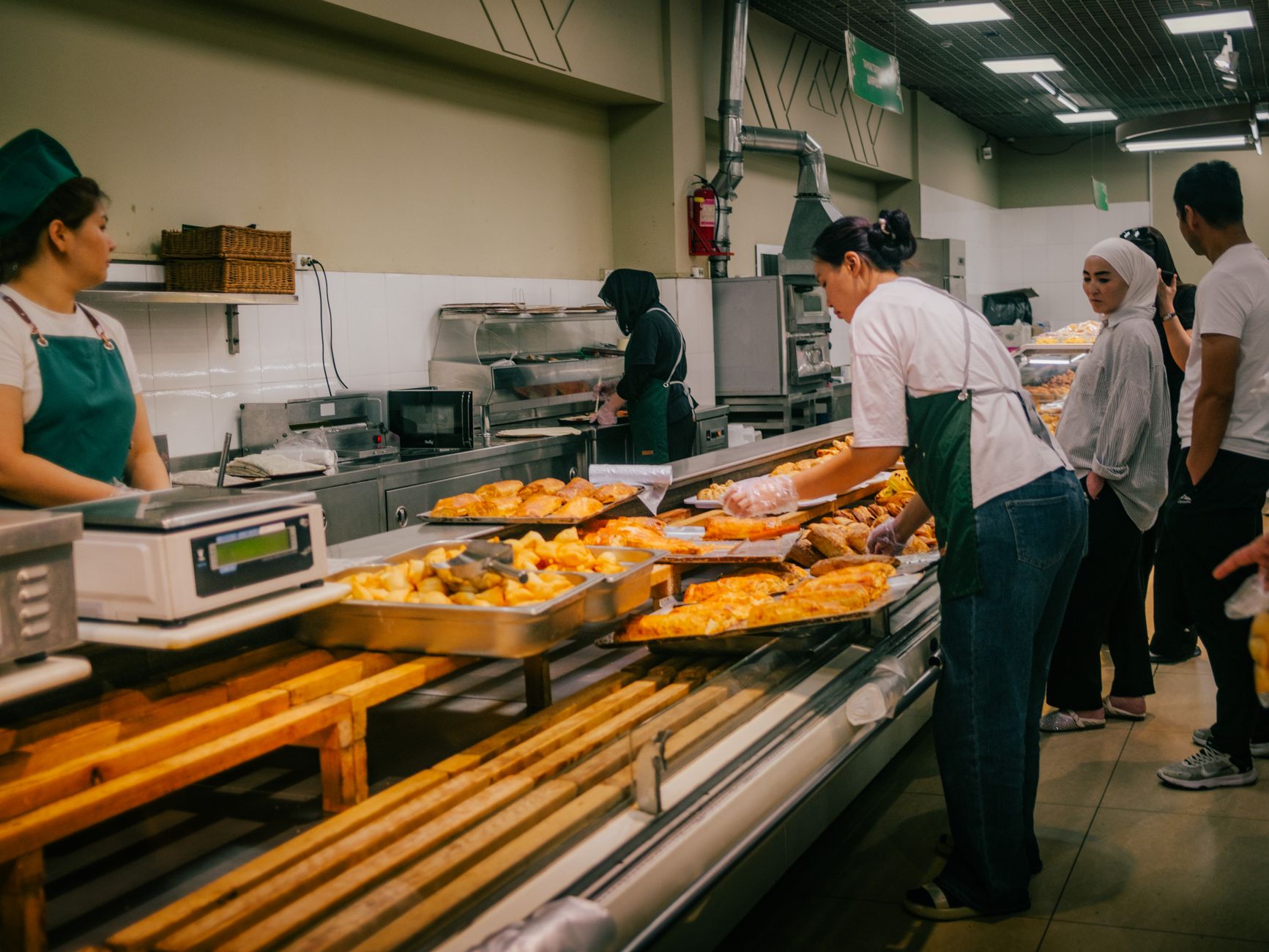
The shifts that are hardest to fill are usually the early and overnight hours, weekends and the days after a holiday. Bakery lines start before dawn and often run into the afternoon, so packing hours sit where staffing is thinnest. According to a workforce study by ABA, ASB and IDDBA, fielded from December 2024 to February 2025, respondents cited the skilled labor shortage as a challenge, and 85% of respondents said a challenging manufacturing environment is an obstacle to retention. The study drew on 80 completed responses from 70 baking manufacturers, and the figures are self-reported.
When turnover is high, a missed packer means overtime for someone already on the line, a slower pace, or a short case count. A cobot does not stop a sick day, but it can keep the placing motion running during an open slot, so the crew covers only the tasks that need judgment. The hours a robot takes over are the repetitive ones, so that is where any saving should be measured.
Injury data points the same way. According to SafetyRecord, citing BLS injury data, bread and bakery product manufacturing had 3.2 total recordable cases per 100 full-time workers in 2024. According to Manufacturing Dive, citing BLS data, food manufacturing had 3.6 cases per 100 full-time workers in 2023, down from 4.6 in 2022, with 61,400 cases in 2023. These rates cover all injury types, so they are context, not proof that a cobot will lower your rate.
What are the real limits of a cobot in a bakery?
A cobot has limits that matter on a bakery floor. Pace is set by the cycle and the grip, and a station that runs well on one product can slow down or need a different end tool for another. Changing the packaging format is a planned job, not a button press, and it needs a trained person with the time to do it.
Product variety is the hardest case. Within one shift, bakery output can differ in size, shape, moisture and fragility. A gripper that handles uniform rolls may not manage an irregular loaf, a fragile pastry or a glazed item that smears. Those items need a different end tool or a person, and the decision should rest on your own product list rather than a general rule.
A robot also brings its own maintenance and fault plan. A stopped cobot is one more reason the station goes down, so spare coverage, a fault response plan and a backup operator belong in the decision from the start. Sanitation and food safety rules still apply at the station, and the cleaning routine has to fit the robot's layout.

What should you check before deciding on a cobot for packing?
The answer depends on a short list of facts about your line. Pull a few weeks of case counts, changeover logs and unfilled shift records before any vendor conversation. The payback question is best answered with your own hours: unfilled slots, overtime hours and changeover time per week.
Work through the list with the line lead, since the people who run the station know which products fight the gripper and which changeovers take the longest.
How do we get started with a cobot at a bakery?
Start with a free site assessment, not a robot. We map the packing station, measure case flow and the space around it, log the shifts that go unfilled and the changeovers per week, and identify which products are uniform enough for the gripper. The result is a clear answer on whether a cobot fits the station and what it would take to run it.
Service Robot Co. is a commercial robot integrator. We pick the robot for the site, lease it through financing, deploy and integrate it, train the staff and service it nationwide. The lease is quoted after the site assessment, so the figure reflects your station and your shifts rather than a generic offer.
Go-live should be phased so the line keeps running. Train the crew on the operator role during planned changeovers, run the cobot on one product family first, and agree on the fault plan before full speed. Ask about backup coverage before day one, since one stopped station can hold up the whole packing line.
Frequently asked questions
Want a cobot at your commercial bakery?
Tell us about your site. We will recommend the robot, quote the lease, and keep it serviced.
Sources
- U.S. Bureau of Labor Statistics, Occupational Employment and Wages, May 2023
- Federal Reserve Bank of St. Louis, FRED, BLS bread and bakery employment
- SafetyRecord, citing BLS Survey of Occupational Injuries and Illnesses
- Manufacturing Dive, citing BLS 2023 injury and illness data
- Processing Magazine, citing BLS turnover data
- ABA, ASB and IDDBA workforce study
- BusinessWire, International Federation of Robotics preliminary 2025 data
- Packaging World, skilled labor shortage report