
The short answer
Cobot vs palletizing worker in Dallas, TX: a cobot makes sense when one line palletizes the same carton pattern for long, steady runs and the site can keep a trained person on the floor for exceptions. It does not make sense when pattern changes are frequent, loads are irregular or heavy, or the line runs too few hours to justify a lease.
Key takeaways
- A cobot fits a repeat palletizing pattern on one line, not a floor full of changing loads.
- Plan on a robot plus fewer staff, because someone still handles stops, changeovers, labels and staging.
- According to the BLS regional release, about 80,360 jobs in this occupation group were held in the Dallas-Fort Worth-Arlington metro in May 2024.
- Warehousing and storage recorded 4.8 total recordable cases per 100 full-time workers in 2024, so cutting repetitive handling is a real safety gain.
- A lease is quoted after a free site assessment, and that assessment sets the hours, the cell layout and the staffing plan.
Cobot vs palletizing worker in Dallas, TX: when does a cobot make sense?
The real question in cobot vs palletizing worker in Dallas, TX is about repetition and staffing, not about whether an arm can stack boxes. A collaborative arm holds the same pattern from the first layer to the last, which is hard to ask of any person through a long shift. The decision turns on whether your line gives the arm enough steady work to earn its place.
A cobot makes sense when one or two lines run a stable carton pattern for long stretches, the cartons are consistent in size and weight, and the site can keep a trained person on the floor for changeovers, jams and damaged product. It is a poor fit when SKUs change several times a shift, loads are irregular or heavy, or the palletizing work is short enough that the lease would sit idle for much of the week.
Dallas is a sensible place to test the question. The government wage data on this page gives the local wage for this job, and the labor and facility figures in the next sections come from federal and regional sources. According to the International Federation of Robotics, the operational stock of industrial robots rose 9 percent to a record 5 million units in 2025, and annual installations rose 11 percent to more than 600,000 units, in its World Robotics 2026 release. Its 2024 press conference deck put collaborative robots at 10 percent of installations in 2023, so cobots are now an established choice for new installations.
What does a palletizing worker actually do in a shift?
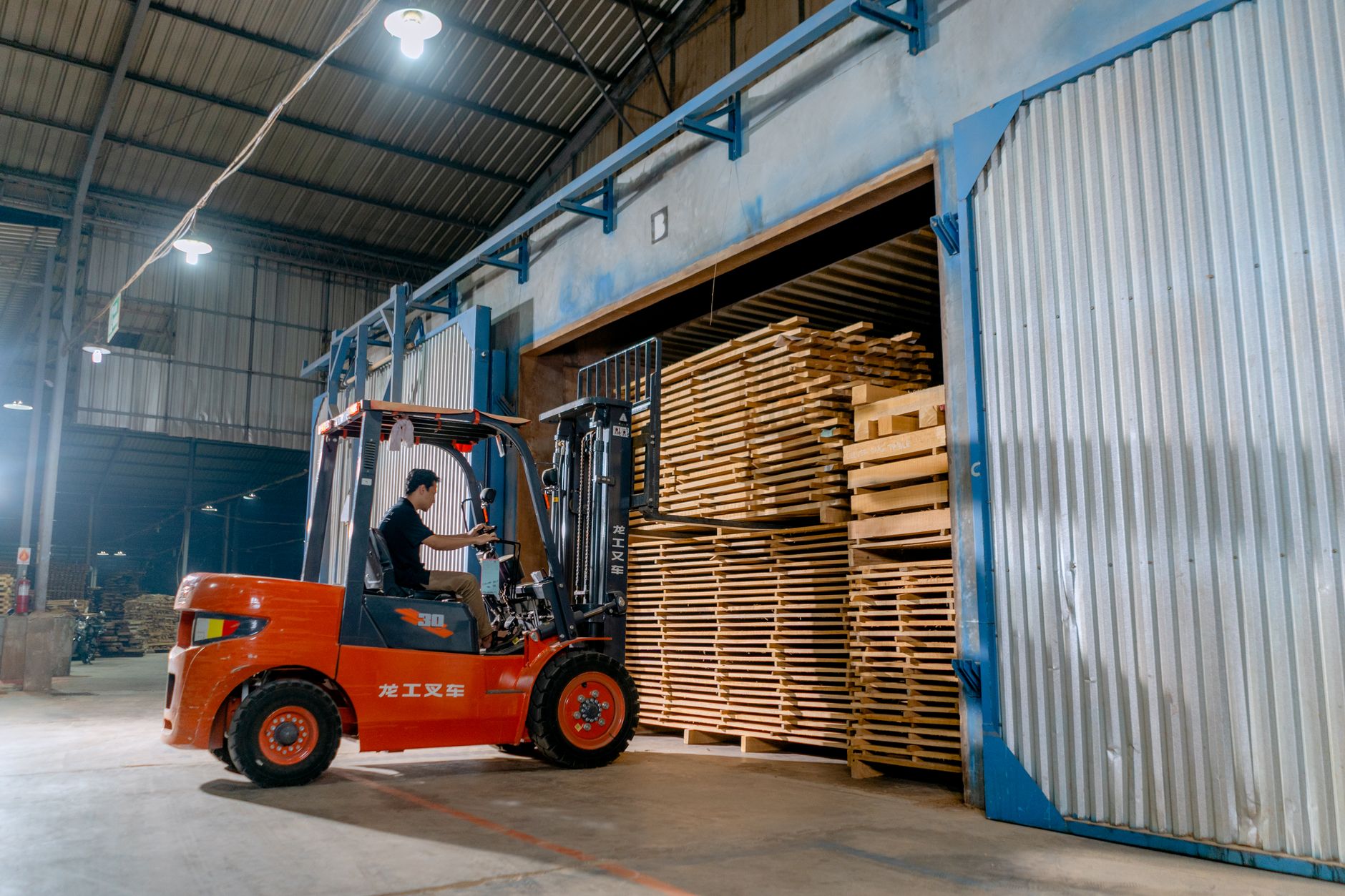
A palletizing worker stands at the end of a packing line and turns a stream of cartons into stable, shippable pallets. Stacking is the visible part. The worker also receives cartons at the infeed, keeps each layer on pattern, places slip sheets or dividers, checks pallet height, applies labels, moves finished pallets to staging with a pallet jack or forklift, and loads empty pallets back into the station.
The shift also includes interruptions that rarely show up in a plan. Jams stop the infeed, damaged cartons come off the line, and a new SKU means a pattern change that someone must set up before the first full layer runs. A good worker catches a bad layer before it reaches the wrap station, and that judgment is what a fixed machine usually lacks.
We did not find published time studies for palletizing in the sources reviewed, so the split between stacking and everything else has to come from the site. A floor walk during the site assessment shows how much of the shift is pure stacking and how much goes to recovering from stops and moving pallets.
Median hourly wage, Laborers and Freight, Stock, and Material Movers, Hand
$4,308
Monthly cost of one full-time worker in Dallas, TX, at the median wage plus payroll costs (an estimate, not a quote).
| Task | Today | With a robot |
|---|---|---|
| Build layers to the pattern | Done by hand, paced by the line | Arm builds repeat layers on one stored pattern |
| Stage and label finished pallets | Person labels and moves pallets by jack or forklift | Person still does this step |
| Clear jams and pull damaged cartons | Person stops the line and fixes it | Arm pauses, and a person clears the stop |
| Change pattern for a new SKU | Person re-stacks from a pattern card | Trained person sets the change, then the arm resumes |
| Wrap and move pallets to the dock | Person wraps and moves each pallet | Person, unchanged |
The task split reflects typical palletizing work. No published per-shift hour figures for this job were found in the sources reviewed, so the actual split comes from the site assessment.
Which parts of palletizing can a cobot take over, and which can it not?
A cobot does best on the repeat core of the job: picking consistent cartons from an infeed and placing them into a stored pattern the same way for every layer. It keeps that pattern running for a full shift, and it can pause cleanly when the line needs a person.
It does not do the whole job. A cell arm does not walk pallets across the building, does not drive a forklift, and does not decide that a dented carton should be pulled. Irregular or heavy loads, frequently changing SKUs, and loads outside the arm's payload need a different design or a person.
Plan on a person for staging, labeling, wrapping, and anything the arm cannot judge. In most cells those steps stay with people, and they decide how much of the shift the arm can actually take.
- Can take: picking consistent cartons from a conveyor
- Can take: building repeat layers to a stored pattern
- Can take: placing slip sheets or dividers at set points
- Cannot take: moving pallets across the building
- Cannot take: judging damaged or unstable product
- Cannot take: pattern changes on frequent SKUs without trained staff
What does the labor picture look like for palletizing in Dallas?
The local base for this work is large. According to the BLS regional release for the Dallas-Fort Worth-Arlington metro, about 80,360 jobs were held in Laborers and Freight, Stock, and Material Movers, Hand in May 2024. The release table is hard to read in places, so confirm the figure on the BLS page before you cite it internally.
Nationally, the Occupational Outlook Handbook from the BLS counts about 7.0 million hand laborers and material movers in 2024. It projects 4 percent growth for 2023 to 2033 and about 1,008,300 openings a year on average over the decade. Openings at that scale mean employers are filling these roles every year, and a site should plan to keep recruiting.
Turnover is the number that shapes a palletizing line. According to the BLS JOLTS release, the total quits rate was 2.0 percent in January 2026. JOLTS reports quits by industry rather than by occupation, so it does not isolate palletizing, but it shows how much movement exists in the wider labor market.
Injury data is only available at the industry level. According to the BLS page for warehousing and storage, the 2024 total recordable case rate was 4.8 per 100 full-time workers. Cases with days away, job restriction, or transfer ran at 4.1, and days-away cases alone at 1.5. We did not find a rate for the material mover occupation in the sources reviewed.
Dallas has a large warehouse base for these lines to sit in. According to the University of Texas at Dallas economic report from November 2025, regional industrial inventory is about 1.03 billion square feet, with overall vacancy at 8.8 percent. Lee & Associates reported vacancy near 8.0 percent in its third quarter 2026 Dallas-Fort Worth industrial report. The two sources use different definitions and dates, so treat them as a range.
We did not find published overtime, night shift, or sick-day figures for material movers. Pull those from your own timekeeping, since they set the real hours a cobot would take over.
How does a palletizing team work with a cobot?
The team is a robot plus fewer staff, not zero staff. A typical cell keeps one person at the infeed or pallet station to watch the pattern, clear stops, and pull damaged cartons. A second person handles staging, labeling, and forklift moves, which the arm cannot do. Fewer people on the stacking step does not mean nobody is on the line.
The cell changes how people spend the shift. Instead of building each layer by hand, the operator checks load settings at the start, confirms the pattern card, and watches for stops. When a new SKU arrives, a trained person sets the change and hands the cell back to the arm.
Coverage needs a plan. Whether a cell can run with no one on site depends on the site's rules and on who answers when it stops. We do not plan a cell to run without a person available for stops.
What can a cobot not do that a person can?
A person wins on judgment. A worker sees a crushed corner, a leaning layer, a wrong label, or a pallet that looks unstable before it moves. People also adapt when a carton arrives slightly off size, and they can rebuild a bad corner on the spot.
A person also covers the flexible work: moving to a second station, helping at the dock during a surge, and cleaning up spills. The arm stays where it is installed, and its reach and payload set the work it can take.
The honest answer is that a cobot removes some of the repetitive stacking, not the whole palletizing job. If your line changes product mix often, a person may be the better choice for most shifts. The comparison below shows where the person wins.
- Pattern changes
Cobot
Repeats one stored pattern well, but changes need trained setup
Palletizing Worker
Re-stacks quickly and adapts when a pattern card is wrong
- Damaged or unstable product
Cobot
Does not judge a dented or leaning load
Palletizing Worker
Spots it before it leaves the station
- Heavy or irregular loads
Cobot
Limited to its payload and the planned pattern
Palletizing Worker
Adjusts grip and layout on the spot
- Stops and jams
Cobot
Pauses, then needs a person to clear the stop
Palletizing Worker
Clears the stop and keeps the line moving
- Repeat layers over a long shift
Cobot
Holds the same pattern from the first layer to the last
Palletizing Worker
Consistency can drift late in a long shift
- Staging, labeling and forklift moves
Cobot
Cannot do these steps
Palletizing Worker
Does these steps
- Night coverage
Cobot
Depends on site rules and a person available for stops
Palletizing Worker
Needs staffing for the shift and breaks
What changes the cost comparison for a cobot lease?
The comparison depends on the line, not on a general example. A lease is quoted after a free site assessment, and the quote reflects the cell, the work it covers, and the staffing that stays in place. Any figure given without that assessment is a guess.
Three things move the comparison most: how many hours per week the cell runs, how many pattern changes a shift requires, and how much staff time the line still needs for staging and exceptions. A line on long steady runs compares very differently from a line that changes SKUs several times an hour.
The government wage data on this page gives the local wage for this job. Use it as a baseline, then set it against the staff a cell still needs and the hours the arm will actually cover, not the hours that look good on a plan.
What do people worry about before leasing a cobot?
Most worries come from three places: staffing, safety, and downtime. Each one has a real answer, and each one depends on the cell and the site rules.
People often assume a cobot means no one is on the line. In practice a cell still needs someone for stops, changeovers, labels, and staging. The arm changes the mix of work, and it takes over repetitive stacking.
Safety is a site decision. Layout, guarding, and stop functions come from the site's risk assessment, and we review them during the site assessment before any quote. Calling an arm collaborative does not by itself show that a cell needs no guarding.
Downtime is a planning question. A stopped cell needs a path back to running, which is why service coverage, remote triage, and a plan for a spare unit should be settled before go live.
How do you get started with a cobot lease in Dallas?

Start with a site assessment. Our team maps the cell, measures the infeed and staging lanes, and records the carton pattern, the weight range, and the shifts the line runs. From that we recommend the robot that fits the floor and the work, and we say plainly when a cobot is not the right tool.
We lease the robot through financing, with the fixed lease payment set in the quote that follows the assessment. We also deploy and integrate it, train the staff who run it, and service it nationwide, so one team answers for the cell from install through daily operation.
A sensible first step is one cell on one line. Run it for a defined period, track the hours it covers and the stops that still need a person, and then decide whether a second cell makes sense. That keeps the decision grounded in your own shift data rather than in a projection.
Frequently asked questions
Put a robot to work in Dallas.
We walk your site, learn the job, and recommend the unit that fits. Then we quote the lease, deploy it, and keep it serviced.
Sources
- US Bureau of Labor Statistics, Occupational Employment and Wage Statistics (OEWS May 2024)
- BLS Occupational Employment and Wages, Dallas-Fort Worth-Arlington, May 2024
- BLS Occupational Outlook Handbook: Hand Laborers and Material Movers
- BLS Injuries, Illnesses, and Fatalities: Warehousing and Storage (NAICS 493)
- BLS Job Openings and Labor Turnover Survey release
- University of Texas at Dallas Economic Engine, The Connection, November 2025
- Lee & Associates, Q3 2026 Dallas-Fort Worth Industrial Report
- International Federation of Robotics, World Robotics 2026 statistics
- International Federation of Robotics, World Robotics 2024 press conference deck