
The short answer
In the cleaning robot vs floor scrubber operator choice, a robot fits a commercial laundry plant when the wet, soapy floor passes repeat on a fixed route between production runs and the aisles stay clear enough to map. It does not fit where carts, linen bins and spills change the floor every hour, or where the work needs a person to judge chemicals, drains and damage. For most plants the realistic answer is a robot for scheduled scrubbing with fewer staff handling exceptions, and the final call follows a site assessment.
See what a cleaning robot costsRun the numbers in the ROI calculator
Key takeaways
- A robot fits the scrubber job only where the wet floor route repeats and stays clear.
- Spills, chemicals, blocked drains and floor damage still need a person on shift.
- A trade publication staffing survey split almost evenly on high turnover: 49.2 percent yes, 50.8 percent no.
- Plan for a robot plus fewer staff, never a robot with zero staff.
- The lease quote comes after a free site assessment that measures your own floor.
Cleaning robot vs floor scrubber operator: when does a robot make sense in a laundry plant?
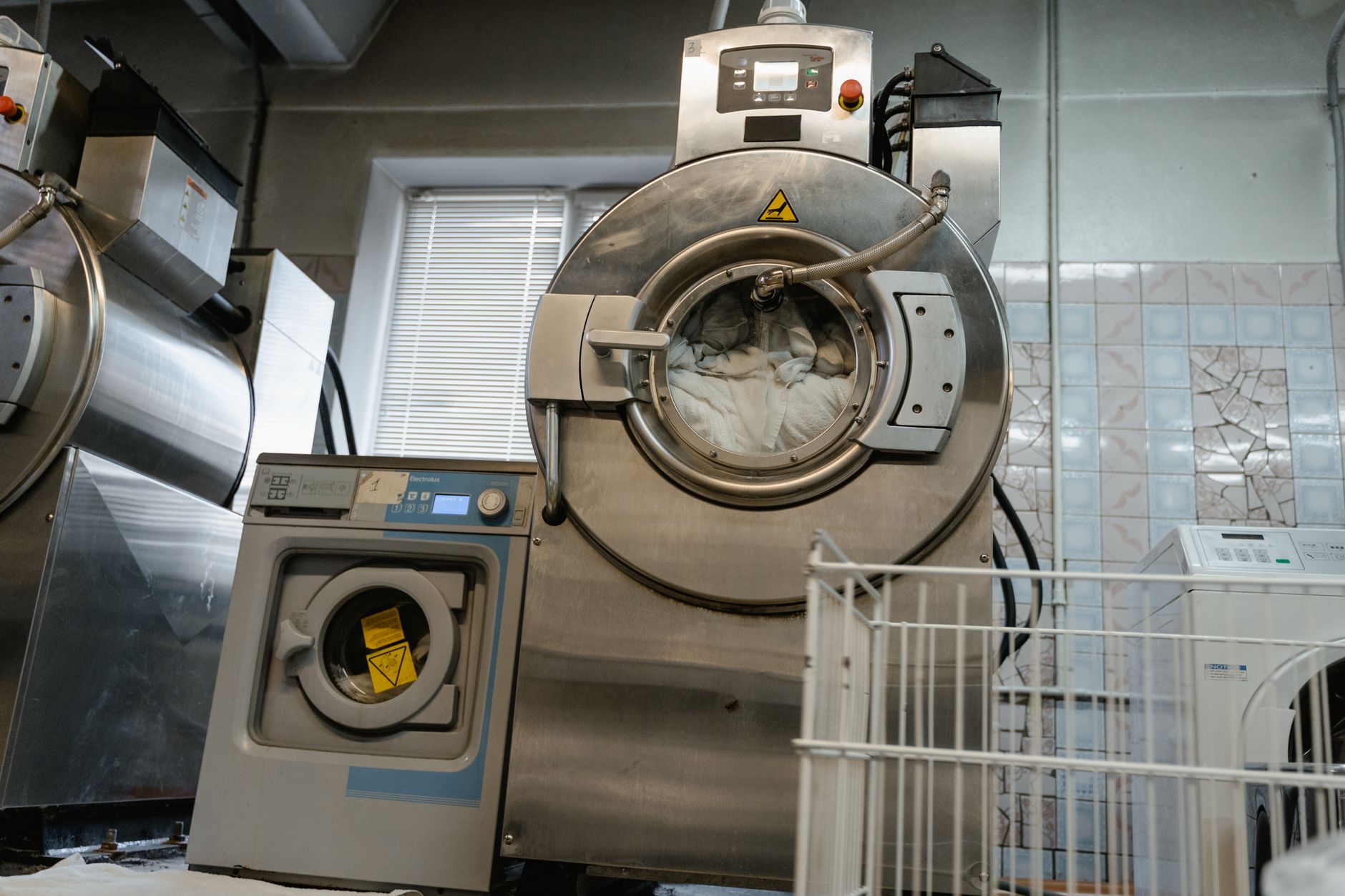
A commercial laundry plant is a wet place. Washers, extractors, ironers and folding tables throw water, detergent and lint onto the floor across the shift, and production needs those passes cleared between runs so the next load starts on a dry surface. A cleaning robot can take the scheduled scrubbing passes along fixed aisles when the route repeats and the floor is mostly open.
It does not fit where the floor changes every hour. Carts, linen bins and pallets moved in and out break a route, and spills that need a person to stop, identify and clean up a chemical or a slick patch stay with staff. Plants with a clear floor layout and a predictable window between runs are the strongest candidates.
The practical outcome for most plants is a split. The robot runs the scheduled passes between runs or overnight, and the floor scrubber operator or a lead moves to exceptions. That means fewer people on the repeat work, not zero people on the floor.
What does a floor scrubber operator actually do during a laundry shift?
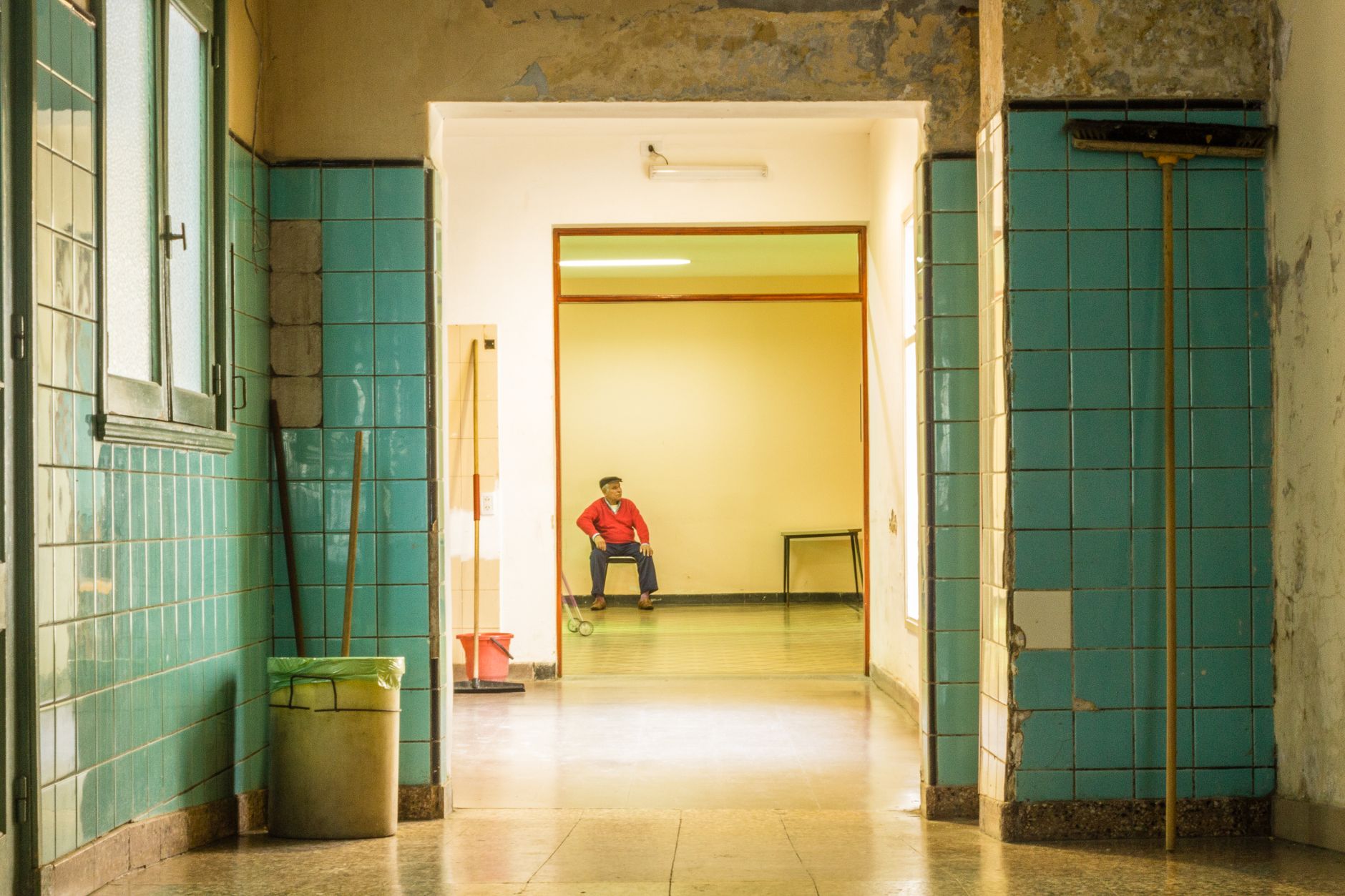
The operator runs a scrubber along the wet areas around the washers and extractors, applies detergent or cleaning product, scrubs, and recovers the dirty water with a squeegee and vacuum. The passes follow the production flow, so the operator works around active machines, cart traffic and people carrying hot linen or chemicals. Timing matters because the operator has to finish before the next load is staged.
Beyond the passes, the operator checks water and chemical levels, battery charge, squeegee condition and brush wear. They empty recovery tanks at a dump point, report leaks and drain problems, and flag floor damage such as cracked or pitted areas. The job is less about the machine than about deciding when a section is clean enough to release back to production.
That judgment is why the job is hard to replace with a single machine. The operator is the person who sees a new puddle forming at a loading point and sends a lead to it before someone slips. A machine on a fixed route does not notice what is not on the route.
Which parts of the floor work can a robot take, and which can it not?
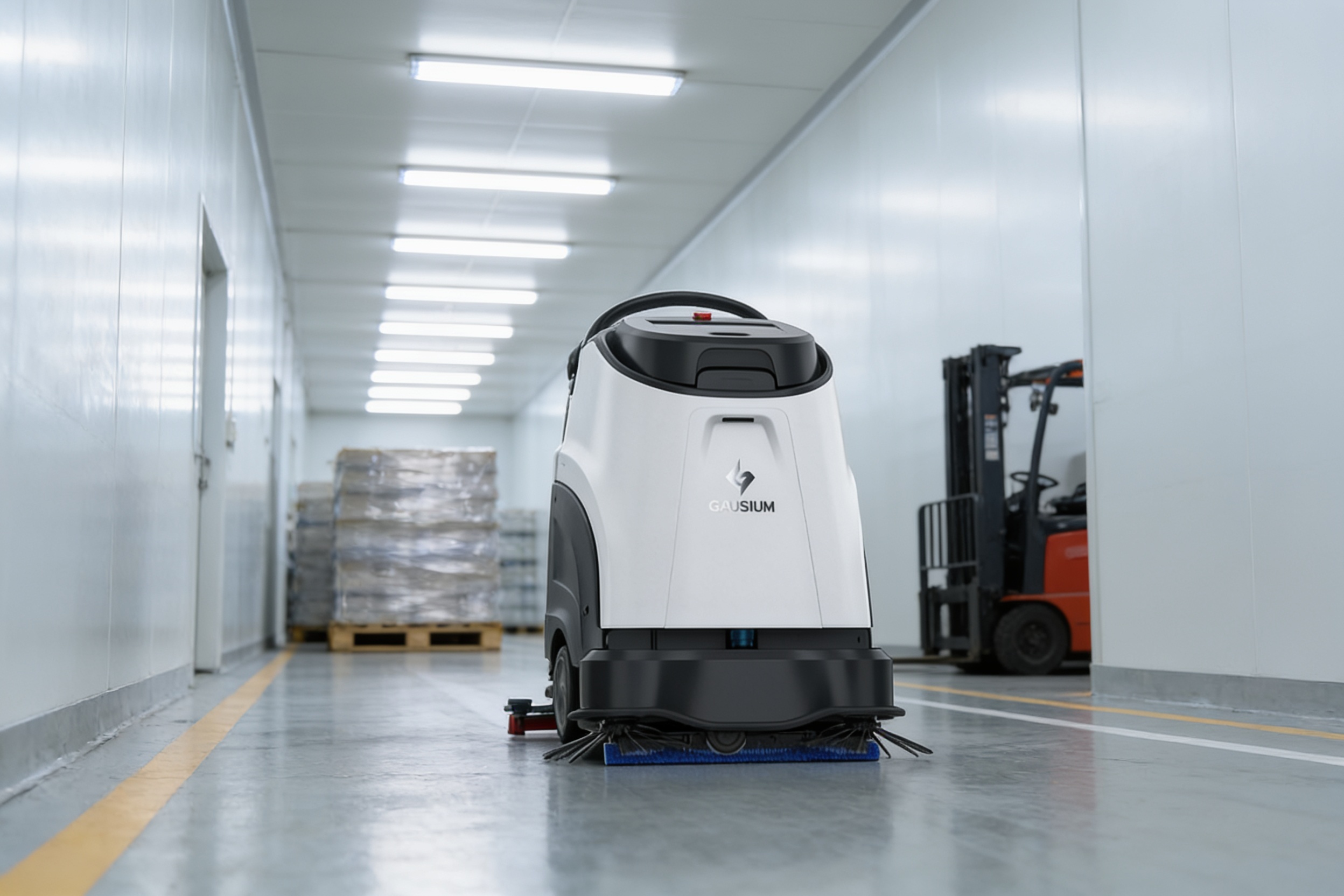
A robot can take the scheduled scrubbing passes in open lanes, run during a quiet window, and return to its dock without a person on board. It works best when the mapping is clean and the layout holds steady, because the route only stays accurate if the aisles do not move. Repeat work is the core of the fit.
It cannot respond to a chemical spill, judge a slick patch that needs drying rather than scrubbing, clear a blocked drain, or move carts and linen out of the path. It also cannot decide that a section is sanitary and ready to release. Those are person tasks, and they usually come up in the middle of a run, when a fixed route is least able to help.
- Scheduled repeat passes
Cleaning Robot
Runs the same open-aisle route on a fixed schedule and logs each pass
Floor Scrubber Operator
Adjusts the route on the spot and checks the result by eye
- Between-run or overnight coverage
Cleaning Robot
Runs in a quiet window with no person on board
Floor Scrubber Operator
Needs a shift, a break and a clean handover
- Spill and chemical response
Cleaning Robot
Pauses and waits; it cannot judge or clean the spill
Floor Scrubber Operator
Stops, identifies, cleans and reports
- Cart and linen traffic
Cleaning Robot
Stalls or reroutes when the path is blocked
Floor Scrubber Operator
Moves the obstacle or asks a colleague to
- Noticing new hazards
Cleaning Robot
Follows the map and does not see a new puddle off the route
Floor Scrubber Operator
Spots a new puddle or damage and acts on it
- Staffing change
Cleaning Robot
Quote after a site assessment, then a fixed robot lease payment
Floor Scrubber Operator
Hiring, training, overtime and sick cover
How many laundry plants and workers are there in the US?
The closest federal count is a NAICS code for drycleaning and laundry services, except coin-operated. According to a data aggregator citing Census County Business Patterns, that code had 15,801 establishments and 93,512 employees in 2023. A BLS-based firm count for the same code shows 14,922 firms in 2024 annual averages, private ownership only, so the two numbers measure different things and should not be added together.
The code is broader than commercial laundry. A NAICS code directory lists 1,766 for linen supply and 868 for industrial launderers, with no year given for either. Those two codes are closer to plants that process linen for hospitals, hotels and food service, yet neither figure says how many run a wet production floor like the one described here.
Use these counts as context for the market, not as a site list. The number that matters for your decision is the floor area and route inside your plant, which only the site assessment can measure.
What do hours and turnover look like for floor cleaning work?
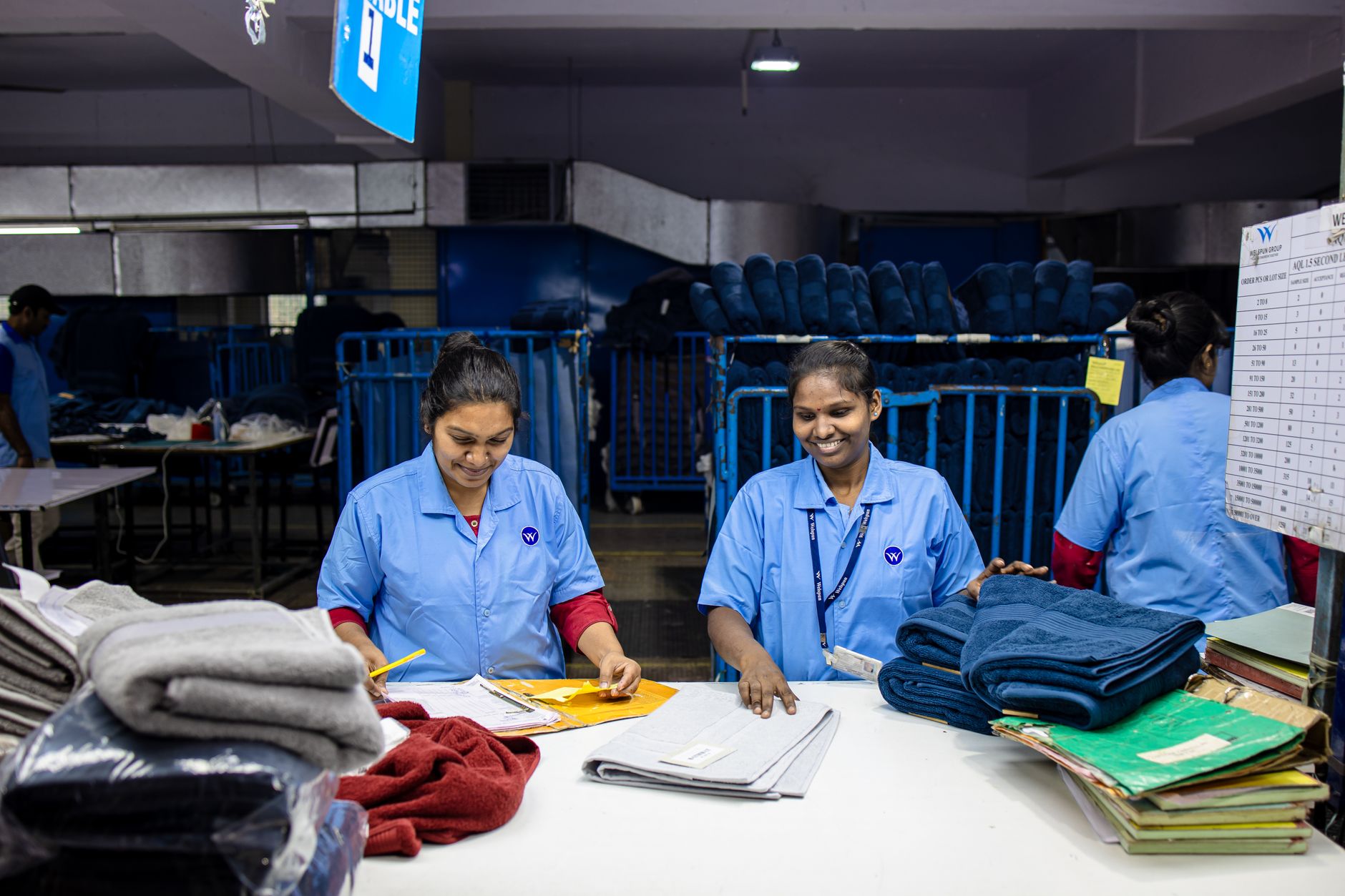
The Bureau of Labor Statistics Occupational Outlook Handbook reports about 2,447,700 jobs for janitors and building cleaners in 2024. It projects 2 percent growth from 2024 to 2034, which it calls slower than average, with about 47,800 new jobs and about 351,300 openings per year. That is the closest federal category we could confirm, and it is not a floor scrubber operator count.
The handbook does not publish a turnover rate for floor scrubber operators, so turnover has to come from your own records or sector surveys. A trade publication, American Laundry News, ran a staffing survey in which 49.2 percent of respondents answered yes and 50.8 percent answered no when asked whether their facility had a high turnover rate. The survey is undated in the version we reviewed, so read it as a sector signal rather than a figure for this year.
Hours vary by plant, and no verified national figure gives the hours a scrubber job takes per shift. The table below lists where the floor hours go, and it should be filled in from measured times at your site, not from an average.
Is a cleaning robot safer than a person on wet floors?
Slips, trips and falls are the injury category that matters most on wet floors. According to Bureau of Labor Statistics injury data for 2024, all private industry recorded 479,480 nonfatal cases with days away from work involving falls, slips and trips, a rate of 22.6 per 10,000 full-time workers. The same data counts 844 fatal falls, slips and trips across all sectors in 2024.
For the personal and laundry services subsector, which contains this work, BLS reports 0.6 cases with days away from work per 100 full-time workers in 2024, and 0.9 with days away, restriction or transfer. Those rates cover the whole subsector, not the drycleaning and laundry code alone, so treat them as direction rather than a plant benchmark. BLS also reports 2,569,000 recordable cases and 946,500 with days away for private industry in 2023, but those years do not match the rates above, so the figures should not be combined.
A robot reduces the number of times a person walks the repeat route with a heavy machine. It does not remove the wet floor, and spill response still falls to staff, so the safety case rests on the exception work as much as on the scrubbing.
How does a team work with a cleaning robot on the floor?
The team stays. The robot takes the scheduled scrubbing passes, while the operator or a lead handles spills, drains, chemical contact, floor checks and any damage. The aim is fewer staff hours on the repeat work, not zero staff, because a plant with no one on the floor has no one to handle the exceptions that stop a line.
We set that split during the site assessment. The robot is leased through financing, deployed and integrated with the plant's schedule, and staff are trained on the exception routine, the check routine and how to pause or reroute the robot when a spill appears. Service runs nationwide, so a fault is handled as a dispatch while the plan keeps its shape.
A typical shift still has a person at the start and end of each run, reading the log and clearing what the robot could not reach. The robot gives the team a steadier route, but the operator's judgment is what keeps the floor safe between passes.
What can a cleaning robot not do in a laundry plant?
A robot cannot handle what is not on the map. Carts, linen bins, hoses and pallets that move every shift cause pauses, skipped sections and manual rescue. Chemical spills, oil or detergent puddles that need a person to judge the surface, drain clearing and floor repair all stay with staff.
The robot also depends on the building. Doors, lifts, glossy wet areas and uneven thresholds can break a route, and a battery that runs low in the middle of a run leaves that section until someone resets it. A lease does not change any of this. The fix sits in the site assessment and the route plan, not in the machine alone.
- Chemical and oil spill response
- Drain clearing and blocked drains
- Moving carts, linen and pallets out of the path
- Deciding when a section is clean enough to release a line
- Repairs to the floor surface itself
How do you get started with a leased cleaning robot at a laundry plant?
Start with a free site assessment. We map the floor, time the scrubbing passes that happen today, note carts and drain positions, and identify the window between runs. The lease comes as a fixed robot lease payment, quoted after the assessment, so the figure reflects your floor and route rather than a general estimate.
A common start is one leased unit on one route, with a backup plan for a spare unit if the first one needs service. Run it for a few weeks, read the log, and widen the route only when the exceptions are predictable. Financing options, the lease term and what service is included are set out in the same quote.
Integration with the plant's schedule and go-live support come before the route is widened, and training covers the exception routine so the team knows what to do when the robot stops. Ask for the site plan in writing before you agree to anything.
Frequently asked questions
Want a cleaning robot at your commercial laundry plant?
Tell us about your site. We will recommend the robot, quote the lease, and keep it serviced.
Sources
- Census County Business Patterns figures, relayed by a data aggregator
- BLS-based firm counts for NAICS 812320, relayed by an aggregator
- NAICS code directory, linen supply and industrial launderers
- Bureau of Labor Statistics Occupational Outlook Handbook: Janitors and Building Cleaners
- Bureau of Labor Statistics injury and illness data for NAICS 812, personal and laundry services
- Bureau of Labor Statistics latest injury and illness numbers
- American Laundry News staffing survey