a rural U.S. manufacturer of solar mounting structures
300% Seasonal Demand Handled Without Additional Hiring
See how a rural solar mounting manufacturer handled a 300% seasonal demand increase without adding staff by deploying a flexible welding cobot.
- 300%
- seasonal demand handled
- 2 to 3x
- lead time pressure
- 38 min
- welding takt time
- 16 to 24 mo
- stated hard ROI
Based on a documented real-world deployment. Figures are from public reporting; the organization is not named.
Capacity Collided With Geography
Every summer, demand for the manufacturer's solar mounting products jumped 300%. Yet its rural location made experienced welders difficult to recruit, leaving the existing crew to absorb a steep and predictable production surge.
The strain was already visible in customer lead times, which had stretched to 2 to 3 times their intended length. Conventional robotic cells were considered, but their fixed layouts, programming burden and batch-production bias did not suit a high-mix, low-volume shop where every required component must be ready before an order can ship.
- Seasonal welding demand exceeded the available skilled labor pool.
- Long lead times threatened the flow of complete mounting kits.
- Part variety demanded rapid changeovers rather than long production runs.
- Repetitive welding consumed talent better reserved for skilled fabrication work.
A Flexible Welding Cell Built Around the Crew

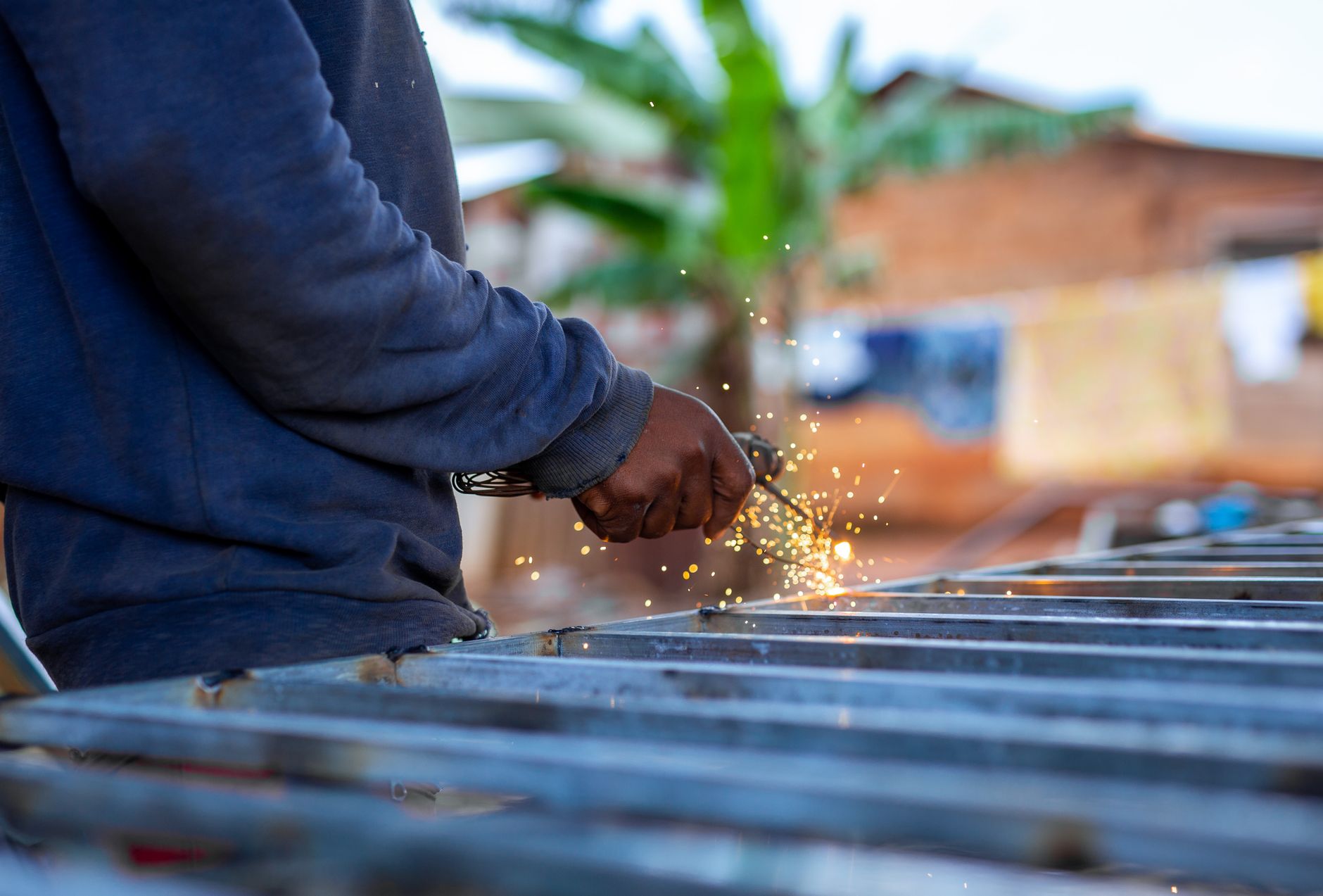
The manufacturer chose a collaborative MIG welding tool that existing personnel could set up, teach and reload. Instead of committing to a large fixed cell, the shop began with repetitive small parts such as collars, clamps and weld nuts, a practical entry point for high-mix automation.
Operators arranged jigs, positioned the torch and taught weld paths through a visual interface. Once programmed, the cobot completed specific part lists on a 38-minute takt, producing 4 to 12 parts per run before workers reloaded the fixtures or introduced a different job.
Adoption moved quickly because welders participated from the outset. Production parts were running the afternoon the equipment arrived, while straightforward troubleshooting and low maintenance supported continued use on the shop floor.
- Select repetitive welds with stable geometry and clear quality requirements.
- Build fixtures that let operators replenish parts while the cobot works elsewhere in its reach.
- Teach the welding team to program jobs and preserve its process knowledge inside the cell.
- Expand only after changeover speed, weld repeatability and operator acceptance are proven.
Seasonal Output Rose Without Expanding Payroll
The manufacturer handled a 300% seasonal increase in demand without hiring additional staff. The cobot supplied repeatable welding capacity while experienced employees moved toward more skilled, higher-value work.
Consistency improved on monotonous small-part runs, where manual fatigue had previously contributed to variation and scrap. Fast job changes also preserved the nimbleness required for a mixed production schedule rather than forcing the plant into large batches.
Management reported a tangible ROI of 16 to 24 months based on hard labor savings. The broader operational gain was capacity that could expand during the summer surge without making the entire production plan contingent on scarce seasonal welders.
A Capacity Planning Lesson for Seasonal Manufacturers
This is a documented real-world example analyzed by Service Robot Co., not a Service Robot Co. client deployment. Its lesson is unusually clear: a welding cobot can act as a flexible capacity buffer when demand is volatile, recruiting is constrained and the product mix punishes fixed automation.
Service Robot Co. is a full-service, OEM-neutral commercial robot integrator for U.S. businesses. We assess the application, select equipment across manufacturers, arrange financing, handle robot deployment and integration, train the operating team and service each unit through a nationwide engineer network.
For businesses evaluating collaborative robot arm rental or cobot rental for manufacturing, that lifecycle matters as much as the arm itself. A commercial robot demo or robot pilot program can validate fixtures, takt assumptions and operator workflow before broader deployment, with one partner and one service number throughout the equipment lifecycle.