a general contractor documenting a 500,000-square-foot project
How a 500,000-Sq.-Ft. Build Freed 20 Documentation Hours Weekly
A general contractor on a half-million-square-foot job used an autonomous quadruped for progress photos, freeing about 20 staff hours weekly for analysis.
- 20 hrs/wk
- Time reclaimed
- 5000
- Images weekly
- 500k sf
- Project scale
- After hrs
- Capture window
Based on a documented real-world deployment. Figures are from public reporting; the organization is not named.
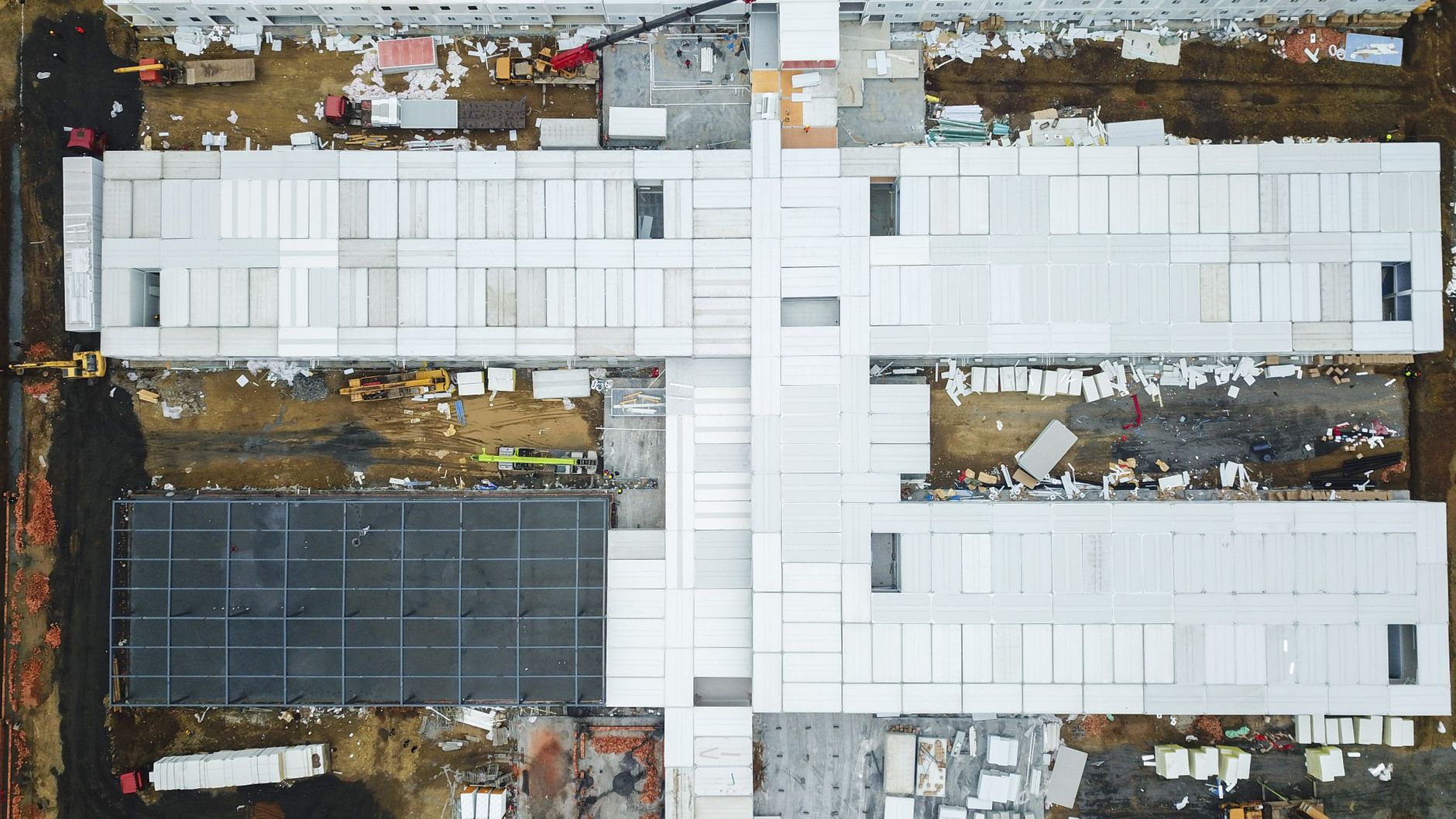
Progress photos ate half a workweek
This contractor needed dense visual documentation on a 500,000 square foot build to coordinate trades and compare field conditions to the model. Capturing roughly 5,000 progress images every week previously consumed up to half of one employee's workweek on that site alone.
Much of the work was repetitive walking with a camera through active zones, including areas that were awkward or risky during the day. Leadership wanted automated capture so project staff could spend time on analysis, coordination, and quality decisions instead of data collection.
- Thousands of weekly images required for reliable progress tracking
- Manual capture tied a skilled employee to a walking route
- Restricted or busy zones made daytime photography slow
Repeatable quadruped routes after close
The team deployed an autonomous quadruped fitted with a 360 degree camera and linked captures to their existing site documentation platform. Innovation staff trained a fixed path with predefined photo stops so frames matched week to week.
The robot ran outside normal work hours, stopping only for battery swaps. Managers could compare daily or weekly image sets against the 3D model to spot drift early and align subcontractors before rework spread.
- Map repeatable capture points across the half-million-square-foot footprint
- Schedule autonomous runs when crews are off the floor
- Feed imagery into model comparison workflows for trade coordination
Twenty hours back for higher-value work

Documentation that previously required up to twenty hours of employee time each week on this site moved to the robot's after-hours route. The assigned employee shifted toward reviewing captures instead of walking the full circuit.
Within the first month, the team reported a modest reduction in overall delivery time because staff could focus on interpreting data rather than gathering it. The documentation platform saw heavier use once collection labor dropped.
What large builds can expect from integrator support
This account is a published real-world example, not a Service Robot Co. deployment. It still shows why U.S. contractors look for vendor-neutral help when progress capture scales with square footage.
Service Robot Co. selects quadruped and inspection robots across manufacturers, then finances, deploys, integrates, trains, and services units through a nationwide engineer network. One partner covers route design, platform handoff, and maintenance so field teams are not juggling multiple vendors mid-build.
On a phased robot rental or pilot, you can prove a single after-hours documentation loop on one wing before you expand capture points across the full slab.