
Key takeaways
- Food and consumer-goods industrial robot orders rose 17% in the first half of 2026 and 18% in Q2 year over year.
- Two consecutive quarters of growth make the signal more useful than a single project-driven spike.
- Stable end-of-line handling is the clearest mainstream entry point, while variable direct-food work remains harder.
- Plants should begin application discovery now, but approve projects from task-level evidence rather than market headlines.
The clearest signal is steady adoption, not a buying frenzy
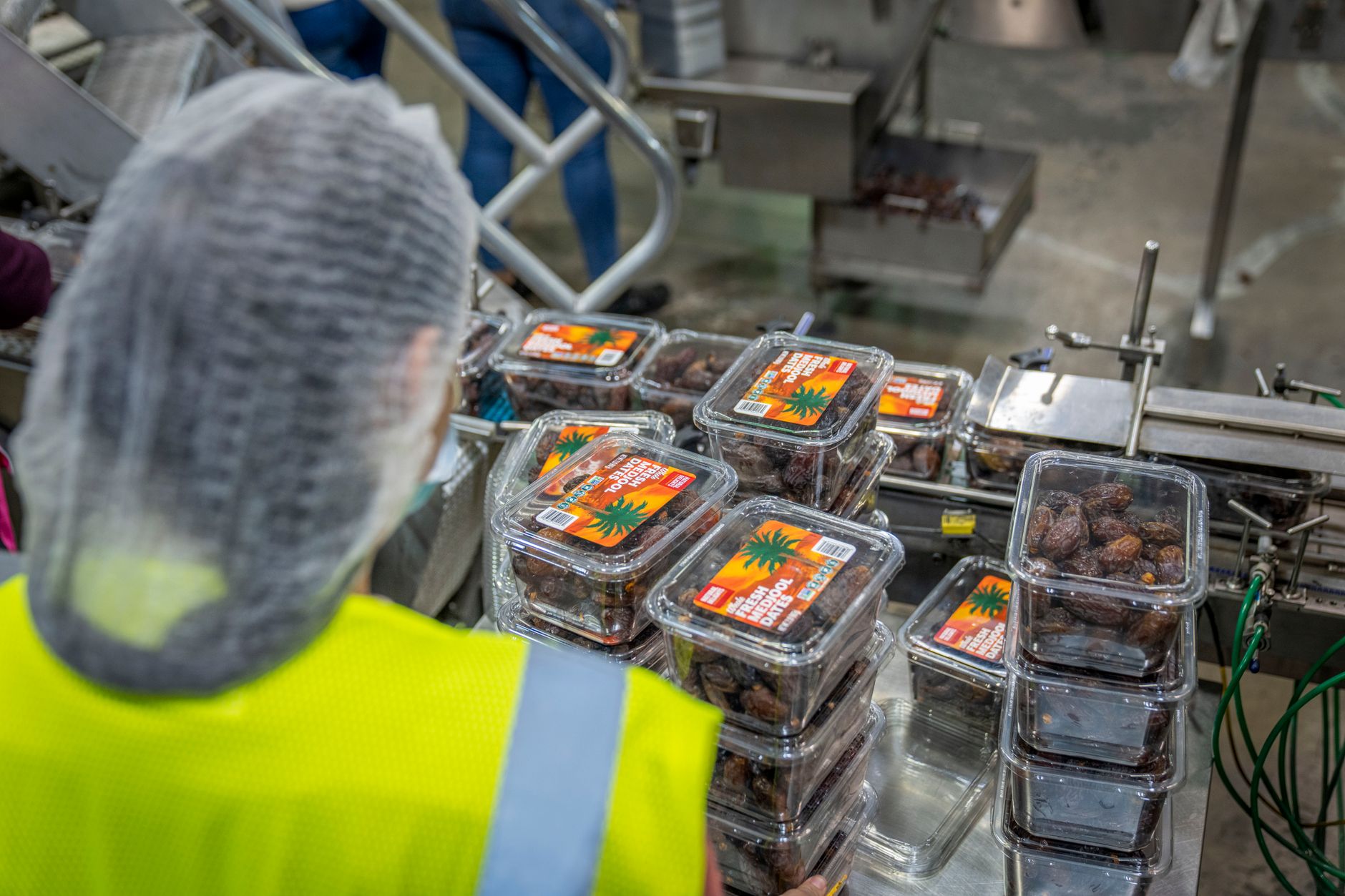
Food and consumer-goods plants are moving industrial robots into the practical middle of the adoption curve. According to the Association for Advancing Automation, or A3, unit orders from its Food & Consumer Goods category rose 17% in the first half of 2026 and 18% in the second quarter compared with Q2 2025. That points to wider acceptance of repeatable plant-floor applications, especially around packing, palletizing and line support.
The timing implication is direct. Plants with stable products, recurring labor pressure and a well-understood bottleneck should start scoping projects now, before the next capacity crunch dictates the schedule. Plants with highly variable products, unsettled layouts or unresolved sanitation requirements should use the same period for trials and engineering work, not rush into a fleet purchase.
A3's figures cover industrial robot orders in a manufacturing end market. They do not measure restaurant robots, food delivery robots or the full autonomous mobile robot market. They also do not reveal which applications produced the food-sector increase, so the most useful reading combines the reported order pattern with the operating characteristics of food plants, without pretending the public data says more than it does.
What does the Q2 order mix actually show?
North American companies ordered 8,940 industrial robots valued at $622 million in Q2 2026, A3 reported on August 11. Units increased 4.3% year over year, while order value increased 21.3%. For the first half, orders reached 17,995 units valued at $1.166 billion, up 2.0% in units and 6.6% in value from the first half of 2025.
Food and consumer goods outpaced the overall market on units in both periods. The category had already risen 16.0% in Q1, according to A3's May report, followed by 18% growth in Q2. That consistency matters because industrial robot orders can be lumpy. A few large projects can distort a quarter, but similar growth across two consecutive quarters is a firmer signal that more plants are approving projects.
The market is also less dependent on vehicle plants. Non-automotive customers accounted for 56% of Q2 robot units, while orders from automotive original-equipment plants fell 25% across the first half. Food plants are therefore part of a broader shift in the customer base, not a footnote to an automotive cycle.
The gap between Q2 unit growth of 4.3% and value growth of 21.3% deserves restraint. It may reflect larger systems, more integration content, price changes or a different application mix. The public release does not separate those causes, so it cannot support a claim that an average robot suddenly became 17 percentage points more expensive.
Which applications look closest to mainstream?
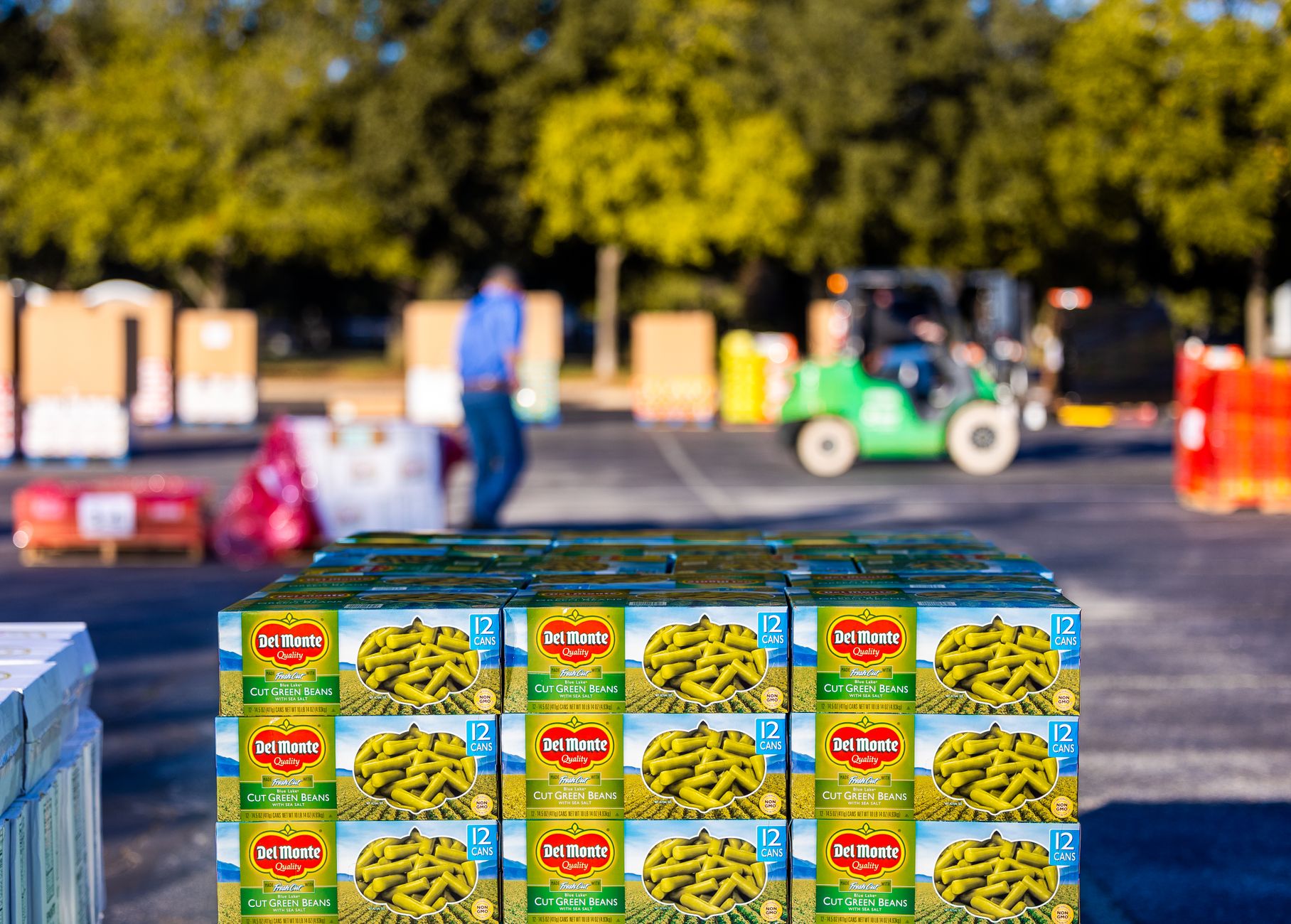
The strongest candidates are tasks with orderly product presentation, fixed pickup points and measurable cycle requirements. End-of-line automation fits that description better than most work near raw ingredients. Cases are more uniform than loose food, the environment is usually less punishing, and the cell can often be isolated without redesigning the process upstream.
That puts palletizing, depalletizing, case packing, tray handling and secondary packaging at the front of the queue. A palletizing robot lease or cobot leasing for manufacturing can also create a bounded first project when seasonal volume makes permanent capacity difficult to size. The important distinction is not the label on the machine. It is the repeatability of the task.
Several application groups now warrant serious evaluation in ordinary capital planning:
- End-of-line case handling and palletizing where package dimensions, weights and rates stay within a defined operating window.
- Pick-and-place between established conveyors, wrappers, cartoners and inspection stations.
- Machine tending robot cells for packaging equipment with repeatable loading, unloading and fault-recovery steps.
- Vision-guided inspection and reject handling where defects can be defined, presented and verified consistently.
- Repetitive transport automation between production, packaging and finished-goods staging, evaluated separately from A3's industrial robot figures.
Why is end-of-line automation crossing first?
End-of-line work sits at a useful intersection of repetition, ergonomic burden and production value. A stopped palletizer can back up an entire packaging line, while an unreliable handoff can create damaged cases, unstable loads and rework. These costs are visible enough to build a credible baseline before a commercial robot demo.
The labor context also supports attention here. The U.S. Bureau of Labor Statistics projects nearly 1 million openings in production occupations each year on average from 2024 through 2034, primarily because workers leave those occupations permanently or move to other work. That is not a food-only shortage figure, but it explains why plants are reserving people for changeovers, quality decisions, sanitation and maintenance instead of repetitive lifts.
Safety data sharpens the case without proving that every task should be automated. BLS recorded a total recordable injury and illness rate of 3.3 cases per 100 full-time workers in food manufacturing during 2024. Seafood product preparation and packaging recorded 5.0, while commercial bakeries recorded 3.7. A task-level ergonomic review is still essential because industry averages cannot predict the risk at one pallet station.
Where do collaborative robots fit in the picture?
Collaborative robots accounted for 2,774 units in the first half of 2026, or 15.4% of all units ordered, according to A3. In Q2 alone, buyers ordered 1,137 collaborative units, equal to 12.7% of total units. Those are meaningful market shares, but A3 did not publish a collaborative share for Food & Consumer Goods in the public release.
For food plants, a collaborative robot arm lease is most credible where access, payload and speed requirements permit a carefully assessed shared workspace. Lower-volume case packing, machine tending and pallet patterns with frequent product changes may fit. A high-throughput line with heavy loads may need guarding and a conventional industrial cell instead.
Collaborative does not mean inherently safe in every application. OSHA says robot risk assessment must consider the programmed tasks, end tooling, environmental conditions, maintenance, foreseeable errors and possible malfunctions. Sharp tools, pinch points and a heavy case remain hazards even when the arm is designed for collaborative operation.
Which jobs are still earlier on the adoption curve?
Variable direct-food handling remains harder than moving sealed cases. Irregular shape, moisture, grease, temperature, fragile products and frequent recipe changes complicate gripping and perception. The technical demonstration may look persuasive while cleanability, allergen control or changeover time quietly breaks the operating case.
Primary cutting, trimming and handling of deformable products should therefore clear a higher proof threshold than secondary packaging. The Food and Drug Administration says food current good manufacturing practices cover plant equipment, sanitary operations and production controls. Its guidance also says food-contact surfaces must be cleaned as often as necessary to prevent allergen cross-contact and contamination.
A pilot must test the full sanitation cycle, not only production. Inspect access around joints, cables, fasteners, guarding and end tooling. Record teardown, cleaning, drying, reassembly and pre-operation inspection. A cell that meets cycle time but lengthens sanitation or creates harborage points has moved the constraint, not removed it.
Mobile transport needs a separate reading too. An AMR pallet mover or material handling robot leasing may be a strong plant project, but A3's industrial robot order release does not establish AMR demand. Validate traffic rules, washdown boundaries, floor transitions, charging, pallet condition and recovery behavior on their own evidence.
How should plants change their timing?
The data argues for earlier discovery, not indiscriminate acceleration. Start with a ranked task register that records actual cycle time, labor hours, stoppages, ergonomic exposure, sanitation burden, product variability and upstream constraints. The first project should have a clean baseline and an owner who can make operating decisions during deployment.
Move to a robot pilot program when the product presentation and acceptance criteria are stable enough to test. Include normal production, changeovers, sanitation, faults and operator recovery. For end-of-line automation, confirm every case size, pallet pattern, label orientation and rate condition expected in the approved scope.
Delay purchase when a line redesign, package change or major capacity decision is still unsettled. Automation attached to a moving target accumulates engineering changes quickly. A phased deployment with no shutdown may reduce disruption, but only when interfaces, installation windows and fallback procedures are agreed before equipment arrives.
Financing should follow technical proof. Monthly payment programs, robot leasing for business or lease purchase programs can align spending with production, but contract structure cannot rescue a weak application. Compare robot leasing vs buying only after throughput, staffing, service coverage and useful life are credible.
Integration quality will separate good timing from rushed timing
Food plants rarely buy an arm in isolation. The operating system includes end tooling, conveyors, controls, guarding, vision, recipes, washdown boundaries, training, spares and service response. Robot deployment and integration must address the complete cell and its relationship to production, sanitation, quality and maintenance.
Service Robot Co. works as an OEM-neutral, full-service commercial robot integrator for U.S. businesses. It selects equipment across manufacturers, then finances, deploys, integrates, trains and services each unit through a nationwide engineer network. That one-vendor lifecycle is particularly useful when a plant needs one partner and one number across mixed equipment and multiple sites.
Use the market signal to bring operations, engineering, sanitation, safety, quality and finance into the same application review. Then ask a vendor-neutral robot integrator to test the task against more than one equipment path. The right robot is the one that fits the product, floor, process and service model, not the one that happens to lead a sales presentation.
A3's Q2 data makes waiting for robotics to become normal in food manufacturing a weaker position. Normal has begun. The plants that benefit will still be the ones that choose disciplined applications, document risk and sanitation requirements, and scale only after the first cell earns trust on the floor.
Frequently asked questions
Sources
Service Robot Co. is not affiliated with, sponsored by, or endorsed by the companies mentioned in this article.