Key takeaways
- Hot-water scrubbing is useful on grease, syrup, soda, coffee and fryer residue, not on ordinary dust and dry debris.
- Compact robots with heat need the right dock, water workflow and floor type, or the temperature feature turns into staff babysitting.
- Real wood and moisture-sensitive floors need extra caution. Many resilient and safety floors can handle wet scrubbing, but only within the flooring maker's rules.
- The right buying test is not the headline temperature. It is fewer touch-ups, cleaner one-pass results and dry floors after the run.
Yes, but only on the right soil and the right floor
Compact floor robots do not need hot-water scrubbing to be useful. For many small sites, cold-water scrubbing is enough. If the nightly problem is light dust, tracked dirt, or dry debris, heat adds complexity without changing the outcome very much. Where heat starts to matter is the messy middle of real operations, grease haze in a quick-service kitchen, syrup around a drink station, sticky coffee residue in a convenience aisle, and breakfast spill tracks in a limited-service hotel.
The market is clearly moving in that direction. According to a robotics manufacturer's August 12, 2026 launch note, a newly released compact scrubber targets spaces of 100 to 800 square meters, about 1,076 to 8,611 square feet, and pairs an 85 C hot-water dock with onboard heat retention for grease and sticky residue in convenience stores, drugstores, chain restaurants, and economy hotels. That is a real capability claim aimed at a real pain point.
Still, temperature alone does not settle the buying question. Heated scrubbing only pays when five things line up at once: the soil actually responds to heat, the flooring can tolerate wet mechanical cleaning, the robot has enough water and recovery capacity, the dock setup does not create extra labor, and the site can prove the hot-water mode beats a cold-water baseline in a fair test.
What soils actually justify heat?
Heat helps most when the floor contamination contains fats, oils, sugars, or drink residues that soften and release more easily with warm or hot water. According to the UK Health and Safety Executive, one school kitchen cut slip incidents by 50 percent after changing its mopping method, including correctly dosed detergent with hot water and brief dwell time before removal. That is not proof that hot water alone solved the problem, but it is strong evidence that heat can materially improve grease removal when the soil calls for it.
The same logic applies to compact autonomous scrubbers. Heat can loosen fryer film, soft-drink syrup, melted candy, coffee drips, cosmetic smears, and the dull tack that builds up where traffic grinds sugary residue into the floor. It matters far less on dry grit, paper dust, tracked-in soil, or ordinary footprints. In those cases, brush pressure, recovery, path coverage, and repeatability usually matter more than water temperature.
- Strong candidates for heated scrubbing: fry-line overspray, fountain drink splash zones, coffee and slush residue, bakery sugar film, sticky entry soils during wet weather, and cosmetics or lotion smears on resilient retail floors.
- Weak candidates for heated scrubbing: dry dust, loose litter, salt crystals, light scuffs, and low-soil corridors that already come clean in one cold-water pass.
Which sites benefit most from heated scrubbing?
Small restaurants are the clearest fit. Front of house dining rooms do not always need heat, but beverage stations, condiment islands, and back-of-house transitions often do. OSHA says floors should be kept clean and dry, and that matters because restaurant slips start where wetness and residue combine. Heat is most valuable where staff would otherwise come back with a mop after the robot finishes.
Drugstores and convenience-heavy retail sit in the next tier. Aisles full of dry-packaged goods usually do not justify heated scrubbing. The sticky zones do: cold beverage doors, front-end drink coolers, coffee bars, cosmetic areas, and entry strips during bad weather. Limited-service hotels also split neatly by zone. Guest corridors rarely need a heat premium. Breakfast bars, elevator lobbies near vending or ice, and service paths from back entry to pantry often do.
For operators managing several small sites, the pattern is simple. Buy heat for localized sticky-floor environments, not because the building is small, retail, or hotel-branded. A compact robot should be chosen by its dirtiest recurring hard-floor zone, not by the cleanest square footage on the floor plan.
- Best fit: quick-service and fast-casual sites with drink syrup, fryer haze, or greasy transitions.
- Good fit: convenience retail, drugstores, and economy hotels with recurring sticky spill zones.
- Poor fit: mostly dry offices, standard hotel corridors, and sites where the main hard-floor task is light dust pickup.
Why tank size and dock design matter more than the headline temperature
Compact machines live under tight water limits, and that changes the economics of hot scrubbing. On the official product page for the August 2026 launch, the robot is listed with an 8 liter clean-water tank, a 7.2 liter waste tank, 300 to 720 square meters per hour of cleaning efficiency, 2.5 to 4 hours of runtime, and an 8-in-1 dock that automates charging, refill, drainage, dosing, rinsing, and water heating. Those numbers are respectable for a small robot, but they also tell you the truth. This is a compact platform, not an unlimited wash system.
That means the dock is not a side accessory. It is part of the cleaning method. If heated scrubbing depends on staff carrying water, emptying recovery tanks mid-run, or restarting the machine after every sticky zone, the feature quickly turns into specification-sheet novelty. The value appears when the dock refills, drains, reheats, and resets the robot with very little human intervention.
Buyers should also resist the top-line throughput figure. A published range such as 300 to 720 square meters per hour covers different cleaning modes and conditions. In practice, the sites that need hot water also tend to need slower travel, better contact, and more careful recovery. Treat the high number as ceiling data. Validate hot-water performance on your real floor at your real soil load.
Which floor types need caution before you turn the heat up?
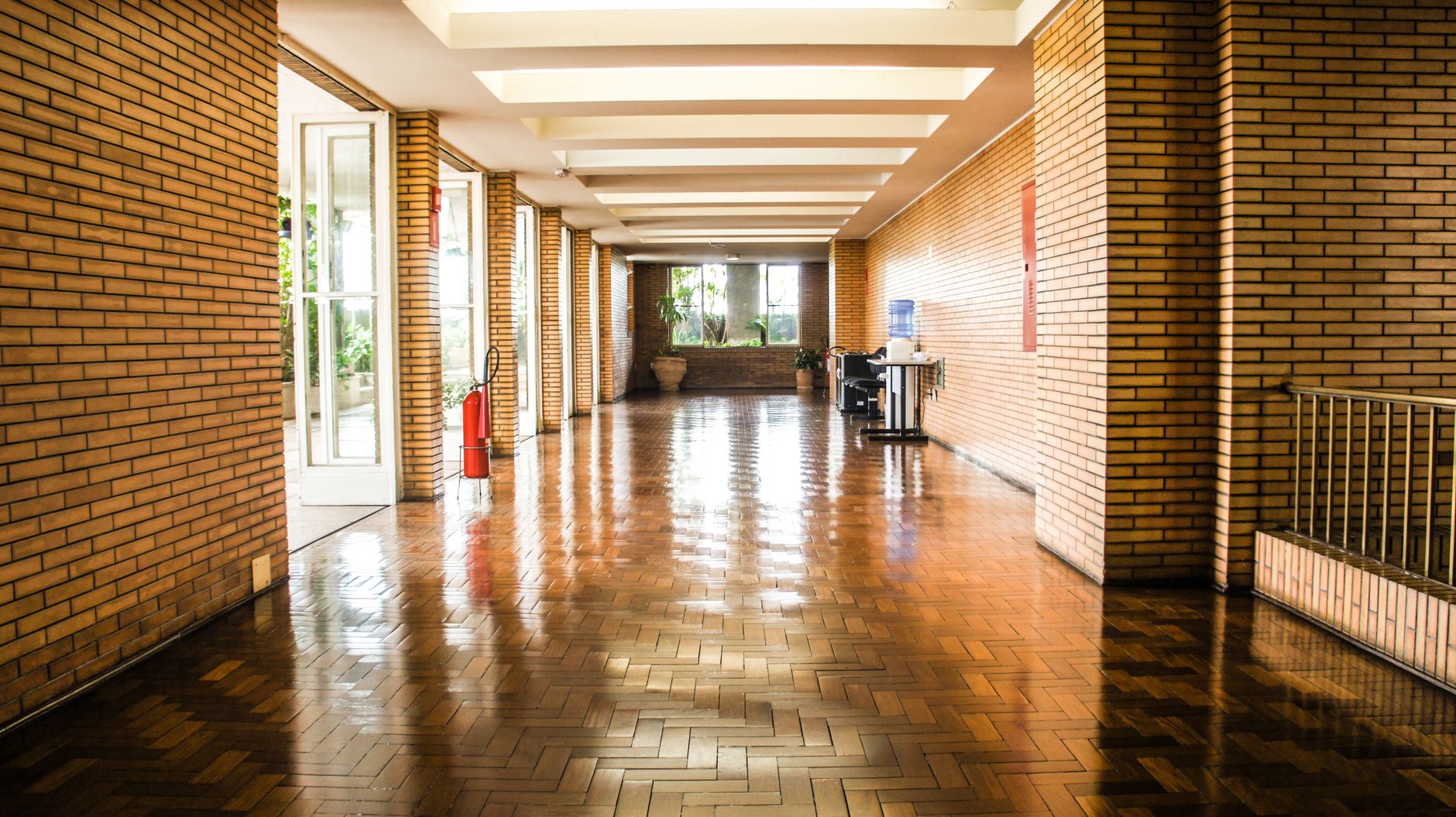
Resilient sheet, vinyl tile, and many sealed hard floors are usually the safest starting point, but even there the floor maker's instructions still govern. Armstrong Flooring's commercial maintenance instructions call for a damp mop with properly diluted cleaner for daily care, warn against using an excessive amount of liquid, and allow machine scrubbing with clean-water rinse for heavy soiling. That supports wet robotic scrubbing, but it does not support flooding seams, overwetting edges, or using hotter water than the floor system and adhesive package can tolerate over time.
Wood is a different story. Mohawk Group's engineered hardwood care manual says never wet-mop or damp-mop hardwood floors with water or other liquids because excessive moisture can cause the floor to warp. That alone should stop most buyers from assuming hot-water scrubbing belongs on real wood, wood-heavy lobby inlays, or moisture-sensitive decorative surfaces without written flooring approval.
Safety flooring also needs nuance. Altro notes that wet and greasy back-of-house areas require flooring designed for that contamination profile, and its hygiene guidance warns that hot-water lances can damage PVC floors if used above temperature recommendations. In plain terms, hot water cannot rescue the wrong floor, the wrong cleaner, or the wrong texture. On stone and marble, the question is less about heat alone and more about sealer compatibility, residue recovery, and repeated exposure. Pilot first, then scale.
How should you validate heated scrubbing before rollout?
Do not judge this capability in a ten-minute demo on a freshly prepped aisle. Run an A and B test on the site's real worst area, one cold-water setting, one heated setting, same path, same detergent, same operator involvement, same time of day. Test for at least one to two weeks so you see how the floor behaves after repeated cleaning, not just how it photographs on day one.
The best validation is operational, not theatrical. Did the robot remove sticky residue in one pass instead of two? Did the morning staff stop spot-mopping the soda island? Did the floor dry cleanly, with no film and no slip complaints? Did chemical usage go down, or did teams quietly add more detergent to compensate? Those are the answers that decide if heat is earning its footprint.
- Track one-pass clean rate on the stickiest zone after close and before open.
- Record touch-up labor minutes after the robot run, especially around beverage, fryer, coffee, and breakfast areas.
- Check dry-back quality. Floors should look dry and feel stable, not tacky, streaked, or over-wet.
- Review wastewater and residue patterns after repeated runs. A machine that looks good on pass one but leaves buildup by day four has not solved the problem.
- Confirm flooring and chemical compliance before chainwide rollout, especially on wood accents, safety flooring, stone, and mixed-surface entries.
Why integration matters more than a hot-water checkbox
Most heated-scrubbing projects succeed or fail on deployment details, not on the heater itself. Dock location, drain access, refill workflow, outlet availability, chemical policy, quiet-hours scheduling, staff training, and service response all shape the result. A compact robot that technically has hot water but misses its dock, runs out of clean water, or gets parked in a janitor closet every night will never deliver the cleaning performance promised in the brochure.
This is where Service Robot Co. has a practical advantage. We are a full-service commercial robot integrator for US businesses, OEM-neutral by design. We evaluate the site, pick the right robots across manufacturers, then finance, deploy, integrate, train, and service every unit through a nationwide US engineer network. One vendor handles the full lifecycle, which matters a lot when the question is not just can this robot scrub hot, but can this location support it reliably every night.
For operators exploring commercial cleaning robot rental, autonomous floor scrubber rental, or a robot as a service program, that discipline matters even more. A floor scrubber monthly lease, monthly payment program, or robot financing for small business only makes sense if the machine actually fits the floor, the soil, and the dock constraints. The smarter path is a commercial robot demo or robot pilot program first, then the right lease rental or sale structure after the test proves out.
What a sensible buying decision looks like
Choose heated scrubbing when the sticky-floor burden is frequent, the hard floor is compatible, the dock can automate water handling, and the site can show a measurable drop in touch-up labor or repeat passes. Skip it when the floor is mostly dry soil, the surface is moisture-sensitive, or the staffing workflow makes heated water a manual chore rather than an automated routine.
In short, hot-water scrubbing is a useful capability, not a universal requirement. For small restaurants, drugstores, limited-service hotels, and similar sticky-floor environments, it can materially improve cleaning. For many other compact sites, a well-matched cold-water robot with strong recovery and a disciplined deployment will do the job just as well. Buy the cleaning method, not the bragging rights.
Frequently asked questions
Sources
Service Robot Co. is not affiliated with, sponsored by, or endorsed by the companies mentioned in this article.