Key takeaways
- Dense canopy, nearby walls and parking structures can block or bounce the satellite signals an RTK mower depends on.
- A healthy-looking connection does not prove the mower knows where it is, because reflections can shift its calculated position.
- Ask every vendor what the mower does when the fix drops, and whether it stops, slows or wanders.
- Sky gaps at the corners and under the heaviest canopy matter more than a clear view from the middle of the lawn.
- Any of these findings points to a free site assessment before a lease quote is built.
Can an RTK mower still work on a tree-lined lot?
Yes, often, but not necessarily everywhere on the lot. An RTK mower needs a clear view of satellites and a correction signal from its base. Tree canopy, building shadows and parking structures can interfere with both, which is why a tree-lined lot needs its own check before anyone commits to a mowing plan.
Vendor guides agree the effect is real, though none of the material we reviewed came from an independent test. The practical question is narrower: does the lot leave enough open sky over the mowing zones and the base station. A free site assessment answers that before any lease is quoted.
What blocks the signal on a tree-lined property?
Canopy is the obvious culprit. As of November 2026, Husqvarna's installation guide says buildings or trees in or around the lawn can block satellite signals. Sunseeker's guide goes further and calls operation under dense canopy a critical limitation, because RTK fails where the signal is blocked.
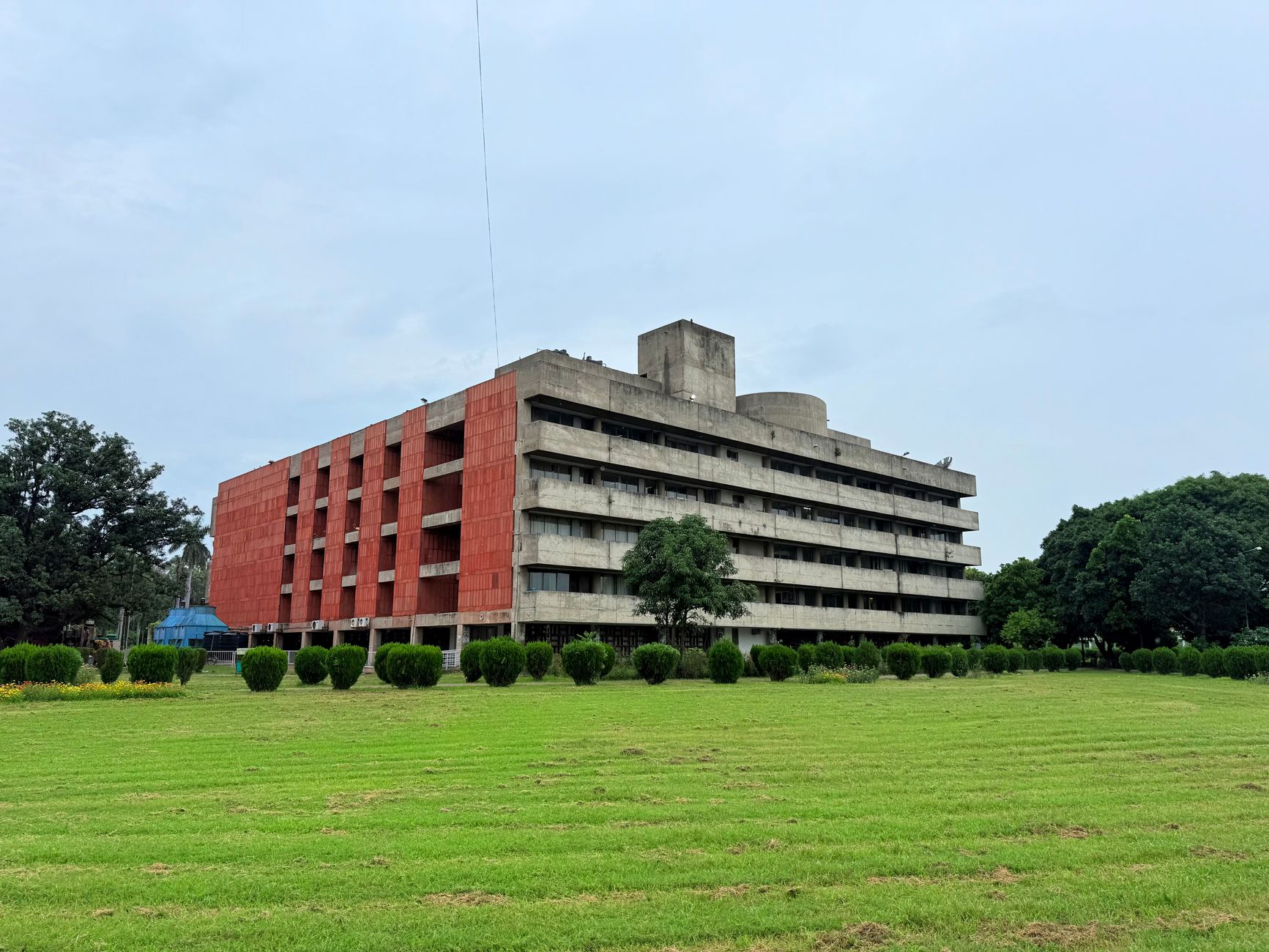
Building shadows and parking structures are easier to overlook. A wall, a deck or a multi-level garage can cut the sky along one edge of a lot, and that shadow moves across the day. A single walk at one hour can miss it, so the check should cover more than one visit or more than one time of day.
Why does a healthy-looking fix still mislead?

Reflections are the trickier problem. Mowrator's vendor blog describes how reflections off trunks, fences, walls or sheds can shift the calculated position while the receiver stays connected. The status light can look fine while the mower's sense of its position drifts.
That same blog notes the effect gets worse when walls or fences also limit the view of the sky. More satellites do not fully solve it. Unmanned Systems Technology reports that multi-constellation GNSS improves availability but does not remove multipath or canopy attenuation.
What happens when the fix drops mid-mow?
Behavior depends on the fail-safe logic built into the mower. Under dense canopy an RTK-only mower can lose its fix, and depending on that logic it may slow, pause or wander. These reports come from vendors, so treat them as a description of design risk rather than a measured failure rate.
For a commercial account the difference matters. A paused mower leaves uncut strips that a crew has to catch, and a wandering one becomes a problem near beds, drains and cart paths. Put these questions to any vendor before a lease is discussed:
- What the mower does when the fix drops: stop, slow, or hold a dead-reckoning track
- How long it searches before it returns to the dock or halts
- Whether vision, LiDAR or inertial sensing carries its motion through gaps
- Which zones it avoids until a reliable fix returns
What should a property walk actually test?
Walk the hardest spots, not just the open lawn. The rtkdata accuracy guide advises testing boundary reliability at the hardest corners and under the heaviest canopy, because open-sky runs do not show how a mower behaves at the edges. A sky view taken from the middle of a lawn can look excellent and still hide the trouble.
Check the base as well. Husqvarna says the reference station needs an open view of the sky and power within reach. One vendor guide advises an elevated base with open sky, away from reflective surfaces. A base placed beside a wall can undo an otherwise good mowing area.

Which findings point to a free site assessment?
Any one of the following findings moves a job from a simple quote to a site-specific one. Note them during the walk and bring the list to the assessment.
- Gaps in sky view at the corners or under the heaviest canopy
- Walls, fences, sheds or parking structures close to the mowing boundary
- A base position without open sky or nearby power
- Sensitive areas such as drains, beds or cart paths where a lost fix would matter most
Where do hybrid sensors and boundary wire fit?
Some makers pair satellite positioning with vision, LiDAR or inertial sensing, so the mower can carry its motion through gaps and reconcile with the satellite fix when it returns. Navimow's academy page describes this approach for thick canopy. As of November 2026 that is a product claim, and we did not find an independent test that confirms it.
Network RTK, which takes its correction over a cellular link, is offered by some makers. Kress warns that obstruction can affect that correction path too, so it does not remove the sky-view question. Boundary wire is the older route, and one vendor guide says it works under tree cover, at the cost of installation time.
Service Robot Co. is OEM-neutral. We match the mower to the lot, then lease, deploy, integrate and service it through a nationwide US engineer network, so one partner handles the whole lifecycle. A lot with mixed canopy may call for more than one mower approach, and we make that call from the site walk and the assessment, not from a brand catalog. Commercial robot leasing works best when the site is mapped first, and we are glad to walk through robot lease options once it is.
Frequently asked questions
Want a robot working for you?
Tell us the job and the site. We will recommend the robot, quote the lease, and keep it serviced.
Sources
- Husqvarna, wire-free lawn mower installation guide
- Sunseeker Tech, how RTK technology transforms robot lawn mowing
- Mowrator, RTK robot mower signal loss and trees
- Unmanned Systems Technology, RTK positioning accuracy in wire-free robot mowers
- Navimow Academy, wire-free robotic mowers under thick tree canopies
- Kress, RTK and network correction product page
- rtkdata, wire-free robot mower RTK accuracy guide 2026
- Household Robot, RTK GPS lawn mowers guide