Key takeaways
- Use drones for rapid overhead coverage, crawlers for stable close inspection, and tethered platforms when dependable data and recovery matter most.
- Standing water, wet coatings, structural transitions, radio shadows, and retrieval routes should determine the platform before payload specifications do.
- A visual survey can locate coating failure and suspected corrosion, but required thickness measurements need suitable ultrasonic equipment and approved procedures.
- Robots reduce confined-space exposure, but the attending surveyor, atmosphere-testing duties, and any ordered confirmatory inspection remain human responsibilities.
Which robot works best in a ballast tank?
No single inspection robot is best for every ballast tank. A drone is usually strongest for rapid visual coverage of upper webs, deckheads, brackets, and other elevated structure. A crawler is better when the survey needs stable, close imagery or contact measurements on accessible steel. A tethered ground or floating platform earns its place when uninterrupted communications, longer operating time, and positive retrieval outweigh cable-management trouble.
For most shipyards, the practical answer is a mixed inspection plan. Use aerial coverage to map the tank, send a crawler to suspicious welds and coating failures, and reserve a tethered platform for radio-shadowed bays, long missions, or water-covered bottoms. The robot should be selected around tank geometry, surface condition, water level, required evidence, and the approved survey plan.
Robots can sharply reduce the amount of time people spend inside a ballast tank, but they do not automatically replace a class or statutory inspection. Survey credit depends on the vessel, flag Administration, classification society, inspection scope, equipment capability, and attending surveyor.
How do crawlers, drones, and tethered platforms compare?
A useful comparison begins with mobility, not the camera specification. Ballast tanks contain stiffeners, scallops, ladders, pipes, sharp transitions, sediment, and wet coating. A platform that produces excellent images on a test plate may fail at the first longitudinal frame.
The best inspection plan may assign different zones to different machines. This also limits the consequences of a single failure and gives the surveyor a better chance of obtaining equivalent evidence across floors, bulkheads, side shell, framing, and overhead structure.
- Crawler: Produces stable close views and can carry contact tools such as an ultrasonic probe. Magnetic adhesion depends on ferrous access, surface cleanliness, coating condition, curvature, and the ability to cross welds or structural breaks.
- Drone: Covers large and elevated areas quickly without scaffolding. It operates without satellite navigation inside the tank, and propeller wash, droplets, narrow bays, collision risk, flight endurance, and recovery after a crash can limit the mission.
- Tethered platform: Carries power, video, control, or a retrieval line through the access opening. It offers dependable communications and positive recovery, but the tether can snag around frames, ladders, and piping. A floating configuration can inspect submerged areas only when depth, visibility, and access permit.
Why do communications fail inside steel tanks?
A ballast tank is a hostile radio enclosure. Steel boundaries block direct paths, while frames and bulkheads create shadow zones and reflections. A wireless link that works beside the access hatch may disappear after the robot rounds a web frame or descends into a lower bay.
Plan communications as part of the route. Position approved relay equipment where line of sight can be maintained, test every compartment before the credited survey, and define link-loss behavior. A drone should stop, land, or return predictably. A crawler should brake or hold position instead of continuing beyond view.
For critical live video, a tether carrying copper or fiber is often the safer engineering choice. It also supports higher data rates and longer missions, but the team needs a cable tender, a snag map, bend-radius controls, and a method for keeping the tether away from sharp steel. Record video locally on the robot as well, since even a well-designed live link can stutter.
What do corrosion and wet coatings do to the mission?
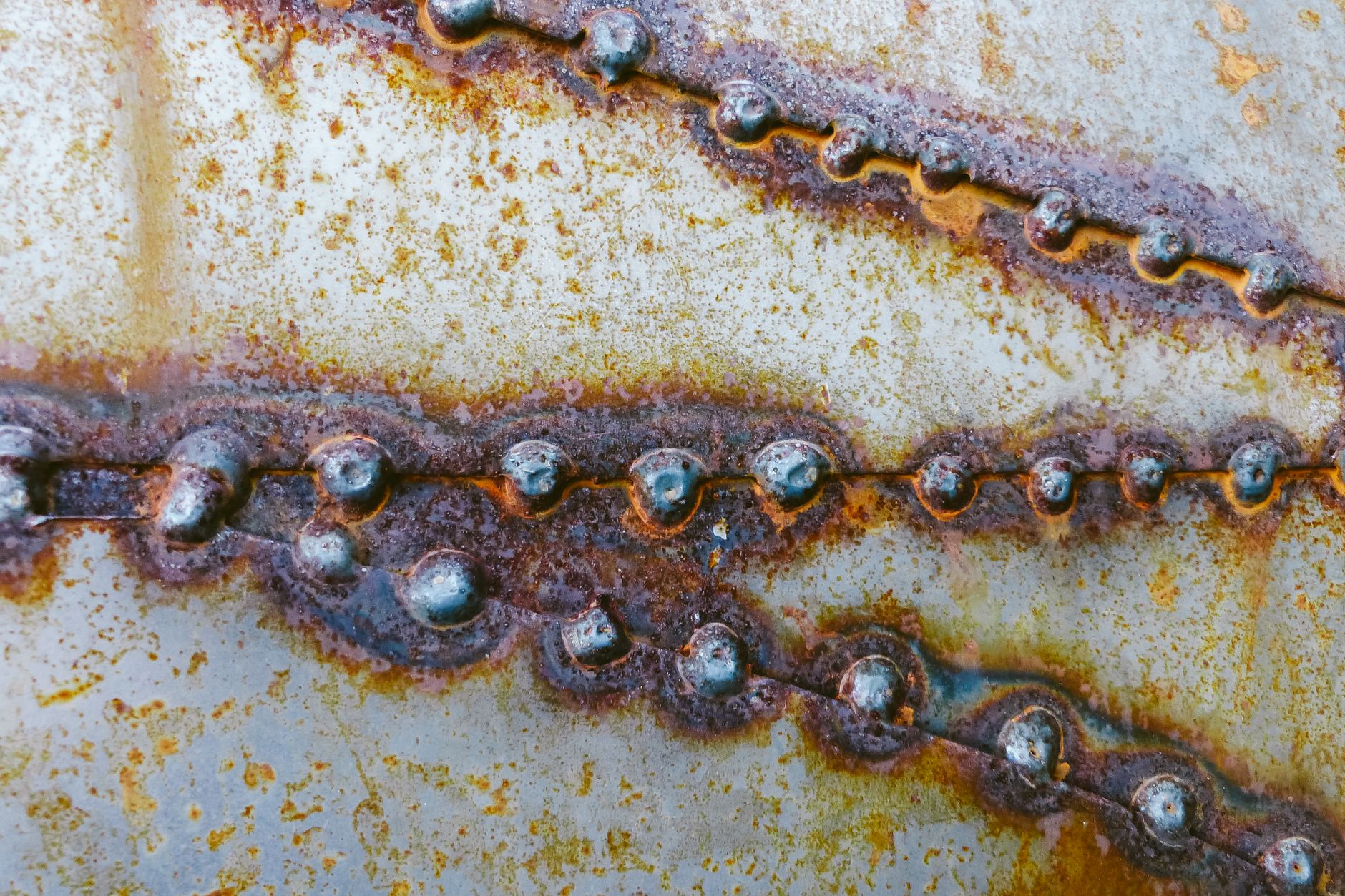
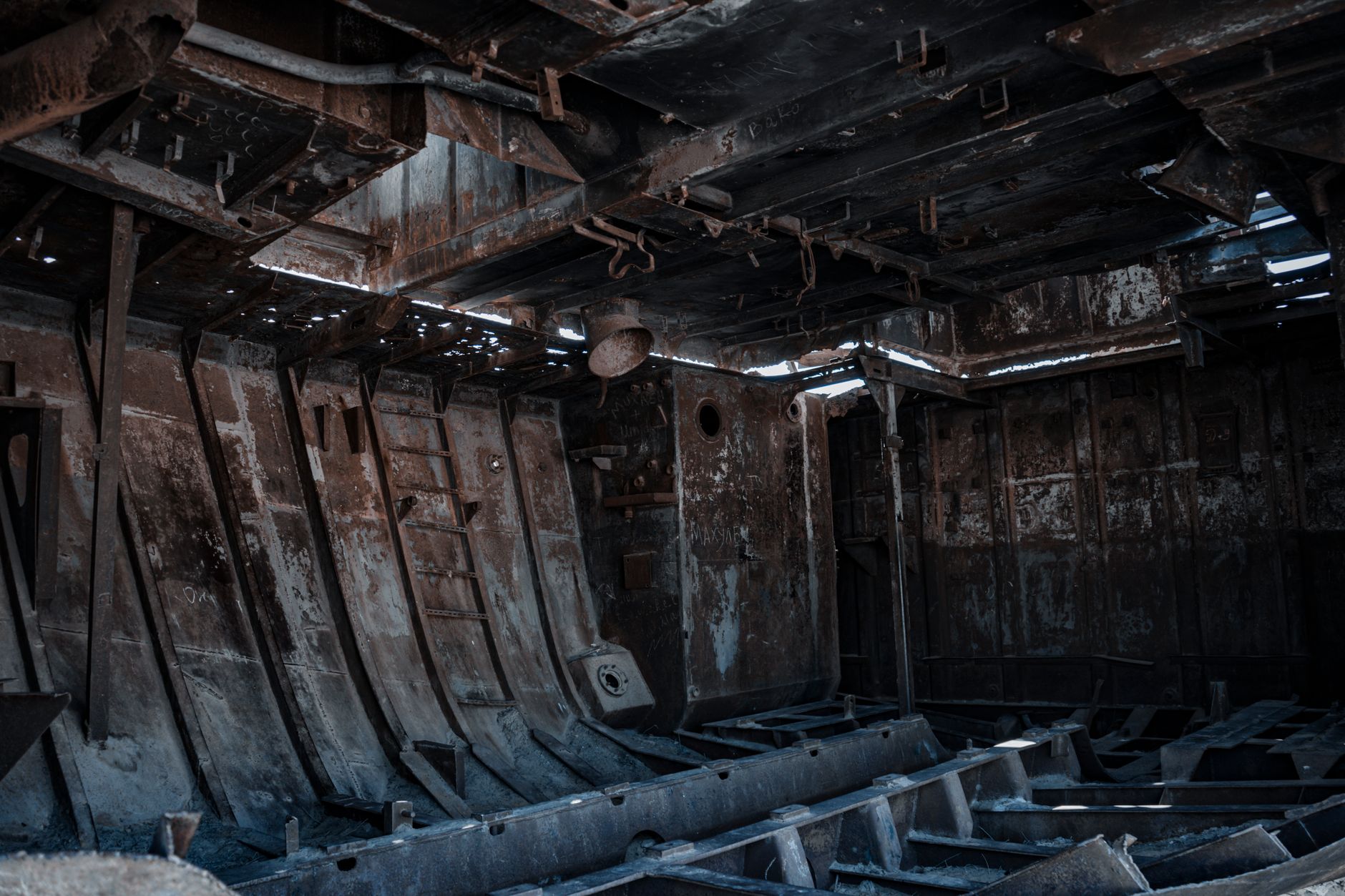
Ballast-tank corrosion is not merely a camera target. Scale can hide the edge of a pit, blistered coating can mask the substrate, and rust staining may lead away from the actual defect. Wet steel adds glare, while condensation softens contrast around cracks and weld toes. Loose scale also compromises magnetic adhesion and contact-probe coupling.
Lighting should combine broad illumination with adjustable oblique light. Flat frontal light can wash out texture, and a powerful lamp reflected by wet coating can erase detail. The operator should capture an establishing view, a close view, and a scale reference, while preserving orientation so the finding can be located again.
Visual evidence is a screening tool unless the approved method says otherwise. If wastage is suspected, thickness measurement may be required. An ultrasonic payload must reach the surface, maintain alignment and coupling, and associate every reading with a traceable structural location. Cleaning or conventional access may still be necessary where scale prevents a defensible measurement.
How should the team handle standing water?
Standing water changes the inspection category. A shallow film can defeat traction, conceal bottom plating, foul wheels, and reflect the lights into the camera. Deeper water may justify a tethered floating platform, but turbidity, sediment, bubbles, and insufficient clearance can make its pictures inferior to those from a drained and cleaned tank.
Establish the actual water depth and likely change in level before deployment. Confirm that the robot, connectors, tether terminations, and recovery equipment are suitable for the exposure. Do not treat a splash rating as permission for submersion, and do not assume salt-contaminated water is harmless to motors, bearings, cameras, or charging contacts.
A split mission often works best. Survey dry walls and overhead structure first, remove or settle disturbed sediment, then inspect the bottom with the appropriate wet-capable platform. After recovery, rinse and inspect the equipment according to its maintenance procedure so corrosion does not migrate from the ship into the robot.
What belongs in a credible retrieval plan?
Every robot eventually becomes cargo that must come back through a manhole. Retrieval should therefore be designed before launch, not improvised after a collision, discharged battery, lost link, or jammed track. The plan must cover the robot at its least convenient point in the route.
A tether can provide positive recovery only when it and its attachment point are rated for the expected load. A data cable alone is not automatically a lifting line. The team should identify snag points, establish pull limits, protect the cable at the hatch, and decide when pulling would damage the robot, tank coating, or internal fittings.
Untethered machines need another recovery method, such as a dedicated line, secondary device, or approved human-entry contingency. That contingency is not permission for an impulsive rescue. If someone must enter, the shipyard's confined-space controls, atmosphere testing, attendant arrangements, communications, and rescue provisions apply in full.
Which inspections still require people?
Robotic inspection does not remove the surveyor from the decision. IACS Recommendation 42 says remote inspection results used for survey credit must be acceptable to the attending surveyor, the inspection should occur in the surveyor's presence, and an inspection plan must be accepted in advance. The surveyor may order confirmatory close-up examination or thickness measurements without the remote technique when damage or abnormal deterioration appears.
The IMO adopted amendments to the 2011 ESP Code at MSC 111 in May 2026 to permit remote inspection techniques for bulk-carrier and oil-tanker surveys. The associated framework takes effect on January 1, 2028. Until the applicable rules are in force, and afterward where required, shipyards should obtain written agreement from the flag Administration and classification society rather than assuming robotic footage will receive statutory credit.
Personnel are still required for physical repairs, surface preparation, conventional nondestructive examination, and any close-up or confirmatory work the attending surveyor directs. Human entry also triggers safety duties. OSHA requires atmosphere testing in the sequence of oxygen, flammability, and toxicity, with acceptable oxygen between 19.5 and 22.0 percent and flammable gases below 10 percent of the lower explosive limit. Test records must remain available for three months.
SOLAS also requires ships to carry portable instruments capable, at minimum, of measuring oxygen, flammable gases or vapors, hydrogen sulfide, and carbon monoxide before enclosed-space entry. A robot can carry supplementary sensors, but it does not replace testing by the qualified person specified in the applicable entry procedure.
How should a shipyard specify and pilot the system?
Start with a tank-specific acceptance matrix. Mark access-opening dimensions, vertical and horizontal obstacles, coating condition, expected sediment, water depth, hazardous-area restrictions, communications routes, target defects, required image quality, and locations where thickness readings may be demanded. Include a route map and naming convention so every image can be traced to a frame, bay, plate, bracket, or weld.
The commercial robot demo should reproduce the shipyard's worst conditions. Test radio loss behind structure, low-light imagery on wet corroded steel, crawler transitions, tether snags, retrieval from the farthest point, and the handoff from visual indication to thickness measurement. A polished demonstration in an open compartment proves little.
Service Robot Co. can manage that process as a vendor neutral robot integrator for U.S. businesses. The company compares equipment across manufacturers, then handles robot financing, deployment, integration, training, and service through a nationwide engineer network. That one-partner lifecycle is useful when a yard needs an inspection robot rental or pilot before choosing lease, rental, or sale.
The procurement package should also define maintenance included, remote triage, on-site dispatch, spare equipment, data ownership, operator competency, cleaning after saltwater exposure, and periodic retrieval drills. A crawlspace inspection robot may resemble the right machine, but ballast-tank duty demands maritime materials, tank geometry testing, and an evidence chain that satisfies the survey authority.