Key takeaways
- Visitor decks carry their worst exposure after dark, when break-ins and thefts cluster and sightlines fail.
- Map night blind spots first: columns, stairwells, elevator lobbies, pedestrian paths and emergency call points.
- Salem's trial used two patrol robots on a 4 p.m. to 7 a.m. rotation with a third held back as a spare.
- A privacy review and a decision on license plate reading can make or break a pilot before the first patrol.
- Every patrol should log time, level, zone, sensor faults and the action taken, so security can act on it.
Where a patrol robot fits on a visitor parking deck
A patrol robot belongs on a visitor parking deck as a watch and record layer. It does not replace a guard post, a gate or a fixed camera at the entrances. Its job is to cover the dark corners that fixed cameras at entrances and elevator lobbies never see, then tell security what it saw and when.
The sections below walk through the risk, the coverage map, the sensors, the patrol routes, privacy, escalation rules, the legal backdrop and the log that makes all of it useful to the security team.
What incidents on hospital decks look like
Public reporting shows a recurring pattern. According to Boston 25 News, Brigham and Women's Mission Park Garage had three car break-ins and three vehicle thefts reported at or near 10 Vining Street since May 1, in reporting from 2026. Nurses said the garage was leased, so the hospital said it could do little.
That gap in control matters before you map anything. The garage owner and the hospital may not share security authority, and a patrol plan that ignores that split will stall.
Timing matters too. KSDK reported that a BJC security guard counted at least 13 vehicles broken into at 3:15 a.m. at Barnes-Jewish's garage. The overnight window is where the coverage gap tends to open.
Mapping blind spots and sightlines before writing routes
According to a TKH Security page, conventional surveillance often focuses on entrances, exits, stairwells and elevators, leaving most of a parking facility with less coverage or none. TKH sells parking guidance sensors, so read that as a vendor's framing and test it on your own deck.
Walk the deck at night, not in daylight. JMG Security notes that a daytime image that looks clear during installation may give little usable information under nighttime lighting, headlights, glare or deep shadows. A 2026 guide from Rhombus says most parking structures and surface lots have inconsistent lighting.
Record these elements on every level:
- Lighting transitions between daylight ramps and interior bays
- Structural columns that break sightlines to parked cars
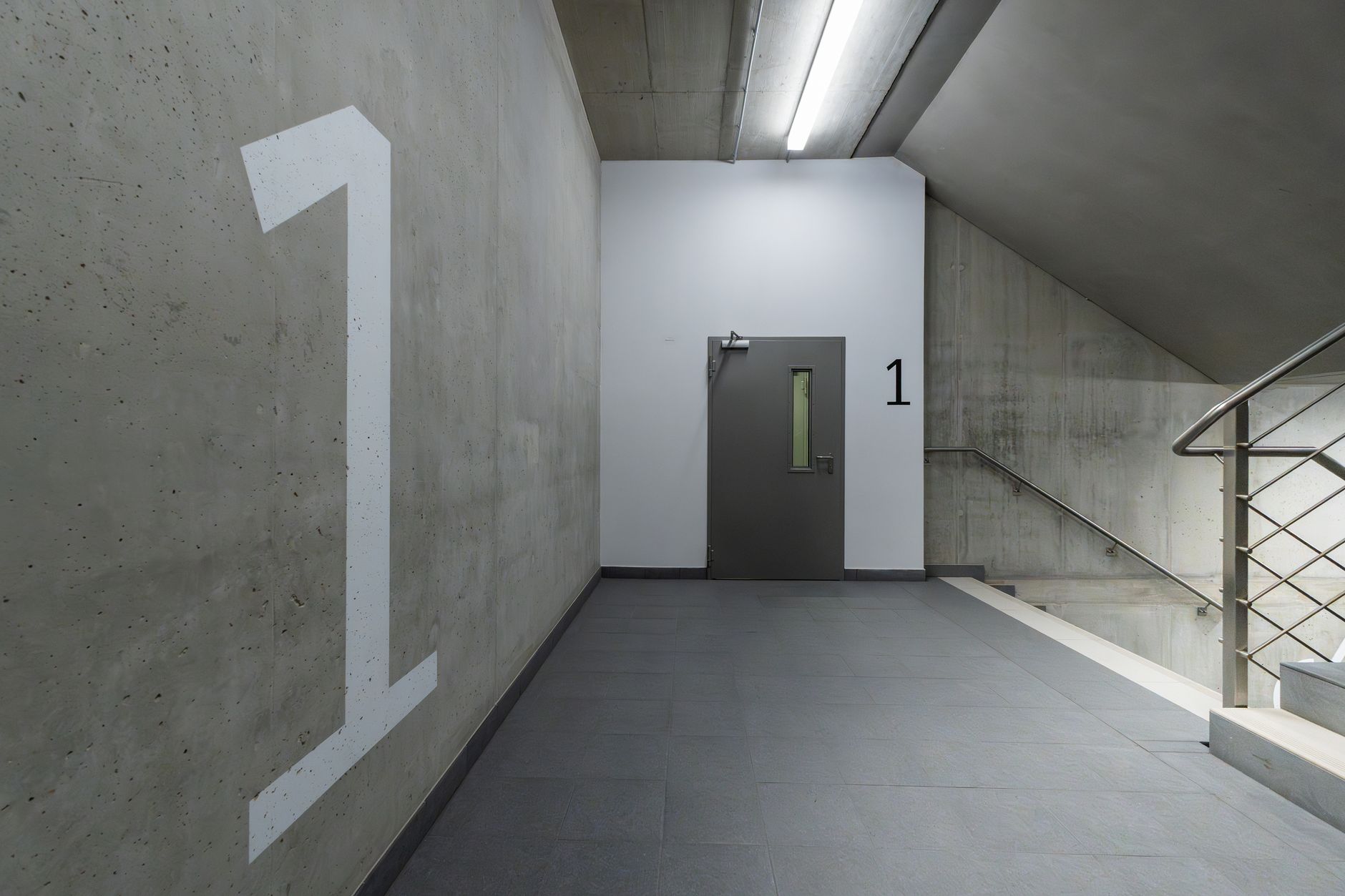
- Elevator lobbies and stairwell landings
- Payment stations and pedestrian paths to the entrance
- Emergency call points and whether a person can see them from the stall
Which sensors a deck robot needs
Knightscope's product page lists the K5 for parking lots and campuses, and its K1 Capsule for campuses, parking structures and public spaces. A third party summary describes the K5 with 360 degree high definition cameras, thermal imaging, license plate recognition and microphones. Those are vendor reported specifications, so confirm them against the spec sheet you receive.
License plate recognition is the sensor most likely to draw scrutiny. Decide early whether you need it, what it stores and who may query it. Knightscope also says its software can integrate existing customer camera infrastructure, a claim worth testing against your own system before you pay for new hardware.
The K7 timing is inconsistent across sources. Knightscope's October 2026 coverage describes shipments in the fourth quarter of 2026 and scaling in 2027, while the product page still lists the K7 as under development. Ask for a delivery date in writing.
Patrol routes, shifts and deployment limits
Salem, Oregon offers a working model. According to Salem Reporter, the city placed robots in the Pringle Parkade for a two month trial starting in early February 2026. Two robots patrolled daily from 4 p.m. to 7 a.m. on rotating shifts, and a third was kept as a spare. The operator was the vendor Daxbot, so treat the trial as a vendor run pilot rather than an independent benchmark.
Route design should follow the levels, not just the ramp. DC News Now reported that Montgomery County's pilot patrolled parking levels two through five. Run the path past pedestrian routes and call points, and confirm the speed and ramp limits your vendor will guarantee in writing.
An aggregator guide says the K5 cannot navigate stairs, curbs above 3 inches or unpaved ground, and needs a charging station and network connectivity. That guide was not verified against the manufacturer, so use it as a checklist to confirm rather than a fact sheet.
Privacy reviews before the robot rolls
Montgomery County's pilot shows what happens when privacy arrives late. According to FOX 5 DC, county officials reported the pilot cost around $100,000, and council members and residents raised privacy objections. Bethesda Magazine later reported that the county scrapped the program in January 2026 and planned to return the 420 pound robot to Knightscope.
Run a privacy review before the first patrol. Define who can view feeds, how long video and plate reads are kept, how visitors are told a robot is operating and which zones are off limits. A written review gives your security team an answer when a council member or resident asks.
Escalation rules and emergency access
Decide in advance what the robot does when it sees something. Salem's vendor, Daxbot, said it would call the security company for less serious incidents such as loitering and the police for dangerous or life threatening events. As of the February 2026 report, it had made no calls to security or police.
Name the person who receives each alert, the response time you expect and who writes the incident report. One 2026 buyer guide calls one human guard supervising four to eight robot units typical, but that is an aggregator opinion we have not independently verified.
Keep a human path open at every level. The Private Security Professionals of America advises that people always have a way to contact 911 or the security team from the parking area, and a robot is not a substitute for a fixed call point.
What the rules say about violence prevention in parking areas
Federal rulemaking is slow. According to Vigilo Healthcare, OSHA's Spring 2025 agenda moved its workplace violence rule for health care to long term actions, and the August 14, 2026 Unified Agenda keeps the proposed rule date as To Be Determined. OSHA can still act under the General Duty Clause, as Pinpoint notes.
States are moving faster. California requires every employer to keep a written Workplace Violence Prevention Plan, enforceable since July 1, 2024, and its Cal/OSHA healthcare standard must be adopted by December 31, 2026. Oregon's proposed rule would require periodic security and safety assessments, with tentative adoption in October and an effective date of January 2027. Oregon OSHA estimates it would cover approximately 62 hospitals, per Littler.
Guidance from OSHA and NIOSH names parking area controls such as panic buttons, security cameras, controlled access points, safe rooms and improved lighting. A deck robot program can document several of these at once, and that record is the kind of evidence an inspector will ask for.
Logging findings so the security team can act
A patrol that only produces video is hard to use. Each run should produce a log that security can search, trust and hand to police or facilities. Standardize the fields before go live, and write the log format into the vendor contract.
Include at least these fields in every entry:
- Patrol start and end time, robot ID and shift
- Level, zone and nearest landmark or column
- Lighting state and any camera or sensor fault found
- Event type, time stamp and photo or clip reference
- Action taken, who was notified and when
- Facilities follow up, such as a dead light or a blocked call point
How Service Robot Co. helps plan the deck
Service Robot Co. is an OEM neutral integrator for US businesses. We pick the right robots across manufacturers, deploy and integrate them, train staff, and service every unit through a nationwide US engineer network, so a hospital team works with one partner instead of several. Robots reach our customers on a three year lease, with one fixed payment quoted after a site assessment.
That site assessment is where a coverage plan like this one gets tested against the real deck. It checks lighting, sightlines, charging locations, network coverage and the privacy review before any robot patrols the levels.
Frequently asked questions
Sources
- Salem Reporter: City tests security robots in Salem parking garage
- Bethesda Magazine: MCDOT scraps security robot pilot program
- FOX 5 DC: Montgomery County testing security robot to monitor parking garage
- Knightscope K5 product page
- Boston 25 News: String of vehicle thefts and break-ins at hospital parking garage
- KSDK: Cars broken into at Barnes-Jewish Hospital parking garage
- JMG Security: Video surveillance in hospitals
- Vigilo Healthcare: OSHA workplace violence compliance