Key takeaways
- An intake lobby needs daily floor care, not a disinfection claim, so confirm your protocol before you pick a robot.
- Threshold height at entry mats and floor transitions often narrows the field before features do.
- Get the IP rating for the exact model in writing, because some public spec pages do not publish one.
- UL 3300 covers public-facing service robots and addresses speed limits, object detection and movement indicators.
- Test on your own lobby floor during a wet intake shift before any lease number is discussed.
What does an intake lobby ask of a floor robot?
An intake lobby is not a grocery aisle. Wet paws, leash grit, carrier drips, and visitors who stop mid-path all land on the same tiles within a single hour. The robot has to work around people and animals, and it has to do so on a floor that never gets a quiet window.
Shelter guidance tends to separate these zones. A Freshwave shelter cleaning guide lists 'front lobby and hallways,' 'intake areas and vehicles,' and 'animal bedding' as distinct categories. The same guide says lobbies where animals walk with staff and visitors fall under regular cleaning rather than disinfection between uses.
That distinction matters for buying. A floor robot supports regular floor care. It does not replace the disinfection steps your protocol requires in intake areas, and no vendor pitch should blur that line.
Which floor types change the robot choice?
Start with the transitions, not the open floor. Sealed concrete and luxury vinyl are easy for most units. The trouble spots are the entry mat, the threshold into the kennel corridor, and the edge where tile meets a rubber or carpeted strip.
Climb height is the number to check. A retailer guide states most mainstream robot vacuums are rated around 0.8 inches (20 mm). An independent threshold guide says that above about 2.5 cm, most robot vacuums rarely cross without ramps or active traversal. Those figures come from vacuums, so scrubber specifications may differ, and you should ask for the number on the exact model you are considering.
Thick carpet on a thick pad can add a taller climb than the strip suggests. Measure the finished height at each transition, including the pad, and put that measurement in your test record.
How much washdown does a lobby floor really need?
Ingress ratings describe how a housing resists water and dust. Under IEC 60529, IP66 is tested with a 12.5 mm nozzle at 100 L/min and 100 kPa for at least three minutes. IP67 is tested at 1 meter depth for 30 minutes. IP69K uses 80 degrees C water at 80 to 100 bar and is defined by ISO 20653 and DIN 40050-9, not IEC 60529.
A scrubber actuator supplier calls IP66 a baseline for indoor scrubbers and says IP69K is justified for machines that get high-pressure washdown. The practical question is whether your crew will hose the unit. If they will, ask for IP69K or document why IP66 is enough.
Public material is uneven. A review of the PUDU BG1 Pro states that the current BG1 Series product page does not prominently publish an IP rating, operating temperature range, maximum slope, or water-flow rate. A review of the LionsBot R5 says the public specification it checked does not prominently publish a complete-robot IP rating. Those pages may not be the full technical record, so request the data sheet directly and file it with your site notes.
An ingress rating says nothing about odor, pathogens, or how well a robot reaches a corner. Keep those questions separate.
What does wet paw and odor control actually require?
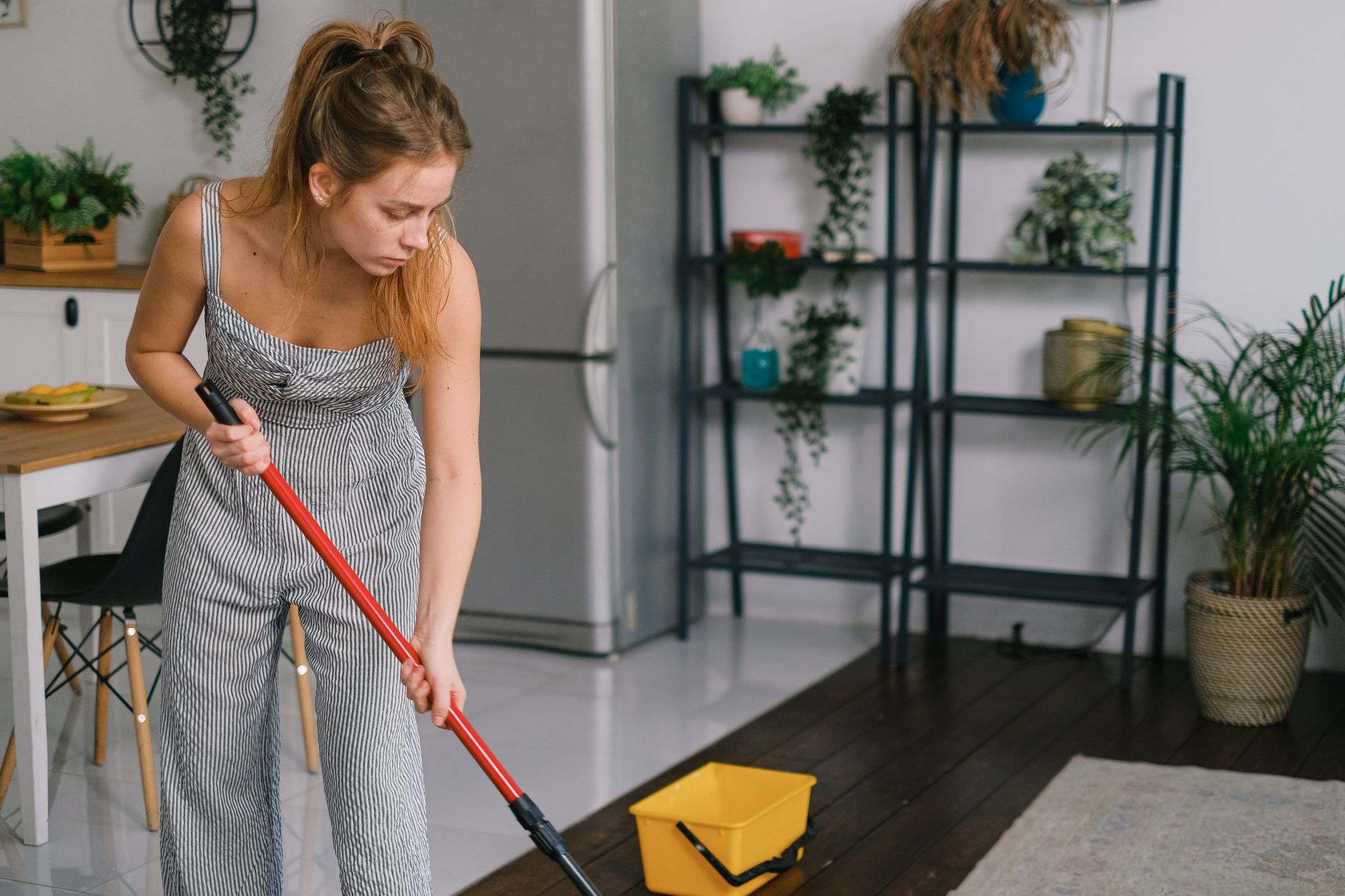
Paw prints are mostly small volumes of water, so a full scrubber may be more machine than the lobby needs. A vacuum with a squeegee or a light wet-pad pass can handle many intake days. The right size depends on how much water reaches the floor during a peak hour.
Scrubbers do add water and detergent, which is why their deck and squeegee actuators need protection, as one scrubber parts supplier notes. In a lobby, that means checking that the robot dries fast enough that a wet strip does not become a slip risk for staff or visitors.
Odor is the hardest claim to test. Kaivac, an animal-care equipment vendor, says kennel cleaning by mop and rags 'can never fully remove soils, odors, and dangerous pathogens.' That is a sales statement, but it explains why facilities test equipment on real soiling instead of trusting habit. Odor usually lives in grout, mat backing, and absorbent residue, so your log should record where smell returns, not just whether the floor looks clean.
What safety standard should a public-facing robot meet?
UL 3300 covers service robots in public and commercial spaces. According to UL, it requires speed limits and object detection based on robot size, plus audible and visual movement indicators. Those features matter in a room with children, nervous dogs, and staff carrying animals.
OSHA added UL 3300 to its NRTL Program's list of appropriate test standards on December 31, 2025, according to UL. Ask whether the exact model has been evaluated and what scope the evaluation covers.
A UL 3300 listing does not measure washdown, climb height, or cleaning performance on your floor. It is one input, not the whole decision.
How do you test the robot on your real floor before a lease is discussed?
Run the test before anyone discusses money. Walk the lobby with the vendor or integrator and mark every transition, mat edge, and drain. Record the finished height at each point, then run the robot on a wet intake day, not a quiet Tuesday.
Log every stop: a visitor standing in the path, a carrier set down, a dog that pulled toward the robot. Check how the robot handles the entry mat, how it dries, whether it leaves tracks that show in the afternoon light, and how long it takes to return to its dock. Note the speaker and light behavior your staff can hear from the front desk.
At Service Robot Co., we begin with a site assessment before we quote anything. We are OEM-neutral, so we can test units from more than one manufacturer on your surface. We lease robots through a three-year lease with one fixed payment quoted after that assessment, and our engineers handle deployment, staff training, and service through our nationwide US network.
What should you have in writing before you sign anything?
A test log and a short written spec sheet will tell you more than a demo. Bring both to the lease conversation so the discussion covers the surface you actually have.
- The ingress rating for the exact model, with the test standard named, and the scrubber deck rating if it differs
- Climb height at each transition in your lobby, measured with the pad in place
- UL 3300 status for that model, with the evaluation scope in writing
- Charging dock location that keeps cables and the dock out of the intake sightline and away from animal areas
- The fault response plan, including who comes on site and how fast, and whether a spare unit is available during a repair
- Your signed test log from a wet intake shift, with photos of each transition and the odor check results
Frequently asked questions
Sources
- UL Solutions: UL 3300 and service robot testing
- AIMS Industrial: IP rating guide
- Freshwave IAQ: Animal shelter cleaning protocols
- Anton Robots: PUDU BG1 Pro review
- Anton Robots: LionsBot R5 review
- Robotin: Robot vacuum thresholds and transitions
- VacuumTips: Robot vacuum threshold and carpet transition guide
- Jederoo: Linear actuators for robotic floor scrubbers, 2026 OEM selection guide