Key takeaways
- Use a pole camera for rapid chamber checks, a push camera for short pipes, and a crawler for longer or obstructed routes.
- Treat imagery as evidence, not as a substitute for measuring grease and settled-solids depth.
- Set inspection and cleaning intervals from actual accumulation data and local sewer rules.
- Require footage tied to asset IDs, locations, measurements, defects, limitations, and pump-out records.
- Pilot the complete inspection workflow at the hardest representative access points before committing to a fleet.
Which inspection approach fits the job?
Choose the inspection method by geometry, not by the appeal of the machine. A pole camera is usually best for fast views through an open hatch. A push camera suits short inlet, outlet, and branch pipes. A tethered crawler earns its place on longer lines, accessible chamber floors, and greasy utility routes where powered traction and repeatable location data matter.
No single device proves that an interceptor is compliant. Optical inspection can reveal damaged baffles, blocked tees, corrosion, residue, and incomplete cleaning, but the grease and settled-solids layers still need direct measurement. Pump manifests and maintenance records complete the inspection package.
For most contractors, the strongest kit is therefore a layered one: a simple pole camera for routine checks, a push camera for compact pipework, and an inspection robot rental or crawler service for jobs that exceed those tools. Select the smallest method that can capture defensible evidence without putting a worker into the space.
Why does interceptor type change the specification?
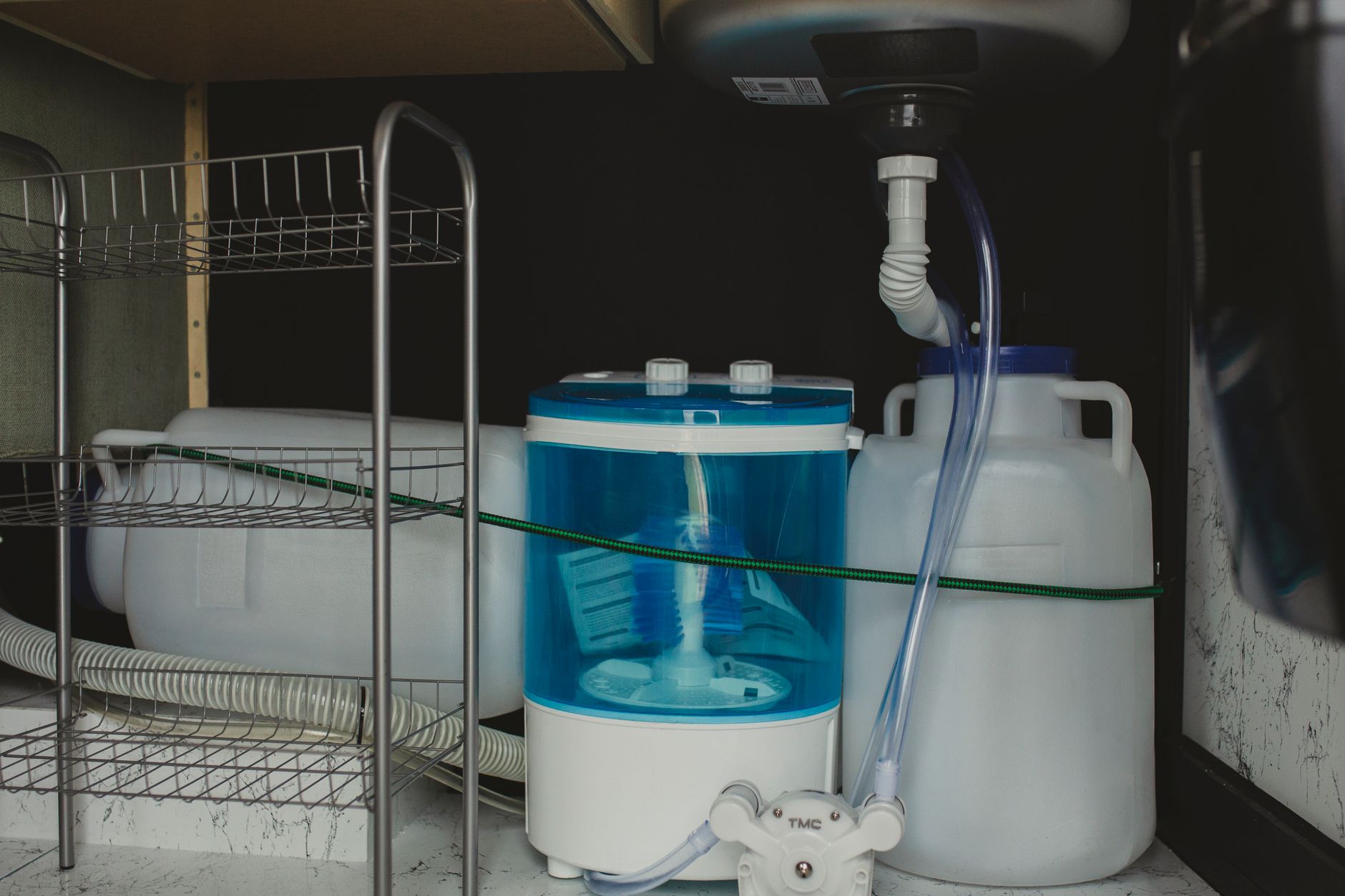
Start by separating small hydromechanical units from large gravity interceptors. Portland’s environmental services bureau says hydromechanical units commonly handle 20 to 50 gallons per minute, while gravity interceptors are tanks ranging from 1,000 to 4,000 gallons. Their inspection problems are plainly different.
A compact indoor trap may sit under a sink, behind stored supplies, or beneath equipment. The useful tool needs a small head, close-focus optics, glare control, and a cable that can negotiate tight cleanouts. A large outdoor interceptor may have multiple compartments, deep access openings, baffles, tees, and standing liquid that hides the lower structure.
Do not overlook the interceptor room itself. Door thresholds, hoses, floor drains, casters, chemical containers, puddles, and greasy tile can defeat a crawler before it reaches the asset. When connected pipework is included, record pipe diameter, bends, slope, flow, cleanout orientation, and the nearest recovery point.
How do pole cameras, push cameras, and crawlers compare?
The selection turns on reach, maneuverability, image control, and recovery. More machinery is not automatically more useful. A camera that enters every scheduled access point and returns cleanly has greater field value than a sophisticated platform that cannot clear the first tee.
For pipe work, specify adjustable lighting and a self-leveling or pan-and-tilt view when defect orientation matters. Grease creates glare, cloudy water obscures submerged surfaces, and a smeared lens can make usable footage collapse within seconds.
- Pole camera: fastest setup for open-chamber views of scum, baffles, tees, walls, and post-cleaning condition. It offers limited reach under ledges and cannot quantify hidden solids by itself.
- Push camera: compact and practical for short laterals, inlet and outlet piping, and restrictive cleanouts. It depends on cable stiffness, can struggle through multiple bends, and has no powered traction.
- Tethered crawler: strongest fit for longer horizontal routes, rough floors, repeatable travel, controlled camera positioning, and distance-referenced findings. It needs adequate clearance, traction, tether management, and a planned retrieval method.
- Handheld inspection camera: useful for exposed fittings and close-range documentation, but generally too limited for deep chambers or meaningful pipe coverage.
What should the access survey measure?
A site assessment should follow the actual work path from the service vehicle to the final inspection point. Measure the clear opening after the cover is removed, not merely the nominal hatch size. Confirm vertical drop, internal ledges, ladder rungs, baffle spacing, pipe invert, standing-liquid depth, and the space available to deploy and recover equipment.
Inspect every representative asset type. A restaurant group may use several interceptor designs even when the kitchens look identical. Renovations, replacement lids, and undocumented plumbing changes often create exceptions that determine which tool is practical.
- Smallest clear opening and tightest internal passage
- Maximum deployment depth, pipe run, and number of bends
- Expected liquid, grease, solids, temperature, and cleaning chemicals
- Wheel traction, slope, thresholds, drains, and fall edges in the utility room
- Safe operator position, tether route, washdown area, and equipment recovery plan
- Power, recording, communications, and data-transfer conditions
- Required disinfection or containment procedure between customer sites
How often should inspection and cleaning occur?
There is no nationwide pump-out interval for every commercial kitchen. The Environmental Protection Agency says maintenance frequency depends heavily on the amount of FOG generated and the kitchen’s best management practices. Local sewer authorities set the enforceable schedule, so the buyer must design a configurable program rather than hard-code one cadence.
The differences are material. DC Water calls for gravity interceptors to be cleaned and inspected every 90 days or sooner when grease and solids exceed 25 percent. Its hydromechanical guidance uses 30 days and a 50 percent condition threshold. Austin requires pump-out at least every 90 days or sooner when grease and solids reach 50 percent of wetted height.
Build the operating cadence from measurements taken across at least one complete cleaning cycle. Record floating FOG, settled solids, total liquid depth, kitchen volume changes, and the date of each full pump-out. Schedule service before the applicable threshold is likely to be crossed, then tighten the interval after menu changes, seasonal peaks, slow drains, odors, or evidence of downstream carryover.
The stakes extend past one kitchen. An EPA pretreatment fact sheet reports that grease from restaurants, homes, and industrial sources accounted for 47 percent of reported sewer blockages. Frequent visual checks can catch deterioration, but they do not replace full evacuation when the measured threshold or maximum local interval is reached.
How should contractors control visibility and contamination?
Inspect before cleaning when the objective is to document accumulation, flow problems, or a suspected failure. Inspect after complete pump-out and appropriate rinsing when the objective is to evaluate concrete, coatings, seams, baffles, tees, and deposits hidden below the liquid line. Many service calls need both views.
Treat a lost image as a field condition, not something to conceal later. Log glare, turbid liquid, submerged surfaces, lens fouling, and inaccessible areas. The EPA’s sewer inspection guidance notes that ordinary CCTV shows conditions above the waterline and that pre-cleaning is often needed for useful inspection.
Use washable housings, protected connectors, strain relief, and a defined dirty-to-clean handling path. Carry lens-cleaning supplies and containment tubs. Contractors serving several kitchens should document how equipment is cleaned between sites so residue from one facility does not become another operator’s sanitation problem.
Does remote inspection remove confined-space risk?
Remote inspection can keep people outside hazardous spaces, but it does not cancel the safety assessment. OSHA defines entry as occurring when any part of a person’s body breaks the plane of an opening. An operator leaning an arm or head into a hatch may therefore create an entry even when most of the body remains outside.
Before opening or working around a tank, determine if it meets OSHA’s confined-space and permit-space criteria. Potential atmospheric hazards, engulfment, trapping geometry, and other serious hazards can trigger additional controls. If human entry is required, use the applicable written program, trained roles, atmospheric testing, attendant, communications, retrieval, and rescue procedures.
Write the deployment method to keep the operator outside the opening plane whenever practical. Also protect against heavy covers, traffic, wet floors, hot wastewater, splashes, sharp concrete, electrical connections, and an unrecoverable robot. No inspection image is worth improvised entry.
What belongs in an inspection-ready record?
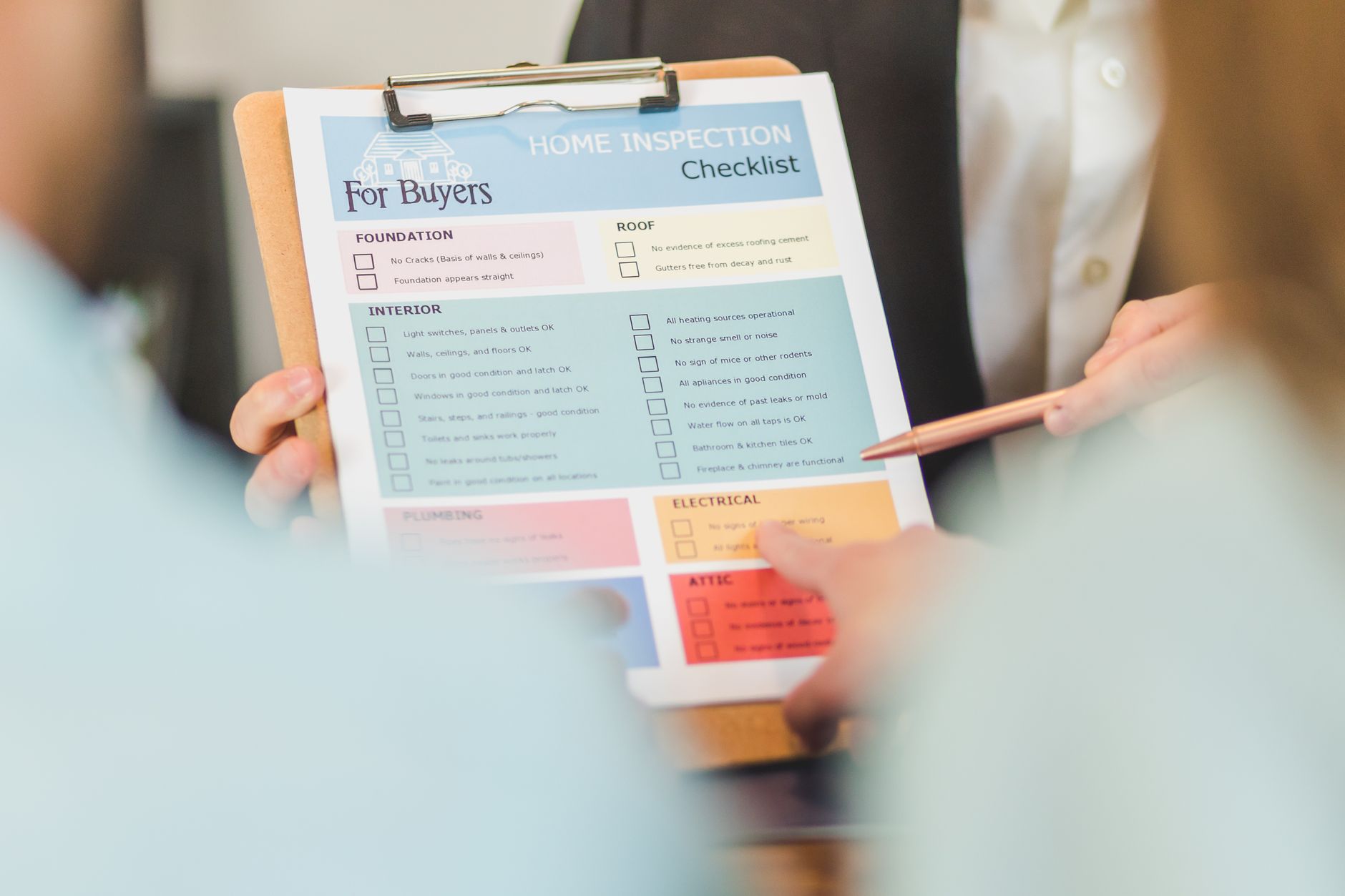
A folder full of video is not a defensible inspection system. Every file should resolve to a facility, asset, access point, direction, date, and operator. Findings need locations that another technician can reproduce, along with an explicit account of what could not be inspected.
Government programs show why records matter. Austin requires grease-trap manifests to be retained for up to three years. Portland requires a cleaning report after every interceptor cleaning or pump-out. Requirements differ by jurisdiction, so retention and export settings must be configurable.
- Asset ID, address, interceptor type, compartment, and access point
- Timestamped before-cleaning and after-cleaning images
- Floating FOG, settled-solids, and total-liquid-depth measurements
- Distance, direction, clock position, and defect classification for pipe findings
- Condition of lids, seals, baffles, inlet and outlet tees, walls, and coatings
- Visibility limitations, obstructions, uninspected length, and reason for stopping
- Pump-out date, volume removed, hauler identity, manifest, and disposal record
- Corrective action, priority, responsible party, and scheduled follow-up
What should a contractor prove during a pilot?
Run a commercial robot demo against the hardest representative jobs, not the cleanest interceptor in the portfolio. Include a cramped indoor trap, a multi-compartment outdoor tank, a greasy utility room, and a connected line with at least one realistic obstruction or bend.
Score setup time, completed coverage, lens fouling, distance accuracy, retrieval, washdown effort, battery or tether performance, file labeling, and report preparation. Have a second technician review the output without attending the job. If that person cannot locate each defect and understand every limitation, the documentation workflow is not ready.
A robot pilot program should also test failure recovery. Simulate loss of video, a snagged tether, poor traction, and an inaccessible segment. Confirm that crews can stop safely, recover the device, preserve partial evidence, and state the limitation without guessing.
How can Service Robot Co. support the buying process?
Service Robot Co. is an OEM-neutral commercial robot integrator for U.S. businesses. For inspection work, that means matching the platform, camera, tether, reporting workflow, and service model to the customer’s access geometry instead of forcing every site onto one manufacturer’s catalog.
The company can handle the full lifecycle through one vendor: site assessment mapping, financing or monthly payment programs, robot deployment and integration, staff training, remote triage, and field service through a nationwide U.S. engineer network. Programs can also be structured around inspection robot rental, purchase, or robot as a service, with maintenance included where appropriate.
That lifecycle matters in grease-heavy environments. Cameras need cleaning, seals and cables wear, and field failures require a clear escalation path. Contractors should ask who owns configuration, operator training, replacement planning, on-site dispatch, reporting templates, and support after go-live. One partner and one number makes those responsibilities easier to enforce.