
The question, in the buyer's words
I run four family dental offices, and the front desk, sterilization runs and floor work eat up staff time we don't have; which kind of robot would actually fit an office like mine, or is it not worth looking at yet?
Key takeaways
- Floor work is the only task here where a robot type clearly fits, and only where floors are open and mostly hard.
- Front desk work and sterilization runs stay with staff for now, because they depend on conversation, clinical handling and infection control.
- Three-quarters of US dentists work in single-location practices, so a four-office group needs its own planning.
- Dental assistant employment is projected to grow 6% from 2024 to 2034, so staffing pressure is not easing.
- Start with one office and one leased unit, then measure the hours it returns before deciding on the rest.
Which robot type fits family dental offices at all?
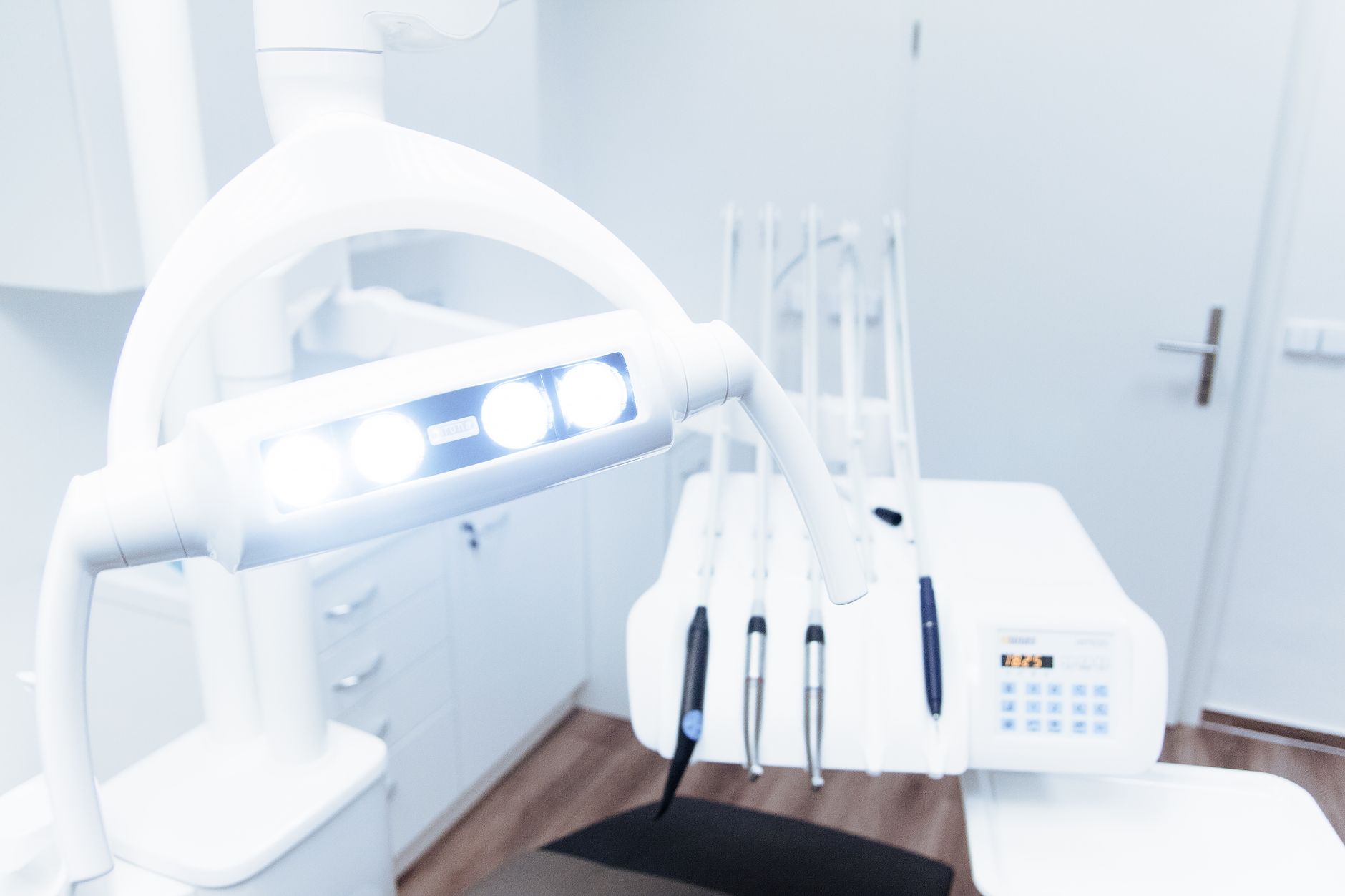
When you ask which robot type fits family dental offices, the honest starting point is narrower than the question suggests. Dental work centers on the operatory chair, the sterilization area and a front desk that talks with patients. Most of the staff time in those places is not repeated, open-floor movement, which is where robots do their best work. Across four locations, the real question is whether one robot type can earn its place in more than one office, and the first honest answer is that only floor work comes close.
According to ADA Health Policy Institute data as reported by Becker's Dental Review, three-quarters of US dentists work in a single-location practice. A four-office group is therefore the less common setup. It also means you are deciding whether to standardize routines across four sites, which matters more than any single machine.
How much staff time do these tasks really take up?
The U.S. Bureau of Labor Statistics counted 381,900 dental assistant jobs in 2024 and projects 6% growth from 2024 to 2034, a change of 24,400 jobs. Offices will keep competing for assistants, so the work spread across desk, sterilization and floors lands on people already in the building. The BLS count does not show how those hours split across tasks, so you will need your own time log for that.
Retirement adds pressure. Becker's Dental Review reports, from survey results, that 21% of dental assistants plan to retire within six years and 23% of dental office managers plan the same. Those are plans, not departures, but they point to a thinner bench in the next few years.
Injury risk is part of the workload picture too. According to Becker's Hospital Review, offices of dentists recorded 10,900 nonfatal injury and illness cases in 2024, out of 133,300 across ambulatory care, and the all-healthcare rate fell to 3.4 per 100 full-time-equivalent workers in 2024 from 3.6 in 2023. Those counts cover all injury types, so treat them as context rather than a measure of floor work or sterilization.
The BLS industry profile for ambulatory health care lists 2.0 total recordable cases per 100 full-time workers and 0.7 cases involving days away, restriction or transfer. Neither figure isolates dental offices, so use them as a baseline for your own injury log, not as a benchmark for your four sites.
Can a floor cleaning robot work inside a dental office?
Floor work is the strongest match. A floor cleaning robot runs a fixed route on a schedule and makes the same pass every night, which suits corridors, the waiting room and the hall outside the operatories. The task is repetitive and staff spend hours on it they would rather use elsewhere, so the fit is real wherever the floor allows it.
Layout is the constraint. Operatories hold chairs, cabinets, delivery carts, suction lines and cables, and they often have thresholds, rugs and tight turns. A robot needs clear paths and a map it can follow. A corridor that is open at closing time is a far better candidate than an operatory full of equipment, where a person still works around the chair.
Flooring changes the machine. Hard surfaces such as vinyl, tile and sealed concrete suit scrubbers well, while carpeted waiting rooms usually need a sweeper or vacuum-type unit. Many dental offices mix both, so the first assessment should record each floor by surface and by clear width.
Coverage depends on open floor per office. A small office may have too little clear floor to justify a full unit, while a larger one with a long corridor may. Ask for the calculation per office, counting the open floor left after chairs and carts are in their normal positions, rather than accepting a general claim about the machine.
Can a robot take over sterilization runs?
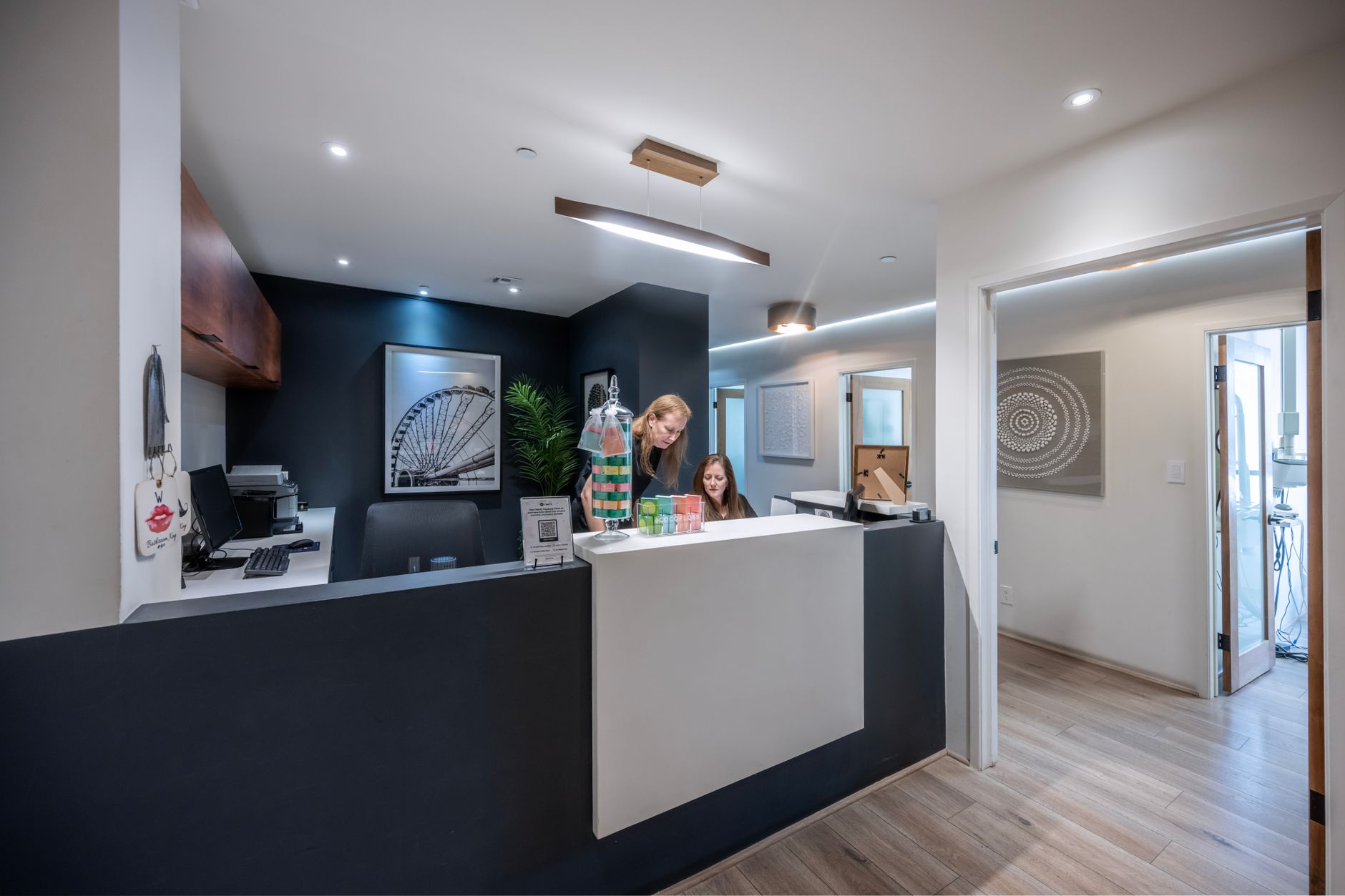
Not in the way most people hope. Sterilization in a dental office involves sorting, cleaning, packaging, loading the washer and autoclave, running biological monitoring and returning sterile packs to operatories, and each step is tied to infection control. No time study or association benchmark for daily instrument processing hours was found, so no reliable figure exists for how much of that work a robot could take.
The one piece that could be mechanized is transport. A mobile unit could carry sealed trays or cassettes along a fixed route between a clean room and a cabinet, which removes walking but not the handling. Every handoff would still need a person to check the tray, confirm the process record and decide what goes back into service.
Workflow often returns more time than new hardware. Labeling cassettes clearly, setting a fixed turnover sequence and keeping one sterilization area per office can cut back and forth, and all of that can be tried this week without new equipment.
A 2025 review in PubMed Central lists high costs, integration difficulties, training needs and regulatory hurdles as barriers to robotics in dentistry. Those barriers weigh most heavily on clinical and sterile work, so expect the longest path there and the shortest one on the floor.
Could a robot handle the front desk?
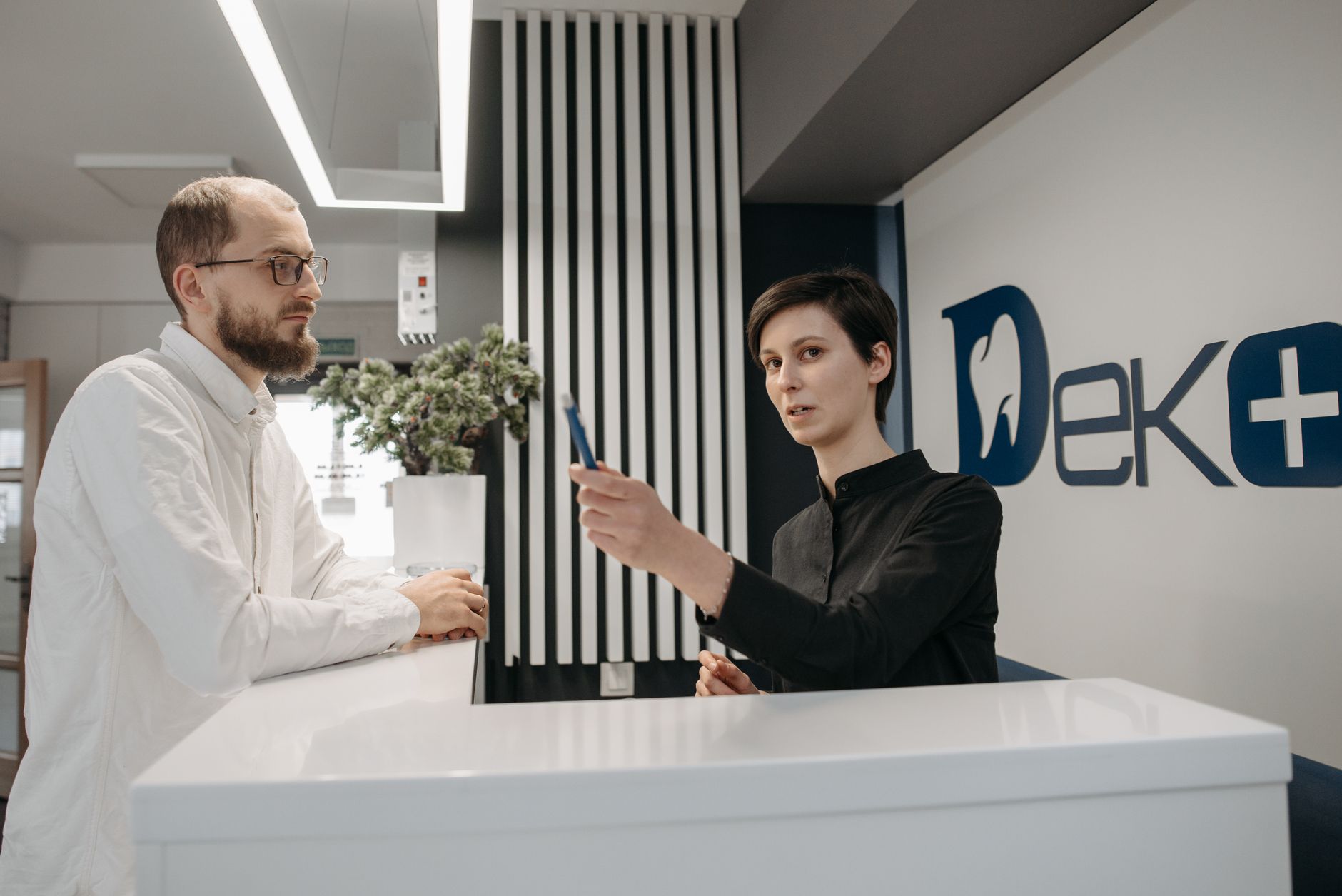
No robot type in this guide fits the front desk. Check-in involves insurance questions, payments, rescheduling, phone calls from anxious patients and the judgment to notice when something is wrong. Those tasks depend on conversation rather than movement. Scheduling software and online forms may take part of the load, but that is a software decision, not a robot lease.
Patient comfort is a real factor. A survey of 502 people by Embry-Riddle, reported by Medical Design and Outsourcing, found that patients were significantly less willing to accept robotic work for more invasive procedures. That survey concerned clinical procedures, not desk duties, so it does not settle the front desk question, but it does show that patients are not uniformly comfortable with robots near treatment.
If the front desk is your bottleneck, start with scheduling, phone routing and forms, since those tend to generate repeated work. Staff on the desk can then give more time to the patient in front of them.
What is a realistic first step for four offices?
Start with one office and one floor unit, then measure the hours it actually returns. Give it several weeks before making any decision about the other three locations, and count what staff do with the hours saved, not what the machine is capable of.
The process begins with a free site assessment. We map each office, record surface types and clear floor widths, check power and network access where the unit would run, and note when cleaning happens now. The lease quote follows the assessment, so the numbers reflect your floors, not a sample floor.
The lease runs through financing. We deploy and integrate the unit, train your staff and service it under our service plan, with regional service engineers in every state we cover. One partner handles the whole lifecycle, which matters when four offices need the same answer on the same schedule.
What would change the answer for four offices?
The answer shifts with layout, flooring and when each office closes. Offices with large open hard floors and an evening cleaning window are the strongest case. Offices with much carpet, many small rooms or a night cleaning contractor already on site are weaker, because the time saved may be small or already covered.
Who does the floor work now also matters. If an assistant finishes the floors at the end of a long day, the hours returned are real. If a contracted cleaner already covers the floors overnight, a robot may duplicate that service, and the decision becomes one about contract scope rather than staff time.
Treat the four sites as one plan with four assessments. One office with a good layout can prove the case, while the others may need other units or none at all. Roll out office by office, and let each site's assessment decide whether it gets a unit.
When is a robot not worth looking at yet?
If your offices are mostly carpet, crowded with equipment, or the hours you want back sit in the front desk or sterilization, a robot is not worth a close look yet. Those cases need a process change, a staffing change or a software decision first.
Wait too if your team is already stretched by a new practice management system or a new location opening. A robot adds training and integration work, and that load lands on the same people who are already short on time.
A free assessment is worth requesting if one office has large hard floors, a predictable evening window and a staff member who keeps losing time to floor work. Ask for the assessment, not the robot, and let the floor plan decide.
Frequently asked questions
Upcoming hospitals & healthcare events
- ConferenceNew England College Health Association (NECHA) 2026 Annual MeetingNov 11 to 13, 2026Newport Marriott Hotel & Spa, Newport, RI
- ConferenceHLTH USA 2026Nov 15 to 18, 2026The Venetian Expo, Las Vegas, NV
- ConferenceIndiana Safety and Health Conference & Expo, 2027Feb 8 to 10, 2027Indianapolis, IN
- ConferenceHealthcare Project Delivery Conference 2027Feb 10 to 11, 2027Manchester Grand Hyatt, San Diego, CA
Want a robot at your dental offices?
Tell us about your site. We will recommend the robot, quote the lease, and keep it serviced.
Sources
- U.S. Bureau of Labor Statistics, Occupational Outlook Handbook: Dental Assistants
- Becker's Hospital Review, healthcare workplace injuries by setting
- Becker's Dental Review, single-location dental practices (ADA Health Policy Institute data)
- U.S. Bureau of Labor Statistics, Industry at a Glance: Ambulatory Health Care
- PubMed Central, 2025 review of robotics in dentistry
- Medical Design and Outsourcing, patient acceptance of robotic dentistry
- Becker's Dental Review, dental assistants planning to retire
- Becker's Dental Review, dental office managers planning to retire