
The question, in the buyer's words
Our state highway crew can only mow interstate medians during daytime lane closures, and the grass seeds before they catch up; could robotic mowers work the flat medians overnight without a crew on the shoulder?
Key takeaways
- We found no state DOT trial of robotic mowers on interstate medians, so any overnight plan should start as a bounded pilot.
- The public robotic mowing results come from steep roadside slopes and are mostly agency-reported, not audited.
- Seeding is a mowing schedule problem, and night work moves cuts away from closures without changing how often grass needs cutting.
- Crossings, ramps, drop-offs and unattended equipment beside live lanes need traffic engineering and insurer sign-off first.
- One flat median section with pass or fail criteria is the lowest-risk way to test an overnight robot.
Can robotic mowers cut an interstate median overnight?
Partly. Robotic mowers can handle flat, mapped turf in the dark, so an overnight median pass is plausible on the flattest sections. We found no state DOT trial of robotic mowers on interstate medians, though, and the public pilots so far are on steep slopes and rest areas. Dropping daytime lane closures also means a machine running beside live traffic, which your agency has to approve before any unit goes out.
The mower is only part of the question. Working without a crew on the shoulder depends on the unit staying inside a mapped boundary, avoiding drop-offs, drains and sign bases, and stopping cleanly when anything enters its path. Those are the behaviors the pilots are still testing. Start with one bounded stretch of flat median and a written go or no-go rule, not a corridor-wide switch.
What do state robotic mowing pilots show so far?
The best public record is on roadsides. The Missouri Department of Transportation has used a remote-controlled slope mower, and it reports that one employee does work that once took about 10 people with weed eaters on steep slopes. That is an agency claim, not an audit, and the same agency says crew size on high-incline grades was cut by half.
Ohio is also testing robotic mowers for slopes too steep for traditional equipment and operators, according to the Ohio Department of Transportation as reported by Columbus news coverage. The agency maintains 80,000 acres of state highway roadside, and it mows back slopes once a year. A 2025 Minnesota bill would fund a study of autonomous mowers for rest areas and highway rights-of-way, and coverage says the technology still struggles with bridges, side streets and railroad crossings.
What the public record does not show is a flat interstate median run unattended for a full season. That gap is the honest starting point for any proposal.
Why does grass seed faster than the crew can cut it?
Seed heads form between cycles, so the mowing schedule decides how much growth a median gets. Frequency is mostly a policy choice. A 2010 Virginia legislative review of mowing practices found roadside mowed one to three times a year, while median mowing had no frequency cap and reached up to eight times a year or more in some urban areas.
According to trade press coverage of Indiana mowing practices, the state transportation department traditionally mows each right-of-way three times a year. Those cycles set the baseline for what a crew must cover, and a faster cut on a median is a planning decision with its own labor and equipment cost.
Night mowing does not slow seeding. It moves the work to a time without closures. If a median is cut every few weeks in season, a robot running every night would make more passes than the seed window needs. The useful question is whether a lighter, more frequent pass on flat ground beats the existing schedule, and that is an agency decision before it is a robot spec.
Run the numbers on passes per season before you add any night hours. A robot that cuts at night only helps if the cut itself is worth making more often.
- Work window
Robotic Lawn Mower
Runs after midnight once lanes are open to traffic and the agency has approved the setup
Staff
Needs daytime closures or a protected work zone, which is the window you have today
- Repeatability
Robotic Lawn Mower
Same path, cut height and pass pattern each night, if the map is accurate
Staff
Varies with fatigue, weather and crew size, but can adjust on the fly
- Hazard recognition
Robotic Lawn Mower
Stops for detected obstacles, but can miss low debris and anything outside its map
Staff
Reads the corridor and spots debris, fallen signs and stalled vehicles
- Incident response
Robotic Lawn Mower
Cannot respond to a crash, clear a lane or direct traffic
Staff
Can flag traffic, call dispatch and clear debris safely
- Slopes and banks
Robotic Lawn Mower
No commercial slope limits established in our search, and wet ground performs worse
Staff
Works steep banks with hand equipment, slowly but with judgment
- Cut frequency
Robotic Lawn Mower
Can run as often as the policy allows once set up, without shift limits
Staff
Limited by shifts, closures and overtime
Is a median a harder site than the flat lawns robots usually handle?
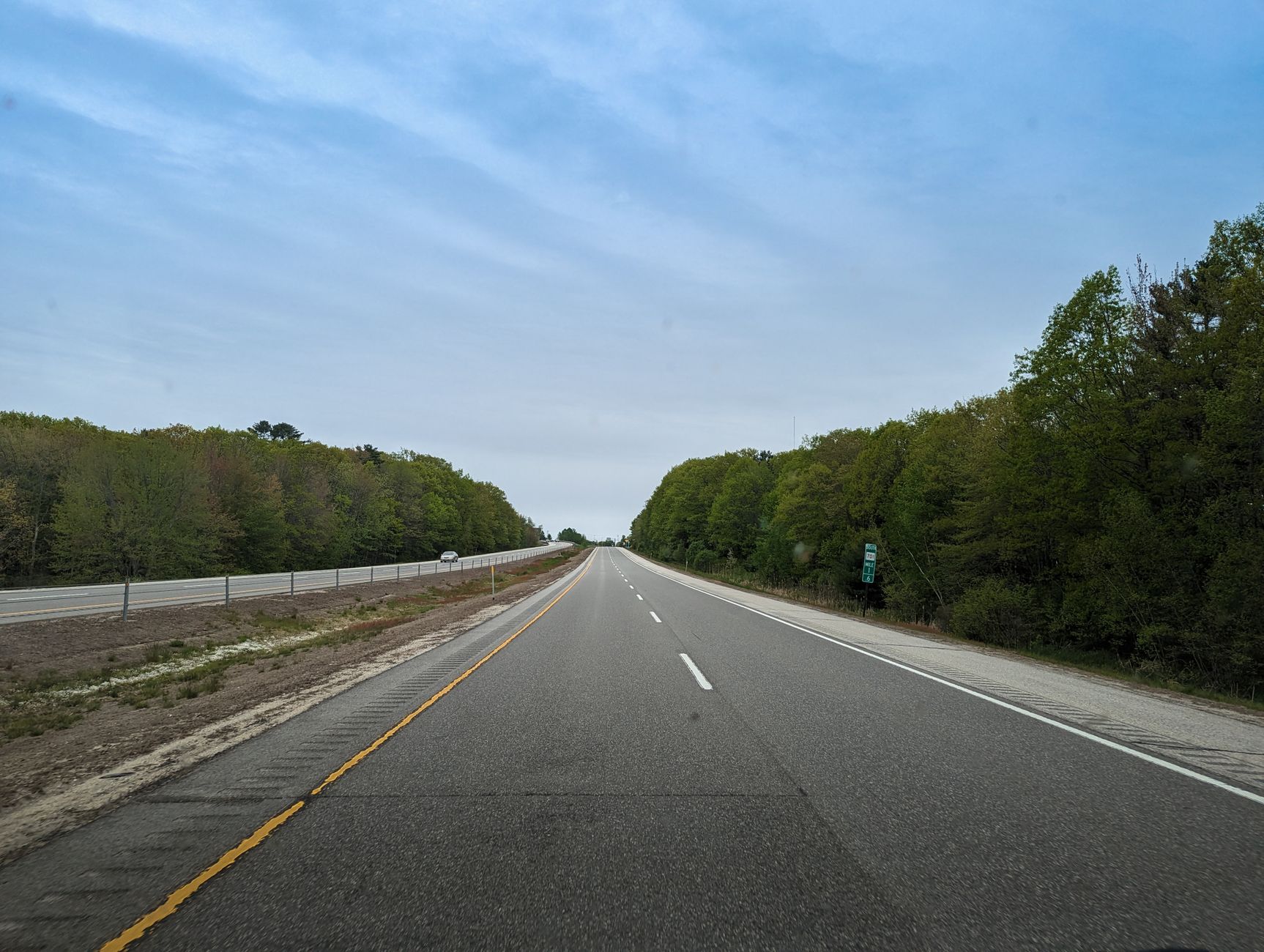
Yes. Medians are narrow corridors with curbs, drains, guardrail posts, sign bases, cable barriers, shoulder drop-offs and ramp gores. A unit needs a mapped boundary that keeps it off these hazards, and it needs a stop behavior when something enters the path. Each of those features has to be surveyed, not assumed from a plan sheet.
Slope is the second limit. Consumer-grade robotic mower manuals rate slopes under dry, good conditions, and wet clay can perform much worse than the rating suggests. We found no commercial-class slope limits in our search, so ask any supplier for a written rating covering your exact grade, soil and wet weather before you accept a pilot.
Flat-looking medians are often crowned or graded toward drainage, so a strip can tilt enough to matter. Measure cross-slope during the mapping pass. A unit that handles one section well can still struggle where the grade changes.
Power access matters on a median too. A unit needs a charging point reachable without crossing lanes, and cables or conduit near the work can be damaged by the mower itself. Plan the charging spot in the same survey as the boundary.

What are the overnight traffic and safety risks?
Overnight work changes the risk rather than removing it. According to NIOSH guidance on highway work zones (archived copy), nearly half of roadway work zone deaths involve a worker struck by a vehicle or mobile equipment. Transportation incidents were 72 percent of roadway work zone fatal injuries in 2010, in preliminary figures from that guidance.
The federal count shows the scale. The Federal Highway Administration reported 765 work zone fatalities in 2016 across all road users, the most for one year since 2007. Those figures cover the whole work zone, not only mowing, but they explain why an unattended machine beside live lanes needs a written plan.
An unattended mower is a new object for drivers to react to at night. It also becomes a hazard for any worker who has to enter the zone to clear a stall, debris or a crash. Your traffic engineers, safety officer and insurer should sign off on the exact setup. A robot cannot respond to a crash, pull debris or direct traffic, so whatever incident response you already run at night stays in place.
Lighting and detection belong in the plan. Ask how the unit behaves in low light, how it senses a pedestrian or a stopped vehicle, and what happens when its sensors are blocked by dust or spray from passing trucks.
What did MoDOT's crew reductions actually prove?
The most quoted labor result comes from the Missouri Department of Transportation, which reports that one employee does the work of 10 people with weed eaters on steep slopes. The same agency says crew size on high-incline grades was cut by half. Both are agency-reported and not audited, and both describe steep roadside banks where hand work is the alternative.
Your median is flat, so the comparison changes. The better test is hours per lane mile per pass, measured against the daytime closure work you already run, plus the number of passes you need to stay ahead of seed. Ask any pilot to report those numbers, not total acres or a general time saving.
Measure what the crew does before and after each pass, including closures, inspection and incident work. Any saving on a flat median has to come from that full picture, not from the steep-bank results.
Where could a robot fit on your corridor now?

A realistic first step is a split plan. Keep your crew on steep banks, ramp gores, incident work and any section with crossings. Test a robot on the flattest, widest and most mapped stretch of median that you can close off from traffic. Minnesota's study debate shows the same split, since bridges, side streets and railroad crossings are still hard for the technology.
Expect the corridor to vary by section. A bridge deck, a ramp gore and a flat median may need three different answers. Ask your pilot partner to rank each section by mapping difficulty and risk before choosing where the unit goes.
Staffing is the wider backdrop. The Bureau of Labor Statistics counted about 150,860 highway maintenance workers in May 2023. Every crew hour that moves off a flat median and onto work that needs a person is useful, even when a robot covers only part of the corridor.
What should an overnight pilot prove before you commit?
A pilot should answer four questions: whether the unit stays inside its mapped boundary through a full night, how it handles drains and drop-offs, how long a pass takes per lane mile including charging, and how it reports stops and faults to a dispatcher. Write these as pass or fail criteria before the first night, so the decision rests on logs rather than impressions.
Ask for stop counts, fault records and mapping accuracy, not only a live demonstration. A demonstration on a clear, dry night proves little about wet ground, storm debris or a crew member working near the edge of the median. Run the pilot through at least one wet period if the season allows.
Set a stop rule for the pilot itself. If the unit fails a stop test, leaves its boundary, or needs manual retrieval more than your team agrees to accept, the pilot pauses for that section until the cause is fixed. Write that rule down before the first night so no one has to argue it later.
How do you start an overnight median pilot with us?
Service Robot Co. is an OEM-neutral commercial robot integrator for US businesses. We pick the robot for the site rather than a brand, lease it through financing, deploy and integrate it, train your staff, and service it under RoboCare, our service plan, backed by regional service engineers in the states we service. One vendor covers the whole lifecycle, so you have one contact for the pilot and for repairs.
The first step is a free site assessment. We map the pilot section, check slope, crossings, drainage and power access, and note the traffic control points your engineers need to approve. The lease quote follows that assessment, so the terms match the exact scope. A single bounded section is the right first scope, because it lets your engineers test the setup and stop criteria without changing the whole corridor.
Crew training matters as much as the machine. Staff who used to mow the median by day need to know how the unit reports, how to recover it, and who to call. Build that into the pilot schedule from the start.
Frequently asked questions
Want a robotic mower at your interstate medians and shoulders?
Tell us about your site. We will recommend the robot, quote the lease, and keep it serviced.
Sources
- MoDOT RC slope mower page
- Spectrum News 1, ODOT mowing crews
- Fox 9, Minnesota autonomous mower bill coverage
- Equipment World, INDOT mowing operations
- Virginia legislative review of mowing practices, 2010
- FHWA press release on 2016 work zone deaths
- NIOSH highway work zones (archived)
- BLS OEWS May 2023, highway maintenance workers