

The question, in the buyer's words
I run grounds for a 14-building public housing authority in Albuquerque, New Mexico, and our two-person crew can't keep the open lawns between buildings cut during monsoon season; which mowing robots fit around the xeriscape beds and walkways?
Key takeaways
- Albuquerque's monsoon season runs June 15 to Sept. 30, according to a local TV report citing the National Weather Service.
- Mowing robots suit open, mappable turf, not xeriscape beds, building edges or steep banks.
- About 1.2 million households live in public housing run by more than 3,300 housing agencies, according to HUD's dataset as reproduced in a geoportal record.
- Reported watering rules bar sprinklers from 11 a.m. to 7 p.m., so plan crew irrigation checks around that window.
- A free site assessment comes first, since the lease quote follows it.
Can mowing robots handle Albuquerque housing lawns and xeriscape beds?
Yes, for part of the job. Mowing robots can keep the open lawns between Albuquerque housing buildings cut on a regular schedule. Those lawns are often the work that falls behind first when a two-person grounds crew also has to tend beds, trash areas and repairs. The xeriscape beds and walkways are where the line between robot work and crew work gets drawn.
This page answers one question: which mowing robots fit around xeriscape beds and walkways on a public housing site in Albuquerque, and what has to be true for that to work. It covers the local monsoon season and watering rules, the labor picture for grounds work, the places a robot should not go, and how a lease is set up. The figures come from a local TV report, the city code, HUD data and federal labor statistics.
We are a vendor-neutral integrator. We pick the robot for your site across manufacturers, lease it through financing, deploy and integrate it, train your staff and service every unit under our service plan. We start with a site assessment, not with a machine model.
How long is monsoon season in Albuquerque, and why does grass get ahead of a crew?
According to a local TV report citing the National Weather Service, New Mexico's monsoon season runs June 15 to Sept. 30. The same reporting says the NWS treats the monsoon as the season when Albuquerque gets most of its moisture. A separate local TV report puts the rainy-season total at about 4.5 inches, though that figure is not attributed to the NWS, so check it against NWS climate data before you use it.
Totals swing widely from year to year. The NWS said that in 2020 most reporting stations got one to four inches, well below normal. According to a local TV report citing NCEI data, the wettest monsoon on record in the Albuquerque area was 2006. A crew sized for a typical summer can fall far behind in a year like that.
When you plan the season, separate the open-lawn cutting from the rest of the grounds work. Put the open lawns on a fixed robot schedule and let the crew handle the tasks that need judgment on each visit. A robot run can follow the same daily plan whatever the crew size that week.
No verified mowing-hours figures for housing authority grounds turned up in this research, so this page does not give an hour count for your crew. Time the open-lawn passes building by building this season and use those numbers in the site assessment.
What watering rules in Albuquerque affect lawns and new plantings?
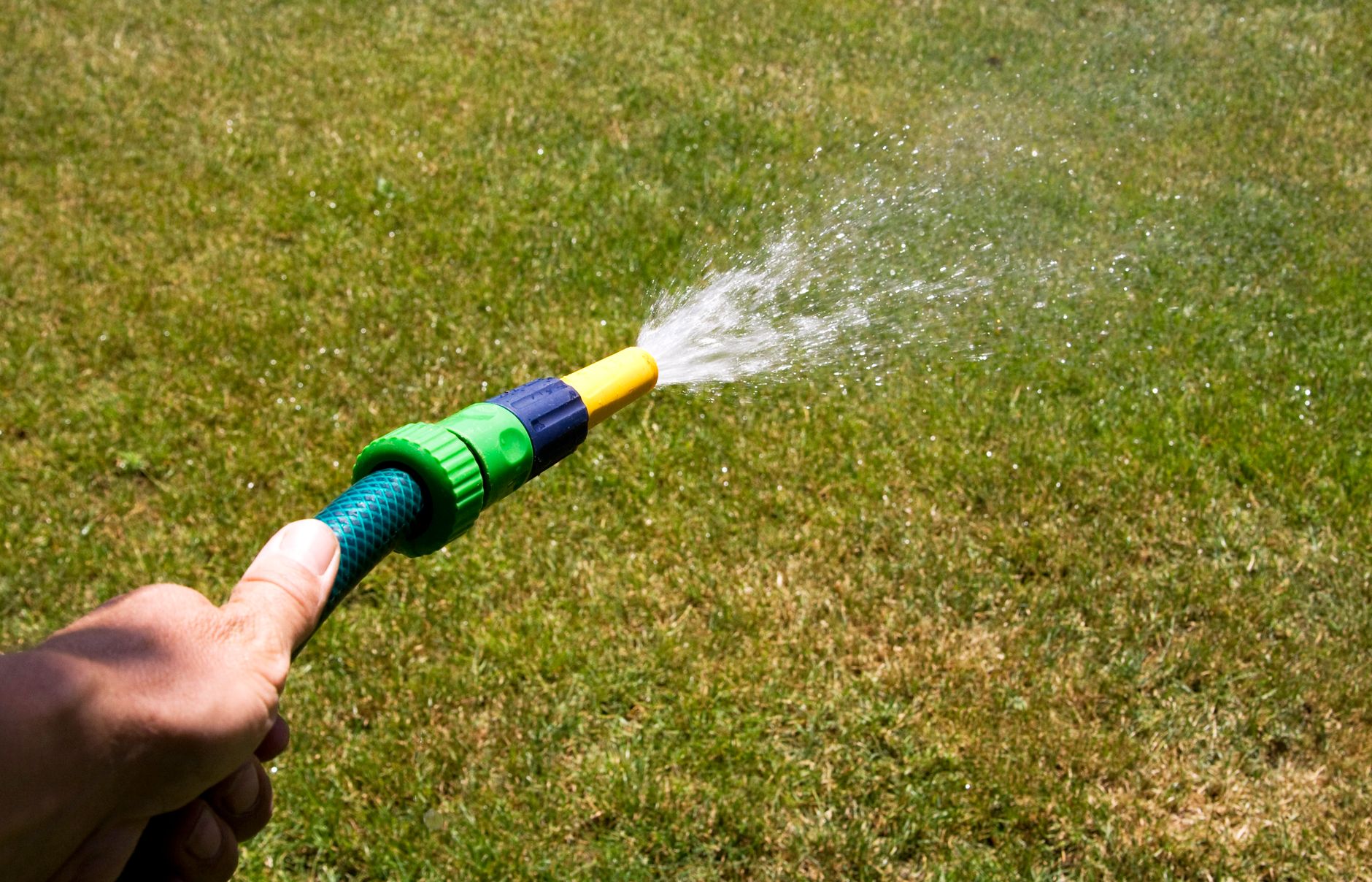
Albuquerque's seasonal watering restrictions run April 1 to Oct. 31, according to a reminder from the Albuquerque Bernalillo County Water Utility Authority reported by local news. The reported rules bar watering or sprinklers between 11 a.m. and 7 p.m. Turf is on a day-based schedule of two days a week in April and May and three days a week in summer, per that reporting and the city's municipal code.
Those rules cover watering, not mowing, and the sources behind this page do not say whether any rule limits when a mower can run. Check the utility's rules and any landscape code that applies to your properties before you set a mowing window. Where irrigation heads sit in the open lawns, schedule robot runs around sprinkler cycles so mapping and watering do not conflict.
A summary of the municipal code mentions an exemption for irrigation of newly sodded or planted landscaping during its first 30 days. Only the summary was reviewed, so confirm the exemption with the utility before changing any watering schedule. No turf-to-xeriscape rebate was verified, so none is included here.
A dry year can still bring sudden growth after a single storm, so check the grass each week rather than assuming the seasonal schedule will hold. Schedule the first robot run of each week after you have checked the sprinkler heads, so the crew catches any broken head before the robot works around it.
Which mowing robots fit between buildings and around xeriscape beds?
Most commercial mowing robots work inside a mapped boundary. Some follow a buried or surface wire, others use satellite positioning, and the mapping step decides whether the robot can work around a bed, a walkway, a light pole or a sprinkler head. For xeriscape beds, the boundary has to run around the bed, not through it, so the robot keeps off decorative rock, drip emitters and low plants.
Walkways are a different case. A robot can cut the lawn up to a walkway edge, but the edge line usually still needs a trimmer. Plan a crew pass for edges, corners and tight spots by the building walls. Where residents walk those paths, ask the provider how the robot detects and stops for people and pets.
Ask for a mapping plan of each property before deciding. Specifications for cutting height, slope rating and wet-ground operation differ by model, so get them in writing for your grass type and your slopes. The list below covers what to request.
Xeriscape beds also change how the boundary is drawn. Beds often sit at a different height than the lawn, and drip lines run under the mulch, so the mapping crew should walk each bed edge with the grounds lead before the first run. Plan on at least one correction pass on the first map.
- A boundary map for each property, reviewed on site before the first run
- Cutting height range for the grass species on your lawns
- Maximum slope rating, checked against your banks and berms
- Wet-ground operating limits for monsoon storm weeks
- Sensor and stop behavior around pedestrians, children and pets
- Service response times for your state, stated in the quote
Where does a mowing robot fall short on a housing site?
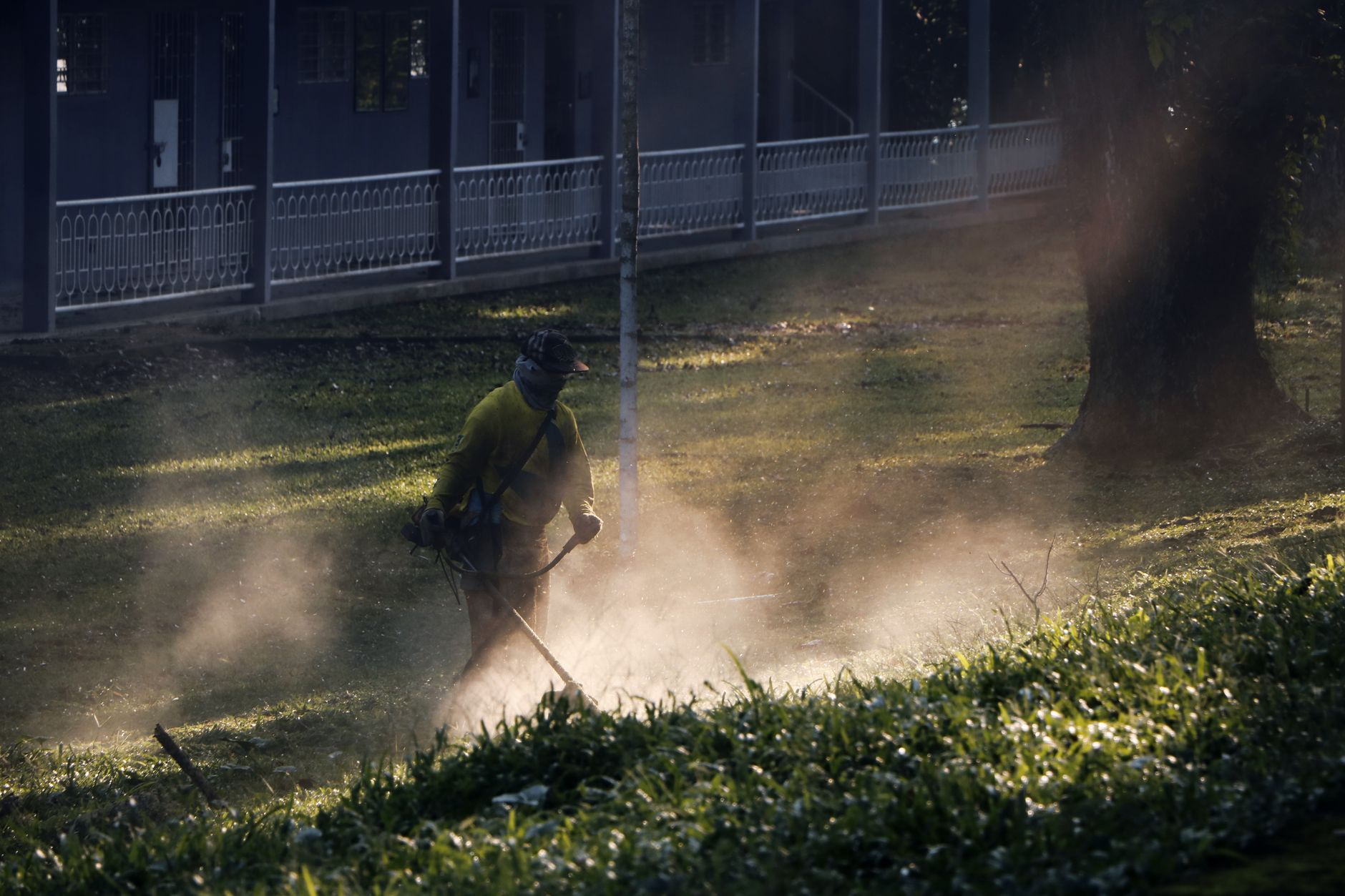
A robot is the wrong tool for steep banks, for grass that has run far past its normal height after a long gap, and for beds where a boundary cannot follow the layout. It will not trim edges, pick up debris or notice a broken sprinkler head on its own. Those tasks stay with the crew, and the robot's job is the open, mapped turf.
Industry coverage of robotic mowers ties adoption to a shortage of skilled grounds staff, which matches the problem you describe. The same coverage makes clear that adoption depends on the property. A mower that fits one site can be a poor fit for another, so the site assessment matters more than any general claim about the technology.
Monsoon weather adds its own limits. Wet ground can cause ruts or slipping, and the sources behind this page do not give wet-ground limits for any specific machine. Ask for those figures directly and test on the wettest lawn you have before scaling.
Plan for the crew to handle the first cut after a long gap by hand or with a ride-on mower, then let the robot hold the lawn at a steady height. Keep a log of every missed strip, scuff or stop. A short record from the first six weeks gives you a clearer basis for the next decision than any national estimate, and the service team can use the same record to tune the boundary.
What labor picture do public housing grounds crews face?
HUD's Public Housing Authorities dataset, as reproduced in a geoportal metadata record dated January 2025, reports about 1.2 million households living in public housing run by more than 3,300 housing agencies. That count is of households, not units, so it does not tell you how many lawns a crew covers. It does show that housing grounds work is spread across thousands of separate agencies, each with its own staffing.
The Bureau of Labor Statistics Occupational Outlook Handbook reports about 1,192,500 employed landscaping and groundskeeping workers in its grounds maintenance profile. That is a national occupation figure, not an Albuquerque count. The sources behind this page include no local labor market data for the city, so check local hiring timelines with your HR office before you plan staffing.
No verified turnover or separation rates for this occupation turned up, so this page does not quote any. If you track turnover in your own crew, that record is more useful than a national number for the decision in front of you.
Your own work order history is a better source than national figures. Pull the last two monsoon seasons, count the open-lawn passes that slipped, and compare them with the crew hours that were available.
How does the commercial mower market look, and what evidence exists?
Market research on robotic lawn mowers is mostly third-party and mostly residential. One syndicated report from GII Research estimates that residential accounts for 58.6 percent of 2025 robotic mower share, and that Europe holds 41.86 percent of 2025 market share. Neither figure is verified against government data, and neither separates housing authority grounds from homeowner lawns.
Market size estimates disagree widely, and commercial-only estimates are much smaller than totals that include every segment. For a housing authority, public evidence specific to housing grounds is thin, so the best test is a pilot on your own property rather than a national trend line.
Trade coverage ties adoption to skilled staff shortages, but no government or trade association adoption rate for commercial mowers turned up in this research. This page cannot say what share of housing authorities or landscape crews run robots today.
How do you get a mowing robot on your site with our company?
We start with a free site assessment. That visit maps the open lawns, marks the xeriscape beds and walkways, and records slopes, sprinkler heads and resident areas, so the robot plan matches your property. A lease quote follows the assessment, so you see the numbers only after we have seen the site.
We pick the robot for your site across manufacturers, lease it through financing, deploy and integrate it, and train your staff to run and check it. Our service plan covers every unit, with regional service engineers in every state we service, remote triage and on-site dispatch when a unit needs attention. Ask about response times for your state in the quote.
You can start with one leased unit on one property, and test the mapping, wet-ground behavior and crew time before deciding on more. Read the lease terms and the service scope in the quote before you sign, and ask for the mapping plan in writing.
Frequently asked questions
Upcoming public sector events
- Trade showAPC/PennDOT/PA Turnpike Fall SeminarNov 18 to 20, 2026Hershey Lodge, Hershey, PA
- Trade showMinnesota Buildings & Facilities Management Trade ShowNov 19, 2026Minneapolis Convention Center, Minneapolis, MN
- ConferenceCASBO CBO Symposium (Executive)Nov 19 to 20, 2026The Langham, Pasadena, CA
- ConferenceVirginia Association of Fairs ConventionJan 14 to 17, 2027Williamsburg Lodge, Autograph Collection, Williamsburg, VA
Put a robot to work in Albuquerque.
We walk your site, learn the job, and recommend the unit that fits. Then we quote the lease, deploy it, and keep it serviced.
Sources
- Local TV report on New Mexico monsoon season timing
- Local TV report on Albuquerque monsoon rainfall totals
- Local TV report on seasonal watering restrictions
- Albuquerque Municipal Code, water conservation section
- HUD Public Housing Authorities dataset, geoportal metadata record
- Bureau of Labor Statistics, Occupational Outlook Handbook, grounds maintenance workers
- Trade coverage of robotic mowers and grounds staff shortages
- GII Research, robotic lawn mower market share analysis