
The question, in the buyer's words
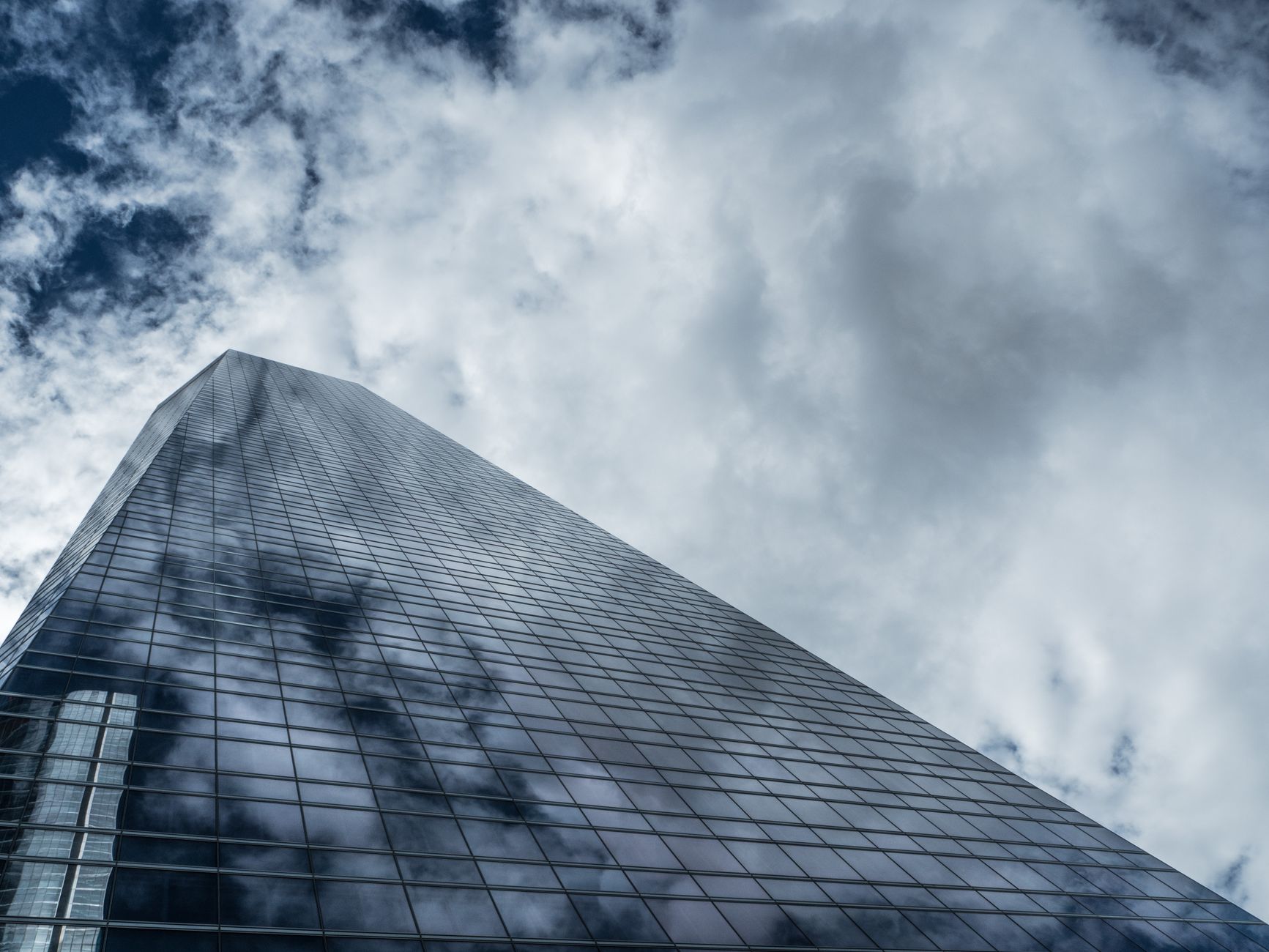
Our 40-story glass office tower has sealant joints that rope crews check after every storm; could drones fly the curtain wall from above and flag failing sealant before water gets into the offices?
Key takeaways
- Drone facade checks flag sealant for a crew to confirm, not as proof of a leak.
- The research we found gives no measured accuracy for drones spotting sealant gaps.
- In ten litigated cases analyzed for cost, envelope issues made up at least 45% of claimed repair costs.
- Rope crews still confirm each flagged joint by hand, and rope work carries serious fall risk.
- Check FAA rules on flying over people and traffic before any tower flight.
Can drone facade checks flag sealant gaps on a glass office tower after a storm?
Drone facade checks on a glass office tower can be useful after a storm, but they answer a narrower question than the one you are asking. A drone flies along the face of the building and photographs the curtain wall, so it can show sealant joints that look split, stained, or pulled away. That tells your rope crews where to look first. It cannot replace a hands-on look at each joint, and it cannot see the wall cavity where water actually travels.
The research supports the drone as a screening tool, not a verdict. A 2025 preprint that reviews drone facade diagnosis, and has not been peer reviewed, calls drones an effective, promising alternative for supporting envelope inspection. The same preprint notes that a drone inspection practice standard is still at an early stage. We found no field test that reports how often drone imagery catches sealant gaps, so this page gives no accuracy figure for that job.
Some vendors publish accuracy percentages for drone inspection, including figures for AI-classified imagery and drone thermography. We could not verify their test methods, so we left those numbers out. The practical test is simple: ask for a demonstration over a known joint on your own building before you accept any claim about detection.
Why does sealant on a glass tower fail and let water into offices?
Sealant does its work at the joints where glass, frames, cladding, and penetrations meet, and those joints are where water finds a route. According to a summary of an ASCE review, the American Society of Civil Engineers, of 46 litigated construction defect cases from 2011 to 2019, sealant joints that were missing, deficient, or unsealed at penetrations appeared in 78% of those cases. The figures come from a summary page rather than the full paper, so check the original review before you cite them in a board packet.
The same review analyzed ten cases for cost. In those ten, envelope issues accounted for at least 45% of claimed repair costs, and cladding was the largest contributor in 80% of them. A small joint failure that goes unnoticed for a season can turn into an interior repair. The value of a fast survey is finding joints early, before tenants start calling.
Water that gets past a failed joint does not always show up on the day it enters. A building consultant's article notes that when flashing, sealants, or drainage planes fail, water can become trapped inside the wall assembly, leading to mold, corrosion, and interior leaks. Another building consultant notes that planned resealing is often more cost-effective than emergency repairs once water reaches interior finishes. That is why a clean outside photograph is not enough evidence on its own.
What can a drone see on a curtain wall, and what can it not see?
A visual camera shows what a careful eye shows from close range: cracked or hardened sealant, gaps at head and sill joints, missing caulk at mullions, and dirty streaks that trace water paths down the glass. Each sign is useful in a survey, but each is only a lead until someone confirms it by hand. Image detail depends on distance and camera resolution, and we found no published resolution standard for sealant gaps on a tower.
A thermal camera looks for temperature differences, which can point to wet insulation or air movement behind the surface. A University of São Paulo thesis on drone infrared thermography found detection of detached facade coatings down to depths up to 8 cm, with 1 to 4 cm failures common. That work concerns coating delamination rather than sealant, and it gives no accuracy percentage. It shows that infrared drones can see subsurface defects, not that they will find a sealant gap.
Thermal readings change with sun, rain, and wind, so a storm-day flight can look quite unlike a calm, dry one. Plan the flight for conditions the drone can handle, and compare results against a baseline taken on a calm day. Without that baseline, a reviewer cannot tell a new flag from an old stain.
Why are rope crews risky after storms, and what does a drone change?
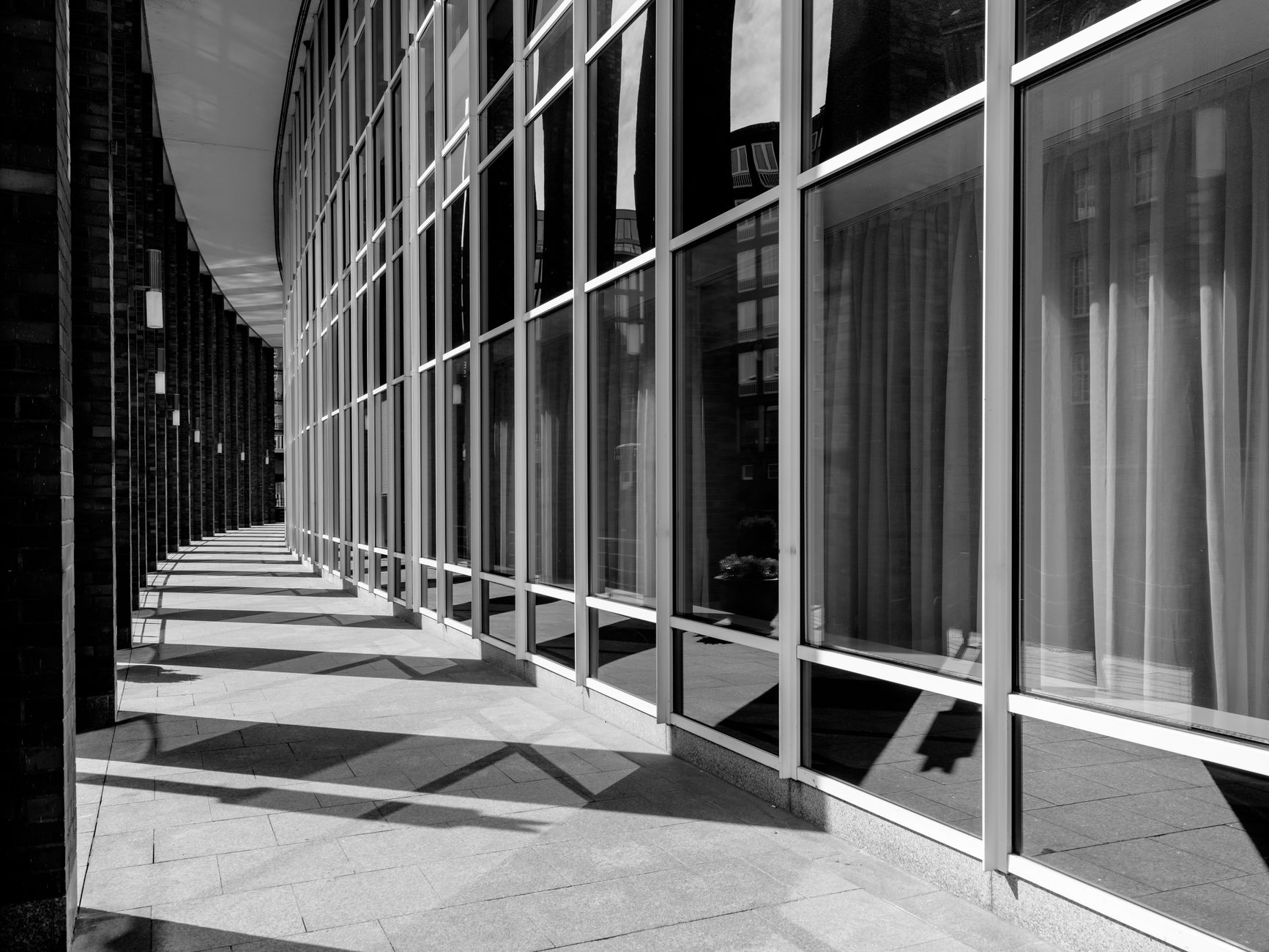
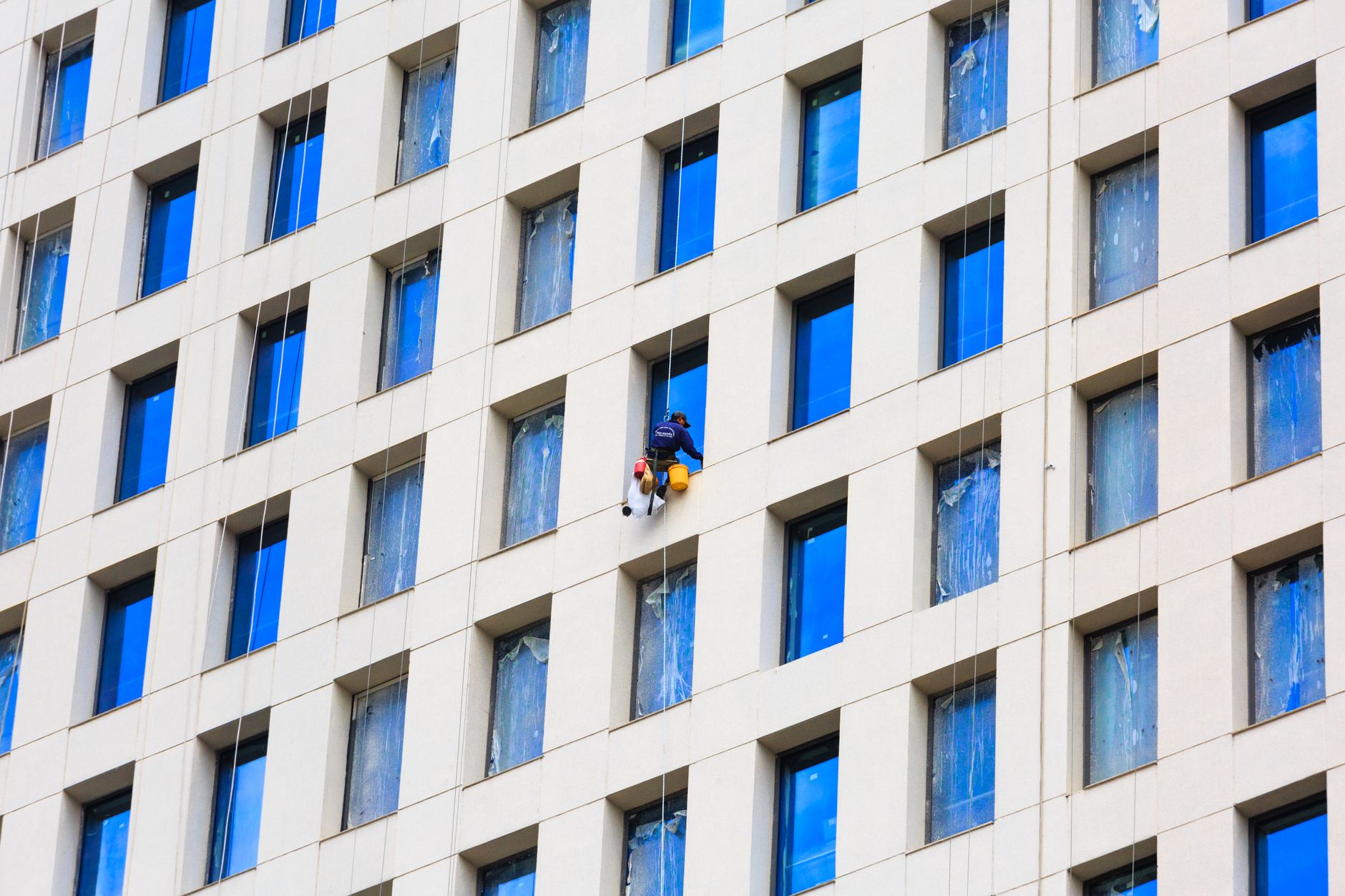
Rope descent remains a common way crews reach a facade, and its failures are serious. According to OSHA enforcement findings, reported in 2024, on a window cleaner who fell 29 stories in downtown Boston in October 2023, the company had failed to inspect and replace damaged rope descent and fall protection equipment. Workers were also not trained to inspect ropes or use the descent system properly.
A NIOSH investigation of a 2005 Oregon case found that an insecure or broken primary line is the cause of most worker falls from suspended heights. Reported fatalities often involved a lifeline incorrectly attached to the same anchor line, or no lifeline at all. A 2019 Washington State investigation of a 70-year-old self-employed cleaner who fell 50 feet from a library points to ANSI/IWCA I-14.1 as the governing rope descent guidance.
A drone does not remove rope work, but it can cut the number of descents. Flights can clear bays that look sound and send crews only to joints that need a hands-on check. The crew still has to inspect the rope system and each flagged joint by hand. Nothing in the research we found shows that a drone flag replaces that step.
What rules govern drone flights near an occupied tower?
Under the FAA's 2021 operations over people final rule, a Part 107 pilot can fly over people without a waiver only with a category-compliant drone. Flying over moving vehicles remains barred except under that pathway. A glass office tower sits above sidewalks, entrances, and streets, so people and traffic below shape the flight plan on every pass.
The FAA has also proposed a Part 108 rule for operations beyond visual line of sight. We did not confirm where that rule stands, so do not build a multi-tower program around it until the FAA confirms its status. Keep your planning tied to the rules in force today, and confirm with your pilot how each planned pass will be flown.
Local and state privacy rules may also apply to images of occupied offices and neighboring windows. We found no published study of drone flights close to downtown glazing. Treat the first flight as a site test. Confirm the landing zone, the wind limit, the pilot's authorization, and how long images will be kept.
Where should a drone check go on a glass office tower?
A survey is most useful when it follows the water path rather than sweeping the whole facade evenly. Start with the corners, which take the most wind-driven rain, and the roof edge, where cap flashing meets glass. Then move to penetrations such as brackets, pipes, and conduit, which the ASCE review found missing or unsealed in many cases.
Use the same six zones for each post-storm pass so the photographs line up from one storm to the next. A calm-day baseline gives the reviewer something to measure against, and turns a vague worry into a dated comparison. Keep the zone list short enough that a reviewer can clear every flag within the same day.
Ground-level glass and entry canopies deserve their own look. They take splash and pooled water, and a joint that fails at the base can wet the lobby before it shows on the upper floors. Mark the zones on a simple sketch of the building so that anyone reviewing the photos later can find the same bay.
What does a post-storm drone check look like in practice?
The sequence matters more than the hardware. Fly only when wind is inside the drone's limits and the glass is dry enough for clear images. A qualified reviewer then sorts flags into three groups: clear damage, possible damage, and nothing found. Only the first two groups go to rope crews, and each flagged joint gets a hands-on look before anyone schedules a repair.
The office side belongs in the same routine. Water can reach interior finishes before a facade reviewer notices anything on the glass, so interior staff reports and a simple moisture check on the top floors should be part of the post-storm pass. Those checks cover what the drone cannot see from outside.
Log every flag with a time, a location, and a photograph, then close each one with a note that says what the crew found. That record is what a building owner, an insurer, or a board will ask for after the next storm. Over a season, the log also shows which bays flag most often, which helps plan resealing before the next failure.
How would a full-service robot integrator approach a tower like this?
We are an OEM-neutral commercial robot integrator for US businesses. We pick the right robot across manufacturers for the site, lease it through financing, deploy and integrate it, train the staff who will fly and review it, and service every unit under our service plan. Regional service engineers back that plan in every state we service, so you deal with one partner for the whole lifecycle.
For a glass office tower, the first step is a free site assessment. The right answer depends on the building's height and landing zone, the airspace below, who will fly and review the images, and whether the goal is a survey program or a repair program. Drones are a poor fit when the roof has no safe landing zone, when water is already inside the building, or when hands-on sealant testing is the main deliverable. In those cases we will say so and look at other options.
No payment figure appears on this page because each lease is quoted after the site assessment. Ask for the quote in writing, with training, service coverage, and response times spelled out. Ask the same questions of any other provider you consider.
Frequently asked questions
Upcoming property management events
- Trade showMinnesota Buildings & Facilities Management Trade ShowNov 19, 2026Minneapolis Convention Center, Minneapolis, MN
- WorkshopIREM Boston Chapter No. 4 Fair Housing Corporate OfferingDec 2, 2026The Simon Companies, Braintree, MA
- ExpoMontana Green EXPO 2027Jan 5 to 7, 2027Hilton Garden Inn, Missoula, MT
- ExpoPittsburgh Remodeling ExpoFeb 5 to 7, 2027Acrisure Stadium, Pittsburgh, PA
Want a drone at your high-rise glass facades?
Tell us about your site. We will recommend the robot, quote the lease, and keep it serviced.
Sources
- Summary of ASCE review of litigated construction defect cases
- Building consultant article on water trapped in failed wall assemblies
- University of São Paulo thesis on drone infrared thermography of facades
- OSHA enforcement findings on the 2023 Boston window cleaner fall
- NIOSH FACE report on a 2005 Oregon window cleaning fall
- Washington State L&I FACE report on a 2019 window cleaner fall
- FAA operations over people rule page
- 2025 preprint review of drone facade diagnosis