
The question, in the buyer's words
Our 1,100-acre dairy farm grows silage, and bunker piles can heat up in the middle where no one sees from the ground; could drones spot hot spots in the piles before we lose feed?
Key takeaways
- A drone sees the surface and face of a silage bunker, not the core, so it flags spots to check rather than proving spoilage.
- Per the infrared forage article's account of Kung's work, internal temperatures above 100 degrees Fahrenheit, 4 to 8 inches behind the face, indicate aerobic spoilage.
- A Kansas State report found uncovered bunker silos lost at least 30% from the top 3 feet compared with plastic-covered bunkers.
- Confirm each alarm with a probe, since one hot spot looked alarming but was aerobically stable once measured.
- Start with a pilot on a few bunkers and compare drone readings with probe values before scaling across the farm.
Can a drone find dairy silage bunker hot spots before feed spoils?
Yes for the surface, and partly for the pile. A drone carrying a thermal camera can fly over a dairy silage bunker and show temperature differences across the face and top, which are the parts of the pile that are hard to see well from the ground. The camera reads heat on the outside of the feed, so it works as an early signal of where to look, not a verdict on the middle of the pile.
The practice already exists in the field. According to a winter 2025-26 inoculant team newsletter, drone-mounted thermal cameras are used to scan the silage face for temperature variations, and high readings often indicate secondary fermentation, which reduces silage quality. That is why drone checks are worth testing on your own bunkers rather than assuming they will behave the same way on every farm.
At 1,100 acres, the main value is coverage and timing. Walking every bunker face takes time, and faces get skipped when the crew is busy. A drone can cover them on a fixed schedule and leave a dated record of which faces ran warm, so a spot that grows from one week to the next stands out.
Why do silage bunker piles heat up and lose feed?
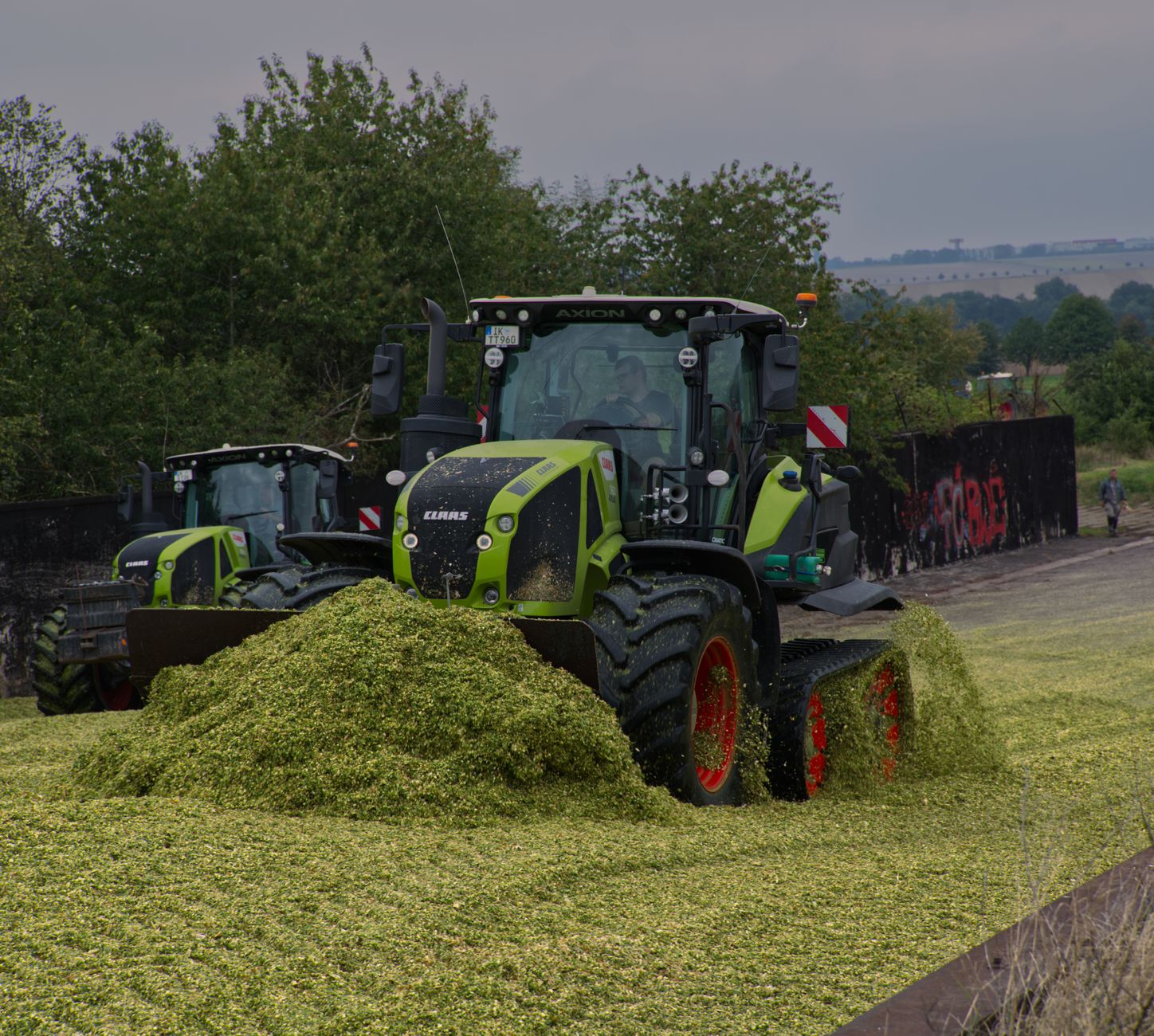
Heat in a bunker usually means air has reached the feed and microbes are consuming sugars and dry matter that should have stayed in the silage. The losses are measurable. According to a Kansas State Agricultural Experiment Station report, uncovered bunker silos lost at least 30% from the top 3 feet compared with plastic-covered bunkers. An earlier K-State alfalfa study found losses above 72% and 32% in the top 0 to 12 inches and 12 to 24 inches, respectively, after 12 weeks in an unsealed bunker.
Losses across the whole pile are smaller but still costly. A German bunker silo study of 48 silos covering grass, lucerne and maize found average dry matter losses of 9 to 12% across crops, and its authors suggested a maximum guideline of 8% for grass and maize silage in bunker silos. A University of Florida cover trial reported whole-silo dry matter losses of about 12 to 13% across treatments, with no clear benefit from the tested cover.
Two conclusions follow. The top layers lose the most, and the whole pile loses enough that catching an early hot spot is worth a flight. A hot spot is therefore a lead on a loss that may already be underway, not a small cosmetic issue.
What can a thermal drone actually see inside a silage bunker?
Less than most people hope. Infrared measures the temperature of the surfaces it sees and does not look into the pile. The middle of a bunker stays hidden from a drone the same way it stays hidden from a walker, so the aerial view shows the face, the top layer, the edges and any spot where a cave-in has exposed feed.
The useful threshold comes from Kung, as reported in an agricultural news article on infrared forage images. Internal temperatures above 100 degrees Fahrenheit, 4 to 8 inches behind the silage face, indicate aerobic spoilage. That reading is taken inside the feed with a probe, so the drone cannot make the measurement itself. The threshold tells you what to probe for after the drone has flagged an area.
No validated drone-specific silage thermal threshold turned up in the sources reviewed. Treat drone output as a relative map: which faces run warmer than their neighbors, and whether a warm area grows between passes. Ask any provider to show how readings were checked against probe values on your own bunkers before you rely on the images for feeding decisions.
Why can a silage hot spot mislead, and how do you confirm it?
A hot spot can be harmless, or it can be the start of real loss, and an image alone does not say which. In one case reported in the infrared forage article, a bunker that looked alarming on infrared was aerobically stable once internal temperatures were measured. In another, the hot spot turned out to be internal feed exposed by small cave-ins that the image picked up as a warm area.
Confirmation means probing. The infrared forage article advises taking internal readings at about 18 inches to confirm. The Kung threshold applies to readings 4 to 8 inches behind the face, so the two sources use different depths. If your crew can reach both, probe at both and log each reading with the flight date and the spot's location, so the record shows what changed.
Cave-ins need separate handling. Exposed feed on a collapsing face is a safety hazard for people on foot, so keep crew back from the edge and send the flight data to whoever manages the feed plan.
How large are US dairy operations getting, and why does it matter?
Dairy farms are getting bigger. According to a farm broadcast summary of USDA NASS data, licensed dairy herds were about 23,600 in 2025, down from 24,600 a year earlier, while the average herd size rose to 397 cows in 2025 from 377 in 2024. Fewer, larger operations push more feed through each site, so a single spoiled face represents more loss than it would on a smaller farm.
The trend is expected to continue. A trade press projection on US dairy farm numbers says farms are set to fall below 20,000 by the end of the decade, from over 100,000 operations in 1992. More consolidation means more silage stored on fewer sites, which makes a repeatable check schedule more valuable than an occasional look.
Your 1,100-acre figure is the number that matters for planning. National counts do not give silage area or bunker count per farm, so those numbers come from your site assessment, not from these reports.
What does a drone bunker check day look like?
A check day is planned around feeding and weather. The survey runs before the feeding crew starts, so flagged faces can be probed the same morning. Readings are most useful when compared with the previous flight, so the route, altitude and timing stay fixed from week to week.
The shift below is one plausible sequence. Times and steps will change with your feeding schedule, the number of bunkers and the flight rules that apply at your location.
Drone checks or walking the pile: who wins on which task?
A person still wins on several tasks. A trained eye can see a torn plastic edge, a crust forming on the face or a crack that a thermal image shows only as a faint change. Someone walking the bunker can also smell sour feed, probe exact points and make a call on the spot.
The drone wins on coverage and repeatability. It can fly every face on a fixed route and keep the same viewpoint week to week, so change stands out. That matters because a spot that is growing is more worrying than one that is simply warm on a single day.
Use them together. The drone finds where to look, the person confirms what is happening, and the feeding manager decides whether to remove, cover or reseal.
How do you set up silage bunker drone checks with Service Robot Co.?
Service Robot Co. is a US robot integrator that picks the right robot across manufacturers, leases it through financing, deploys and integrates it, trains staff and services each unit under RoboCare, our service plan, backed by regional service engineers in every state we service. For silage checks, the first step is a free site assessment that maps your bunkers, flight paths, obstacles, and where readings need to reach your team.
A lease quote comes after that assessment, so it reflects your actual layout and survey frequency rather than a generic package. Deployment includes integration with how your crew already logs feed and moves data, plus training so staff can fly the route, record readings and read the images with the limits described above.
Start with a pilot on a few bunkers before committing across the farm. The test that matters is whether drone readings line up with probe values on your own silage, and a pilot is the most direct way to find out.
Frequently asked questions
Want a drone at your silage bunker piles?
Tell us about your site. We will recommend the robot, quote the lease, and keep it serviced.
Sources
- Inoculant team newsletter, Winter 2025-26
- Beyond face value using infrared forage images
- Kansas State Agricultural Experiment Station report
- Kansas State alfalfa bunker study
- Dry matter losses of grass, lucerne and maize silages in bunker silos
- University of Florida corn silage cover trial
- Farm broadcast summary of USDA NASS dairy herd data
- Trade press projection on US dairy farm numbers