

The question, in the buyer's words
Our 300-seat community theater has a box office run by one volunteer, and patrons keep asking about seating, accessibility and intermission; could a humanoid robot answer those questions and check tickets at the window?
Key takeaways
- A humanoid robot can handle repeated lobby questions, but window ticket checks should stay with a person.
- For a 300-seat house, the 2010 ADA Standards call for 5 wheelchair spaces, dispersed across the seating.
- Our arithmetic from the same standards gives 12 assistive listening receivers, to be confirmed against the official text.
- A hotel pulled its humanoid front desk robots after they failed guest questions, so accuracy is the real test.
- Pilot one unit with your own question log before any lease decision.
Can a humanoid robot answer community theater box office questions?
Yes, for a defined set of questions. A humanoid robot can stand in the lobby and answer what a community theater box office hears most often: where the wheelchair seats are, whether the house has listening devices, when intermission falls and where the restrooms are. Whether it answers those correctly every time is the real question, and most of this page is about testing that.
The honest split runs along one line. Questions with fixed answers that you control, such as the seat map, the accessibility counts and the show schedule, suit a robot well once those answers are loaded and checked. Questions that depend on a patron's own needs, refunds, seat changes or medical access need a person. The robot can route those to a volunteer or a phone line, but it should not decide them.
Humanoid questions at a box office also differ from hotel desk questions in one way. The answers change with each production. Intermission time, late seating and house rules move from show to show, so the answer set needs a named owner who updates it before every opening, not once a season.
What do patrons ask about seating and wheelchair spaces?
Seating and wheelchair access draw the most follow-up questions, and they carry the firmest rules. According to the 2010 ADA Standards, Section 221, as reproduced on corada.com (a secondary copy, not the official ada.gov text), a house of 151 to 300 seats needs 5 wheelchair spaces. The same reproduction says those spaces must be dispersed rather than clustered in one area unless an exception applies, and companion seats must align with adjacent wheelchair spaces.
That gives the robot a precise answer, but only if the seat plan it reads matches the house as it stands. A robot telling a patron that a row has room for a chair, when the row was rebuilt last season, does more harm than silence. Load the map from the layout as it stands today, date it, and have a volunteer walk the rows once per season to confirm.
The robot should not judge whether a particular seat suits a particular patron's mobility, sightlines or transfer needs. It can state the layout and the number of spaces, then point to a staffed person for anything beyond those facts.
How many assistive listening receivers does a 300-seat house need?
Hearing access comes next, and it too is set by counts. The 2010 ADA Standards, Section 219, Table 219.3, as reproduced on corada.com, sets receivers by seat count. For 50 seats or fewer, 2 receivers are required, both hearing-aid compatible. For 201 to 500 seats, 2 receivers plus 1 for every 25 seats over 50 are required, with 1 in 4 receivers hearing-aid compatible.
Applied to a 300-seat house, that works out to 12 receivers, with about 3 of them hearing-aid compatible. The 12 is our arithmetic from the table as reproduced, not a published total, so confirm it against the official text on ada.gov before you count equipment or plan a shelf.
A robot can tell patrons where the receivers are kept and who issues them. It should not hold the device stock or sign out receivers unless a person keeps the log. A missing receiver is a lost item, and for a patron who needs it, a lost show.

Can the robot answer intermission and show time questions?
Show times and intermission are the easiest questions to answer and the easiest to get wrong. The robot can state the start time, the intermission length and the door close time from a schedule a volunteer updates for each production. It should read the date from the same source, so last month's schedule never appears on opening night.
Restroom and concession directions are fixed and suit a robot well. Temporary changes, such as a corridor closed during a set change, need an override that a person can set quickly from the window. Without one, the robot will send patrons toward a closed door, and it will do so with complete confidence.
The list below is the question set we would test before any lease decision. Each item needs a named source and a named owner, and the robot should answer only from those sources.
- Seat map by section, with wheelchair spaces and companion seats, dated each season
- Assistive listening count, hearing-aid compatible count and where the receivers are kept
- Start time, intermission length and door close time for the production on the bill
- Restroom, concession and exit directions, with a manual closure override
- Refund, exchange and seat change policy, routed to a person
Should a humanoid robot check tickets at the window?
No, not in this build. Our research found no verified source showing a humanoid robot scanning tickets, handling cash or resolving a ticket problem at a box office window. Those tasks need the most reliable handling and the most accountability, and a mistake at the window means a seat sold twice or a patron turned away from a show already paid for.
The window is also where one volunteer's time matters most. Moving the robot in front of the window to take over ticket checks would hand the least tested task to a machine. A better split keeps the volunteer at the window and lets the robot handle the lobby questions that arrive before the window line forms.
If you still want to test ticket checks, run it as a separate pilot with a fixed ticket format, a supervised window and a written fallback to a paper list. Do not let it work alone on opening night, and do not count it as proven because the lobby pilot went well.
How many community theaters are there in the US?
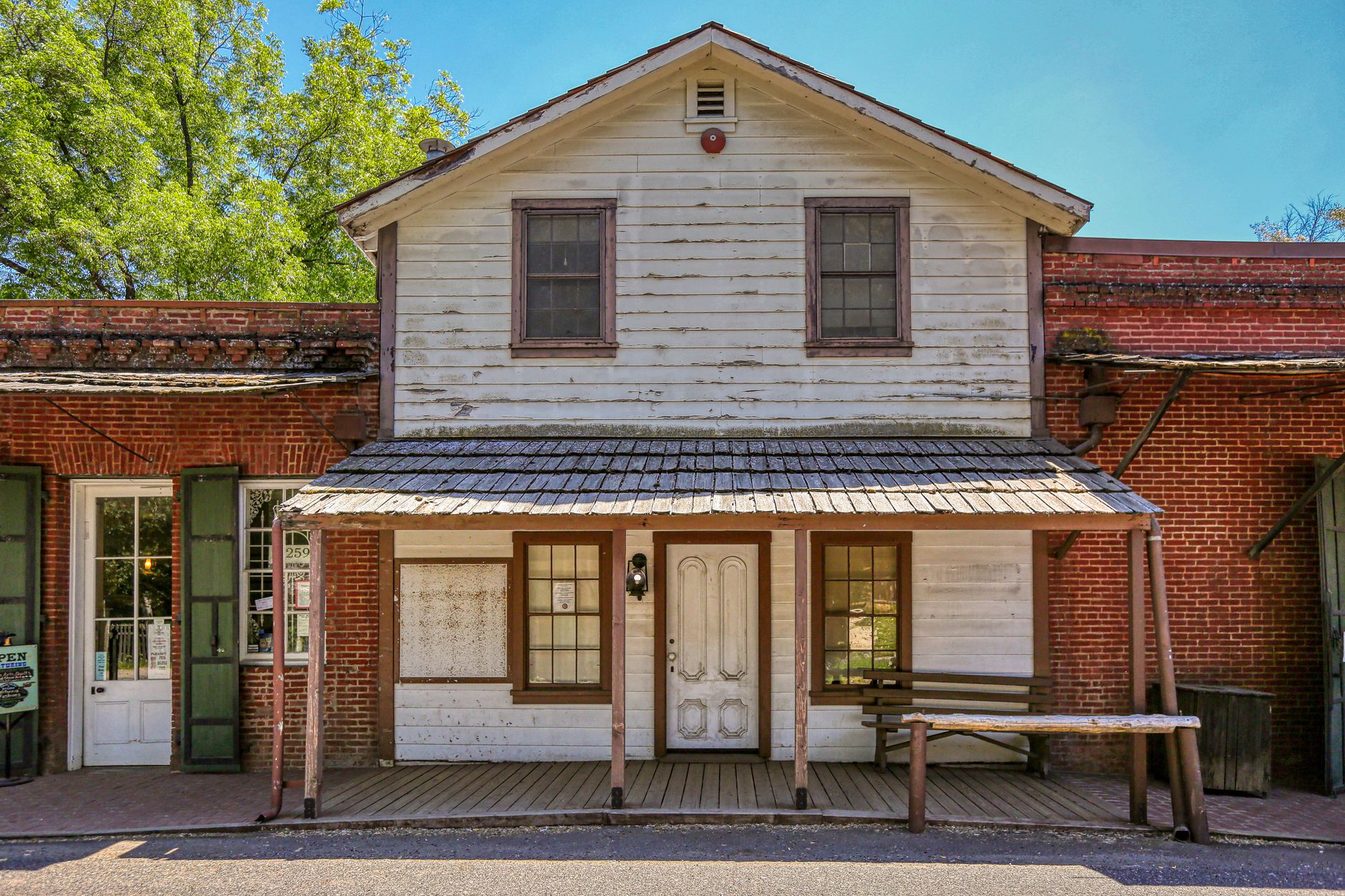
The honest answer is that nobody reliably knows. The AACT 2026 strategic framework reports more than 1,500 member theatres in its nationwide network, but that counts members who belong to the association, not every community theater. An older estimate attributed to AACT, cited in a book review, gives 10,000 community theatres with about 1 million members.
A 1959 estimate by Gard and Burley, reported in the same review excerpt, put the figure at about 3,500 full-scale community theatres producing on a continuing basis. Our search did not confirm which page held that figure, so treat it as unverified. The gap between 1,500 and 10,000 is reason enough not to build a rollout plan on any single national count.
What this means for you is practical. Your own seat map, show schedule and accessibility counts are the real inputs, and national totals will not tell you whether a robot can answer your patrons' questions correctly.
What does one volunteer at the window mean for staffing?
A volunteer-run box office carries a staffing risk that a paid crew does not. The Bureau of Labor Statistics volunteer rate was 24.9 percent in its 2015 release, the most recent BLS release our search found, and it fell 0.4 percentage point that year. That figure covers the general public, not theater volunteers, and it is dated, but it shows that volunteer availability moves over time.
We did not find verified data on box office turnover, hours per shift or injury rates for community theater volunteers, so do not plan around figures we cannot cite. The useful measure is your own: how many lobby questions a show draws in the last stretch before curtain, and how many of them end up at the window.
A robot does not replace the volunteer who knows the house. It takes the repeated questions so that person can handle the hard ones. Keep at least one trained backup for the window on nights when the robot is down or the volunteer is out.

How would a humanoid pilot work in a theater lobby?
Start with one unit and a defined question set. We begin with a free site assessment that maps the lobby, the path from the entry to the window, the seating and accessibility layout, and where the robot can stand without blocking the line or the accessible route. A quote follows, and the lease runs through financing, so the house does not have to find the full cost up front.
Deployment and integration cover loading your seat map, accessibility counts and show schedule, training volunteers to update those sources, and go-live support for the first few performances. Our service plan covers repair and maintenance with on-site dispatch and remote triage, backed by regional service engineers in every state we service. Ask about spare unit coverage for the pilot period, so one fault does not close the lobby.
Judge the pilot on answer accuracy, not on how impressive the robot looks. Log every question, check each answer against its source, and keep the window staffed throughout.
What does the research not show yet?
No published 2026 trial that we found measures how accurately a humanoid robot answers visitor questions. A hotel withdrew its humanoid and dinosaur robots from its front desks because they could not answer guest questions about local attractions or airport access. The date of that withdrawal was not shown in our search, but the failure mode matches what a theater lobby would face.
A Swiss study of a robot handling routine desk questions found it was perceived predominantly positive by staff and guests, but that reliable information use required a high level of autonomy and technological stability. Its date was not shown either, so read it as a finding about conditions, not a timeline.
The gap you should close yourself is accuracy on your own questions, tested in your own lobby before any decision. We also found no verified figures on injury rates or box office hours, so this page makes no claim about either.
Frequently asked questions
Upcoming event venues & stadiums events
- Trade showBrats & RobotsNov 10, 2026Alliant Energy Center Exhibition Hall, Madison, WI
- MeetupMPI Virginia Morning Brew Meet-Up, November 2026Nov 10, 2026Hampton, VA
- SummitVA1 Governor's Tourism Summit 2026Nov 18 to 20, 2026Kalahari Resorts & Conventions, Spotsylvania, VA
- ConferenceVirginia Association of Fairs ConventionJan 14 to 17, 2027Williamsburg Lodge, Autograph Collection, Williamsburg, VA
Want a humanoid robot at your community theater lobbies?
Tell us about your site. We will recommend the robot, quote the lease, and keep it serviced.
Sources
- 2010 ADA Standards, Section 221 (secondary reproduction, corada.com)
- 2010 ADA Standards, Section 221.2 (secondary reproduction, corada.com)
- 2010 ADA Standards, Section 219 Table 219.3 (secondary reproduction, corada.com)
- AACT 2026 strategic framework (PDF)
- Project MUSE book review citing AACT and Gard and Burley estimates
- Bureau of Labor Statistics, Volunteering in the United States release (2015)
- Hotel humanoid robot withdrawal case study (bestpractice.ai)
- Swiss study of a robot handling routine desk questions (FHNW)