
Key takeaways
- Cobots suit the fixed, repetitive handoffs between stitching and packing, not the detailed sewing.
- Skilled staff stay on the work that needs judgment, and the robot covers the transfer.
- Most footwear plants run small batches and varied styles, which limits full automation.
- Savings come from hours recovered at fixed stations, sized during a free site assessment.
- Robots are only leased through financing, and the payment comes in a quote after the site assessment.
Can cobots for footwear factories take over the handling between stitching and packing?
Yes, for a specific slice of the work. Cobots for footwear factories are most useful at the fixed, repetitive handoffs between stitching and packing, where a person moves the same kind of part from one station to the next many times a shift. A cobot is a collaborative robot arm built to work near people, so it can stand at a station, pick up finished pieces, and place them where they need to go.
It does not replace the sewing or the finishing. Those tasks depend on hand judgment about leather, thread tension, edges and fit, and the skilled operators who do them should keep doing them. The cobot takes the transfer and packing motions that cost the same effort every time, which keeps operators on the machines and the detailed finishing work.
For an operator, the useful question is where in the building the same motion repeats. Usually that is a few stations, not the whole plant. The rest of this page covers how the robot works day to day, which areas it fits, how staff work alongside it, what drives the savings, and what it cannot do.
What does the handling problem look like in a footwear plant today?
Footwear is a labor intensive industry with a small, specialized workforce. According to the U.S. Bureau of Labor Statistics, the footwear industry had 11,220 jobs in May 2023 across all occupations. A pool that size leaves a plant little room to absorb a long vacancy on a skilled line.
The sewing jobs are a narrow part of that total. The same BLS table lists about 200 sewing machine operators in May 2023, with a relative standard error of 17.6%. It lists about 380 for May 2022 and about 260 for May 2020. BLS notes that these estimates are small and move a lot from year to year, so a plant should check its own staffing records rather than rely on the industry total.
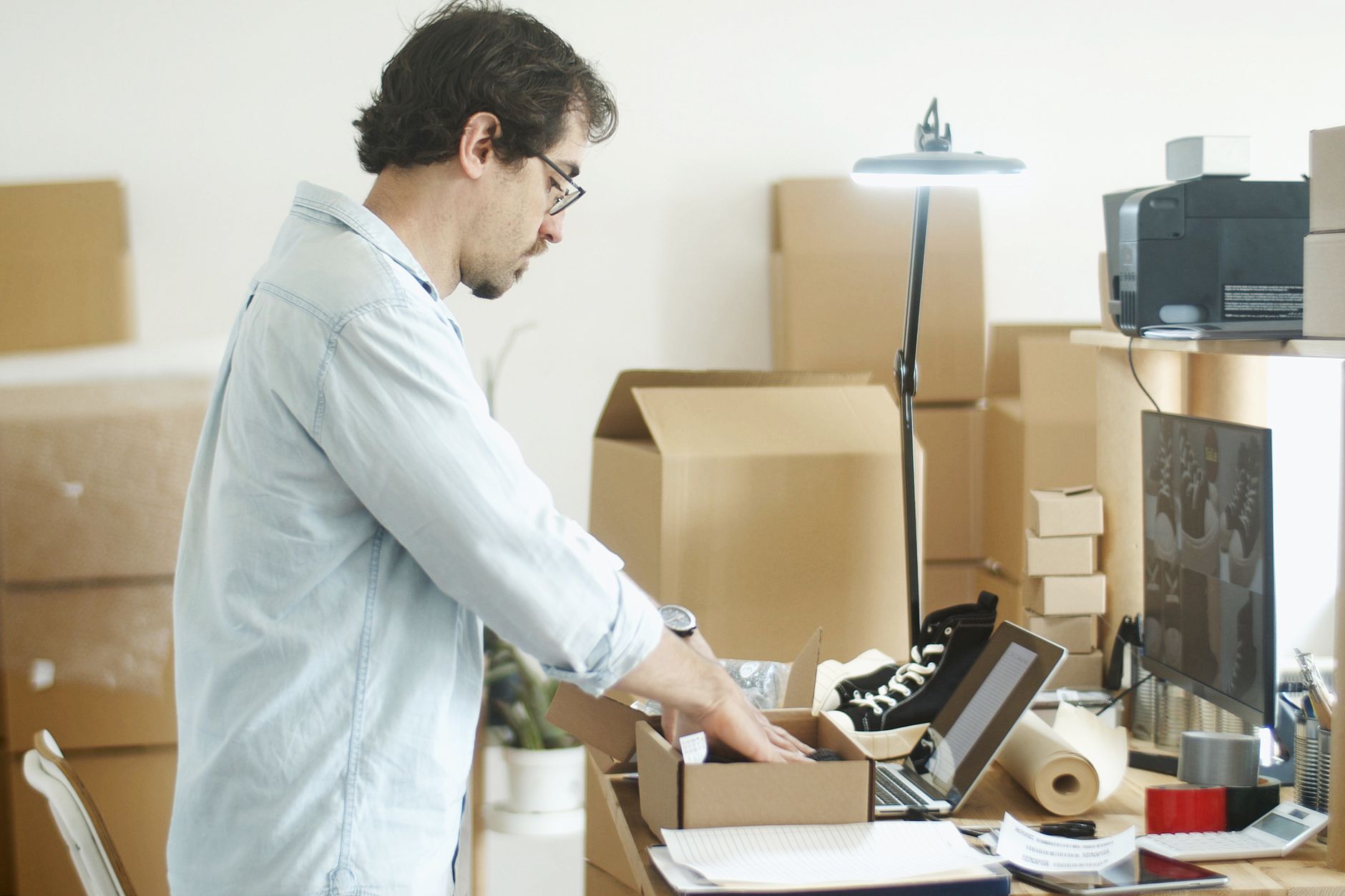
Between stitching and packing, the day is repetitive. A stitched upper or subassembly comes off a machine, gets set on a tray, is carried to a staging rack, and later is picked, carried to a packing bench, boxed, labeled and stacked. Each move is simple. Repeated many times a shift, the moves take hours away from the skilled work and wear on the people making them.
What are the main benefits of cobots in footwear work?
The first benefit is steadier flow at the handoffs. A cobot at a fixed station picks up and places parts the same way on every cycle, so the sewing outlet is cleared on time and the packing bench is fed without someone walking across the floor. Staff spend less time carrying and more time on the work that needs them.
The second is that skilled people stay where their skill matters. Sewing and finishing are where experienced operators earn their place, and a cobot in the transfer role lets the plant keep them there. That matters more in a sector where the sewing workforce is as small as the BLS figures show.
The third is that cobots are now a mainstream tool. According to the International Federation of Robotics, 66,000 new cobot installations were recorded in 2025, equal to 11% of all industrial robot installations. Annual industrial robot installations passed 600,000 for the first time, reaching 603,000 in 2025, up 11%. A summary of IFR data by Plastech reports more than 64,500 cobots sold in 2024, with 13% year on year growth.
The footwear specific view is more cautious. World Footwear, in May 2025, described a lean waste reduction approach that combines cobots and automated guided vehicles. It presents this as a middle path because varied product lines and small batches make full automation hard.
How does a cobot work at a footwear station day to day?
A cobot at a footwear station is fixed to a bench, with a gripper matched to the parts it handles. It runs a short, repeated program: reach to a tray, pick a finished piece, move it to a rack or a packing position, release, and return. The operator loads the trays and handles exceptions, while the arm repeats the same motion each cycle.
Good setups rely on sensing. Research at DFKI Bremen on shoe packaging describes a robot that grasps objects and detects collisions while working with human supervision. It uses a depth camera and a wrist force and torque sensor to adapt to people and changing surroundings. In practice, the arm is built to notice contact and respond to it, which is what lets a person work beside it.
Serma, a Spanish footwear trade publication, notes that operations in the sector run from assembly and mounting through scraping, gluing and finishing. It also notes that cobots can perform a single task or several depending on production needs. For an operator, that means the arm is often set to one station's job first, then extended only if the line needs it.
Which areas of a footwear factory does the robot work in?
The robot works where transfers repeat and the layout stays fixed. In most footwear plants that means the edges of the stitching area and the packing side of the floor, with the detailed work kept in the middle. The six areas below are the ones we look at most often during a site assessment.
Layout matters more than the number of stations. A cobot needs a stable base, clear reach, and a path where operators can reach the machines without leaning over the arm. We measure those things before recommending a station, so the robot goes where the handoff already happens, not where it is easiest to install.
We do not place a cobot at a sewing machine or a finishing table where an operator's judgment is the job. Those stations stay with the people who run them today.
How do cobots work alongside your existing staff?
A cobot works alongside a team, never in place of one. A typical station keeps its operator or packer, who loads the trays, checks the work, clears exceptions, and restarts the cycle after a stop. The robot takes the repeated motion, and the person takes everything that needs a decision.
The staffing picture supports that approach. According to BLS, the industry had 11,220 jobs in May 2023, and sewing machine operators were about 200 jobs in the same table. Most plants will want to keep those operators on the machines, so the transfer work is the part to hand off.
Training is short and practical. We train the people who will run the station, covering loading, stopping, clearing a pick error, and the daily checks. Those people become the ones who know the robot best, and their judgment keeps the station running when the line changes.
What drives the savings from a cobot?
The savings come from hours, not from a fixed promise. The main driver is how many hours per shift go to the repeated transfer at each station, and whether those hours would otherwise be spent by skilled people. We measure those hours at each station during the site assessment, then work out the range that applies to that line.
Waiting is the other driver. When the sewing outlet clears on time and the packing bench is never empty, the whole line runs more evenly, and that gain is often easier to see than the raw hours. Those effects depend on layout and volume, which is why we do not give a single number before we have seen the floor.
Weigh the hours against your own open roles and turnover, using your own records. Industry totals from BLS are useful for context but should not replace the numbers from your own plant.

What can a cobot not do in a footwear factory?
Honest limits matter. A cobot is not a sewing machine, a cutter or a finisher. It does not judge leather quality, it does not correct a stitch that has gone off, and it does not replace the skill that goes into fit and finish. These are the tasks where it is the wrong tool.
Small batches are a real constraint. World Footwear describes varied product lines and small batches as the reason full automation is hard, so a cobot program works best on parts that repeat across batches. Plan for some setup work when styles change.
A cobot also needs a stable setup and staff who can run it. If the layout keeps shifting or no one is assigned to the station, the robot will not deliver the hours we planned for. We say that plainly during the assessment.
- Detailed sewing, stitching and lasting, which need an operator's hands and eyes
- Quality judgment on leather, color, thread or stitch defects
- Fast changeover across many small batches without setup time
- Moving between buildings or across the whole floor on its own
- Handling a different part on every cycle with no repeatable position
How do you get started with cobots for footwear factories?
Start with one station. We begin with a free site assessment where we walk the line, record the handoffs and the hours they take, and talk through the stations where a cobot would fit. You see what the robot can and cannot do on your floor before any commitment.
Robots are only leased, through financing, and the payment comes in a quote after the site assessment, once the station, layout and robot choice are known. We pick the right robot for the site, deploy and integrate it, train the staff who run it, and service it nationwide, so one partner handles installation and follow-up.
A common first step is one leased cobot at one station, run for a period and reviewed against the hours recorded in the assessment. Expansion to other stations follows only if the numbers and the staff support it.
Frequently asked questions
Want a cobot at your footwear factory?
Tell us about your site. We will recommend the robot, quote the lease, and keep it serviced.
Sources
- U.S. Bureau of Labor Statistics, May 2023 occupational employment table, NAICS 316200
- U.S. Bureau of Labor Statistics, May 2022 occupational employment table, NAICS 316200
- U.S. Bureau of Labor Statistics, May 2020 occupational employment table, NAICS 316200
- International Federation of Robotics, President's report
- Plastech summary of IFR data
- World Footwear, Lean Robotics article, May 2025
- DFKI Bremen research publication on shoe packaging
- Serma, industrial automation robots or cobots