
Key takeaways
- Cobots for commercial kitchen equipment manufacturers pay off first on repeat weld and grind passes.
- Vendor-reported cases show large time cuts, so test on your own stainless parts before counting on them.
- A cell works best when part families repeat and a person keeps setup and inspection.
- Start with one leased cell after a free site assessment, then decide whether to add more.
How can cobots for commercial kitchen equipment manufacturers cut repeat work?
Cobots for commercial kitchen equipment manufacturers do one job well. They take the repeat passes on stainless parts, the same weld seam or grind stroke made over and over, so the skilled fabricator beside them can spend the day on assemblies that need judgment. A collaborative arm shares the bench with the welder, runs the repeat path, and leaves the setup and the final check to people.
The benefit is measured in hours, not headcount. The arm does not take over the complex builds. It takes the repetitive passes off the fabricator's day, and that is where a skilled welder's hours can quietly go.
We are a US commercial robot integrator. We pick the right robot for the site, lease it through financing, deploy and integrate it, train the staff and service it nationwide. The rest of this page covers the figures we can source, what a cell cannot do, and how to start with one leased unit.
What does the work look like at this kind of plant today?
A commercial kitchen equipment plant builds stainless units such as hoods, prep tables, sinks and cooking line components. Much of the labor sits in welding and finishing. A fabricator tacks, welds, grinds and polishes the same joint types batch after batch, and when orders stack up, the one welder who can run the job becomes the bottleneck.
The skilled labor pool is growing slowly. According to the U.S. Bureau of Labor Statistics, about 457,300 jobs were held in welding, cutting, soldering and brazing in 2024, and that occupation is projected to grow 2 percent from 2024 to 2034, slower than the average for all occupations. Manufacturing is the largest employer at 61 percent. For an operator, that means skilled welders are slow to add, so their hours on repeat passes are hours they cannot spend on hard jobs.
The sector itself is shifting too. According to a market research report, commercial cooking equipment manufacturing had about 17,503 employees in 2025 and about 16,870 in 2024. Its 194 businesses in 2026 declined at a 1.9 percent CAGR from 2021 to 2026. For a shop competing for the same skilled people, protecting a welder's hours on the hard work matters more.
Is this approach already in use in factories?
Yes, and the trend is broad. According to the International Federation of Robotics, new cobot installations reached 66,000 units in 2025, about 11 percent of all industrial robot installations. Total industrial robot installations passed 600,000 units for the first time, reaching 603,000, up 11 percent.
Adoption is context, not proof. A sector-wide number does not tell you what one stainless cell will return on your parts. What it does tell you is that collaborative arms are a normal factory tool now, not an experiment, so a shop weighing one cell is following a well-established path.
The real question is fit. The same arm can suit a repeat seam on one part family and be a poor match for a shop that builds one-off custom units every week. Let the site assessment answer that for your floor.
What are the main benefits for kitchen equipment shops?
The biggest benefit is skilled time returned to the fabricator. When the arm takes the repeat weld passes, the fabricator moves to fit-up, complex assemblies and the touch-up work that people do best. Orders that were waiting on one welder can start moving again.
Speed on repeat work is the second benefit. According to a robot maker's case study on a stainless fabricator, a cobot with a laser welder cut escalator part welding time from 3 hours to 15 minutes, a 95 percent cycle time reduction. That is one vendor-reported part at one shop, so treat it as a result to test on your own parts, not a forecast for your line.
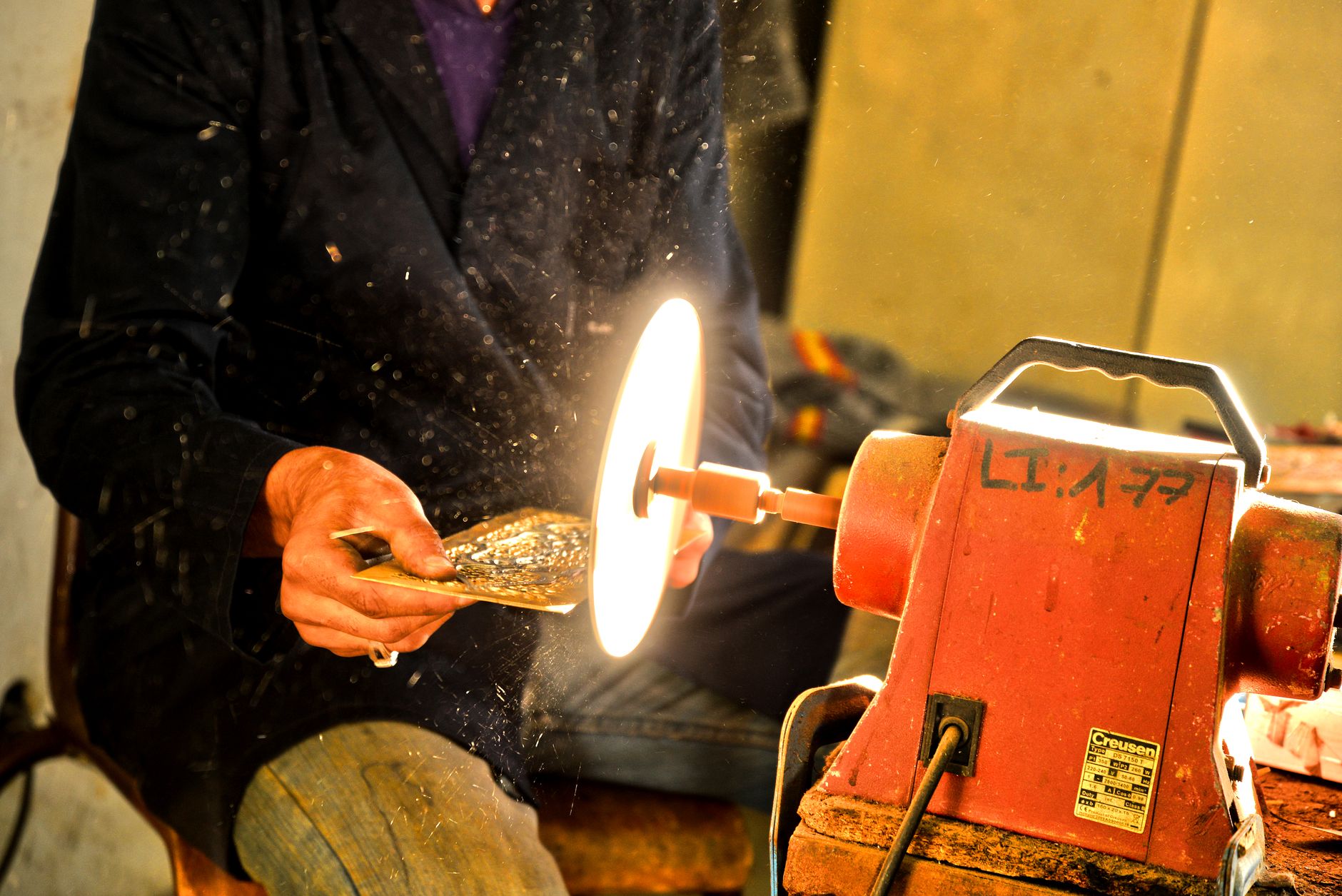
Finishing gains show the same pattern in a different material. A trade association article describes robotic grinding of mild steel metal cabinets, where manual grinding that took 96 man-hours per shift now takes the robot under 10 hours. That is mild steel, not stainless, but repeat grind strokes are the kind of hours an arm handles well.
How does a cell work day to day?
A typical cell pairs one collaborative arm with a welding power source, a fixture that holds the stainless part in position, and a station where a fabricator loads, checks and unloads. The operator sets the program for the part family, the arm runs the repeat passes, and the fabricator inspects each bead before the part moves on.
A welding cell maker's case study reports a 30 to 35 percent gain in welding productivity from an 8-axis cobot welding cell, and says operators were freed for grinding and touch-ups. Those are the tasks that fill a fabricator's day after the welds are done. Treat the figure as vendor-reported and check it against your own shift logs.
Between runs the cell needs routine care like any production equipment. Clean the torch and nozzle, check the fixture, and confirm the program for the next part number. Our service team handles repairs and on-site dispatch nationwide, so the shop's daily job stays small.
Which areas of the plant does the robot cover?
The arm works where repeat passes meet a fixed fixture. That means the weld cell first, then the finishing bench beside it, then the handoff points where parts wait for the next step.
The zones below are the areas we see most often in this kind of plant. In each one, the people who know the part stay in charge of setup and the final call.
How does the robot work alongside existing staff?
A cell is a robot plus people, never a robot alone. The arm carries the repeat passes, and the team carries the setup, the judgment and the checks. A typical starting cell keeps the fabricator, the finisher and the inspector who already know the part, with the arm taking the repeat hours between them.
Training matters as much as the arm. Fabricators learn to load fixtures, read the program, judge each bead and stop the cell when something drifts. We train the staff on the cell during deployment, and go live support covers the first production runs.
Plan the move before it happens. A welder who used to spend the day on repeat passes can move to work that uses more of their skill. A welding cell case study cited earlier reports that operators were freed for grinding and touch-ups, which is the kind of work to plan for.
What drives the savings in hours and labor?
Savings come from hours on repeat passes, not from a headcount decision. The main drivers are cycle time on each part, how many repeat passes a unit needs, how much of a fabricator's shift those passes take, and how often the welder is the bottleneck on orders.
Put rough figures on it using your own shift logs, and treat the vendor cases as ranges to test. One stainless part went from 3 hours to 15 minutes in one reported case, and a welding cell gained 30 to 35 percent productivity in another. Your part mix, fixture time and inspection load decide where your own number lands.
Hours only count if they are used. Track the freed hours on complex assemblies, backlog and touch-up work so the gain shows on the order board, not only in the log.
What can a cobot not do?
A cobot does not design the unit, read a new drawing into a custom build, or decide that a bead looks wrong. It runs the passes it has been set up for. Parts that change every run, odd geometry and one-off custom work still belong to the fabricator.
Setup takes skilled time too. A new part family needs fixturing, a program and trial runs before the cell earns its place. Short runs across many part numbers can eat the savings, so a cell fits batch sizes that repeat.
The arm does not replace inspection or the final say. Keep a person on checks, expect the first weeks to surface fixture and program issues, and be direct with your team about which tasks stay with them.
How do you get started with a leased cell?
Start with one cell, not a whole line. We begin with a free site assessment, where we look at your parts, fixtures, floor space and the welding hours on the table. We then pick the right robot for the site, and the lease quote follows the assessment. The payment comes in that quote, once the scope is known.
The robot is leased through financing, and we handle deployment and integration, staff training and nationwide service. Start with one leased unit, run it on your real parts, then decide on a second cell. A phased deployment keeps the rest of the shop running while the first cell proves itself.
Bring three things to the assessment: a few months of shop hours spent on repeat passes, your top part numbers, and a list of orders that waited on a welder. With those, we can say honestly whether a cell fits your floor.
Frequently asked questions
Upcoming manufacturing events
- Trade showBrats & RobotsNov 10, 2026Alliant Energy Center Exhibition Hall, Madison, WI
- Trade showMATE Farm & Ranch ShowFeb 11 to 13, 2027MetraPark, Billings, MT
- ExpoPFMA Expo 2027Feb 17 to 18, 2027Washington County Fair Park, West Bend, WI
- ExpoLouisville Facilities Maintenance ExpoApr 15, 2027Mellwood Art Center, Louisville, KY
Want a cobot at your commercial kitchen equipment manufacturer?
Tell us about your site. We will recommend the robot, quote the lease, and keep it serviced.