
Key takeaways
- Autonomous mobile robots for frozen food plants take repeat pallet and tote moves off the packing line crew.
- Labor turnover is high, at 32.6% in cold warehouses in the 2019 Global Cold Chain Alliance survey.
- No published hours figure exists for this use yet, so measure your own move time first.
- Condensation, uneven floors and hand-opened doors must be checked before any route is set.
- Robots are leased through financing, and the payment comes in the quote after a free site assessment.
See what a autonomous mobile robot costsRun the numbers in the ROI calculator
How can autonomous mobile robots help frozen food plants?
Autonomous mobile robots for frozen food plants take over the repeat moves that pull people away from the packing line. Pallets and totes travel from freezer rooms to packing line feed points and back, and the route is the same from one shift to the next. The robot follows that route without a driver, so the crew can stay on the line.
The gain comes from consistency. A person pushing a pallet jack through a cold room spends time on the walk, the door, the wait for a lift and the trip back. A robot on a fixed route makes the same trip the same way every time, and it does not need a break in the middle of the run. The question for an operator is how many of those trips sit on the critical path of the line.
The payoff depends on the floor, the move volume and how much of the labor goes to repeat transport. We run a free site assessment before we quote anything, because the answer changes from plant to plant.
What does the problem look like at a frozen food plant today?
Frozen food plants run on tight timing. Product leaves a freezer, moves to a packing line and has to arrive at the pace the line sets. Every pallet or tote that waits for a driver or a lift holds the line. These moves are repetitive, which makes them easy to underestimate, and they happen all shift long.
The labor side is harder. According to AFFI, the national trade association for the frozen food industry, its members and suppliers provide over 670,000 American jobs. According to the Global Cold Chain Alliance's 2019 survey, labor turnover in cold warehouses was 32.6%, nearly unchanged from 2018, as reported by FreightWaves. FreightWaves also says warehousing is among the four industries with the highest worker turnover, at 37%.
A March 2026 trade article notes that public data on cold warehouse turnover is hard to find, so the 2019 figure is the best published number available. The operators it describes report steady applicant flow but worry about quality. A 2024 industry note flags higher training spend, more overtime and more risk of problems when people turn over. Each of those lands on the shift supervisor's desk.
What are the main benefits?
The benefits are mostly about where people spend their time. None of them is a promised saving, and the size depends on your own numbers. The main gains are these.
Adoption is growing across industry, though not specifically in frozen food. According to A3, the automation trade association, North American robot orders rose 6.6% in 2025, with 36,766 robots ordered, and Q4 marked the sixth straight quarter of year-over-year growth. A3 covers industrial robot arms only, not mobile robots or humanoids, so that 6.6% is not a mobile-robot rate.
- Fewer minutes of each shift spent on repeat pallet and tote moves, so packers stay on the line.
- A fixed route and steady speed, so product reaches the line on a predictable beat.
- Less waiting for a driver or a lift during packing peaks, when the line is most sensitive to delay.
- Less walking and lifting on cold floors for the people who stay on the line.
- A trip record for every move, so you can see where the line waits and where overtime goes.
How does the robot work day to day?
Each day the robot receives its work from the plant's task queue or a pickup point. It drives to the freezer room exit, takes the pallet or tote, and carries it to the packing line feed point. Then it returns for the next load or waits at a staging spot. The routes and stop points are mapped during the site assessment, and the robot follows that map.
A shift has a rhythm. The robot is busiest around packing peaks and quiet during changeovers, when the line is down. Staff usually set the priorities at the start of shift and can change them when the line stops or a load is delayed. The robot does not decide which product runs next. The line schedule does.
Which areas of the plant does the robot work in?
The robot works in the transfer zones between the cold side and the packing line, where the route is fixed and the traffic is predictable. It usually stays out of open production areas during setup and changeover, where equipment and people move in ways no route can plan for. The zones below show the most common stops.
The transfer zones are also where the floor and the doors matter most. The site assessment checks each zone for condensation, floor levels, door type and how often a door is opened by hand, because those factors decide how reliable the route will be.
How does the robot work alongside the existing staff?
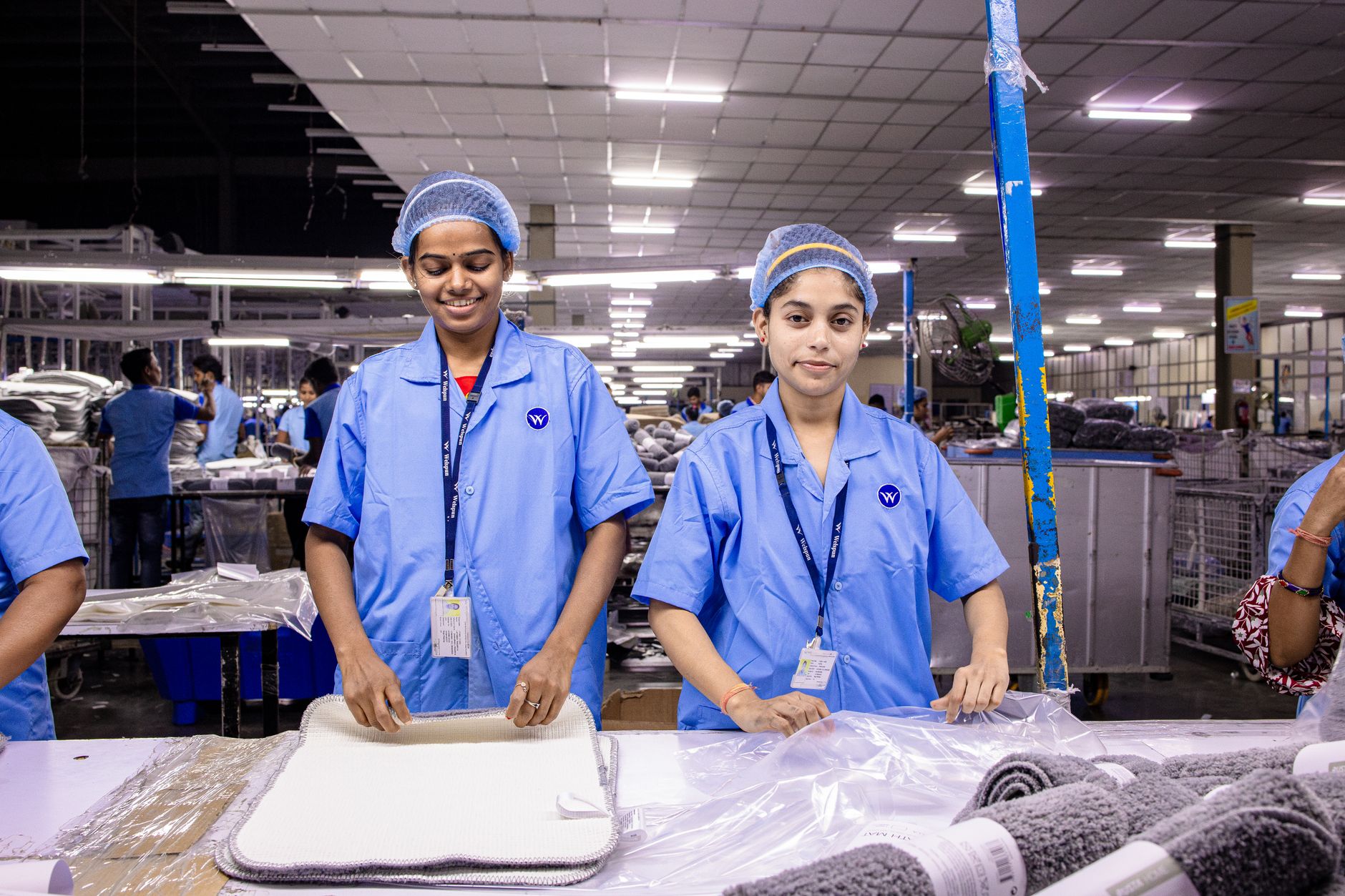
The robot does not replace the crew. Packers, line leads, sanitation staff, forklift drivers and quality staff still do the work that needs judgment. The robot takes the repeat moves so those people spend less time waiting for them.
Plan for a robot plus a smaller team, never a robot alone. Someone has to load and unload the robot at its stations, clear faults, handle exceptions and keep the route clear. Name the people who own those tasks on each shift, so a fault does not sit until someone notices.
We train the staff who will work with the robot during deployment, so the people on shift know the stops, the alarms and the escalation steps before the robot runs its first full shift.
What drives the savings, and how do you measure them?
The savings come from hours. Each repeat move a person no longer makes returns time to the line. The size depends on how many moves the plant makes each shift, how far they travel, how often the line waits and how much overtime covers gaps in the moves.
We have not found a published hours figure for autonomous mobile robots at frozen food plants, so this page does not give one. The best source is your own record. Time one typical shift of pallet and tote moves, count the waits at the packing line and note the overtime hours spent covering moves. That baseline makes the rest of the math specific to your plant.
Market data helps with timing, not with your savings. According to The Robot Report, reporting A3 figures, first-half 2025 orders for North American robots rose 4.3% and revenue rose 7.5%. Those are industrial arm figures, so they show the market is moving, not what a mobile robot will return on your floor.
What can the robot not do?
Frozen environments are hard on robots. In a published pilot of a mobile robot in a cold, humid meat plant, condensation, uneven floors and manually opened doors caused navigation problems. Doors that people open by hand are a problem for a fixed route, so the site assessment looks at door handling as closely as it looks at the floor.
The cold rating is a real limit too. A May 2026 news report described two logistics companies that began demonstration experiments with robots that run in freezers at minus 20 degrees Celsius, across frozen, chilled and ambient zones. No savings were reported. Read that as a sign the technology is maturing, not as proof for your freezer.
The robot also cannot handle work outside its route. It does not pick from irregular stacks, unload a trailer, change a line over or clear a jam. It moves loads along a set path, and people do the rest.
How do you get started?
Start with a free site assessment. We map the route, check the floors, doors, freezer exits and packing line feed points, and identify where the repeat moves happen. That gives us the right robot for the site and a clear plan for integration.
We are a US commercial robot integrator. We pick the right robot for the site, lease it through financing, deploy and integrate it, train the staff who work with it, and service it nationwide. The payment comes in the quote after the site assessment, so there is no number to guess at before we see the floor.
Many operators begin with one unit on one route, then add more once the baseline shows where the time goes. The assessment will tell you whether that fits your plant.
Frequently asked questions
Want a warehouse robot at your frozen food plant?
Tell us about your site. We will recommend the robot, quote the lease, and keep it serviced.
Sources
- FreightWaves, cold chain labor turnover
- Global Cold Chain Alliance, North American Warehouse Labor Turnover Survey
- Trade article on cold chain warehouse workforce
- AFFI, About the frozen food industry association
- A3, robot orders grow 6.6% in 2025
- The Robot Report, A3 first-half 2025 robot orders
- May 2026 news report on freezer AMR demonstrations
- Published pilot of a mobile robot in a cold, humid meat plant