
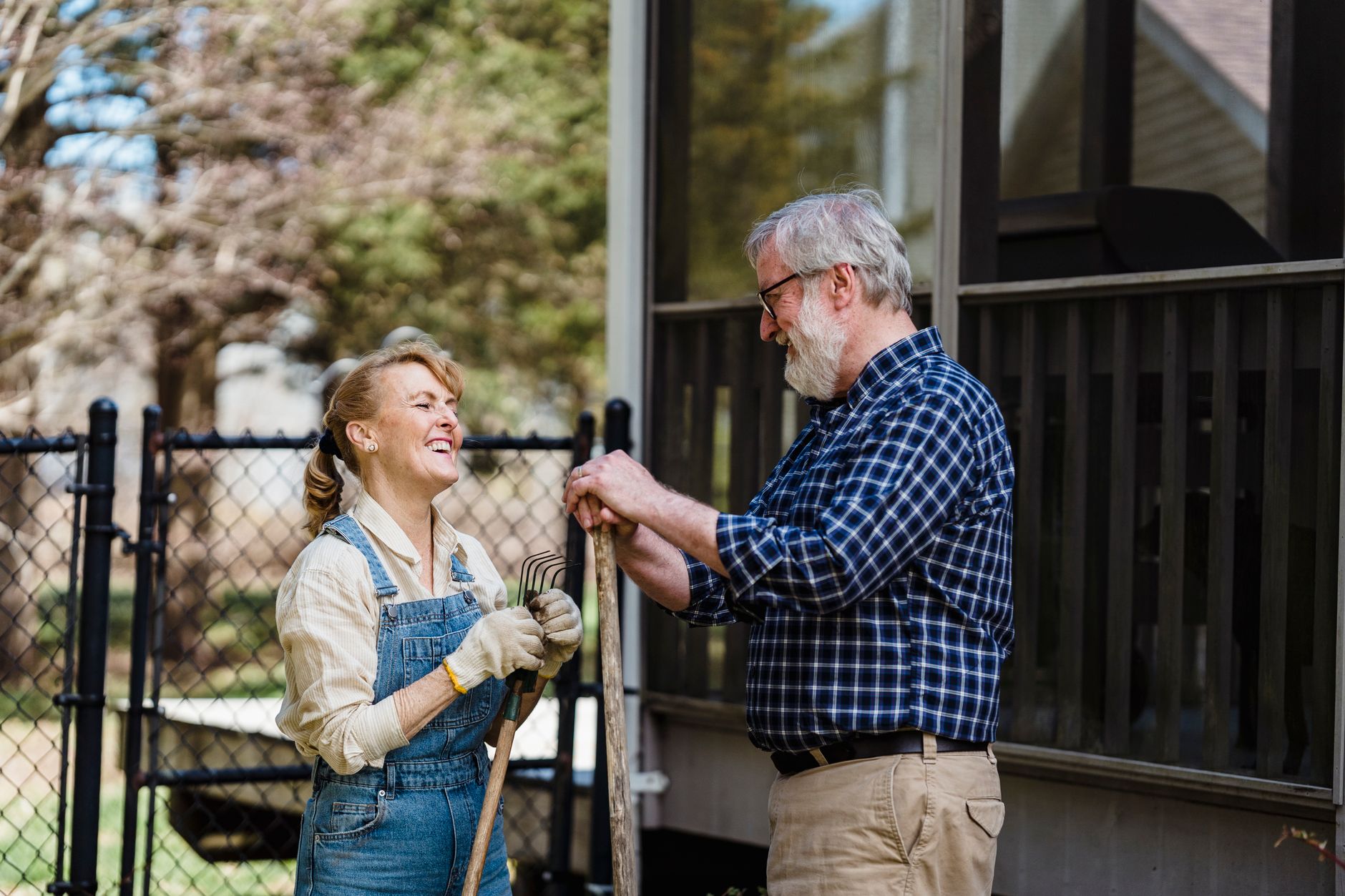
The short answer
Robotic lawn mower ROI for senior living communities comes mainly from crew hours moved back to resident-facing work, not from cutting headcount. The savings range depends on how much of the mowing schedule a robot takes over, how many crew hours that work uses today, and the fixed robot lease payment quoted after a free site assessment. Because every lawn differs, the calculator gives a range, not a promise.
Key takeaways
- The return comes from crew hours moved back to resident care, not from a headcount cut.
- Mowing is the most frequent direct labor task in landscape work, according to trade press.
- Savings are a range set by how much of the lawn the robot covers and what the lease costs.
- Mowing sits in an occupation with high injury rates, so fewer crew hours on mowers reduces exposure.
- A free site assessment turns the range into a figure for your own lawn.
Where does robotic lawn mower ROI for senior living communities come from?
Senior living occupancy is high and rising. According to NIC, occupancy reached 89.9 percent in Q2 2026, up 0.4 points, with occupied units at a new record. More occupied communities means more entrances, courtyards and walking paths that need regular mowing on a fixed schedule, and that work competes with resident care for the same staff.
The number of sites is large as well. The NCHS 2020 National Post-Acute and Long-Term Care Study invited about 11,600 residential care communities to take part. That list is a 2020 snapshot, so treat it as a sense of scale rather than an exact count. WageDex, an aggregator, reports 952,640 people in the landscaping and groundskeeping occupation for May 2025, while a BLS projections table it cites lists 1,192,500 for 2024. The two counts use different scopes, so use either one only as scale.
On many sites the same few people handle mowing alongside building and resident tasks, so every mowing hour competes directly with other work. That is where the return starts.
What does the grounds work look like at a senior living community?
Community grounds are usually large, mostly open lawn with clear boundaries: a front entry, courtyards between wings, fence lines, walking paths and parking islands. Those edges are fixed and easy to map, which is what a robot needs to run a repeatable route. Planted beds, tree roots and steep banks do not fit the simple pattern, so the site map has to show them.
Timing matters as much as area. Mowing can run on a schedule during quiet daytime or evening hours, so the work does not interrupt residents on walks or during meals. The mower runs the mapped lawn on its own, while a crew member checks it, handles edges and stays on hand for anything the route did not expect.
How much crew time does mowing take today?
Labor takes a large share of a landscape business. According to Landscape Management, labor is roughly 45 percent of a landscape contractor's profit and loss, and mowing consumes the most direct labor by task frequency. Because mowing repeats on a set cycle, small weekly savings add up over a season.
This page uses two people as a typical grounds crew size for one senior living site. That is a working assumption, not a verified count, and the site assessment replaces it with the real number from your records.
The safety side of the job adds to the case. In BLS data for landscaping and groundskeeping workers in 2019, there were 12,380 nonfatal injury and illness cases with days away from work, an incidence rate of 185 per 10,000 full-time equivalent workers. Annual rates from 2015 to 2019 ranged from about 149 to 219. The fatal injury rate for the same occupation was 18 per 100,000 workers, with 229 deaths. The 2019 figures are the latest year in that BLS snapshot, so they show the pattern rather than this year.

What changes the return up or down?
The same lawn can produce a strong return or a weak one, depending on facts the assessment checks first. Acreage and shape matter most, because long straight runs use the robot better than many small islands. Slopes, tree cover and obstacles slow the route and cut coverage.
Staffing and use matter next. The return only appears if the crew time freed is redirected to resident-facing work rather than left as idle time. Turnover also changes the math. Grounds crews are hard to staff, and each open position adds pressure to keep mowing on schedule, which makes reliable, scheduled mowing more valuable.
How does the ROI math work?
Start with the hours. Take the crew hours spent mowing each week, multiply by the share of that mowing the robot can realistically take over, and value the freed hours at the labor rate your site uses. That product is the labor offset. The share is the most important input, because a robot that covers most of the lawn returns far more than one that handles only the easy blocks.
Then subtract the lease cost and the time that still needs a person, such as edge trimming, daily checks and seasonal setup. The fixed robot lease payment is quoted after a free site assessment, so the number reflects your lawn rather than an average. Savings are always a range. A conservative case assumes lower coverage and slower adoption, while a fuller case assumes the robot covers most of the lawn on schedule.
What are the risks to the return, and how do you avoid them?
The main risk is paying for a robot that covers less than planned. Irregular sites, dense obstacles and poor boundary setup cut coverage, and the lease payment does not shrink when a lawn is harder than the map showed. A pilot on the most regular section of the grounds shows real coverage before the whole site is committed.
A second risk is a crew that does not know the system. A mower whose alerts go unread, or whose faults go unreported, loses the hours it was meant to save. Training people to read status alerts, clear obstacles and handle edge work is part of the job, not an add-on.
Last, the adoption evidence is early. According to Lawn and Landscape, autonomous mowing is far from widespread, and one university reported ROI within a year on a commercial autonomous mower while noting that early units were high-maintenance. Treat early payback claims as site specific.
- Quiet-hour mowing
Robotic Lawn Mower
Runs on a fixed schedule, including early or late windows set for quiet
Staff
Can adjust on the spot for a visit or an event
- Edges, corners and beds
Robotic Lawn Mower
Covers mapped open lawn, while edges and corners usually need a person
Staff
Trims tight spots and handles unexpected debris
- Obstacles and site changes
Robotic Lawn Mower
Needs the map updated after major changes to the grounds
Staff
Notices and works around new items on the day
- Injury exposure
Robotic Lawn Mower
Keeps people off the mower for mapped work
Staff
Carries the usual risks of operating mowing equipment on the job
- Weather and heat
Robotic Lawn Mower
Runs on schedule, but needs checks after storms
Staff
Can stop work when conditions turn, using judgment
- Cost to run
Robotic Lawn Mower
Fixed robot lease payment plus the time to check the unit
Staff
Paid hours at the site labor rate, plus the cost of filling open shifts
Is a robotic lawn mower worth it for senior living grounds?
The honest answer depends on how much regular, open lawn the site has and whether the freed hours will be used. A site with long repeat mowing, clear edges and a crew ready to move hours toward resident work tends to gain the most. A site with many small, irregular areas gains less, though it may still gain on consistency and safety.
Two worries come up often. One is that residents will be disturbed. The mower runs in a scheduled window and can be set for quiet hours away from meals and visits. The other is that the robot replaces the groundskeeper. The return comes from hours moved to other work, and staffing decisions stay with the operator.
What is the timeline from assessment to payback?
The sequence runs in order. First comes the assessment, when the site is walked, the lawn is mapped, boundaries are recorded and existing mowing hours are logged. Next, a pilot section tests coverage on the most regular ground. Only after that does full deployment go live, with staff trained on alerts, edges and handoffs.
We pick the right robot for the site, lease it through financing, deploy and integrate it, train the staff and service it nationwide. Payback is measured against logged hours, so it becomes visible only after the robot has run through a full season of mowing. Until then, the figures are estimates that the logs should confirm or correct.
How do you get a precise figure for your site?
A free site assessment is the fastest route to a number you can defend. We use the site map, acreage, mowing cycle and crew hours to model the share of the lawn the robot can take over, then set the savings range and the lease quote from those facts. You do not need a finished plan to start, only a site map and a rough record of mowing time.
Ask the same questions of any proposal. What share of the lawn does the robot cover, and how was that measured? What crew time remains, and who handles it? What does the lease include for service and on-site dispatch, and how quickly does a unit return to work if it goes down? Straight answers to each question are a good sign that the ROI figure will hold up.

Frequently asked questions
Want a robotic mower at your senior living community?
Tell us about your site. We will recommend the robot, quote the lease, and keep it serviced.
Sources
- NIC Insider, Q2 2026 senior housing occupancy
- BLS Injuries, Illnesses, and Fatalities snapshot for landscaping and groundskeeping workers, 2015 to 2019
- Landscape Management, labor share of landscape contractor P&L
- Relia Magazine, maintenance worker injury and fatality statistics
- NCHS 2020 National Post-Acute and Long-Term Care Study, residential care community invitations (archived)
- Lawn and Landscape, autonomous mowing panel coverage
- WageDex, landscaping and groundskeeping workers employment