

The short answer
Delivery robot ROI in New York comes from the runner and server hours a robot takes over, offset against a fixed robot lease payment quoted after a free site assessment. The savings range depends on how many trips on your floor follow repeatable routes, how many hours those trips take, and how much staff turnover you carry. We do not promise a figure, so treat the range on this page as an estimate that the site assessment replaces with measured hours.
See what a delivery robot costsRun the numbers in the ROI calculator
Key takeaways
- The return comes from runner hours the robot takes over, not from removing a job.
- According to the BLS, the New York-Newark-Jersey City metro employed 136,960 waiters and waitresses in May 2023.
- Homebase, a vendor, reports 75 percent annual food industry turnover in 2025, which raises the value of freed hours.
- Route layout, trip counts and how freed hours get scheduled move the savings range more than anything else.
- A free site assessment measures your hours and produces the fixed lease quote.
Run the numbers for your site
Auto-detected from your location - we use the real BLS wage here. Not right? Pick your city or state above.
What do you want to automate?
The robot walks the repetitive trays; staff stay with guests and tables.
Delivery robot ROI in New York: what the return looks like
A delivery robot earns its place in a New York restaurant by taking over trips a person would otherwise make: carrying food from the pass to tables, returning empty trays, and moving items between stations. The return is the labor hours of that work your staff no longer spends, set against the fixed robot lease payment. It is not a headcount cut, and it is not a guarantee.
This page explains how that math works for a New York, NY site, which local labor numbers matter, what moves the result up or down, and how a free site assessment turns estimates into a figure you can sign off on. The savings range in our calculator is an estimate tied to city-level inputs, not a promise for your room.
How large is the New York labor pool for this work?
According to the BLS May 2023 table for the New York-Newark-Jersey City metro, 136,960 waiters and waitresses were employed there. That metro includes suburban counties, so it overstates the work inside city limits, but it shows the scale of the occupation that runner trips belong to. The wage panel on this page uses the May 2024 government figure for New York, NY.
Food service employment in the city is large as well. FRED, using BLS data, reports food services and drinking places employment in New York City at 299.7 thousand for January 2026. A third-party page reports 19,638 full-service restaurant establishments and 314,321 employees in New York State for 2024. Dividing one by the other gives about 16 people per restaurant across all roles. That is our derived figure, not a published one, and it counts cooks, dishwashers and managers as well as servers.
We use 16 as the typical headcount per site in this page's model, because a server-only count per site was not found.
Median hourly wage, Waiters and Waitresses
$5,064
Monthly cost of one full-time worker in New York, NY, at the median wage plus payroll costs (an estimate, not a quote).
Where does the return come from in a New York restaurant?
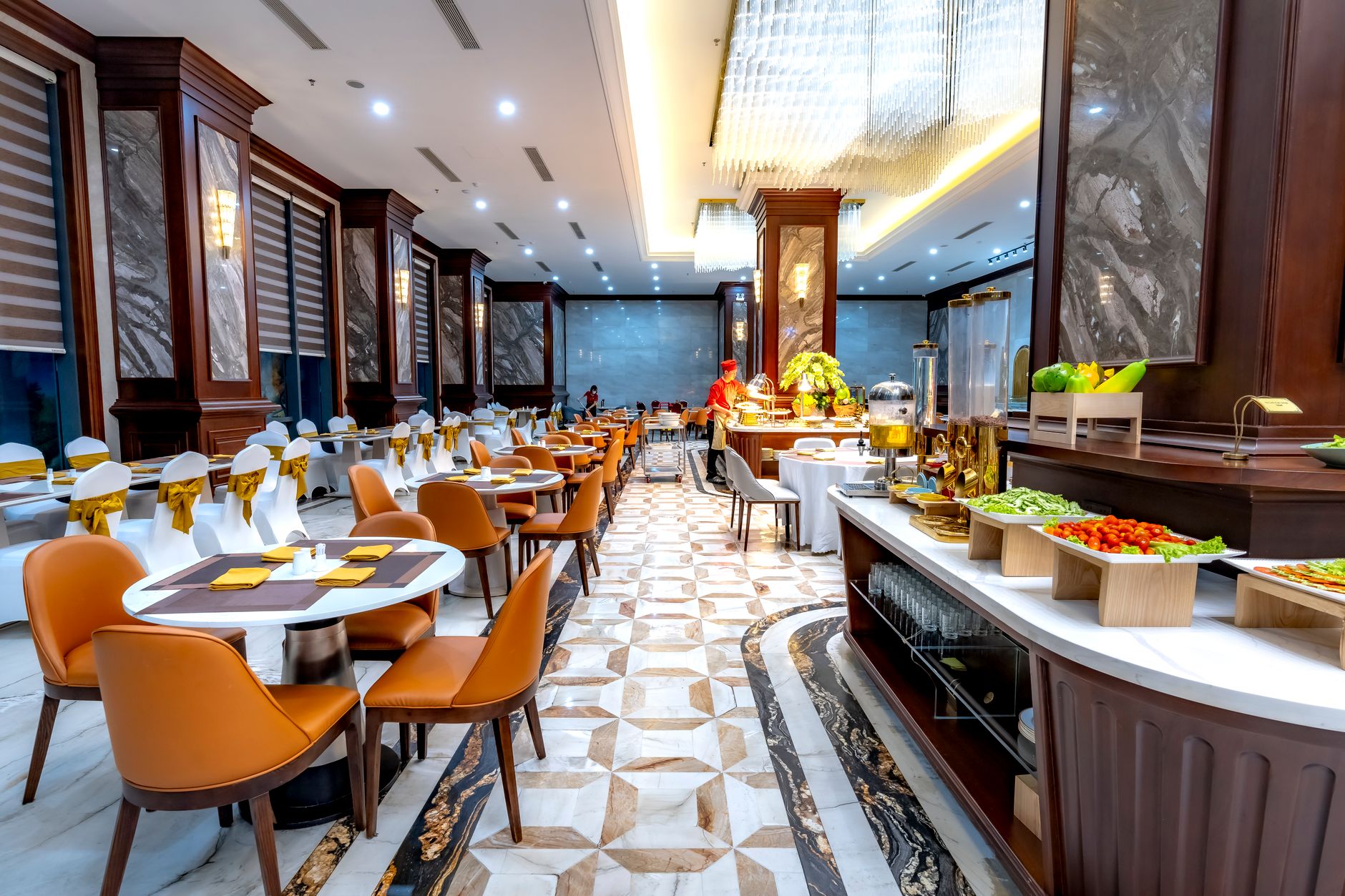
The return comes from runner and server trips that a robot can take on set routes. In a typical full-service dining room, those trips are the kitchen pass to the dining room, tray returns to the dish area, and restocking service stations. Each trip is short, and together they fill a shift. The question for your site is what share of those trips follows a repeatable path, because that share is the work a robot can take.
Most of the work that does not fit the robot is tableside: taking orders, explaining specials, handling problems and reading the room. That stays with people. The robot changes the walking and carrying, not the hospitality, so the labor it offsets is the waiters and waitresses type of work that is walking, carrying and returning.
How does the math work?
The savings range has three inputs. First, the labor hours of the trips the robot takes over, converted to paid hours at the local wage for this job shown in the government wage data on this page. Second, the share of those hours the robot realistically takes, which is less than the full total because some trips are off-route, urgent, or need a person. Third, the fixed robot lease payment, quoted after the site assessment, set against the hours that are freed.
The offset is simple to state and harder to measure. Freed hours only become money if they are used: removed from overtime, used to fill vacant shifts, or redeployed to cover peaks. If the hours are just spread thinner across the roster, the return shrinks. Ask whether the plan converts hours into fewer overtime or agency shifts, not just shorter shifts on paper.
What changes the number up or down?
Route layout and trip count move the number the most. A long, straight run from kitchen to dining room adds many trips the robot can take. A floor with several levels adds more trips, but each level change needs elevator access, mapping and a plan for the handoff. A cramped room with many turns can reduce the share of trips that stays on route.
Staffing overlap and turnover come next. Where turnover is high and shifts are hard to fill, freed hours are worth more, because each open shift otherwise falls on the people already working. Where staffing is steady, the return depends on reassigning hours carefully, and the gains are smaller.
Does staff turnover change the return?
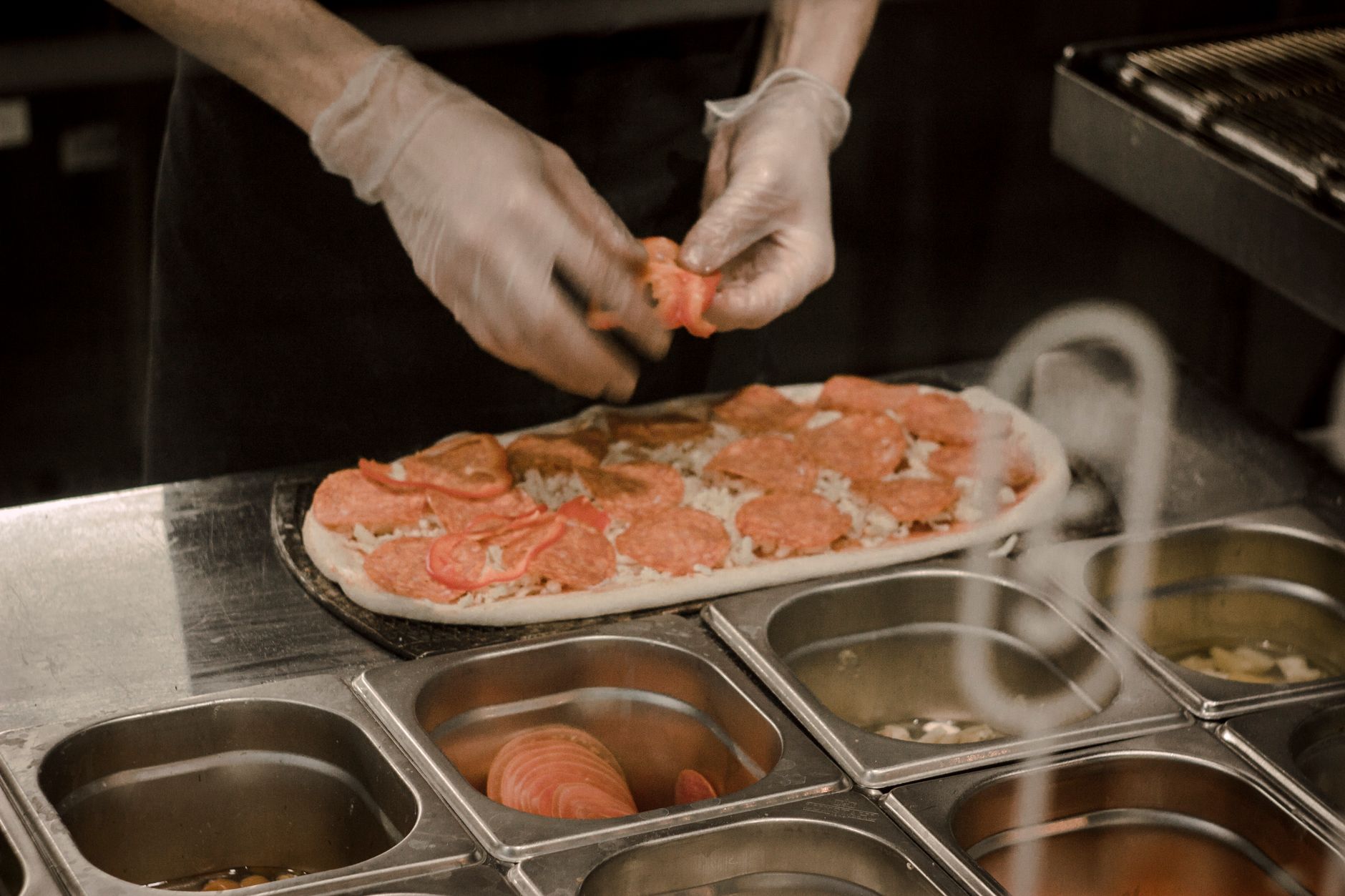
Turnover is the input most owners underweight. Homebase, a vendor, reports 75 percent annual turnover for the food industry in 2025. That figure is vendor-reported and not a government statistic, so treat it as a direction, not a measured rate for your restaurant.
The national outlook for servers is flat to shrinking. The BLS Occupational Outlook Handbook projects waiters and waitresses employment to decline 1 percent from 2024 to 2034, from a base of 2,329,700, with about 456,700 openings a year that include replacements for people who leave. Hiring load is therefore partly a churn problem. A robot that covers some runner trips reduces how many shifts depend on finding one more person.
What are the risks to the return, and how do you avoid them?
The main risks are low trip volume, poor routing and optimistic hour assumptions. A floor with few repeatable runs will show a small offset however well the robot performs. Avoid this by requiring the site assessment to measure trips before any savings range is shared.
Guest acceptance is the second risk. A Big Red Rooster study reported by Restaurant Dive found 32 percent of diners would prefer not to see robots prepare their food. That finding covers food preparation, not delivery, but it signals that a robot should run quietly, route cleanly and never block a guest path. Brief your staff on what to say when guests ask.
The third risk is downtime. The national injury base for this sector is high: according to the BLS, accommodation and food services recorded 234.8 thousand injury and illness cases in 2024, a total recordable rate of 2.6 per 100 full-time workers. Those figures are the baseline for your own logs, and we have not measured how much a robot changes that rate. A robot out of service during a Friday peak removes the offset for the day and leaves staff covering the route, so the lease should include service coverage, a response plan and a backup unit.
Are other restaurants adopting automation?
Adoption is growing but uneven. According to a Popmenu survey of 359 US operators conducted from November 2024 to January 2025, 34 percent had adopted AI technology and 48 percent planned to in 2025. That covers AI in general, not delivery robots alone, so it shows appetite for technology rather than robot adoption specifically.
We did not find a 2025 robot-specific adoption figure for restaurants. The practical reading is that operators are already evaluating tools, so the real comparison is between a measured, leased robot route and continued hiring against churn, not between automation and doing nothing.
How long until the robot pays back?

A realistic path runs in phases: a free site assessment that measures trips and routes, a fixed lease quote with terms, installation and route mapping, staff training, then a period of live running before the numbers settle. Payback follows once the route is stable and freed hours are reassigned. Judge the first stretch on hours moved, not on the full offset.
The return is slower where the route is complex or the team is still adjusting. It is faster where runs are repetitive and turnover is high, because the freed hours land on shifts you were already struggling to fill.
How do you get a precise figure from a free site assessment?
Our free site assessment measures your floor: route lengths, trip counts by time of day, level changes, and the hours your staff spends on runner work. We take those measured hours, run them through the calculator for your city, and present a savings range and a fixed robot lease payment. The payment comes in the quote after the assessment, not on this page.
We are a US commercial robot integrator. We pick the robot that fits the site, lease it through financing, deploy and integrate it, train the staff and service it nationwide. One partner handles selection, installation, training and repairs, which keeps freed hours from being lost to a unit that is waiting on a fix.
Frequently asked questions
Put a robot to work in New York.
We walk your site, learn the job, and recommend the unit that fits. Then we quote the lease, deploy it, and keep it serviced.
Sources
- US Bureau of Labor Statistics, Occupational Employment and Wage Statistics (OEWS May 2024)
- BLS OEWS May 2023, New York-Newark-Jersey City metro
- BLS Occupational Outlook Handbook, Waiters and Waitresses
- FRED, food services and drinking places employment, New York City
- BLS injuries and illnesses by industry
- Homebase, restaurant employee turnover
- Restaurant Technology News, Popmenu operator survey
- Restaurant Dive, Big Red Rooster diner study
- Third-party state establishment and employment page, New York