

The short answer
The delivery robot ROI for veterinary hospitals comes from staff time returned to patient care. A robot takes the short, repeated supply, lab sample and linen runs between exam rooms, pharmacy and back areas, and the labor hours those runs consume are offset against a fixed robot lease payment, with the share of runs a robot realistically handles setting how far the range can go. The result is a savings range, not a promise, and a free site assessment narrows it to your floor, your run volume and your shift pattern.
See what a delivery robot costsRun the numbers in the ROI calculator
Key takeaways
- The return comes from staff hours spent on short repeated runs, not from a headcount cut.
- Savings are a range set by run volume, route length and the share of runs the robot realistically takes.
- Veterinary technicians and assistants do most of this running, so their time is costly to lose.
- The lease payment is quoted after a free site assessment, so the number reflects your building.
- Start with one leased unit, log the runs, and expand only when the measured hours support it.
Run the numbers for your site
Pick your city or state for a real regional number - we use the real BLS wage there. (On the live site this auto-detects from your location.)
What do you want to automate?
The robot walks the repetitive trays; staff stay with guests and tables.
What is delivery robot ROI for veterinary hospitals?
Delivery robot ROI for veterinary hospitals is the value of the staff hours a robot takes over, set against the fixed lease cost of that robot over its term. In a veterinary hospital the work is supply restocks from storage to exam rooms, lab samples carried to the lab, and clean and soiled linen moved between treatment areas and the laundry. Each trip is short, but the trips repeat through every shift and they pull the same people away from animals.
The setting is large. According to the dvm360 summary of the 2025 AVMA economic report, there were about 34,000 U.S. veterinary practices in 2022, up from 32,634 in 2021. A commercial estimate from IBISWorld puts veterinary services businesses at 56,756 in 2025, but its definitions differ from AVMA's, so the two counts should not be mixed. What matters to a practice is that the same run pattern repeats across many small and mid-sized sites, so the routing and staffing logic carries from one building to the next.
Where does the return come from in a veterinary hospital?
The return is staff time. Veterinary technicians and assistants usually do the running, and the robot takes the kind of work the government wage data on this page describes for waiters and waitresses: repetitive carrying between fixed points on a predictable schedule. We value those hours at that government wage data and never at the pay of a technician, nurse or veterinarian. What the practice does with the returned time, whether that means more attention at the table or fewer interrupted procedures, is the practice's own decision.
Four places hold most of the value. The first is restocking, where staff walk supplies from storage or pharmacy back to exam rooms. The second is lab samples, where a sample waiting on a person can delay a result. The third is linen, heavy and frequent bins moved between treatment areas and the laundry. The fourth is the small interruption, where a technician leaves an animal on the table to fetch one item. Those hours rarely appear on a schedule, which is why a site walk is the way to find them.
Workforce pressure makes those hours costlier to lose. According to the U.S. Bureau of Labor Statistics Occupational Outlook Handbook, there were about 131,400 veterinary technologists and technicians in 2025, with projected 9% growth from 2025 to 2035, about 12,300 added jobs. AAHA states that veterinary technicians have the highest turnover rate of any healthcare position, so the staff who do most of the running are also the ones who leave most often, and each departure resets the routine.
Median hourly wage, Waiters and Waitresses
$3,798
Monthly cost of one full-time worker, at the median wage plus payroll costs (an estimate, not a quote).
How does the ROI calculator work?
The calculator takes three inputs. The first is the labor hours the robot takes over each week, built from the runs on your floor. The second is the share of those runs a robot realistically handles, because some runs are urgent, some need a person to load or unload, and some routes close at certain hours. The third is the fixed robot lease payment for the term, which is quoted after a site assessment rather than guessed from a brochure.
The math is short. Hours offset times the share taken gives the hours actually returned. Those hours, valued at the government wage data on this page for the work the robot takes over, give the gross labor value. Subtract the lease cost over the term and what remains is the return, shown as a range from a cautious case to a fuller case.
Nothing here is a promise. The high end assumes most scheduled runs are robot eligible and the route stays clear. The low end assumes the robot takes only the predictable runs and staff still cover everything else. A site assessment replaces both assumptions with timed walks and counted runs, which is why the range tightens after the visit.
What changes the number up or down?
Run volume and route length move the number most. A hospital with many runs on long routes, carried by staff who are off the table for a good part of the day, has more hours to offer. A small single-room practice with few runs has less, and the lease may not carry its own weight at that volume. The shape of the day matters as much as the total, because runs that cluster in predictable windows are easier to schedule than runs scattered through emergencies.
Layout and access move it too. A single floor with straight corridors and wide doors supports steady traffic. Multiple floors, long elevator waits, gurneys and animals on leashes in the corridor, and doors that must be opened by hand all reduce the share of runs a robot can take cleanly. Each of those is measured on the walk, not assumed.
Team habits are the last factor. If staff keep carrying items themselves because it is faster in the moment, the robot sits idle and the return shrinks. If the practice names a load point owner and builds the robot into the routine, the hours come back. Ask which of these will hold on your site before you take the number at face value.
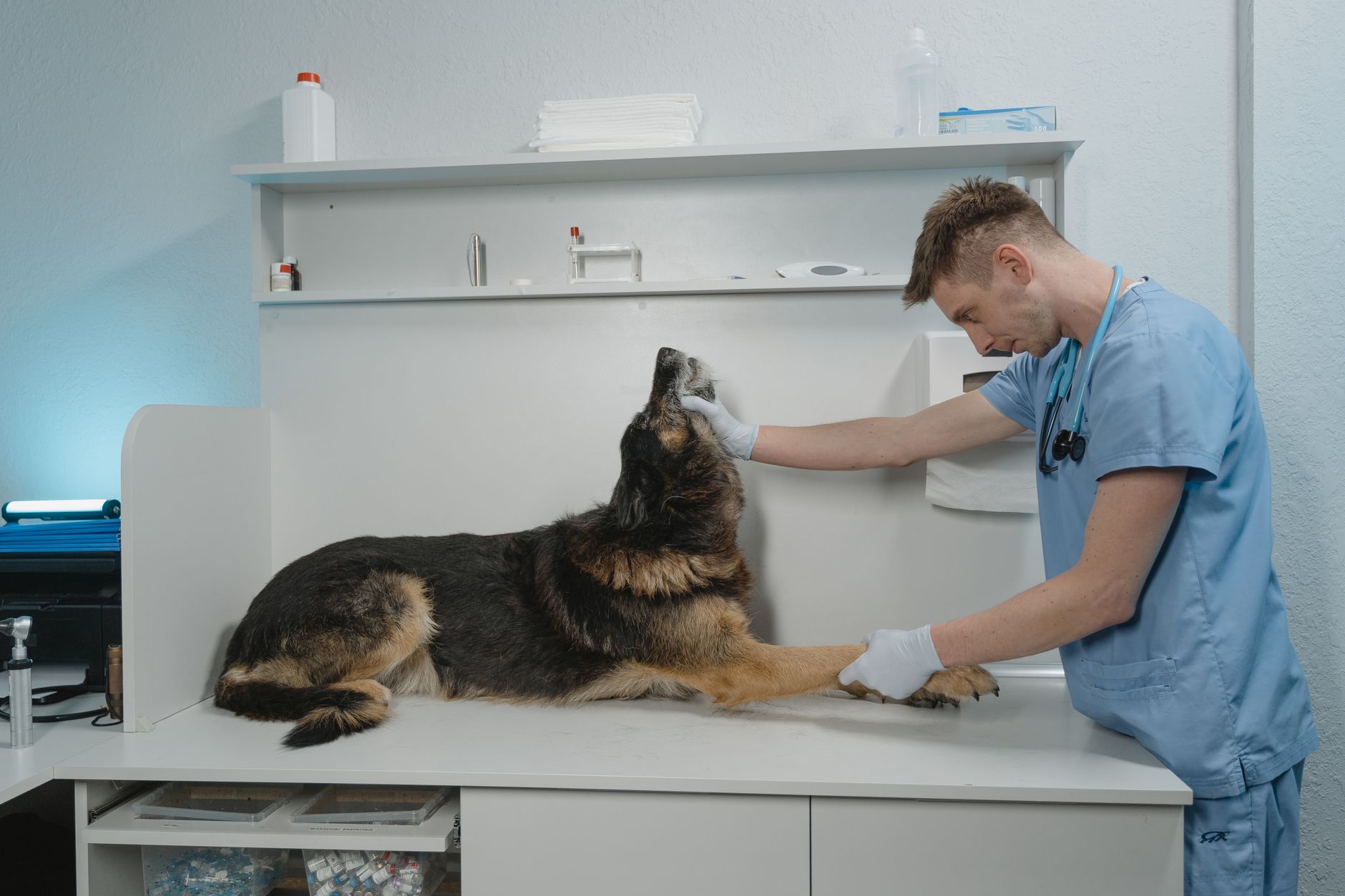
Do carrying runs add injury risk to the return?

Veterinary services carries a high injury rate, and that bears on the case for a robot. According to the U.S. Bureau of Labor Statistics, veterinary services had 10.6 nonfatal injuries and illnesses per 100 full-time workers in 2023, against 2.4 for all private industry. In 2023, 29% of veterinary services recordable cases led to days away, job transfer or restriction.
Heavy linen bins and supply cases are the kind of lifting that feeds those cases. A robot does not handle animals and does not remove the risk of animal handling, so it should not be presented as an injury fix. Taking repetitive carrying off staff does reduce one source of strain, and that is a real secondary benefit.
For context, the BLS release reports the all-private-industry total recordable case rate at 2.3 per 100 FTE in 2024, down from 2.4 in 2023. Set the veterinary figure beside that and the gap is clear. Count injury reduction as a secondary benefit, and keep it out of the core savings range until your own incident log supports it.
Where does a person still do the job better?
A person is the better choice in several places, and a fair comparison names them. A technician decides in seconds when a sample is urgent, reroutes around a surprise in the hallway, and lifts an awkward load without help. A person also handles animals, owners and every procedure, which no robot does. The robot wins on consistency along a fixed route and on taking the repeated trips without being pulled off a case.
- Routine restock on a fixed route
Delivery Robot
Follows the same path every time and runs on a schedule
Staff
Flexible, but walks the route between tasks and gets pulled off the animal
- Urgent sample or unplanned run
Delivery Robot
Needs a request, a clear route and a ready load point
Staff
Faster to decide and can change the plan in seconds
- Heavy or awkward loads
Delivery Robot
Needs staff to load and unload at each end
Staff
Lifts and handles without help, though with strain risk
- Animal handling and owner contact
Delivery Robot
Not involved
Staff
Essential, and the core of the job
- After-hours runs
Delivery Robot
Can run on a schedule if the floor is clear
Staff
Needs someone on call, and is the fallback when the floor is not clear
- Cleaning and infection control protocols
Delivery Robot
Carries items but does not replace the cleaning protocol
Staff
Follows the protocol and makes the judgment calls
What are the risks to the return and how do you avoid them?
The biggest risk is overestimating how many runs the robot takes. If the share assumption is too high, the return looks good on paper and disappoints in the first months. The fix is to count the runs on the floor before you sign, and to treat the high case as a target rather than a forecast.
Blocked routes come next. Gurneys parked in corridors, doors that jam the path and animals moving through the hall all stop a run. Agree on clear corridor rules with the team before go-live, and put the route in writing so everyone knows where the robot goes.
The quieter risks are habits and dead spots. If people keep carrying items because it is faster, the robot runs half empty and the return slips. Confirm connectivity in the laundry, back rooms and any elevator, and name an owner for each load point. Check the lease term against your run volume and your growth plans, and set up a service path with on-site dispatch and remote triage so a fault does not stop the routine.
What is a realistic timeline from assessment to payback?
The path runs in stages. It starts with the free site assessment and the quote, then moves to mapping the routes, selecting and installing the robot, training staff and setting up how runs are requested. Go-live support covers the first days, when route tuning and new habits still need attention.
The payback check comes after a measured period on the floor, not on the calendar. We compare the hours the robot actually took over against the range from the assessment, then decide whether to add a unit or keep the one you have. Start with one leased unit where run counts are high, and expand only when the measured hours support it.
How do you get a precise figure from a free site assessment?
A precise figure comes from measurement, not a guess. During the free site assessment we walk the routes your staff actually use, time the runs at peak and quiet hours, count the trips by type, and check the floors, doors, elevators and connectivity along each path. We also ask who loads and unloads, and how emergencies move through the building.
From that visit we build the savings range and the fixed lease quote. We are a US commercial robot integrator. We pick the robot for your site, lease it through financing, deploy and integrate it, train your staff and service it nationwide. One partner handles the quote, the installation, the training and the service calls, so the number on the table is the number you run.
Ask for the measured hours in writing, the assumptions behind the high and low cases, and the service path before you decide. A good assessment will also tell you when the return is weak, and that is useful information too.

Frequently asked questions
Upcoming hospitals & healthcare events
- ConferenceNew England College Health Association (NECHA) 2026 Annual MeetingNov 11 to 13, 2026Newport Marriott Hotel & Spa, Newport, RI
- ConferenceHLTH USA 2026Nov 15 to 18, 2026The Venetian Expo, Las Vegas, NV
- ConferenceIndiana Safety and Health Conference & Expo, 2027Feb 8 to 10, 2027Indianapolis, IN
- ConferenceHealthcare Project Delivery Conference 2027Feb 10 to 11, 2027Manchester Grand Hyatt, San Diego, CA
Want a delivery robot at your veterinary hospital?
Tell us about your site. We will recommend the robot, quote the lease, and keep it serviced.
Sources
- US Bureau of Labor Statistics, Occupational Employment and Wage Statistics (OEWS May 2024)
- dvm360 summary of the 2025 AVMA economic report
- IBISWorld veterinary services businesses estimate
- BLS Occupational Outlook Handbook, veterinary technologists and technicians
- CDC/NIOSH veterinary medicine page
- AAHA, vanishing credentialed veterinary technicians
- BLS The Economics Daily, nonfatal injuries in veterinary services
- BLS Occupational injuries and illnesses news release