
The short answer
Autonomous forklift ROI in Miami comes from the repeat freight and pallet hours a unit takes off the shift, priced against the local wage for that work and set against the lease payment. Savings are a range, not a promise, and the share of work a unit can realistically handle, the shift hours it covers and the site layout decide where a given site lands. A free site assessment turns those inputs into a lease quote and a payback estimate for your floor.
See what a autonomous forklift costsRun the numbers in the ROI calculator
Key takeaways
- The return comes from steady freight and pallet hours a unit can take over, not from headcount cuts alone.
- Miami-Dade has a large transportation and warehousing base, so local operators compete for the same labor market.
- The savings range is only as good as the share of work you have timed and can repeat.
- Forklift injury data is a reason to plan safe operation, and it also shows which moves are worth automating.
- The lease quote follows a site assessment, so the range on this page is a starting point, not a final figure.
Run the numbers for your site
Auto-detected from your location - we use the real BLS wage here. Not right? Pick your city or state above.
What do you want to automate?
The robot takes the repetitive cart and pallet moves off the heaviest motion.
What return can a business in Miami expect from an autonomous forklift?
The autonomous forklift ROI in Miami comes from one source: freight and pallet hours that a unit takes over from people, once that work is steady enough to schedule. A site with repeated moves between receiving, staging, racks and outbound doors gives a unit the kind of work it handles well. A site with mostly irregular, one-off jobs gets a smaller return from the same machine.
Miami-Dade is a dense market for this kind of work. According to the FIU Metropolitan Center, Miami-Dade has over twice as many transportation and warehousing establishments as Broward County. Many local operators draw on the same labor market, so a dependable pallet flow is worth protecting and measuring.
What does this work cost in labor hours, and what is the local wage for it?
The labor side of this model is priced on Laborers and Freight, Stock, and Material Movers, Hand, the occupation that covers hand moving of freight and materials. The government wage data on this page shows the local wage for this job in Miami, FL, from the May 2024 OEWS series. Use that panel as the rate, and multiply it by hours you can confirm on your own floor.
Nationally, the Bureau of Labor Statistics counted about 3.01 million jobs in this occupation in its May 2023 OEWS data. Its Occupational Outlook Handbook reports about 6,950,000 jobs for hand laborers and material movers in 2024, with 4% projected growth from 2024 to 2034. Demand for this work is not shrinking, which is why operators keep looking for steady ways to cover it.
Median hourly wage, Laborers and Freight, Stock, and Material Movers, Hand
$4,196
Monthly cost of one full-time worker in Miami, FL, at the median wage plus payroll costs (an estimate, not a quote).
How is the autonomous forklift savings range calculated?
The core formula is simple. Take the hours per week the unit realistically performs, multiply by the local wage for that work from the government data panel, and add any overtime the unit avoids. Subtract the lease payment and the time staff spend supporting the unit each week. The result is a range, because every input is a range.
The most important input is the share of work the unit takes, not the hours on paper. A unit running repeat pallet moves for most of a shift takes a high share. A unit covering part of one lane takes a smaller one. Exceptions such as damaged loads, blocked aisles and special handling stay with people, and they should be left out of the offset.
The lease sits on the cost side. Robots are leased through financing, and the lease payment is quoted after a site assessment rather than taken from a list. We pick the right robot for the site, deploy and integrate it, train the staff and service it nationwide, so the quote covers the full scope you will run.
What changes the number up or down?
Three factors move the range more than anything else: how steady the moves are, how many hours the unit runs, and how much of the floor it can cover without help. Steady, repeated flows push the return up. Irregular volume, long idle periods and cramped aisles push it down.
Check the points below before you accept any range. Each one changes either the offset, the cost side, or the time to payback.
Where do the labor hours actually go, task by task?
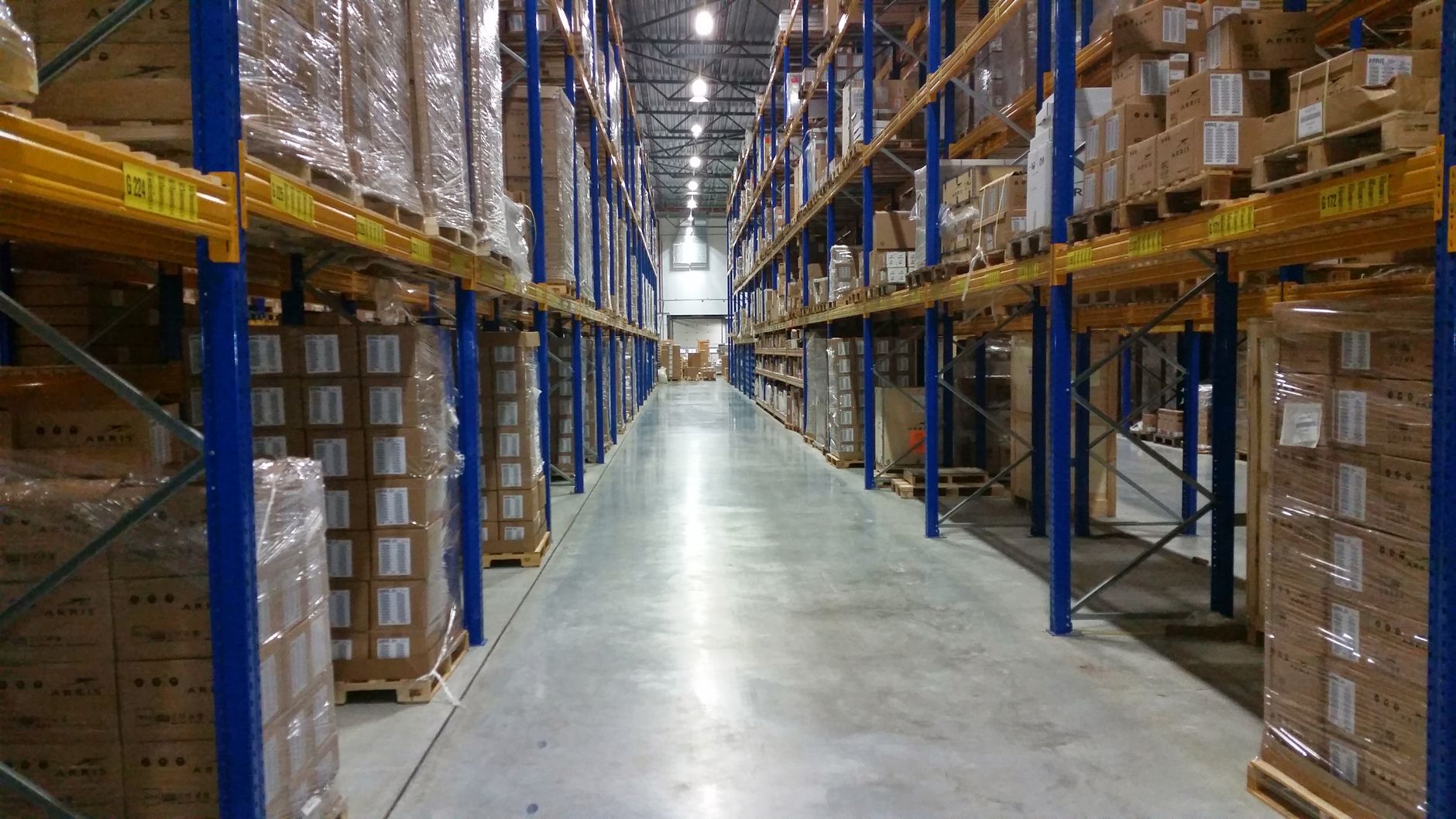
Before modeling, map a typical shift by task. Most sites find that a large share of hours goes to repeat transport between a few fixed points, such as trailer to staging and staging to rack. Those repeat moves are the first candidates for a unit. Exceptions and checks are different, and they stay with people.
The table below lists the task types we measure during the site assessment. Hour figures are not published here, because the research did not verify task-level hours for Miami sites. The research also did not verify a typical headcount for this role at one site, so use your own shift roster. Your shift logs or a short timed sample give the numbers the calculator needs.
| Task | Today | With a robot |
|---|---|---|
| Trailer to staging moves | Timed from your dock logs during the assessment | Unit takes the repeat flow, and staff check each load |
| Staging to rack replenishment | Timed in a shift sample | Unit runs scheduled replenishment between fixed points |
| Exception handling and damaged loads | Staff time, measured the same way | Stays with people and is excluded from the offset |
| Shift start checks and setup | Logged by the shift lead | Short daily check and route confirmation |
| Unit faults and reroutes | Not applicable | Staff clear the fault while remote triage begins |
Hour figures are measured on your site during the assessment. The research did not verify task-level hours for Miami operations, so no published hour figures appear in this table.
What are the risks to the return, and how do you avoid them?
The biggest risk is an overstated estimate: a unit that looks busy on the schedule but spends time waiting on loads, doors or people. Cap the offset at the share of work you have actually timed, and build in idle time between arrivals. A pilot on one lane is the cheapest way to see the real number before committing to a full rollout.
Turnover is a real cost, but it does not prove the return by itself. A 2025 US turnover survey, as summarized in a secondary source, put average voluntary turnover at 13.0% in 2025, with retail and wholesale highest at 26.7%. Use your own turnover rate in the model, because a national average can differ sharply from one site.
Local labor data points the same way. Miami-Dade College's compilation, which may cover a wider area than the county, showed 2,581 jobs in General Warehousing and Storage based on 2015 data, projected to reach 2,711 by 2027. Treat that as dated context for the scale of the workforce, not as a current count.
Is injury risk a reason to automate forklift work?
Forklift work carries serious injury risk, and that shapes the case for automation as much as the wage line does. An OSHA Region I directive using FY2017 data estimated roughly 85 forklift fatalities and 34,900 serious injuries a year. According to the same directive, 42% of forklift fatalities involve the operator being crushed by a tipping vehicle.
A separate OSHA Region IV directive, FY2019 and based on BLS data, reported an average of 100 workers killed and 20,000 seriously injured each year. These are national averages from older directives, so use them as planning context, not as a Miami rate. Fewer manual moves near loaded equipment can reduce exposure, but the safety case still needs its own floor plan and traffic rules.
How long does it take to reach payback?
Payback follows a sequence, and each step can slip. A site assessment and floor mapping come first, then a pilot on one lane or shift, then full deployment with go live support and staff training. Plan for the early weeks to run slower while staff learn the exception process.
We did not find verified adoption figures for forklift automation in Miami, so the payback case here rests on your own timed data rather than a local benchmark. That makes the pilot more valuable, because it replaces assumptions with measurements from your own dock and aisles.
We deploy and integrate the unit, train the staff who work beside it, and service it nationwide, with on-site dispatch and remote triage for faults. Ask the assessment team to show the timeline with the pilot and full rollout as separate steps, so payback is measured against the real schedule rather than the best case.
How do you get a precise figure from a free site assessment?
The calculator on this page gives a starting range from the local wage and general site inputs. A precise figure needs a free site assessment, where we map the route, count the moves by shift and measure the share of work a unit can take. Bring your receiving schedule, dock logs, layout drawings and turnover data if you have them.
The assessment returns a lease quote and a payback estimate tied to your numbers. Compare it with the range here. If the quote falls well outside that range, ask which input changed, because that input is the one to test in a pilot.
Work with one partner for the whole scope: selection, leasing, integration, training and service. Keeping the lease, the deployment and the support in one place matters when a unit needs attention during a shift.
Frequently asked questions
Put a robot to work in Miami.
We walk your site, learn the job, and recommend the unit that fits. Then we quote the lease, deploy it, and keep it serviced.
Sources
- US Bureau of Labor Statistics, Occupational Employment and Wage Statistics (OEWS May 2024)
- BLS Occupational Outlook Handbook, Hand Laborers and Material Movers
- BLS OEWS May 2023, Laborers and Freight, Stock, and Material Movers, Hand
- OSHA Region I directive CPL 04-00-023D (FY2017)
- OSHA Region IV directive CPL 19-07 (FY2019)
- WorkTime summary of Mercer 2025 US Turnover Survey (secondary)
- FIU Metropolitan Center, Transportation and Warehousing
- Forklift Action, OSHA forklift accident insights
- Vecna Warehouse Automation Trends (2023, vendor-reported)