
The short answer
The robotic lawn mower cost for campgrounds depends on how much mowable turf a property has, how many pads, trees, hookups and drain edges the mower must work around, when mowing is allowed to run, and how much mapping, integration, unit count and service the site needs. No single figure fits every campground, so the lease quote comes after a free site assessment that measures those facts on the ground.
Key takeaways
- Campground mower cost follows turf area, site obstacles, mowing windows, mapping and service, not a fixed figure.
- Job postings advertise seasonal grounds weeks of about 28 to 40 hours, with much lighter shoulder months.
- Mapping, integration, training and service terms are the costs first quotes most often miss.
- Open turf with clear edges suits a robotic mower well, while pads, trees and hookups add setup work.
- The lease is quoted after a free site assessment, with terms written out in full.
What does a robotic lawn mower cost for campgrounds depend on?
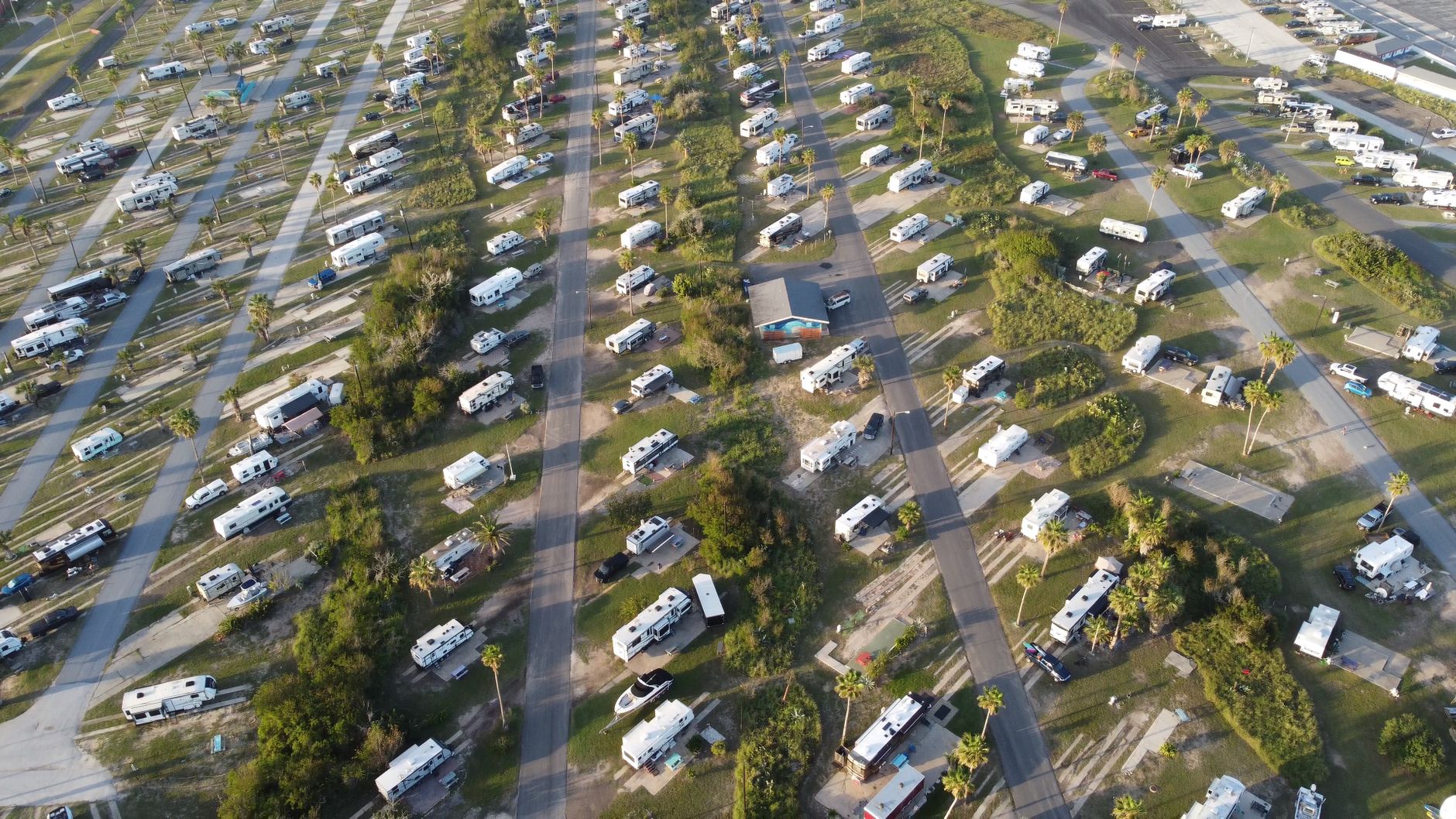
The robotic lawn mower cost for campgrounds comes down to a short list of site facts. The first is how much turf the mower must cover each week, which is usually less than the full parcel once wooded buffers, water and built areas are removed. The second is how many fixed obstacles sit inside that turf, such as pads, picnic tables, tree trunks, posts and drain edges. Mowing windows, mapping, integration, unit count and service terms follow from those facts, and each one moves the quote.
Two campgrounds with the same total acreage can land far apart. A property with open lawn, clear edges and an overnight mowing window is a simple job. A property with many sites split by gravel, hookups and shade trees needs more boundary work and more exception handling, even if its mowable area is smaller. The rest of this page covers the facts that decide which kind of job you have.
We do not state a figure before we see the property. The lease quote follows a free site assessment, where we map the turf and obstacles, check slopes and power, and note when mowing can happen. That order keeps the number tied to your grounds rather than to an average.
How many campgrounds and RV parks are there in the US?
IBISWorld, a third-party market research firm, counts 15,276 campgrounds and RV parks in the US for 2024. It reports that the business count grew 1.5% a year on average from 2019 to 2024, so the sector is still expanding. That growth matters for grounds work because each new property brings its own turf layout and its own seasonal labor problem.
Market counts say little about a single property's mowing load. A campground's grounds work depends on its acreage, its site count and how guests use the lawns. Use the national count as context, then focus on the site facts that set the cost.
Grounds work at a campground often depends on seasonal hiring, and the staffing section below covers how turnover affects that crew.
Which factors move the cost up or down at a campground?
Turf area is the first driver. A mower's workload scales with the acres it has to cut each week, so mowable area matters more than the parcel boundary. Wooded buffers, water, storage yards and the built footprint of sites come off the count. Count only the open turf that is cut on a schedule, and note any areas that need a different cutting height.
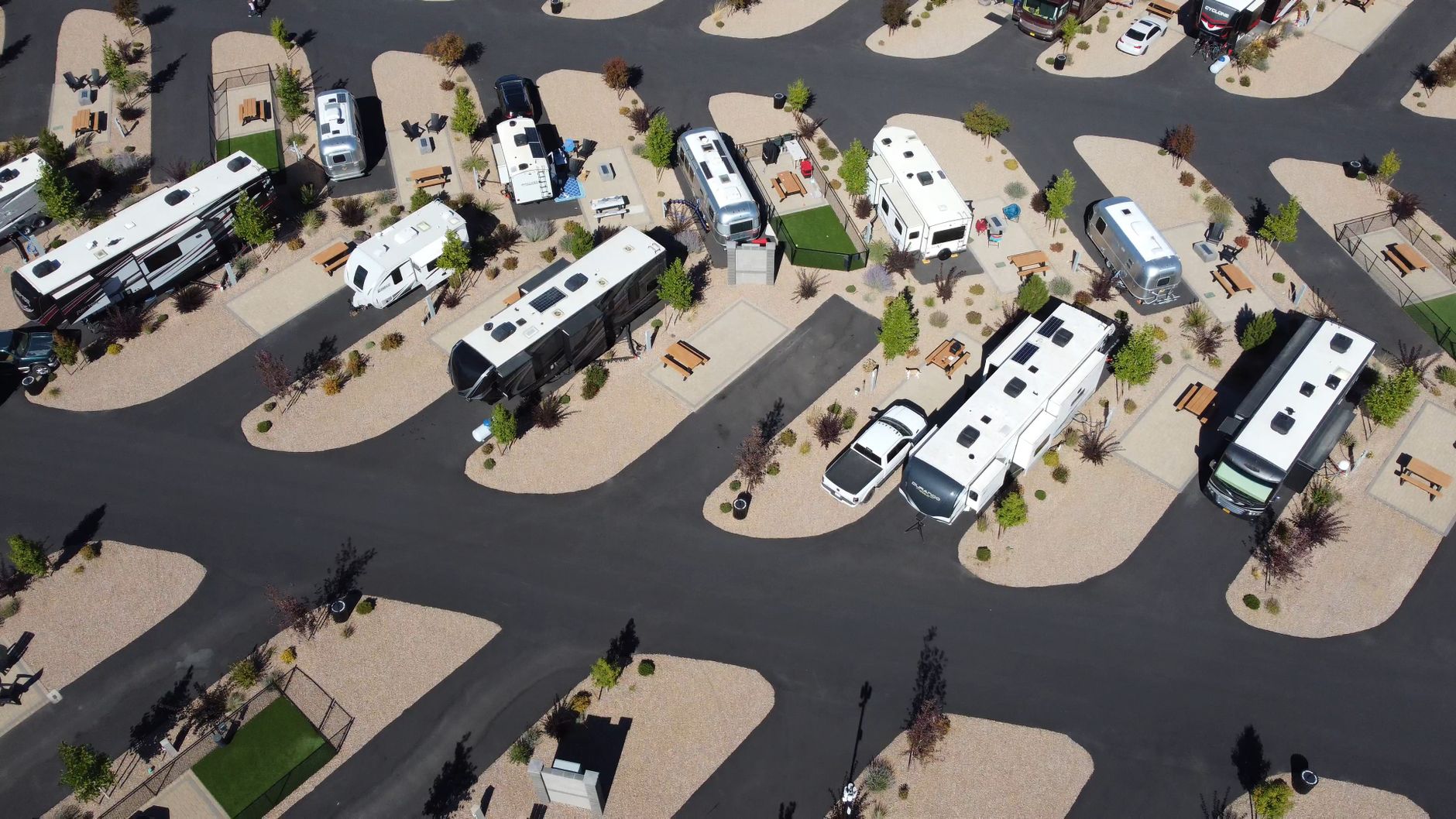
Surfaces and obstacles come next. Each pad, picnic table, tree trunk, post, hookup and drain edge adds mapping and boundary work, and creates more exceptions the mower has to avoid. Slopes and drainage ditches can change which mower model fits and how the boundary is set. Gravel roads and loose stone are not mowing surfaces, so their edges need clear limits on the map.
Shifts and mowing windows set how the robot runs. A property that can mow overnight or in the early morning, when guests are not out, can run long blocks with fewer units. A property that can only cut between guest activities needs shorter, more frequent runs, which changes the unit count and the charging plan. Traffic also matters. Guests, children, pets and maintenance vehicles create stops and avoidance events that the setup has to plan for.
Unit count, mapping and integration, and service terms complete the list. One unit covers a bounded area, and adding units shortens the window but adds to the lease. Mapping is a one-time step that grows with obstacle count. Integration with irrigation controllers, gates or site power adds work when those systems must connect. Service coverage, response times and spare unit terms are set in the lease, and a property that cannot leave turf uncut during a repair should ask for them in writing.
How does leasing a robotic mower through financing work, and what does the quote include?
Robots are leased through financing, so the property does not commit capital up front. The lease spreads the cost over a set term. Our quote shows a fixed lease payment for a stated term, produced after a free site assessment, so the number reflects your turf rather than a catalog average.
We select the robot for the site, lease it through financing, deploy and integrate it, train the staff and service it nationwide. That sequence is the same whether the site is one zone or several, and it keeps one partner responsible for the mower from the first survey through the service calls that follow.
The quote should show the units, the term, what the lease payment covers, deployment and integration, training, and service terms with response expectations and spare unit coverage. Items that sit outside the lease, such as zones added after go-live, should appear as separate lines with their own schedule.
A shorter pilot on one zone can show how the mower handles your obstacles before the full site is committed. We do not promise savings figures in advance. Whether the work pays off depends on how many crew hours move to other tasks, and that is measured after go-live rather than promised before it.
How many labor hours does a robotic mower take over at a campground?
No source we checked publishes typical mowing hours for campgrounds or RV parks, so this page does not give a per-site figure. Job postings are the closest proxy. They show what employers advertise for the seasonal grounds role, not measured mowing time. One public park district's RV park posting lists about 40 hours a week from March through October and about 5 hours a week from November through February.
Another RV park posting lists a minimum of 28 hours a week from April through October, and a Missouri RV park's seasonal groundskeeper posting lists 40 hours a week. Mowing is only one of several duties in each. Still, the pattern is clear: in season the grounds role is a near full week, and the off season is much lighter.
The Bureau of Labor Statistics counts about 1.3 million grounds maintenance jobs, 1,192,500 of them in landscaping and groundskeeping, and projects 4% growth from 2024 to 2034, which it describes as about as fast as average. That is a broad labor market, but it does not tell a campground how many hours its own mowing takes.
The robot takes repeat open-turf cutting off the week during its mowing windows. Staff keep the work a mower cannot do, and the table below shows how the workload shifts, task by task.

What are the injury and turnover risks in grounds work?
Grounds work carries real injury risk. The Bureau of Labor Statistics Survey of Occupational Injuries and Illnesses recorded 12,380 nonfatal injury and illness cases with days away from work for landscaping and groundskeeping workers in private industry in 2019, an incidence rate of 185 per 10,000 full-time equivalent workers. Over 2015 to 2019, that rate ranged from 149.0 in 2018 to 218.8 in 2016.
A CDC-hosted study citing BLS data puts the landscaping services industry at 176.8 per 10,000 in 2018, against 89.7 for all private industry. We did not find a 2024 nonfatal rate, so these are the most recent injury figures we verified, and they are older than they should be. Use them to frame the safety review, not as a forecast.
Turnover adds a second risk. The American Camp Association, as cited in a secondary study, says camps must replace more than 40% of seasonal staff each year, and that voluntary departures drive most of that turnover. A 2018 ACA staffing survey, as cited in secondary sources, found 52% of camps hired 5% or more above their staffing target to cover expected attrition. Both figures are camp-focused and dated, but they describe the spring hiring problem a small grounds crew faces.
What can a robotic lawn mower not do at a campground?

A robotic mower cuts bounded open turf on a schedule. It does not trim close to a pad edge the way a hand trimmer does, it does not clear storm debris, and it cannot handle an unmapped obstacle without help. Steep slopes, wet ground and turf that has grown too tall for the schedule are also limits, and the site assessment checks each one before a quote is written.
The mower also cannot take on the rest of the grounds job. Picnic areas, playgrounds, ponds, gravel and loose stone are not mowing zones, and they need their own plan. Leaf clearing, pruning, irrigation repair and litter pickup remain staff work. Expect a steady, smaller amount of hand work every week, not zero.
Set expectations before go-live. A robotic mower is a schedule tool, not a replacement for the whole crew. A campground that expects one unit to cover every zone in every season will be disappointed, so the quote should name which zones are covered and which are not.
How do I get a quote for a robotic lawn mower at a campground?
Start with a free site assessment. We walk the property, map the mowable turf and its obstacles, check slopes, power and any connected irrigation or gate systems, and note the hours when mowing can run. From those facts we size the unit count and the mowing windows, and we write the lease quote from that sizing.
To speed the visit, gather a site map or aerial view, the count of sites and open zones, a list of trees, pads, hookups and drains, your guest hours and quiet times, and your seasonal staffing week. If you already keep a grounds schedule, bring it. Those inputs usually shorten the assessment.
Compare quotes on the same zones, term and service scope, not on the lowest number. A lower lease payment that leaves out mapping, training or spare unit coverage can cost more in open turf that stays uncut. Ask each provider to show what is included and what is separate, and ask for response terms in writing.
Frequently asked questions
Want a robotic mower at your campground?
Tell us about your site. We will recommend the robot, quote the lease, and keep it serviced.
Sources
- IBISWorld, campgrounds and RV parks in the US
- Bureau of Labor Statistics, Occupational Outlook Handbook, grounds maintenance workers
- Bureau of Labor Statistics, injury snapshot for landscaping and groundskeeping workers, 2015 to 2019
- CDC-hosted study citing BLS injury data
- American Camp Association, staffing and turnover
- Willow Creek Park District, RV park maintenance job description
- Qureos listing, RV park grounds and facility maintenance assistant
- Career listing, Missouri RV park seasonal groundskeeper