
The short answer
Cobot cost in Chicago is set by what the arm has to do at your site, how many units run, how the cell connects to existing equipment and doors, and how service is covered. For a Chicago business, the lease is quoted as a fixed robot lease payment after a free site assessment, because those inputs differ from one building to the next.
Key takeaways
- The task, the number of units and the site layout set most of a cobot lease quote in Chicago.
- Integration with existing machines, doors and lifts is an easy item to underestimate.
- The Chicago-Naperville-Elgin metro had 10,750 industrial machinery mechanic jobs in May 2023, according to the BLS, which informs local service planning.
- Cobots were 19.6 percent of North American robot orders in 2025, according to A3 as reported by trade press.
- Get the number from a written quote after a free site assessment, not from a national average.
Cobot cost in Chicago: the short answer
A cobot lease in Chicago is set by the work the arm has to do at your site, not by the arm alone. Cells running the same collaborative robot can carry very different quotes, because the task, the unit count, the integration into existing equipment and the service coverage all vary.
This page does not state a lease figure, because any number given without a site walk would be a guess. Instead it sets out each input that moves the number, the local labor and workplace facts that bear on service, and the steps from assessment to a signed quote.
What drives cobot cost at a Chicago site
Start with the task. A cobot that tends one machine or palletizes at one cell has a narrow scope. One that feeds several stations or moves between them adds fixturing, safety review and programming, and each of those lands in the quote as set-up and service scope.
Floor and layout come next. Level concrete, clear access and a fixed work cell keep the arm inside its working reach with less engineering. Uneven slabs, floor drains, columns that block reach, and cold, damp areas near loading docks add engineering time, and a site walk shows which of these apply to your floor.
Shifts and traffic matter as much as the task. A cell that runs under supervision on a day shift needs less guarding and fewer checks than one that runs unattended overnight. Forklift and pallet traffic near the cell, and the people who walk past it, decide how much safety work the install needs.
Chicago labor and maintenance talent
Local maintenance labor affects how fast a cobot gets back to work after a fault. According to the U.S. Bureau of Labor Statistics, the Chicago-Naperville-Elgin metro had 10,750 industrial machinery mechanic jobs in May 2023. Machinery mechanics are a closely related trade to cobot upkeep, so the size of that pool is a useful local signal, though it does not describe any one service team.
Cleaning labor is a separate question, and the national figures are the best available for it here. According to the BLS Occupational Outlook Handbook, 2,447,700 janitors and building cleaners held jobs in 2024, with projected growth of 2 percent from 2024 to 2034, which is slower than average. Chicago turnover figures for that occupation were not available for this page, so those numbers stay national.
Workplace injury rates give a national baseline for any cell that puts people near moving equipment. According to the BLS, total recordable cases in private industry were 2.3 per 100 full-time equivalent workers in 2024, down from 2.4 in 2023, the lowest rate in the series back to 2003. Health care and social assistance ran at 3.4 cases per 100 full-time equivalent workers in 2024, down from 3.6 in 2023.
Which Chicago businesses run cobots
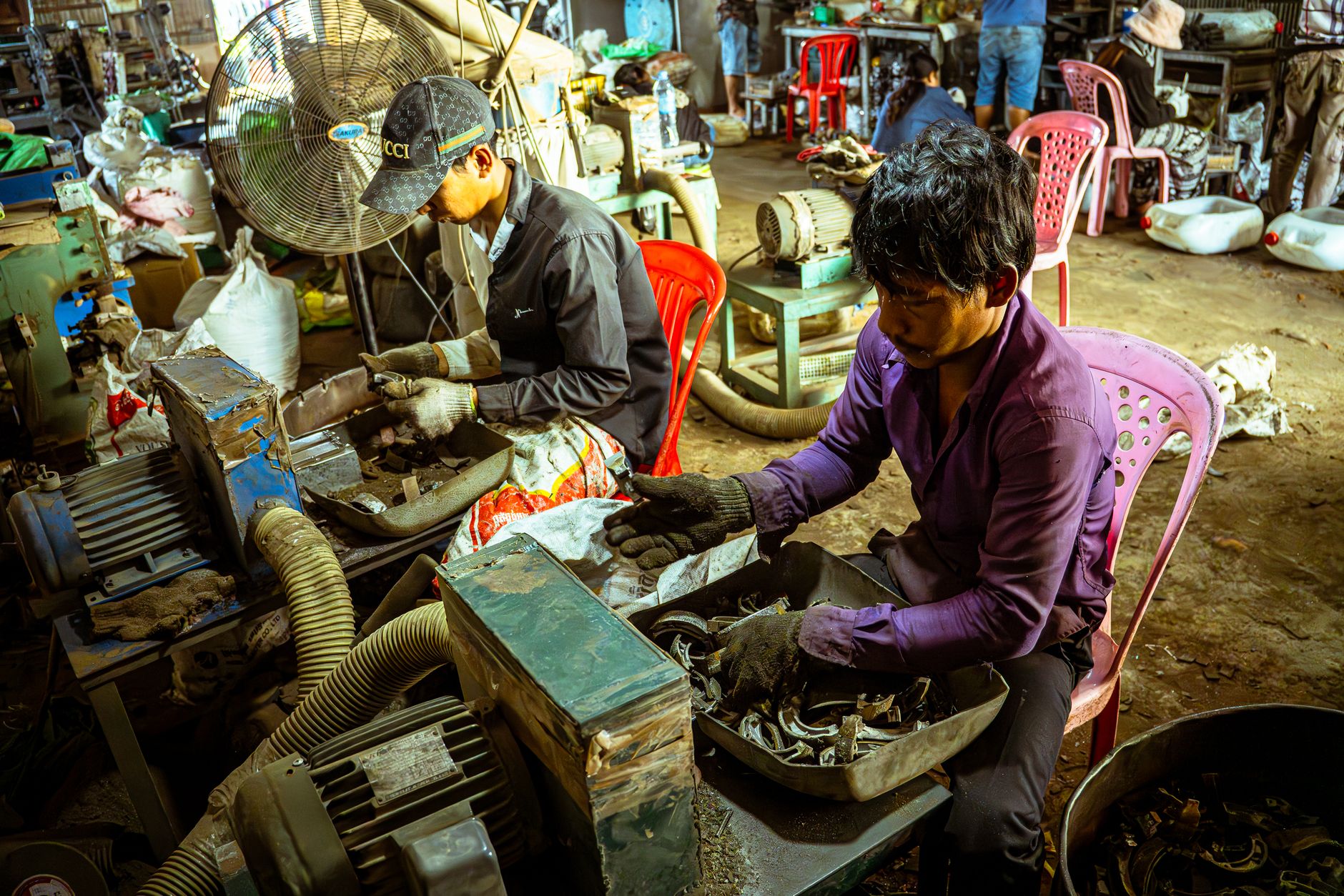
Cobots fit repetitive work that already sits beside staff: machine tending on CNC equipment, tote and bin handling, palletizing, and end-of-line packing. Small-batch manufacturers, machine shops, fabrication and packaging operations tend to have that mix, and they are the kinds of sites where a single cell can be scoped and tested.
Adoption is rising. According to A3, as reported by trade press, cobots were 7,212 units ordered in full-year 2025, or 19.6 percent of total robots ordered, and full-year robot orders rose 6.6 percent. The fourth quarter alone reached 2,953 units, the highest quarter since A3 began tracking cobots in the first quarter of 2025, when 1,052 units were ordered.
The global picture points the same way. According to the International Federation of Robotics, the operational stock of industrial robots rose 9 percent to a record 5 million units in 2025. No verified 2025 cobot share of that stock was available for this page, so this page does not state one.
How many labor hours a cobot takes over
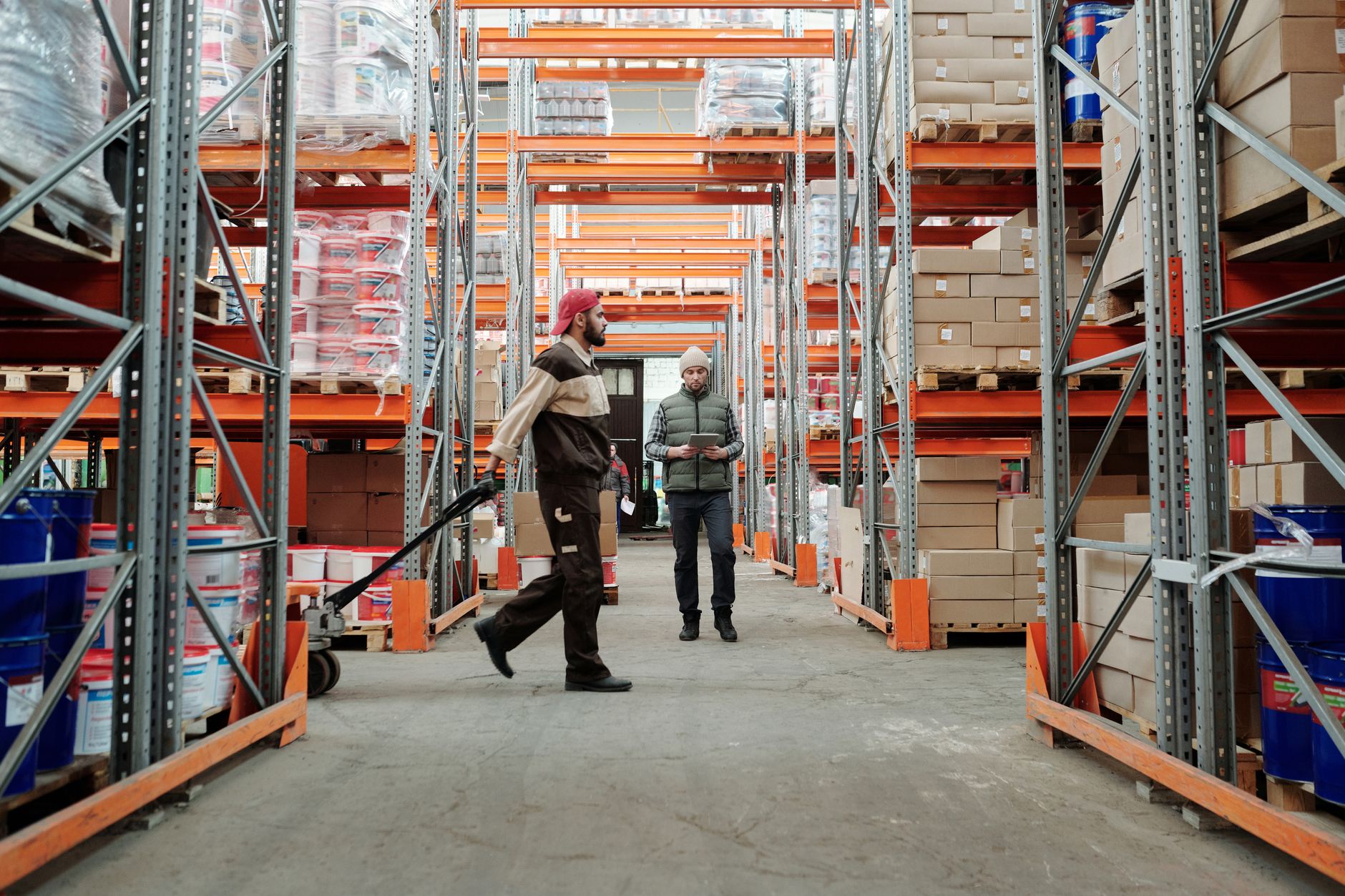
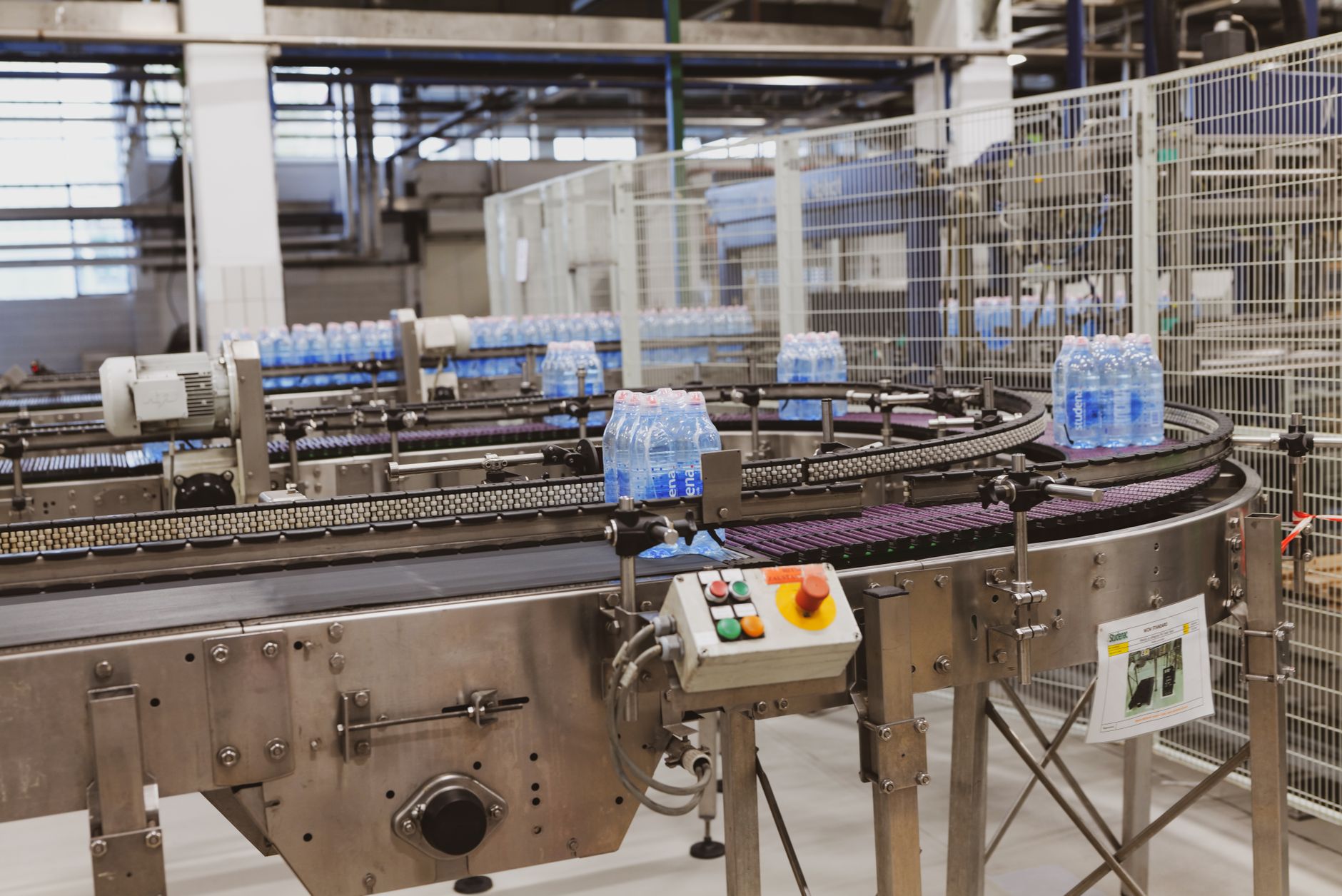
The work a cobot takes over is a loop of touches: load a part, press start, pull the finished part, stack it, and repeat. Each loop holds a person at the machine, and the hours spent on those touches are the cost that moves. Measuring that time cell by cell is the most reliable way to size the lease.
No verified Chicago shift counts, cycle times or task-time studies were available for this page. The comparisons in the table below are qualitative and reflect how we walk a site, so treat them as a frame for your own count rather than a published benchmark.
To build your number, time one full shift at each cell. Count the touches as well as the minutes, because a cobot that removes a touch also removes the walk back to the station. Those counts, along with the unit count, are the main inputs to the quote.
How leasing through financing works
We lease robots through financing. The lease is how the robot reaches your floor, and the lease payment stays fixed for the term stated in the signed quote. You do not need upfront capital to start, which lets a team move on a cell without a large one-time outlay.
The quote is written after the site assessment. It names the units, the integration scope, deployment, training, the service coverage and the lease term. If an item is not listed in the quote, it is not part of the lease, so read the line items before you sign.
Leasing also makes a phased start practical. Starting with one leased unit lets you measure the hours it takes over before you commit to more cells. Phased deployment keeps the rest of the floor running while the first cell goes live.
How to get a quote after a free site assessment
The quote starts with a free site assessment. We walk the floor, measure the work cell, record the routes and doors the arm will touch, and note the power, network and safety conditions. The output is a site plan and a defined scope, and the quote is built from both.
The quote then sets out the lease payment and term, the integration scope, deployment and training, and the service coverage. Ask every provider you compare to state those same items, so the comparison holds. A quote that leaves one of them blank is not finished.
Bring the shift schedule to the assessment, along with a rough count of touches for each cell, the controls and interfaces on the machines, and the names of the supervisors who will run the cell. Those shorten the visit and tighten the number.
What a cobot cannot do
A cobot repeats a programmed motion within its reach. It does not judge a part the way an experienced operator does, and it does not correct a fixture that has drifted. Tasks that need fine tactile judgment, wide part variation or constant changeover are usually a poor fit for a single cobot cell.
It is not a forklift and not a floor scrubber. It works the cell it was installed for. Moving it to another cell takes re-teaching, re-checking and often new fixturing, so a site that changes its product mix often should carry that cost in the quote rather than discover it later.
It also cannot run without a plan for what it cannot handle. Keep a staffed path for exceptions, a maintenance window, and a response plan for when the arm stops. A cobot waiting on a repair is still a cost on the line.
Frequently asked questions
Put a robot to work in Chicago.
We walk your site, learn the job, and recommend the unit that fits. Then we quote the lease, deploy it, and keep it serviced.
Sources
- U.S. Bureau of Labor Statistics, OEWS May 2023, Chicago-Naperville-Elgin metro
- U.S. Bureau of Labor Statistics, Occupational Outlook Handbook, Janitors and Building Cleaners
- U.S. Bureau of Labor Statistics, Injuries, Illnesses, and Fatalities news release
- U.S. Bureau of Labor Statistics, The Economics Daily, 2024 workplace injuries and illnesses
- A3 full-year 2025 North American robot orders, as reported by trade press
- A3 first nine months 2025 North American robot orders, as reported by trade press
- A3 Q1 2025 North American robot orders release
- International Federation of Robotics, World Robotics 2026, as reported by trade press