
The short answer
The cobot cost for tortilla factories depends less on the arm than on the cell built around it. Line speed, sanitary washdown rules, the number of fixed stations, and how the cell connects to existing conveyors and controls set the lease quote, and a free site assessment measures each of them on your floor. Two plants with the same arm can receive quotes that look nothing alike for these reasons.
Key takeaways
- Line speed, washdown rating and integration shape the cobot cost for tortilla factories more than the arm alone.
- Federal sanitation rules put cleanability into equipment design, so the cell belongs inside the cleaning sequence.
- Hours depend on your own station data, so time each station across a full shift before comparing quotes.
- The lease quote follows a free site assessment and lists each scope item as its own line.
What does a cobot cost for a tortilla factory?
The cobot cost for tortilla factories depends less on the arm than on the cell built around it. Line speed, sanitary washdown rules, the number of fixed stations, and how the cell connects to existing conveyors and controls decide the lease quote. Those items are measured on your floor during a free site assessment.
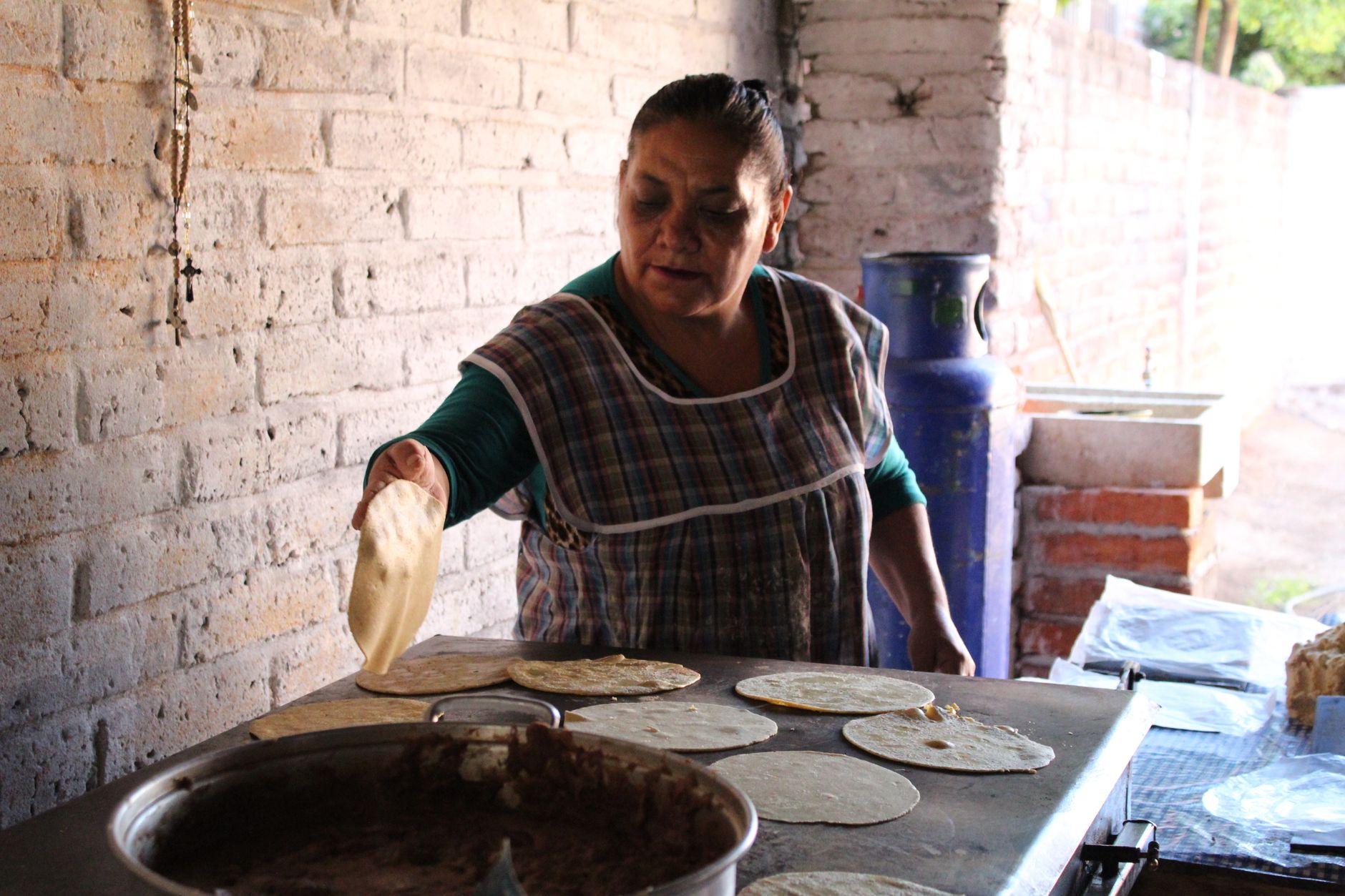
Tortilla lines are hard on machines. Product moves fast, the same motion repeats at one station for hours, and the equipment has to be cleaned to a standard set by federal food safety rules. Two plants with the same arm can receive quotes that look nothing alike for that reason.
Scale matters too. According to IBISWorld, which gives an estimate rather than a federal count, tortilla manufacturing had 1,474 businesses in 2025, and the average firm had 13.7 employees. A plant of that size usually has a few repeat stations worth automating before it has a case for a full line.
What drives the cobot cost up or down at a tortilla plant?
Line speed comes first. The arm has to keep pace with the takeaway rate at peak, and that sets its speed, reach, grip and vision needs. When one arm cannot keep up, the quote adds a second unit or a buffer, and that is often the largest single change in scope.
Washdown rating comes second. Under 9 CFR 416.4, equipment in official establishments must be built to allow thorough cleaning and inspector access. According to Food Engineering, some conveyors cannot tolerate high-pressure washdown, so washdown-rated equipment is specified for ready-to-eat work. Sealed joints and smooth finishes add to the build.
Stations and shifts come third. A cell that runs one shift with a clean sanitation window is priced another way than one that runs continuously. Each added station brings its own fixture, sensors and cleaning points.
Integration and guarding make up the rest. The cell needs count, tray and reject signals from the packer or conveyor, and it must report status back to the line controls. A fixed cell near people also needs a risk assessment, guarding or sensing, and sometimes a layout change that keeps access open for cleaning crews. Controls work can rival the arm itself in scope.
What work does a cobot take over on a tortilla line?
The fit is strongest where the work repeats at a fixed station all shift: stacking finished product, loading trays, feeding packing and handling cases at the end of the line. The arm does not improvise, so the station needs consistent product presentation and clear fixtures.
The labor pool is large. According to the Bureau of Labor Statistics, about 144,690 food batchmakers were employed in 2025, up from about 142,000 in 2024. According to BLS occupational data for May 2021, Bakeries and Tortilla Manufacturing was the largest industry for food batchmakers, employing 26,020 of them. Those figures describe the occupation nationwide, not any one plant.
Injury rates in the sector are also worth tracking. According to the Bureau of Labor Statistics injury chart, food manufacturing recorded 3.3 total recordable cases per 100 full-time workers in 2024, against 2.3 for private industry and 2.7 for manufacturing overall. Those figures came through secondary summaries, so check them in the BLS table before citing. According to Manufacturing Dive, citing Labor Department data, food manufacturing had 61,400 injury cases in 2023, at a rate of 3.6, down from 4.6 in 2022.
How many labor hours does a cobot take over?
No verified industry figure exists here for hours spent at tortilla stations, and turnover for the occupation was not available in the research, so plants should measure their own. The clearest method is to time each station across a full shift, count the staff assigned to it, and note the sanitation and restart time.
Hours depend on line speed, shift length and station count. A plant running one stacking station on two shifts logs far fewer hours than a plant with four packing stations running continuously. The hours table below is a structure to fill in, not a benchmark.
The hours that matter most are the repetitive ones: the same motion, the same station, all shift. The arm can take those over while staff move to checking counts, clearing jams and running changeovers. Changeovers and cleaning still need people, so plan for staff roles to shift rather than disappear.
How does the work run today versus with a cobot?
Today the station depends on a worker who keeps pace with the line through the whole shift, reaching, stacking and reloading trays. A missed beat shows up as product backing up at the handoff or as a short pack.
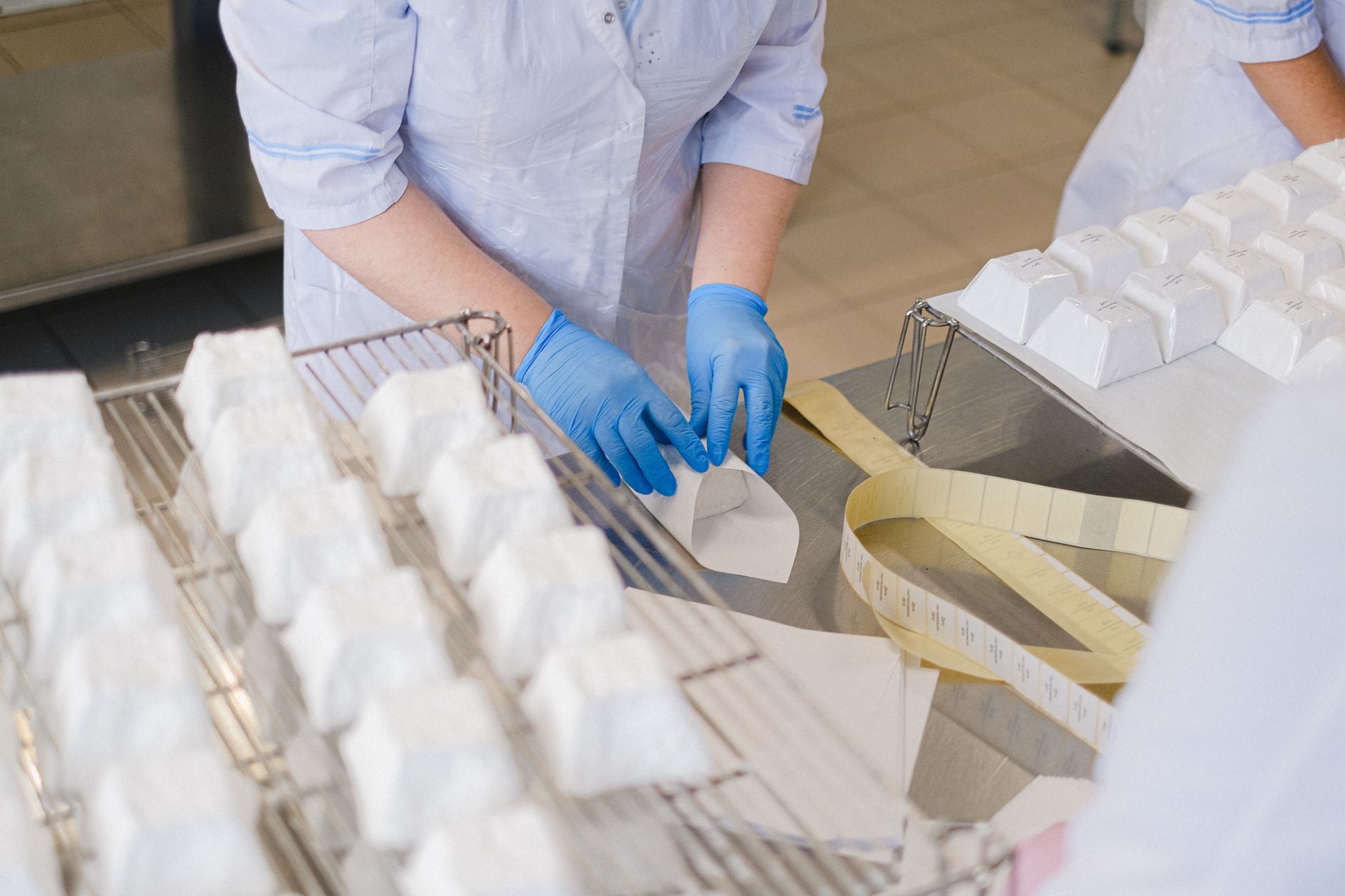
With a cell, the arm carries the repetitive motion and staff handle judgment work: checking product, clearing jams, handling changeovers and running the sanitation sequence. According to archived FSIS training material, cleaning runs dry cleaning, pre-rinse, foaming and scrubbing, rinse, visual inspection, sanitizing, then drying. Sanitizing follows cleaning because it does not work on soiled equipment, so the cell belongs inside that sequence.
Water rules apply too. Water, ice or brines that have contacted raw product may not be reused on ready-to-eat product, so any wash water tied to the cell follows that rule.
How does leasing a cobot through financing work?
Robots are leased through financing, so the cost arrives as a fixed lease payment rather than a large upfront outlay. The payment is quoted after a free site assessment, when the scope, speed and integration needs are known. Term length and coverage are written into that quote.
The quote includes deployment and integration, staff training and nationwide service. Anything outside that scope, such as added stations or extra guarding, appears as its own line, so you can see what drives the number.
Leasing suits a plant that wants to start with one cell and add units after the first one proves out. Run the first cell against its hours table, check uptime, and then decide whether a second station makes sense.
What can a cobot not do on a tortilla line?
A cobot does not replace the whole line. It does not fix a dough sheeter, an oven or a jam deep inside the equipment, and it does not judge product quality beyond what its sensors and fixtures are set to see. Product that varies widely in size or shape needs a new fixture or a person at the station.
It cannot run through a sanitation cycle without a plan. The cell has to be cleaned, and its covers and cabling need checks. It cannot exceed its payload or reach, and a badly fixtured station will struggle whatever the arm.
Set expectations on uptime through the service plan, not the arm's spec sheet. Ask what the response time is for a fault during a shift and what happens to the line while the cell is down.
How do I get a cobot quote after a site assessment?
Start with the free site assessment. We measure line speed at peak, the takeaway rate, the sanitation window, the shifts, the number of stations and the signals available from the packer or conveyor. We also check floor clearance, access for cleaning crews and any guarding the layout needs.
The quote follows the assessment. It lists the lease through financing, the scope of deployment and integration, training, service and any items outside that scope. Ask for it in writing and check it against the checklist above.
Bring four items to the first call: peak line speed, the shift schedule, the sanitation procedure, and the number of fixed stations. With those, the assessment starts from measured numbers instead of estimates.
Frequently asked questions
Want a cobot at your tortilla factory?
Tell us about your site. We will recommend the robot, quote the lease, and keep it serviced.
Sources
- Bureau of Labor Statistics, food manufacturing industry at a glance
- Bureau of Labor Statistics, occupational data for food batchmakers, May 2021
- IBISWorld, tortilla manufacturing industry report
- Bureau of Labor Statistics, nonfatal injuries by industry chart
- Manufacturing Dive, injury and illness rate report
- eCFR, 9 CFR Part 416 sanitation
- USDA FSIS, RTE sanitation training material (archived)
- Food Engineering, sanitary equipment design