
The short answer
The cleaning robot cost for bank branches depends on how much hard floor the robot must cover, how the layout forces it to turn and stop, how many nights it runs, and how much mapping, integration and service the site needs. Freestanding branch planning averaged about 2,700 square feet in one ABA Banking Journal survey, so layout and schedule often matter as much as raw floor area. A lease quote is set after a free site assessment that measures the real floor.
See what a cleaning robot costsRun the numbers in the ROI calculator
Key takeaways
- Floor area alone rarely sets the quote, layout and schedule usually do.
- Hard floor with predictable daytime traffic suits scheduled overnight scrubbing.
- Mapping, integration, training and service are the costs people most often miss.
- Stanchions, counters, carpet and narrow corridors cut the usable autonomous area.
- The quote follows a free site assessment, so the real floor sets the terms.
What does cleaning robot cost for bank branches depend on?
The cost of a cleaning robot for a bank branch comes down to four questions: how much hard floor needs scrubbing, how hard that floor is to navigate, how many nights a week the robot runs, and how much setup and support the site needs. Each one moves the lease quote, and the first two usually decide the result.
Branches are not large buildings. Turner & Townsend reports that ground-up branch prototypes average about 3,000 square feet, and most of that area is open lobby, teller line and back office. The robot covers a modest footprint, but the layout inside that footprint decides how much of it can be cleaned without help.
That is why two branches of similar size can produce quotes that vary widely. An open lobby with polished hard floor and a single teller line is a simple job. A site with planters, a wide carpet border and a crowded counter needs more mapping, more route planning and more time on site before anyone can commit to a schedule.
How many banks and branches are in the US?
According to the FDIC, 4,379 FDIC-insured institutions were reported in its third quarter 2025 release, including 3,953 community banks. The release counts institutions, not branches, so it does not give a branch total. Branch numbers should be confirmed with each bank before planning a network rollout.
For a bank that runs several branches, the cost question shifts from one site to a repeatable routine. The same floor type, the same overnight window and the same service terms across every location make the quote easier to compare and the staffing plan easier to write.
How do floor area and layout change the cost?
Cushman & Wakefield reports that the average new branch location for the five largest banks fell 46% in square footage from 2000 to 2023. Less floor means less run time per night, but smaller sites often pack more furniture, counters and doors into each square foot, and the robot has to work around all of them.
Turner & Townsend reports that banks typically have eight to nine service points, each about 240 square feet of front-of-house space. Service points are where customers queue, and the queue lanes, stanchions and counters are what the robot has to map. A teller line with fixed posts and a vestibule door creates more route decisions than an open lobby of the same size.
The Nassco review notes that furniture, obstacles and narrow spaces reduce the usable autonomous area. So the first thing a site assessment checks is not the room's total square footage, but how much of it a robot can clear without a chair or a stanchion blocking the route.
How much janitorial labor does a branch floor take?
The Bureau of Labor Statistics counted 2,447,700 janitor and building cleaner jobs in its 2024 data, and services to buildings and dwellings is the largest employer at 35%. BLS projects employment to grow 2% from 2024 to 2034, which is slower than average, adding about 47,800 jobs. Because the labor pool is not expanding quickly, a hard-to-fill overnight shift is a real planning risk.
BLS lists a typical entry requirement of no formal credential, with short-term on-the-job training. It also projects about 351,300 openings a year on average over the decade, largely from replacement demand. The search did not find an official BLS turnover rate for this occupation, so that openings figure is the closest official signal of how often a cleaning role has to be refilled.
The work carries physical risk. BLS reports 191.6 nonfatal injury and illness cases requiring days away from work per 10,000 full-time-equivalent janitors and cleaners, excluding maids and housekeeping cleaners, averaged over 2016 to 2020. A robot does not remove that risk for staff who still handle edges, spills and equipment, but it cuts the time a person spends pushing a machine across the whole floor.
How does leasing a cleaning robot through financing work?
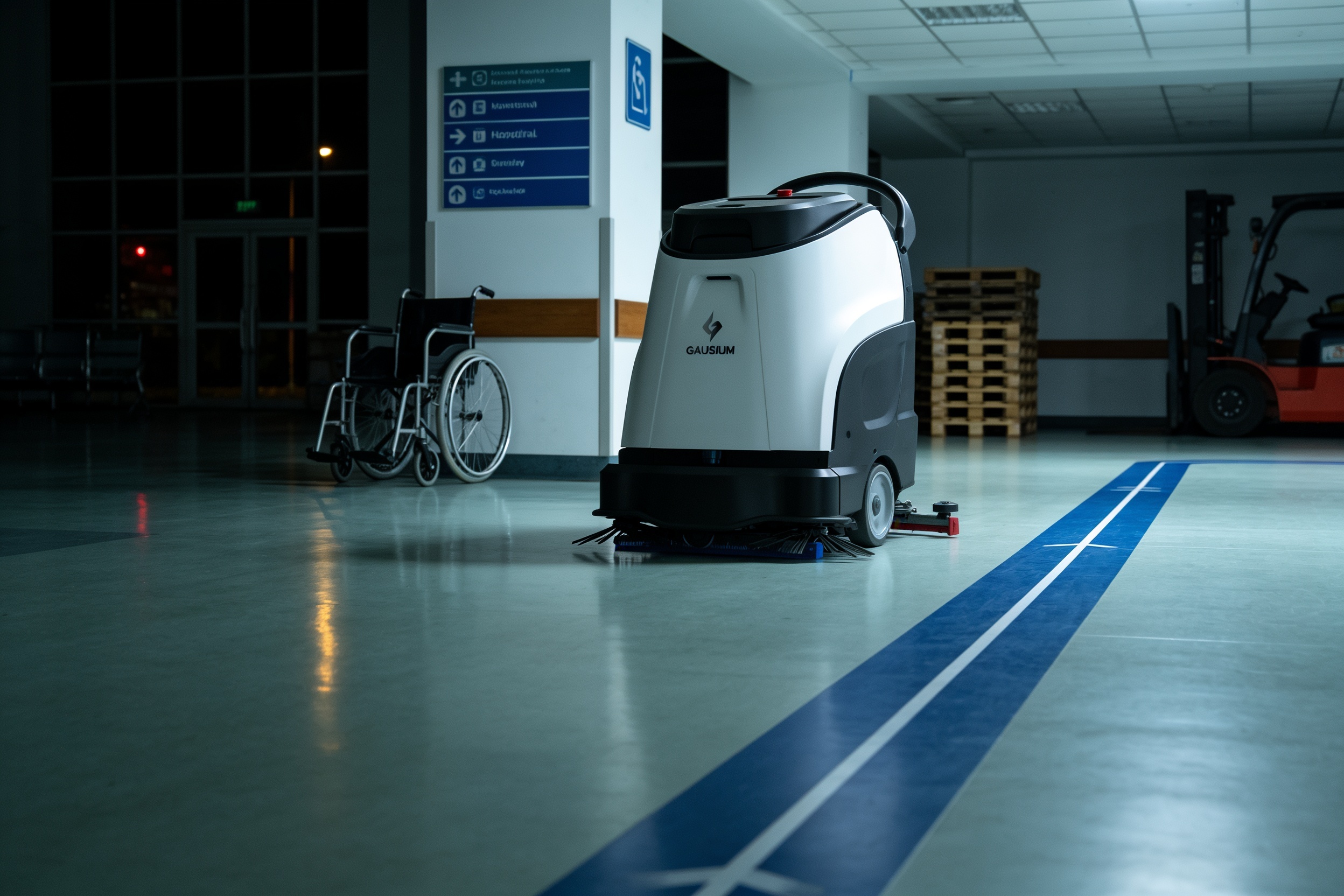
Robots are only leased, through financing. A lease gives the branch network a defined term and a fixed lease payment, rather than a large up-front outlay that competes with other capital projects. The exact terms are set in the quote, which follows a free site assessment and is not a catalog estimate.
A quote should show the lease term, the robot fitted to the floor, mapping and integration, training, go live support, service coverage and any spare unit arrangement. It should also list exclusions in plain words, such as insurance, software or repairs caused by the site, so you can compare it with your existing cleaning contract.
Because every branch layout differs, the quote for one site will not match the quote for another. Ask for the scope in writing, and ask the provider how a lease is handled if a branch closes or moves to a new floor plan.
What can a cleaning robot not do in a bank branch?
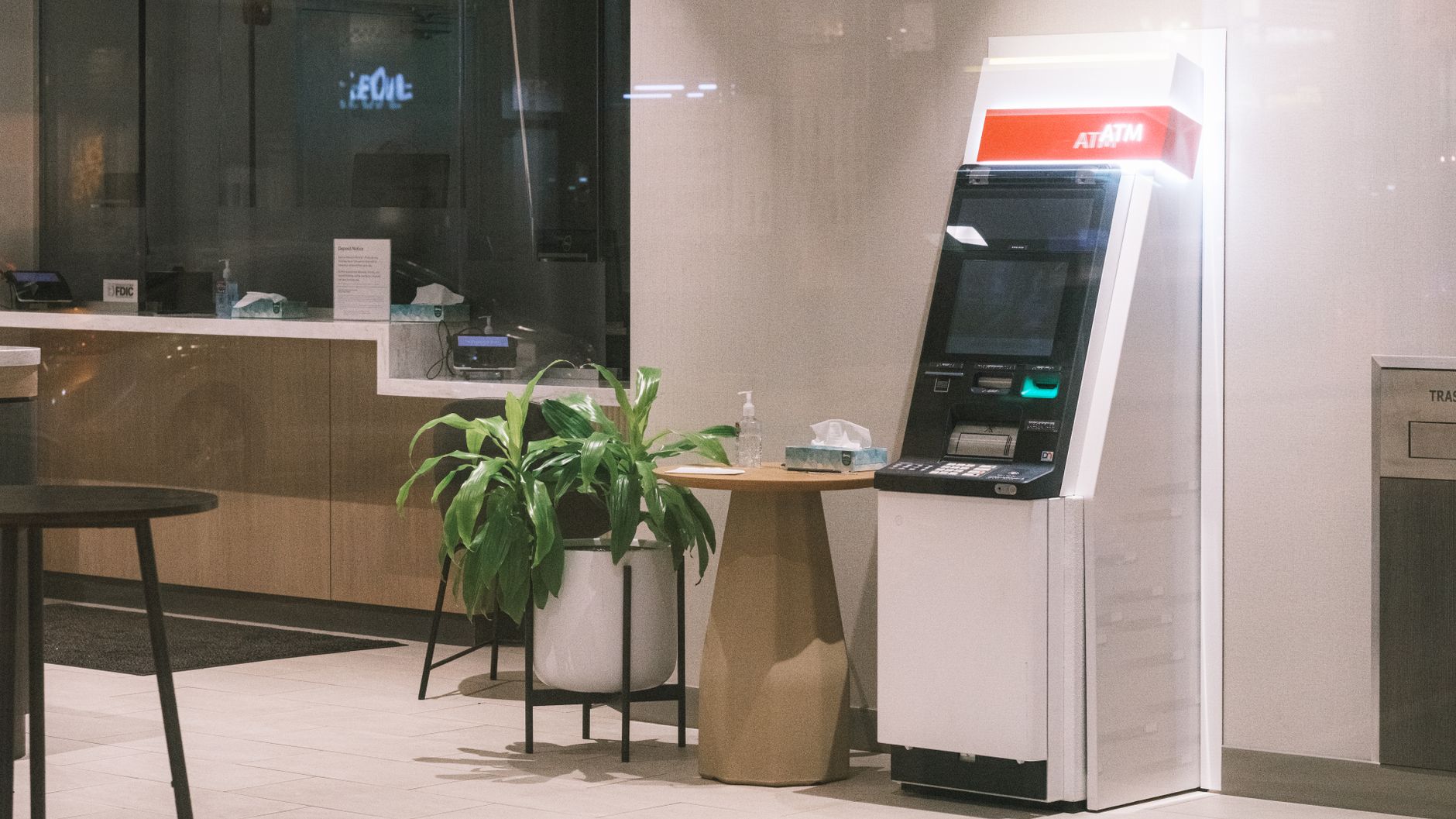
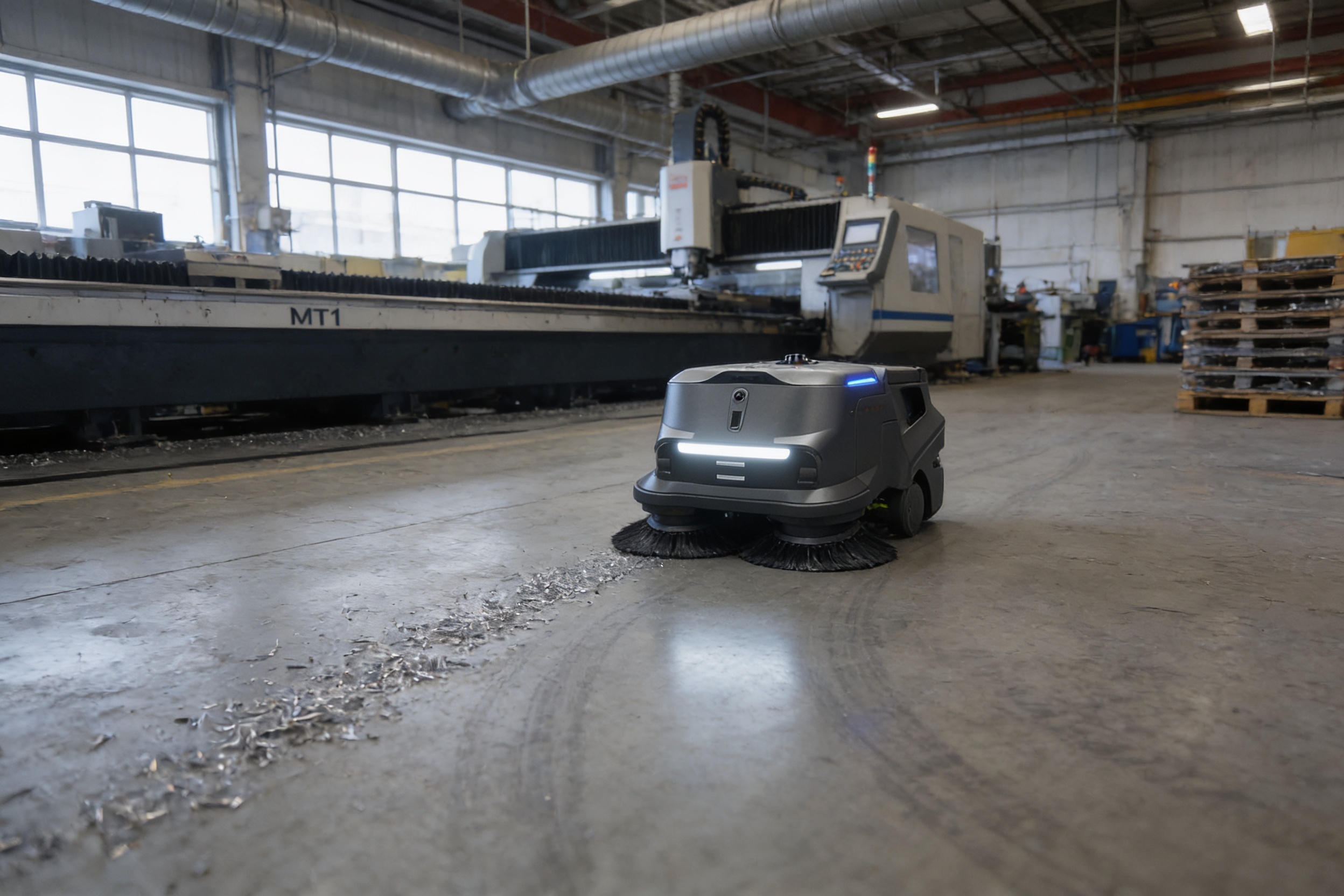
A floor scrubber covers open hard floor well, but it does not do detail work. Edges, the space under counters, the footing around ATM cabinets and the corners behind queue rails usually still need a staff pass. Plan the robot for the scheduled main route, and keep staff for the rest.
Floor surfaces set hard limits. Carpet, raised thresholds, cable runs and wet spills stop or slow a unit, and any level change, such as a step, is outside what a floor scrubber can cross. Those areas need a separate plan from the start, not a surprise on the first night.
A robot also does not respond to the reasons a branch gets dirty during the day. A spilled drink, a smudged glass door or a broken fixture needs a person on shift. The robot keeps the overnight pass consistent, and staff handle exceptions, a split the site assessment should confirm.
Is cleaning robot adoption common among building service providers?
Adoption is growing from a low base. The AACEM and ISSA Autonomous Cleaning Survey, using a 2019 baseline and not vendor-reported, found that about 62% of building service contractors, 68% of in-house providers and 69% of facility managers reported no use. About one-third of non-adopters said they might adopt within a year.
A 2026 review by Nassco, distributed as a press release and so a vendor-published summary whose methodology we have not verified, reports that planned adoption of robotic floor equipment roughly doubled from 2025. It also reports that about 32% of building service contractors plan to adopt within 12 months.
Read these figures as direction, not as benchmarks for one branch. Check the survey year and sponsor, and ask any provider how many sites with a similar layout it has deployed and what its service response looks like.
How do you get a cleaning robot quote for a bank branch?

Start with a free site assessment. We measure the floor, map the main route, note the surfaces, count the service points and agree the overnight window with branch operations. The assessment is where the drivers above get their real values, and it is the point where a lease quote is set.
Then we send a written quote. It lists the lease terms, the robot fitted to the floor, mapping and integration, training, go live support and service after deployment, along with the exclusions. If your site needs spare coverage during repairs, the quote will say how it is handled.
To speed up the first quote, bring the floor plan, your janitorial schedule, the number of branches you want covered and any insurance or IT requirements from your risk and technology teams. A single branch can start as a pilot before you decide how far to expand, and the same routine can then move to the next site.
Frequently asked questions
Want a cleaning robot at your bank branch?
Tell us about your site. We will recommend the robot, quote the lease, and keep it serviced.
Sources
- FDIC third quarter 2025 release
- ABA Banking Journal
- Turner & Townsend US Retail Banking Report 26
- Cushman & Wakefield
- Bureau of Labor Statistics Occupational Outlook Handbook, Janitors and Building Cleaners
- Bureau of Labor Statistics, Janitors and Cleaners injury and illness snapshot 2016-20
- AACEM and ISSA Autonomous Cleaning Survey
- Nassco 2026 review (press release)