
The short answer
For most convenience stores, an autonomous mobile robot makes sense for the overnight restock haul, while a stock associate stays on the shift for work that needs judgment. The robot fits when the store runs thin or empty after midnight and the restock is mostly moving cases and totes from the back room to the aisles. It does not fit when nobody is left to check dates, handle spills, sell age-restricted products or serve a customer at the register.
See what a autonomous mobile robot costsRun the numbers in the ROI calculator
Key takeaways
- Overnight restocking suits a robot when the work is mostly hauling cases and totes from the back room to the aisles.
- A robot does not replace the person who checks dates, faces shelves, covers the register or serves customers.
- Turnover runs high in this industry, so the night route needs more than one trained person.
- Measure your own restock runs and unfilled shifts first, because no industry average settles the question for your store.
- Plan one robot plus fewer staff, never zero staff, with someone on site for safety and the counter.
Autonomous mobile robot vs stock associate: which fits a convenience store?
The real question is the gap, not the robot. An overnight shift run by one person already splits attention between the counter and the floor, so each restock trip is a short gap at the register. A robot removes the trip, not the person, and that is the trade a store should weigh.
The category is large. According to the NACS store count as of Dec. 31, 2025, there were 151,975 U.S. convenience stores, down 280 (0.2%) from 152,255 a year earlier. Texas has the most, at 16,504, according to Chain Store Age.
Most operators are small. According to CSP Daily News, about 63% of stores belong to operators with 10 or fewer stores. A small operator usually cannot spread one missed overnight shift across a larger team, so the gap lands on one person or on the owner.
What does a stock associate actually do on a convenience store shift?
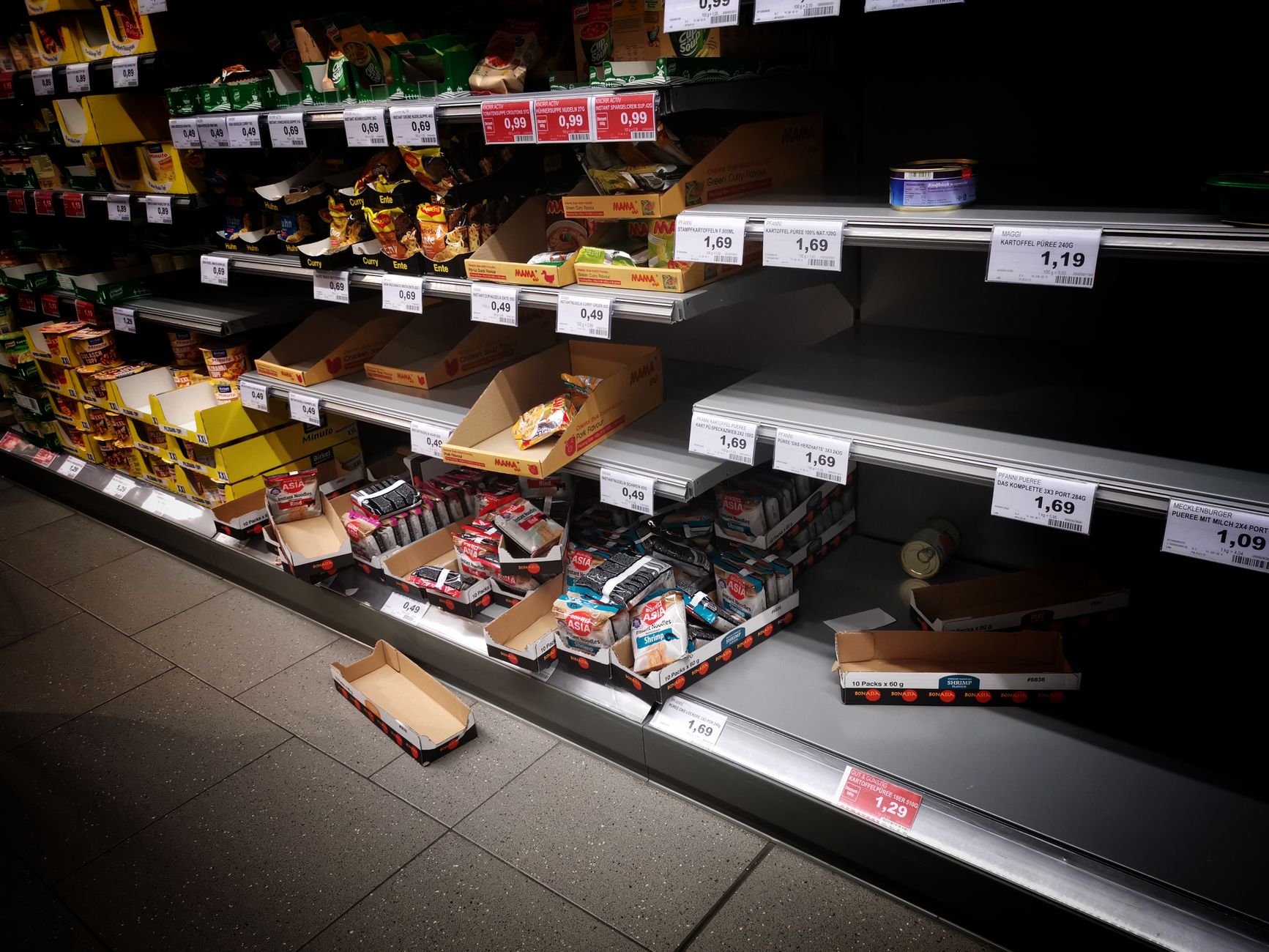
The overnight stock associate works through several jobs in sequence, and the restock run is only one of them. The shift usually includes receiving deliveries, breaking down cases, stocking the cooler and shelves, facing product, checking dates, cleaning spills and watching the register. The restock run is the part that repeats: pick up a tote or case in the back room, walk it to the aisle, unload it, and walk back for the next load.
Those walks add up. When one person runs both the register and the restock, every trip to the aisle is a short gap at the counter. The person who learns the route also carries it in their head, so when that person leaves, the route has to be taught again from scratch.
Median hourly wage, Laborers and Freight, Stock, and Material Movers, Hand
$4,380
Monthly cost of one full-time worker, at the median wage plus payroll costs (an estimate, not a quote).
Which parts of the restock work can a robot take, and which can it not?
The robot's strength is the haul. An autonomous mobile robot can carry loaded cases and totes from the back room to the aisle on a set route, then return to the dock for the next load. That removes the repeated walking, which is the same every night and the part most likely to pull a person away from the counter.
The physical side of that work carries risk. According to the BLS injury and illness snapshot, laborers and freight, stock, and material movers, hand had 289.8 cases per 10,000 full-time equivalent workers in 2020, counting days-away cases in private industry. The BLS Occupational Outlook Handbook says this group has some of the highest injury and illness rates of all occupations. The 2020 snapshot is the latest year this pass found for this group, so treat it as a benchmark for the work, not a count for convenience stores.
A person still handles the ends of the run. Someone loads the tote in the back room and unloads it at the aisle, unless the site is set up so the robot takes more of that step. Anything with judgment stays with staff.
- Robot can take: moving loaded cases and totes between the back room and the aisles, the empty tote return trip, and the same route on every shift.
- Robot cannot take: checking dates and damaged product, facing shelves, stocking high or awkward shelves, cooler and tight aisle work without a clear route, age-restricted sales and register work, clearing spills and blockages, and any customer question.
- Hauling loaded totes to the aisle
Autonomous Mobile Robot
Repeats the same route on every shift without tiring
Stock Associate
Moves faster on a messy route and can detour around a blockage
- Night coverage
Autonomous Mobile Robot
Runs the haul while the clerk stays at the register
Stock Associate
Covers the register, the floor and safety at the same time
- Checking dates and damaged product
Autonomous Mobile Robot
Cannot judge whether a product is expired or damaged
Stock Associate
Spots expired or damaged product and pulls it
- Customer questions and age-restricted sales
Autonomous Mobile Robot
Cannot answer a question or check identification
Stock Associate
Handles the sale and the customer directly
- Facing and stocking shelves
Autonomous Mobile Robot
Cannot face product or stock awkward or high shelves
Stock Associate
Faces the shelves and fills the cooler by hand
- Turnover and training
Autonomous Mobile Robot
Keeps the same route after setup, with no retraining each time a person leaves
Stock Associate
Needs retraining each time a person leaves, and the route knowledge leaves with them
How many hours does the overnight restock take, and what does the labor data say?
This pass did not find published figures for how long a restock run takes at a convenience store, so the hour count has to come from your own store. Time two weeks of overnight runs, log the number of loops, and note each gap at the register. Those hours are the figure the lease case rests on, not an industry average.
The labor data explains why the gaps are hard to fill. According to NACS employee retention data, employee turnover was 60.8% in the first half of 2025, and manager turnover was 17.1%. The NACS Talent Insights Dashboard shows turnover for full-time and part-time sales associates exceeded 100% in 2024, so the night route is often taught to someone new.
The night shift is thin across sales work in general. According to the BLS shift schedule table, 25.1% of sales and related workers were on a non-daytime schedule. Within that group, the table lists 2.2% on a night shift and 10.6% on an evening shift. That table covers all sales and related workers, not convenience stores alone, and the retail-only row was not in the search. The government wage data on this page shows the local wage for this job, which is the cost side of filling those hours.
How does the team work with a robot on the night shift?
The right setup is one robot plus fewer staff, never zero staff. The robot takes the haul, and the person on shift keeps the register, the floor, the checks and the safety watch. The robot changes the shape of the shift, not whether someone is on site.
The day team sets up the night. Before close, staff load the totes the robot will run, clear the route, and confirm the charging spot and dock are free. The night clerk checks status at the start of each loop, unloads at the aisle, and handles anything the robot cannot.
Plan the first weeks around people, not hardware. Train more than one person per shift on dispatch, loading and the stop-and-clear steps, so one absence does not leave the robot idle or the route unmanned. Write down what to do when the route is blocked, because the answer should not depend on who happens to be working.
What can the robot not do at a convenience store?
The honest answer is that a robot does not cover most of the shift. It does not check whether a product is expired, notice a leaking case, or decide that the cooler needs facing before the morning crew. It does not sell, answer a question, or help a customer who needs assistance. Any plan that assumes it does will fail on the first bad night.
Layout is the other limit. Narrow aisles, tight corners, thresholds, a cooler door that swings into the route, or a cluttered back room can narrow the path or stop the run. The robot can also stop when something blocks it, and a person has to clear the way. Staffing rules still apply, because the operator decides how many people must be on site overnight, and the robot does not change that number.
The fit can be poor for short runs. If the store restocks only a few cases a night, the robot may spend more of the shift on setup and dispatch than it saves on the walk.
Are other stores using mobile robots for this work?
Adoption data is strongest for warehouses, not convenience stores. According to GlobeSt, AMRs and AGVs are found in roughly 10 to 15% of facilities. That is a broad figure across facility types, and this pass did not find a count of U.S. convenience stores that run robots, so treat adoption in this category as an open question.
The injury and labor data explain why the haul is the part worth testing first. Hauling the same loads on the same route, night after night, is the kind of repetitive transport that suits a robot, while the judgment work stays with people. A site-level trial will show more than any sector average.
How is the cost of a robot lease for a convenience store worked out?
A lease for a commercial robot is quoted after a site assessment. We visit the store, measure the back room, the aisles, the floor and the route, then set a fixed robot lease payment through financing. The quote depends on the route, the number of loops and the service plan, so this page does not print a figure.
To judge the cost, compare the lease against the overnight gap you measured, not against a general number. Count the unfilled shifts, the overtime or cover paid to fill them, and the sales lost during each gap. That is the basis for any payback discussion, and it is the number to bring to the quote.
We pick the right robot for the site, lease it through financing, deploy and integrate it, train the staff and service it nationwide. Ask what the service plan covers, how dispatch works and how long a repair takes, and get those answers in writing before you sign.
How do you get started with a robot at a convenience store?
Start with four measurements: the overnight restock time over two weeks, the distance from the back room to each aisle, the cooler and door positions, and the number of shifts that go short. Those decide whether a robot fits before any hardware conversation starts. Keep the log in a simple sheet that the owner and the night lead can both read.
Then request a free site assessment. We map the route, test the floor, confirm the charging spot and dock location, and quote the lease after that. A single unit is usually the sensible first step, so the route and the stop-and-clear steps are proven before the store commits to more.
Plan the go-live with the day crew and the night crew together. Set the first loads with supervision, keep manual restocking as the fallback until the route runs clean, and set a date to review the unfilled shifts after the first month of running.

Frequently asked questions
Want a warehouse robot at your convenience store?
Tell us about your site. We will recommend the robot, quote the lease, and keep it serviced.