
The short answer
Autonomous forklift vs forklift operator at a pallet plant comes down to repetition. An autonomous forklift makes sense when the same lumber and stack moves repeat every shift between saw, nailing and stacking stations, and when operator shifts are hard to fill. It does not fit when loads change daily, when most moves reach into mixed racks, or when the floor has no clear route to map, and most plants end up with a robot plus fewer staff, never zero staff.
Key takeaways
- Fixed, repeated moves between saw, nailing and stacking are where an autonomous forklift fits best.
- Plants that cannot map a clean route or face daily load changes should keep operators on those jobs.
- Public labor data points to steady demand for material movers, so forklift hiring recurs every year.
- Expect a robot plus fewer staff, not zero staff, with someone on shift for jams, mixed loads and alerts.
Autonomous Forklift vs Forklift Operator: Which Fits a Pallet Plant?
For most pallet plants, the autonomous forklift vs forklift operator choice comes down to how repetitive the work is. If lumber, nailed panels and finished stacks move the same way on each shift, between fixed stations on a mapped floor, a robot can run that route. If loads change every day, operators reach into mixed racks, or trucks load at doors that move around, a person is still the better choice.
The robot case is strongest when a plant has an open forklift shift it cannot fill for weeks. Filling one shift is hard when the same person must move material across several stations and also cover trucks. A robot does not close that gap alone. It takes the repeated legs of the route, and the plant keeps people for the rest.
A useful test is to list the top five moves on a typical shift. If four of them repeat between the same stations, the robot case is strong. If most of the shift is unplanned, the case is weak, and the plant should fix its routing before adding any machine.
What Does a Forklift Operator Actually Do in a Pallet Plant Shift?
Pallet plants fall under NAICS 321920, wood container and pallet manufacturing. According to Vantage Insights, which reports Census County Business Patterns data for 2023, that code had 2,793 establishments and about 60,890 employees. Most of these plants follow the same material flow: lumber comes in, is cut and nailed, and leaves as stacked finished pallets.
The operator's shift is mostly repeated moves. They pull lumber packs from yard or dry storage to saw infeed, carry boards or sub-assemblies to nailing, move nailed pallets to stacking, and load finished stacks to staging or trailers. Between runs they clear jams, reposition empty pallets, top up station queues and keep lanes clear for others.
The work is physical and tight on the floor. Operators work around saws, nailers and pedestrians, and their route changes when a station slows or a truck arrives early. That is why the job is harder to fill than the number of moves suggests, since the person has to read the floor and not just follow a fixed line.
Which Parts of the Work Can an Autonomous Forklift Take?
An autonomous forklift does best on fixed routes between mapped stations. It can take the repeated loads that cross the floor on most shifts without a person driving. Those loads are the core of the job, not the edge cases, which is why they are the first place to look.
It cannot do the parts that need judgment or hands. It does not reliably pick mixed loads from unplanned racks, load a trailer at a door that moves, clear a jammed saw, or decide that a stack looks unstable. Plants that store material loose in lanes or change station layouts often need a mapping pass before a route is safe to run.
- Lumber packs from yard or dry storage to saw infeed, on a set route
- Cut boards or sub-assemblies from saw to nailing stations
- Nailed pallets or panels from nailing to stacking
- Finished stacks from stacking to staging or outbound lanes
- Empty pallets back to feed points, when the route is fixed
How Many People Do This Work, How Often Do They Leave, and How Long Does a Route Take?
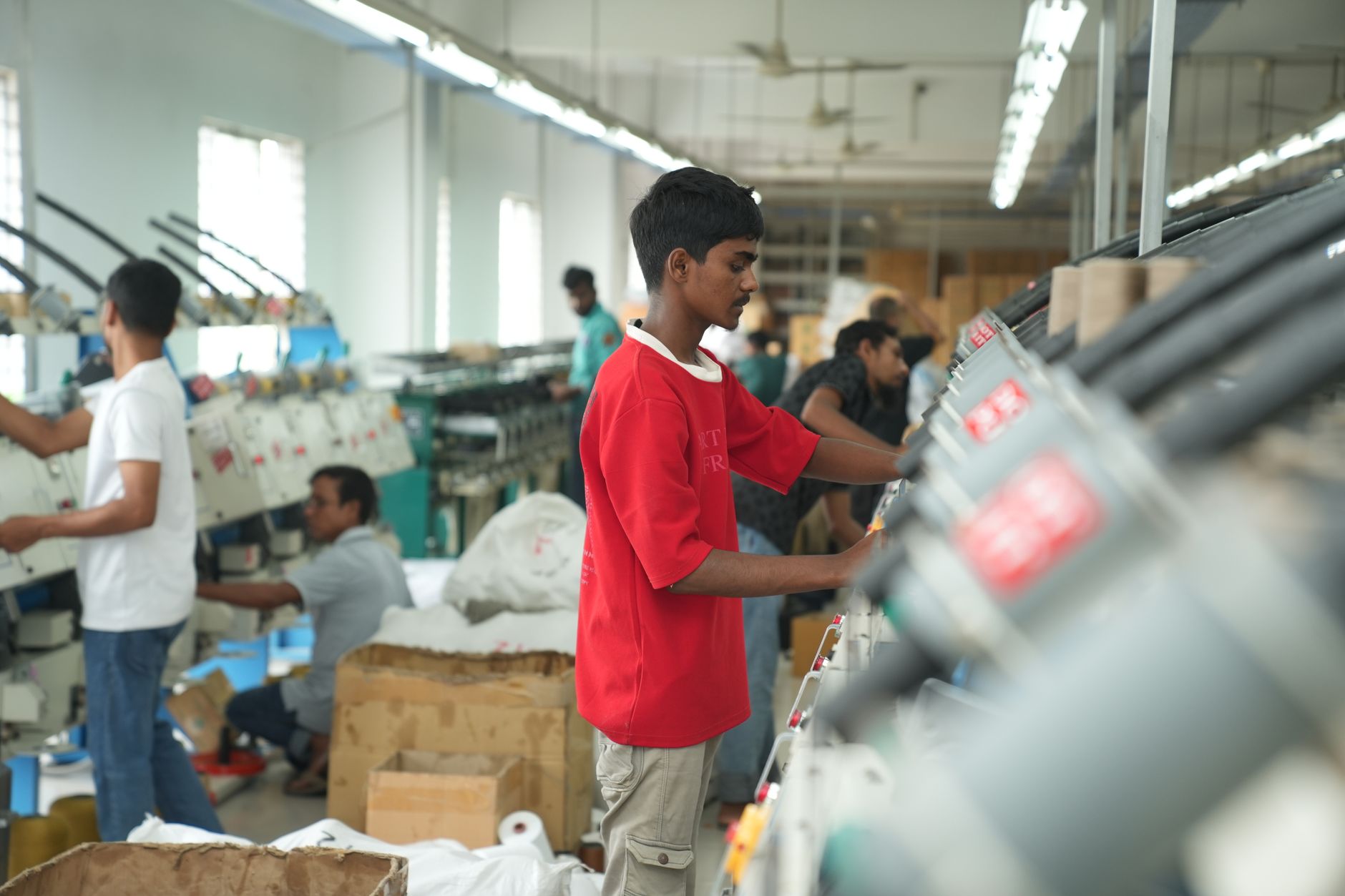
The labor pool is large and steady. According to the Bureau of Labor Statistics Occupational Outlook Handbook, about 6.95 million hand laborers and material movers were employed in 2024, with projected growth of 4% and about 258,400 new jobs over 2024 to 2034. The same source says prospects are good largely because workers who leave the occupation must be replaced, so hiring for these roles never fully stops.
For the operator job itself, WageDex, summarizing BLS occupational data, reports 805,770 industrial truck and tractor operators in May 2024, projected growth of 1.1% from 2024 to 2034, and about 76,400 openings a year. Openings come from both new positions and people leaving, so each plant competes with other employers for the same workers every year.
Turnover at the manufacturing level is moderate. According to the National Association of Manufacturers, summarizing BLS JOLTS data, the manufacturing total separations rate was 2.3% in February 2026 and 2.2% in May 2026, unchanged from May 2025. Separations were about 294,000 in January 2026, down about 12% from a year earlier. These are sector totals, not pallet plant figures.
We did not find verified public figures for overtime, night shift share or sick days in pallet plants. Those numbers often matter more to the hours case than headcount alone, so pull them from your own timekeeping before you size a robot.
Hour savings depend on your route, not on an industry average. No source we checked gives verified hours per shift for forklift work in pallet plants, so the honest starting point is your own floor. Time each repeated leg: yard to saw, saw to nailing, nailing to stacking, and stacking to staging. Record the stops, the waiting at busy stations and the walk back, then separate the legs a robot can run from the ones a person must keep, such as jams and mixed loads.
What Does Forklift Injury Data Mean for the Choice?
According to Bureau of Labor Statistics injury and illness data, wood product manufacturing had a total recordable cases rate of 4.2 per 100 full-time workers in 2024. The rate for cases with days away, restriction or transfer was 2.7, and the rate for cases with days away only was 1.5. These are subsector rates, not forklift-specific rates.
OSHA estimates that about 1.5 million workers operate powered industrial trucks, according to its Region I directive on the topic. That number shows how many people share floors with forklifts, which is why pedestrian separation and route discipline matter as much as who is driving.
A robot does not remove the hazard of a moving truck on a shared floor. It changes who is in the lane and how often a person crosses it. Plants should set exclusion zones and pedestrian rules before any robot goes live, and keep those rules whether a person or a robot is driving.
Autonomous Forklift vs Forklift Operator: Point by Point
The comparison is clearest when each option is judged on the work it does best. A robot wins on repetition and consistent timing. A person wins on judgment, flexibility and handling the unexpected. The table below helps check where your plant falls.
Be honest about the rows where the operator wins. Mixed loads, changing trucks and anything that needs a judgment call are still people's work, and a plant that assigns them to a robot will see more stops and more manual intervention.
- Repeated station-to-station moves
Autonomous Forklift
Runs fixed routes the same way on every scheduled run
Forklift Operator
Repeats the route but slows with fatigue and interruptions
- Off-shift coverage
Autonomous Forklift
Can run scheduled routes with a person on site for exceptions
Forklift Operator
Needs a filled shift and a trained operator each time
- Unplanned loads and mixed racks
Autonomous Forklift
Weak, since it needs planned routes and known stock positions
Forklift Operator
Strong, because it sees and adjusts to what is on the rack
- Jams, saws and pedestrians
Autonomous Forklift
Stops and alerts, and a person clears the problem
Forklift Operator
Clears the problem and reroutes the lane
- Trailer loading at changing doors
Autonomous Forklift
Limited unless doors and staging stay fixed
Forklift Operator
Adjusts to the door and the truck on site
- Route changes
Autonomous Forklift
Needs remapping and route updates before the change runs
Forklift Operator
Learns a new route on the job
- Vacancies and turnover
Autonomous Forklift
Not affected by quits, but still needs a staffed exception role
Forklift Operator
Exposed to open shifts, sick days and turnover
Is Adoption Growing, and What Does That Mean for a Pallet Plant?
Adoption is rising, but unevenly. According to A3, as reported by The Robot Report, North American companies ordered 36,766 robots in 2025, up 6.6% in units from 2024. Non-automotive orders surpassed automotive for the first time in 2025, a sign that general industry is adopting robots more widely, though that count covers industrial robots in general and not autonomous forklifts.
ABI Research, a third-party forecaster, put autonomous forklift annual shipments at 12,286 in 2024 and forecasts 220,605 by 2032, with North America at a 35% share by 2032. Growth like that tends to bring more options, but it does not tell a plant whether its own floor is ready.
How Does a Team Run With a Robot in the Plant?
The robot changes the job, not the headcount to zero. In a well-run plant, the robot covers the repeated runs, and one or more people keep the exception work: clearing jams, handling mixed loads, supervising the route, checking the mapped floor and responding to alerts. A plant with no staff on the floor is not a plant that can run this safely.
We pick the right robot for the site, lease it through financing, deploy and integrate it, train the staff and service it nationwide. Our crews map the route, set the stations and exclusion zones, and train the people who will supervise. The plant still owns the staffing decisions, and we set those up with the plant's shift leads.
What Can an Autonomous Forklift Not Do?
A robot cannot do most of the work that needs judgment, and a plant that expects it to will be disappointed. It does not reliably handle unplanned loads, damaged pallets or stacks that look unstable. It cannot decide to reroute around a broken station or a stack that fell over. Those tasks stay with people.
The floor also sets the limit. Uneven concrete, loose stock in lanes, poor lighting and frequent layout changes all add stops and cut the time a route can run. A site assessment finds those issues before a lease is signed, and some of them are simple to fix before go live.
How Do You Get Started, and What Sets the Lease Quote?
Start with the time study and the route map, not a vendor brochure. Pick one route, run it for a fixed period, and measure the stops, the waiting and the exceptions. That gives you a clean basis for deciding what, if anything, to automate first.
A lease quote follows a free site assessment. We look at the floor, the route, the station layout, the exclusion zones and the staffing on each shift, then quote a fixed robot lease payment through financing. Ask for the quote to show what training, deployment and service cover, and what the plant itself must provide.
Frequently asked questions
Want an autonomous forklift at your pallet manufacturing plant?
Tell us about your site. We will recommend the robot, quote the lease, and keep it serviced.
Sources
- Vantage Insights, Census County Business Patterns 2023 for NAICS 321920
- BLS Occupational Outlook Handbook, Hand Laborers and Material Movers
- WageDex, Industrial Truck and Tractor Operators
- National Association of Manufacturers, summary of BLS JOLTS data
- BLS Injury and Illness Data, Wood Product Manufacturing
- OSHA Region I Directive, Powered Industrial Trucks
- The Robot Report, A3 North American robot orders 2025
- ABI Research, Autonomous Forklift Shipments