
a 242-bed acute-care hospital in southern New Jersey
Hospital Pharmacy Cuts Medication Repackaging by More Than 90%
See how a 242-bed hospital cut medication repackaging by more than 90% while dispensing 2,500 non-IV doses daily under one technician in a live pharmacy.
- >90%
- less repackaging
- 2,500/day
- non-IV doses
- >90%
- non-IV, non-narcotic coverage
- 5%
- robotic doses checked
Based on a documented real-world deployment. Figures are from public reporting; the organization is not named.
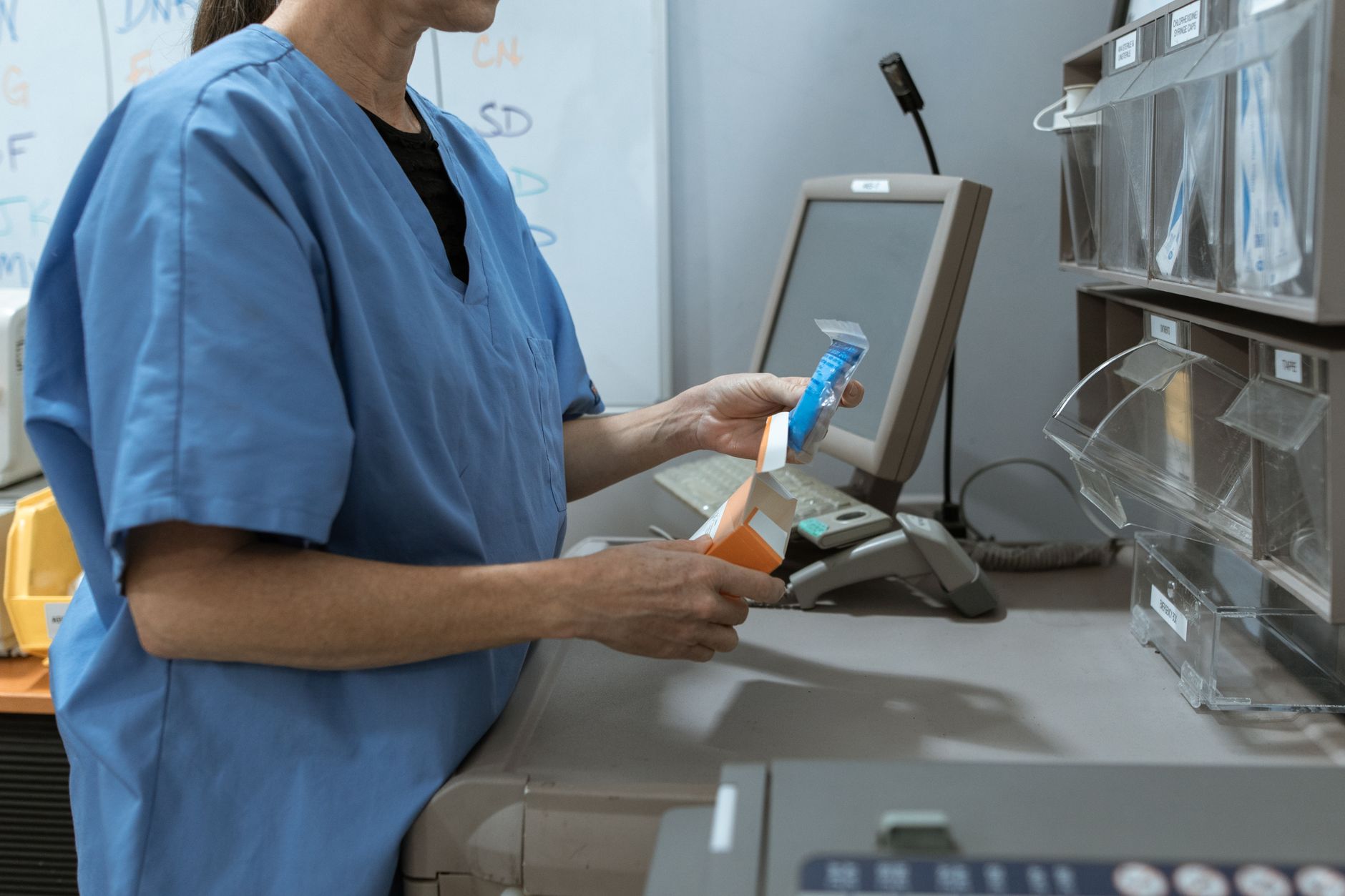
Modernizing the pharmacy without unsettling care
In the case-study period, a 242-bed acute-care hospital in southern New Jersey faced a central-pharmacy modernization problem with clinical consequences. Repackaging consumed technician and pharmacist labor, while multiple automation systems made medication distribution harder to manage as a unified operation.
Nursing strongly favored the established distribution model. PRN and controlled medications came from unit-based cabinets, while daily medications arrived in wall cabinets inside patient rooms, a pattern that kept nurses out of queues and supported efficient medication passes.
Pharmacy leaders therefore had to renew the underlying automation without disturbing nursing routines or diverting attention from clinical pharmacy programs. The brief was precise: modernize central distribution, retain pharmacist review, and keep medication flow running through the cutover.
- Reduce medication repackaging labor and its associated handling touches.
- Unify storage, retrieval, and inventory activity across the central pharmacy.
- Preserve the medication-distribution pattern nurses preferred.
- Protect ongoing clinical pharmacy programs during installation.
A workflow-led automation cutover
Leaders from pharmacy, nursing, finance, and hospital administration began with a detailed assessment of the existing distribution model. They selected an automated central pharmacy system and carousel that could support barcode-based handling, manufacturer unit-dose use, cart-fill and cartless workflows, inventory control, and patient-specific packaging.
Installation took place in the same footprint as the outgoing equipment. Instead of a hard switch, the hospital flexed old and new technologies together while existing staff covered selected manual processes, keeping medication distribution active during an aggressive cutover.
Change management extended beyond equipment placement. The hospital used hands-on learning and interactive feedback to address objections, involved stakeholder groups in key decisions, communicated openly, and built contingency plans to minimize downtime. The published record does not describe the ongoing service contract.
- Assess the nursing workflow before specifying central-pharmacy automation.
- Select equipment that supports manufacturer unit-dose barcodes and existing distribution modes.
- Install in the existing footprint while old and new processes operate together.
- Use manual fallback, open communication, and contingency planning to protect live medication distribution.

High daily volume with far less repackaging
Once in operation, automation handled storage, retrieval, and inventory management for more than 90% of the non-IV, non-narcotic formulary. It dispensed 2,500 non-IV cart-fill and first doses each day in patient-specific sealed bags under the oversight of a single technician.
That technician also managed carousel processes, while a floater technician assisted with restocking. Overall medication repackaging fell by more than 90%, and pharmacist checking remained at 5% of robot-dispensed doses. Automation changed preparation and handling while preserving a defined pharmacist control point.
The shared platform preserved nursing's preferred distribution model and avoided disruption to clinical pharmacy programs. The operational gain was not raw throughput alone. It came from removing repackaging touches, coordinating inventory work, and packaging doses for the patient without forcing a new bedside routine.
The deployment lesson for healthcare leaders

This documented example was not a Service Robot Co. deployment. Its value lies in the implementation pattern: start with the care workflow, select hardware around it, plan the cutover around live operations, and keep clinical checks explicit.
Service Robot Co. applies that discipline to robot deployment and integration as an OEM-neutral, full-service commercial robot integrator for US businesses. We compare equipment across manufacturers, arrange purchase or monthly payment programs, deploy and integrate the selected units, train the operating team, and carry ongoing service through a nationwide US engineer network.
For a hospital evaluating pharmacy automation or medication transport robots, the advantage is accountable lifecycle ownership. Selection, financing, go-live support, and a robot maintenance service plan sit with a single vendor, giving the buyer one accountable contact instead of a relay among suppliers.