Key takeaways
- Robot-assisted rounds create the strongest returns when skilled employees spend substantial time walking repeatable routes and documenting normal conditions.
- The comparison must include travel, incomplete rounds, repeat visits, exposure controls, analyst review, service, and integration, not just collection time.
- Repeatable images, gauge readings, acoustic files, and thermal data become more valuable as a time series tied to assets and operating conditions.
- A representative pilot should establish route completion, data quality, intervention rates, review time, and maintenance findings before a larger commitment.
When do robot-assisted rounds pay?
Robot-assisted inspection rounds usually pay when a facility spends substantial skilled time walking predictable routes, collecting readings, and documenting normal conditions. The robot does not replace maintenance judgment. It moves recurring travel and capture work to a repeatable platform, leaving people to review exceptions and act.
The case becomes stronger across sprawling plants, warehouses, utility corridors, campuses, and other sites where the walk between assets consumes more time than the inspection itself. Returns also improve when rounds occur after hours, require two-person staffing, expose employees to routine hazards, or are frequently shortened by urgent work.
Labor should be valued at loaded compensation, not base wages alone. The Bureau of Labor Statistics reported that private-industry compensation averaged $46.60 per hour in March 2026, comprising $32.60 in wages and $14.01 in benefits. Each facility should substitute its actual occupation, shift, overtime, and supervisory costs, but the national figure shows why travel deserves a place in the model.
What does a manual round really consume?
A scheduled round begins before the first gauge is read. Someone receives the assignment, collects equipment, reaches the route, obtains access, records observations, reports exceptions, and returns. If a photograph is blurred or a reading is omitted, a second walk may follow.
Separate movement from inspection touch time. A technician who spends most of a round traversing corridors is performing necessary work, but not work that demands the technician's full diagnostic skill. Robot-assisted collection changes that allocation by letting qualified people concentrate on interpretation, troubleshooting, and repair.
A defensible baseline measures the entire workflow over representative operating periods. Include ordinary routes, congested shifts, access delays, charging or tool preparation, and the time needed to transfer notes into a maintenance system.
- Route labor from assignment through return, including escorts and access waits
- Inspection touch time at each asset, separated by image, gauge, acoustic, and thermal tasks
- Reporting, transcription, file naming, supervisor review, and maintenance-ticket creation
- Repeat walks caused by missing, unreadable, or questionable evidence
- Rounds skipped, shortened, or completed late, with the recorded operational reason
- PPE, permits, shutdown coordination, and any second employee required by site rules
What work can a robot collect reliably?
A mobile inspection platform can carry several sensors through one route, but every modality has different acceptance criteria. The economic gain comes from combining compatible tasks without weakening the evidence.
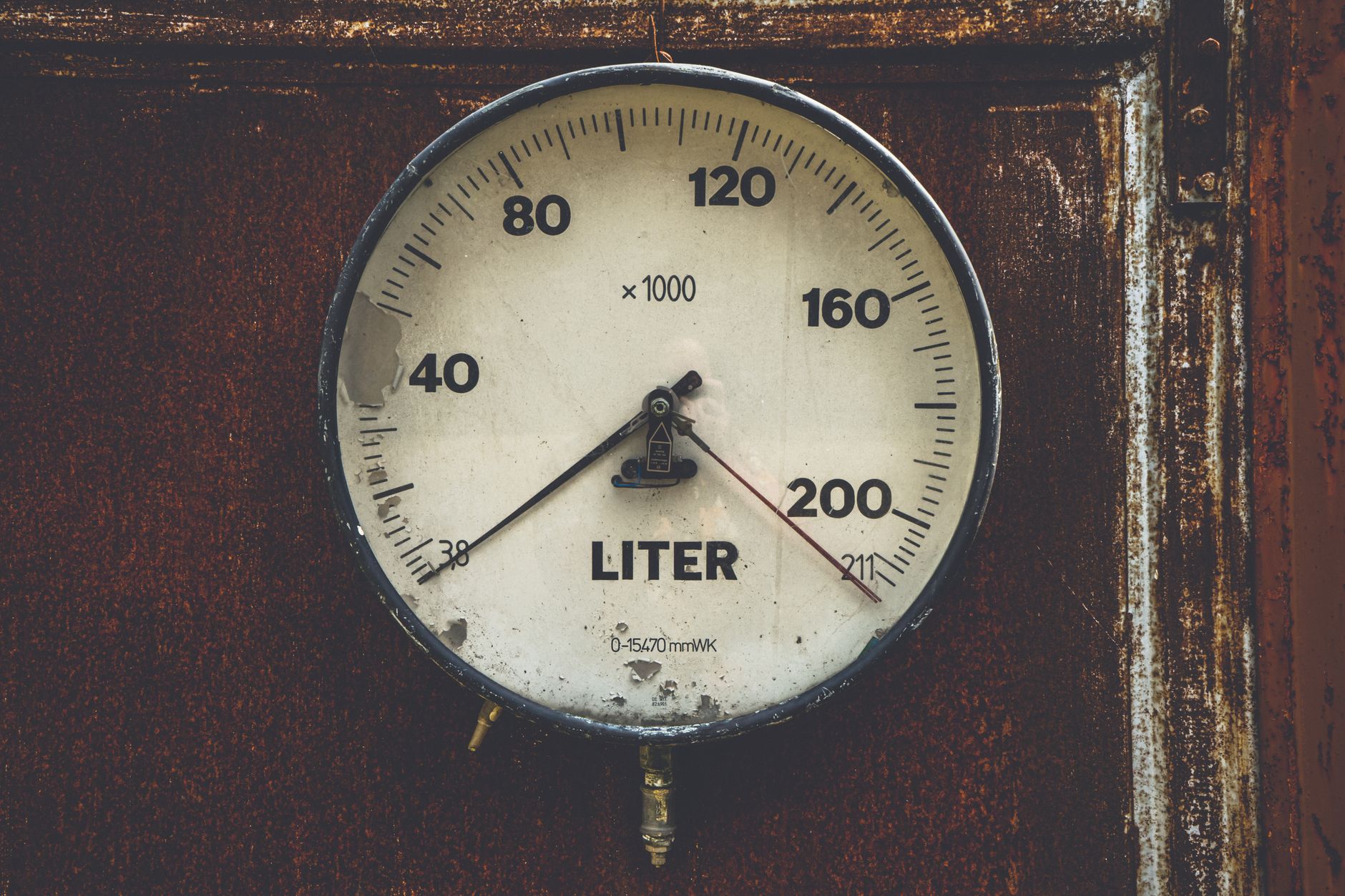
Visual collection can document leaks, corrosion, indicator lights, valve positions, housekeeping conditions, and other visible changes. Gauge capture can convert readable analog or digital displays into structured values, provided the deployment validates camera position, lighting, glare, scale, and confidence thresholds.
Acoustic collection can preserve comparable sound files or derived features for bearings, compressed-air leaks, steam traps, and other sources. Thermal collection can reveal temperature patterns that ordinary images miss. Both require context because background noise, equipment load, emissivity, reflections, distance, and ambient conditions can alter the result.
The correct design sends uncertain readings and meaningful changes to a qualified reviewer. It does not silently treat every machine-generated value as fact. Manual confirmation remains appropriate for ambiguous captures, safety-critical indications, tactile checks, odor, sampling, and tasks that require physical manipulation.
- Fixed asset identity and repeatable sensor viewpoint
- Timestamp, route position, operating state, and environmental context
- Raw evidence retained beside any extracted reading or alarm
- Quality thresholds that trigger review instead of automatic acceptance
- A documented manual fallback for inaccessible assets and failed captures
How do missed checks change the economics?
A missed round has no universal price. Its expected cost depends on what the check might have detected, how long the condition can remain unnoticed, and the consequence of delayed action. That value should come from the facility's own failure history, work orders, production records, and safety reviews.
Start by comparing scheduled checkpoints with completed checkpoints, not merely closed work orders. A round marked complete may still contain blank fields, copied values, inconsistent asset names, or unusable photographs. Measure completion at the checkpoint level and preserve the reason for every exception.
Automation can make route execution more consistent, but it introduces different failure modes. Blocked paths, dirty lenses, poor connectivity, depleted batteries, changed layouts, and inaccessible doors can all interrupt collection. Route-completion alerts and a defined recovery owner are therefore part of ROI, not administrative extras.
Trendable evidence adds value beyond attendance. A timestamped sequence can show a gauge drifting, a hot spot expanding, a leak growing, or an acoustic signature changing. That history helps maintenance teams distinguish an isolated odd reading from persistent degradation and gives them better material for planning corrective work.
How should avoided exposure be valued?
Routine does not mean risk-free. Rounds may pass traffic lanes, wet surfaces, hot equipment, electrical rooms, elevated walkways, confined approaches, dust, noise, or poorly lit areas. Moving routine observation away from a person can reduce exposure frequency, although it does not eliminate the employer's duty to control hazards.
OSHA standard 1910.22 requires walking-working surfaces to be inspected regularly and as necessary and kept in a safe condition. In its walking-working-surfaces rule materials, OSHA estimated that the rule would prevent 29 worker deaths and 5,842 lost-workday injuries each year. Those figures describe the rule's anticipated effects, not the benefit of robots, but they show that exposure during ordinary movement is economically consequential.
Do not assign an invented dollar value to risk reduction. Use actual time and spending for permits, escorts, PPE, production isolation, ventilation, training, and exposure monitoring. Add incident costs only from the organization's own safety and insurance records, with finance and safety leaders agreeing on the treatment.
Robots should not be used to bypass requirements for qualified inspection, lockout, energized work, confined-space entry, or hazard correction. Their proper role is to reduce unnecessary human presence and furnish preliminary evidence that helps people decide when controlled access is justified.
What belongs in the ROI calculation?
Build the model around annual cash flows and operational outcomes. Manual annual cost equals loaded route labor plus administration, access controls, repeat inspections, and the expected cost of delayed or missed detection. Robot-assisted annual cost includes financing or subscription payments, service, connectivity, analyst review, interventions, integration, and remaining manual checks.
Annual net benefit equals the manual cost removed plus measured avoidance benefits, minus the recurring cost of the robot-assisted process. Simple payback equals initial implementation cash divided by annual net benefit. For a lease or robot as a service arrangement, compare annual net cash flow and contract terms because the initial cash requirement may be small.
Keep hard savings separate from modeled avoidance. Eliminated overtime, documented contractor spending, and reduced route hours are easier to defend than an estimated failure that never occurred. Present both, but label assumptions and show the result again with avoidance benefits set to zero.
Run sensitivity cases for route volume, completion rate, reviewer time, intervention frequency, service availability, and equipment life. The project should still make sense under a credible downside case. A fragile return that depends on perfect autonomy or immediate staff reduction is not a sound operating plan.
- Baseline case using observed manual hours and recorded costs
- Expected case using validated pilot performance
- Downside case with slower review, more interventions, and lower route completion
- Capacity case showing how released technical hours will be reassigned
- Risk-adjusted case that clearly identifies each probability and consequence assumption
Why does trendable evidence matter so much?
A notebook proves that someone visited. A governed time series shows what the asset looked and sounded like, what its instruments displayed, and how those observations changed. That distinction improves troubleshooting, auditability, handoffs, and maintenance planning.
A Department of Energy assessment at the Paducah facility described round sheets that identified important equipment and acceptable instrument readings. The assessment found that these routines supported system functionality, performance trending, and response to out-of-tolerance indicators. Robot collection can strengthen that practice by attaching consistent raw evidence to each record.
The Department of Energy's maintenance guidance says predictive maintenance traditionally uses infrared thermography, vibration, ultrasonic analysis, oil analysis, chemistry testing, and performance trending. A 2024 department publication states that predictive maintenance can save more than 40 percent compared with a reactive strategy. That is not a promised robot return, but it indicates why structured condition data can be more valuable than labor savings alone.
The same department guide describes a Midwest manufacturer whose ultrasound survey found 107 compressed-air leaks representing 1,031 cubic feet per minute, or 16 percent of compressor output. The lesson is economic: systematic sensing can reveal distributed waste that isolated observations fail to assemble into a business case.
Evidence quality still requires governance. NIST recommends internal measurement-assurance programs rather than one universal calibration interval, with recalibration results used to refine future intervals. Sensor calibration, units, asset identity, retention, access control, and review history therefore belong in the operating design.
How should a facility pilot and procure the program?
Begin with a route that is economically meaningful and technically representative. Record the current workflow first, then test capture quality across actual lighting, noise, traffic, access, temperature, and equipment states. The pilot should report checkpoint completion, usable-data rate, human interventions, analyst minutes, exceptions found, and service events.
Procurement should compare the whole program, not a sensor specification in isolation. An inspection robot rental, robot leasing for business, or a RaaS monthly subscription may preserve cash and provide no upfront capital structure. Confirm exactly what maintenance included means, how replacements are handled, and which integration or connectivity costs remain with the customer.
Service Robot Co. operates as a full-service, OEM-neutral commercial robot integrator for U.S. businesses. The company selects equipment across manufacturers, then finances, deploys, integrates, trains, and services each unit through a nationwide U.S. engineer network. That one-vendor lifecycle is useful when a route needs different mobility or sensor packages across sites.
A vendor neutral robot integrator should also be willing to reject a poor fit. Service Robot Co. can conduct site assessment mapping, structure a commercial robot pilot program, connect evidence to the customer's maintenance workflow, and support the deployed fleet after go-live. The objective is a measurable inspection process, not merely a machine completing laps.
Frequently asked questions
Sources
- BLS Employer Costs for Employee Compensation, March 2026
- OSHA General Walking-Working Surface Requirements
- OSHA Walking-Working Surfaces Rule FAQ
- DOE Operations and Maintenance Best Practices Guide
- DOE Effective Maintenance Management Guidance
- DOE Paducah Conduct of Operations Assessment
- NIST Recommended Calibration Interval Guidance