Key takeaways
- PFL permits carefully validated contact during motion, while a monitored stop keeps the robot stationary whenever a person occupies the collaborative space.
- Neither mode automatically makes an application safe or eliminates guarding.
- PFL often constrains speed, payload, tooling, and part geometry more severely than buyers expect.
- A monitored-stop cell can run faster while clear, but every human entry interrupts production.
What is the operational difference?
Power-and-force limiting, commonly called PFL, allows a robot and person to occupy the collaborative workspace while the robot is moving. Contact may be permissible, but only when the completed application has been assessed, tested, and shown to keep contact forces and pressures within the applicable limits.
A safety-rated monitored stop takes a different approach. When a person enters the defined collaborative space, the robot reaches and maintains a monitored standstill. Drive power may remain available, but motion is prohibited until the safety system determines that operation can resume under the cell's validated restart logic.
The practical choice is therefore contact control versus motion prevention. PFL can support frequent, close interaction without stopping every cycle, usually at lower application speeds. Monitored-stop operation can preserve higher production speed while the space is clear, but human access pauses the process.
Neither label removes the need for a task-based risk assessment. A robot arm may have certified safety functions, yet its gripper, workpiece, fixture, upstream machine, and programmed path determine if the application is actually safe.
Why does the terminology matter?
The phrase safety-rated monitored stop remains common in purchasing documents and older guidance. The current ISO 10218-1:2025 terminology describes a monitored-standstill safety function, meaning the absence of motion is monitored while drive power remains active.
According to ISO, the third edition of ISO 10218-1 and the second edition of ISO 10218-2 were published in February 2025. Part 1 addresses the industrial robot itself, while Part 2 addresses the integrated application and cell, including commissioning, operation, maintenance, and decommissioning.
ISO/TS 15066:2016 remains an important reference for collaborative operation and biomechanical contact guidance. Buyers should state the applicable standards and editions in the request for quotation instead of accepting a vague claim that a machine is simply collaborative.
Does either mode eliminate perimeter guarding?
PFL can sometimes support an open cell, but fence-free is an engineering outcome, not a product feature. The assessment must consider every credible contact with the arm, tool, part, fixtures, nearby machinery, and surrounding structure. Crushing against a fixed surface can be more severe than a free impact because the person may be pinned.
A monitored-stop layout commonly uses interlocked gates, light curtains, laser scanners, pressure-sensitive devices, or another safety-rated means of detecting entry. The protective field must be positioned so the hazardous motion stops before a person can reach it. The stopping time of the entire application, not merely the arm's catalog value, controls the required separation distance.
Guards may still be necessary in both modes when the process creates hazards the robot's motion controls cannot tame. Examples include sharp blades, hot tooling, welding energy, hazardous substances, flying chips, dropped loads, high-pressure fluid, and access to another machine's danger zone.
OSHA states that the United States has no robotics-specific OSHA standard. General requirements, including machine guarding and hazardous-energy control, still apply, while national consensus standards provide important guidance. An open cobot cell is not exempt from those duties.
How do the modes change speed and throughput?
PFL has no universal safe operating speed. Permissible motion depends on moving mass, effective inertia, payload, tool shape, contact area, body region, the possibility of trapping, and the difference between transient impact and quasi-static contact. A speed that passes at one pose can fail at another because the robot's effective mass changes through its workspace.
This is why a PFL application may run more slowly than its nominal robot specification suggests. A heavier gripper, longer reach, denser workpiece, or pointed contact surface can force lower settings. Cycle-time studies should use the safety-validated program, payload, and tool, not an unrestricted demonstration path.
Monitored-stop operation can allow full planned process speed while the safeguarded space is empty. When a person enters, production stops. It can therefore outperform PFL on fast machine tending, palletizing, or end-of-line automation when access is occasional and predictable.
Frequent replenishment changes that calculation. If an operator crosses the boundary every few cycles, stop time, clearance detection, and restart behavior can erode output. Buyers should measure access frequency and dwell time during a robot pilot program rather than relying solely on theoretical cycle time.
What must the risk assessment examine?
The assessment belongs to the application, not just the arm. OSHA's technical manual says integrators must conduct a hazard analysis and risk assessment for each collaborative application, ideally with participation from the employer and affected workers. It also recommends completing and documenting that assessment before commissioning and verifying the result during site acceptance.
Start by mapping tasks across the full lifecycle: normal production, loading, clearing jams, cleaning, tool changes, teaching, inspection, maintenance, fault recovery, and foreseeable misuse. OSHA notes that many robot accidents occur during non-routine work such as setup, testing, programming, adjustment, and maintenance.
For PFL, identify every plausible contact point and classify the contact condition. Validate force and pressure using an appropriate measurement method at representative poses, speeds, payloads, and tool orientations. Also test foreseeable faults and the places where a hand, head, or torso could be trapped against the cell.
For monitored-stop operation, measure total stopping performance and verify detection coverage, boundary placement, monitored standstill, prevention of unexpected restart, and behavior after sensor faults or power interruptions. Consider a person who remains still, becomes hidden behind equipment, or enters from an unusual route.
OSHA's 2024 injury and illness summary identified 550 manufacturing incidents involving robots in employer-submitted narratives. That count does not establish that robots caused every event, but it reinforces why reviews must cover installation, repair, production, and abnormal tasks rather than the automatic cycle alone.
Why can tooling decide the answer?
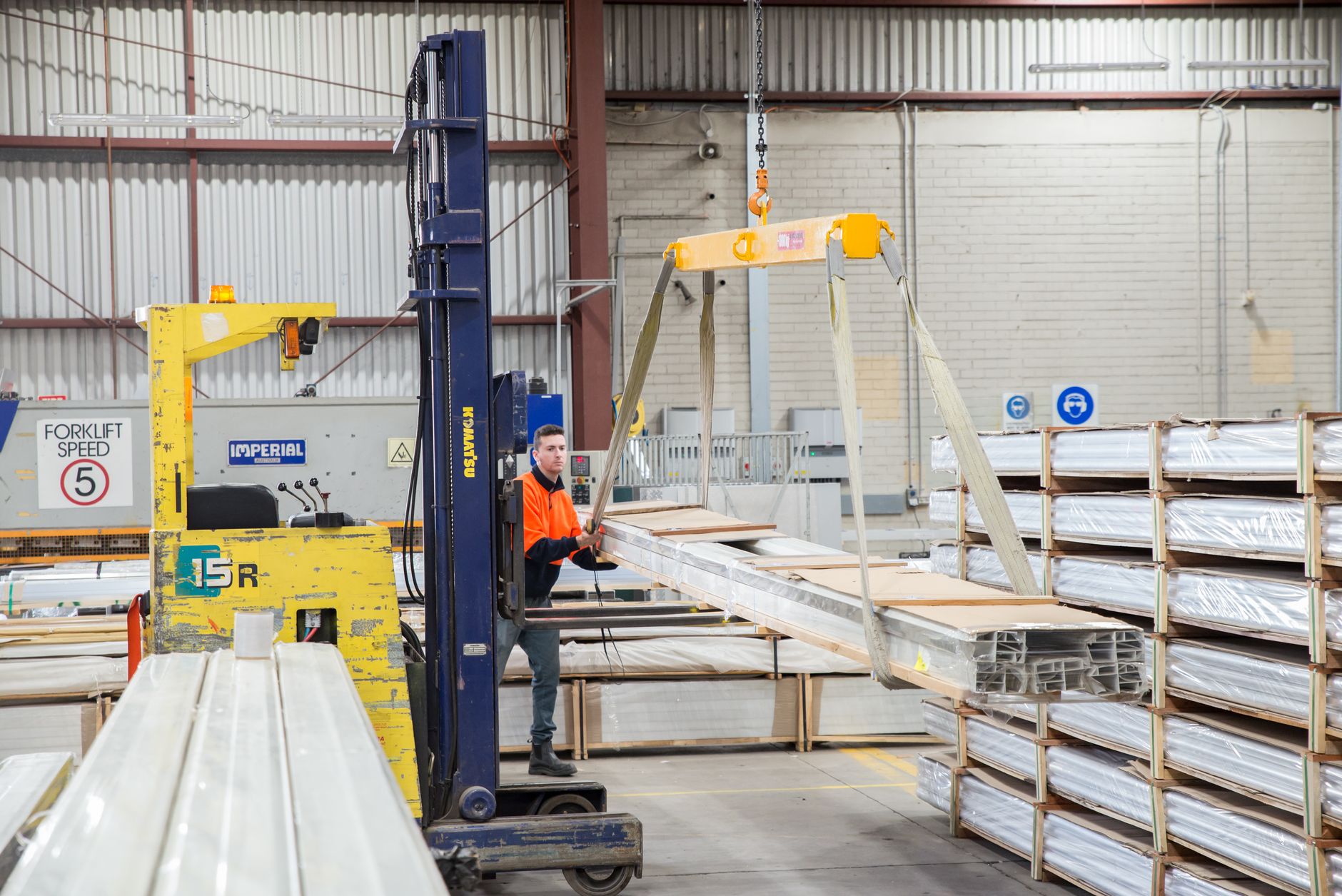
End-of-arm tooling often determines if PFL is feasible. Broad, rounded, compliant surfaces spread contact pressure. Narrow fingers, exposed fasteners, sharp edges, pinch points, needles, cutters, and heavy off-center tools concentrate energy or introduce hazards that force guarding.
The workpiece matters just as much. A rounded plastic carton and a thin sheet-metal blank create very different contact conditions, even on the same arm. A gripper must also retain the part through foreseeable stops, power changes, and collisions so that the payload does not become a falling or projected object.
A monitored stop avoids robot-person contact during automatic motion, but it does not neutralize the tool. Hot jaws, stored pneumatic energy, rotating spindles, and gravity-supported loads may remain dangerous after motion stops. Safe access may require isolation, discharge, blocking, or a separate protective stop from the connected machine.
Treat every tool or part change as a safety-relevant modification. A later payload increase can invalidate stopping-distance measurements, PFL contact tests, and the assumptions recorded in the original assessment.
How does each mode affect daily human access?
PFL suits tasks where people need routine proximity to a moving robot and contact can be made acceptably low risk. Examples may include presenting parts, sharing a bench, or performing adjacent manual work. Operators still need defined work zones, training, clothing rules, recovery procedures, and clear authority over restart.
Monitored-stop operation suits access that is necessary but intermittent. A worker can enter to replenish a fixture, inspect a result, or remove material while the robot remains at monitored standstill. The cell should make its state unmistakable and prevent motion while anyone remains in the space.
Neither mode replaces lockout/tagout when servicing exposes workers to hazardous energy. A monitored standstill is a production safety function, not energy isolation. Maintenance procedures must address electrical, pneumatic, hydraulic, gravitational, thermal, and process energy independently.
Human behavior belongs in the throughput model. If awkward loading causes workers to lean through a scanner field repeatedly, nuisance stops will become routine. That is both an output problem and a warning that the workstation layout deserves revision.
How should a buyer choose and specify the cell?
Choose PFL when productive motion beside people is genuinely necessary, contact hazards can be reduced and validated, and the resulting safe speed still meets the business case. Choose monitored-stop operation when people only need periodic access and the application benefits materially from higher unattended speed.
Do not force one technique across the entire cycle. A cell may use monitored separation during fast travel, PFL during a close-interaction phase, software-based space limits near fixtures, and interlocked guarding around an irreducible process hazard. The safety architecture should follow the task sequence.
A useful cobot rental for manufacturing proposal should state the collaborative technique, safety functions, assumed payload, end effector, part family, validated speeds, access rules, residual risks, training, and change-control process. The same rigor applies to a collaborative robot arm rental, a financed purchase, or a commercial robot demo.
Service Robot Co. approaches robot deployment and integration as an OEM-neutral integrator for U.S. businesses. The team can select equipment across manufacturers, arrange financing, deploy and integrate the cell, train users, and provide service through a nationwide engineer network. That gives buyers one vendor for the lifecycle while allowing the safety mode to follow the application instead of a favored catalog.
Before acceptance, require the documented risk assessment, safety-function validation, stopping tests, PFL measurements where applicable, operating procedures, training records, and criteria for reassessment. Service Robot Co. can also structure a robot pilot program around the real tool, parts, operators, and access pattern, which is far more revealing than a showroom cycle.
Frequently asked questions
Sources
- ISO 10218-1:2025 industrial robot safety standard
- ISO 10218-2:2025 robot application safety standard
- ISO/TS 15066 collaborative robot specification
- OSHA Industrial Robot Systems Technical Manual
- OSHA Robotics Standards
- OSHA Robotics Overview
- OSHA 2024 Work-Related Injury and Illness Summary
- NIST Collaborative Robot Force Measurement Paper