Key takeaways
- Use a guarded indoor drone for fast first-pass coverage in open overhead volume.
- Use a crawler for tight, dusty, obstacle-rich ceiling spaces and repeatable close-up imagery.
- Prop wash, loose dust, and hard retrieval paths can flip the decision away from flight.
- Indoor-only drone work avoids Part 107, but facility rules and operator training still matter.
- Many sites get the best result from a two-step workflow: drone to find, crawler to confirm.
The short answer for facility teams
For most ceiling inspection work, guarded indoor drones are the faster scouting tool in open overhead volume, while surface-mounted crawlers are the steadier documentation tool in tighter, dirtier, obstacle-packed spaces. If you need to scan rafters, cable trays, pipe runs, or a large plenum quickly, a drone usually gets eyes on target faster. If you need repeatable close-ups inside ducts, above fragile ceiling tile, or around loose dust and hanging utilities, a crawler is usually the safer bet.
The dividing line is simple. Drones win when free airspace is available and retrieval is manageable. Crawlers win when stable standoff, controlled lighting, and low disturbance matter more than speed. That is why many mature programs use a drone for the first pass and a crawler for the confirmation pass, not one platform for every overhead task.
There is also a safety reason to take remote inspection seriously. According to the U.S. Bureau of Labor Statistics, 666 workers died from falls to a lower level in 2024. That does not mean every plenum should be flown. It does mean facility teams should think hard before defaulting to ladders, lifts, and repeated ceiling access when a remote platform can do the first look.
What access problem are you really trying to solve?
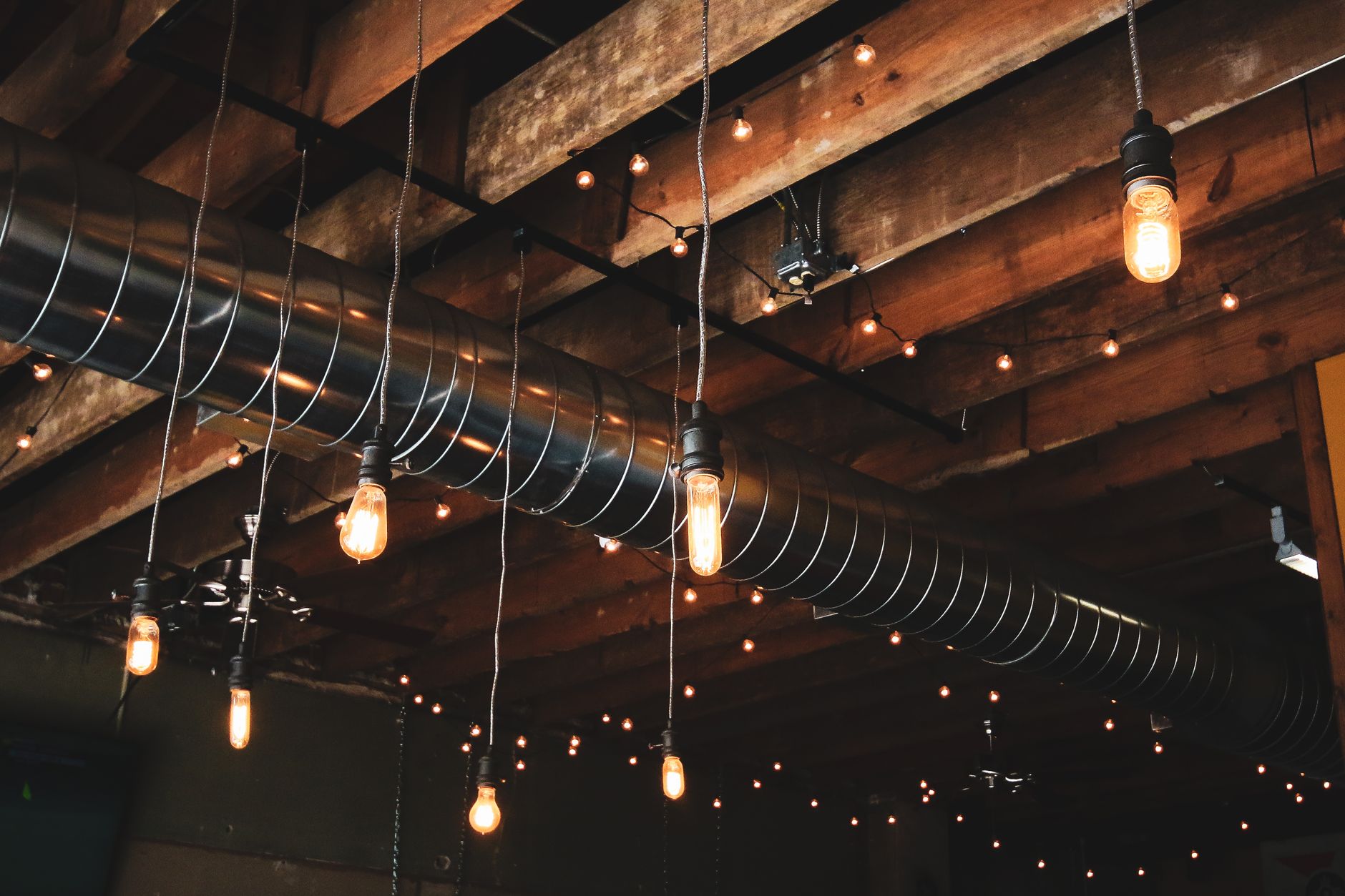
Access is not just a matter of height. Rafters and overhead utilities in warehouses often offer plenty of air volume but poor human sightlines, which favors a guarded indoor drone. Ceiling plenums and dropped ceilings flip the problem. The opening may be small, the headroom low, and the route broken up by runners, hangers, conduit, flex duct, and lighting housings.
A 2021 Sensors study on false-ceiling inspection robots described exactly that environment. The researchers built a 1.5 kilogram tracked crawler about 152 by 257 by 60 millimeters because the robot had to pass through narrow spaces, stay light on fragile ceiling components, and climb over runners and fixtures. That is the core crawler advantage. It turns a cluttered overhead void into a slow, deliberate route instead of a constant hover problem.
- Choose a guarded indoor drone when the overhead space is open, line of sight can be maintained, and you need broad coverage from a few access points.
- Choose a crawler when the entry point is tight, the surface path is predictable, and the void is crowded with cables, hangers, fixtures, or fragile ceiling materials.

What happens to image quality overhead?
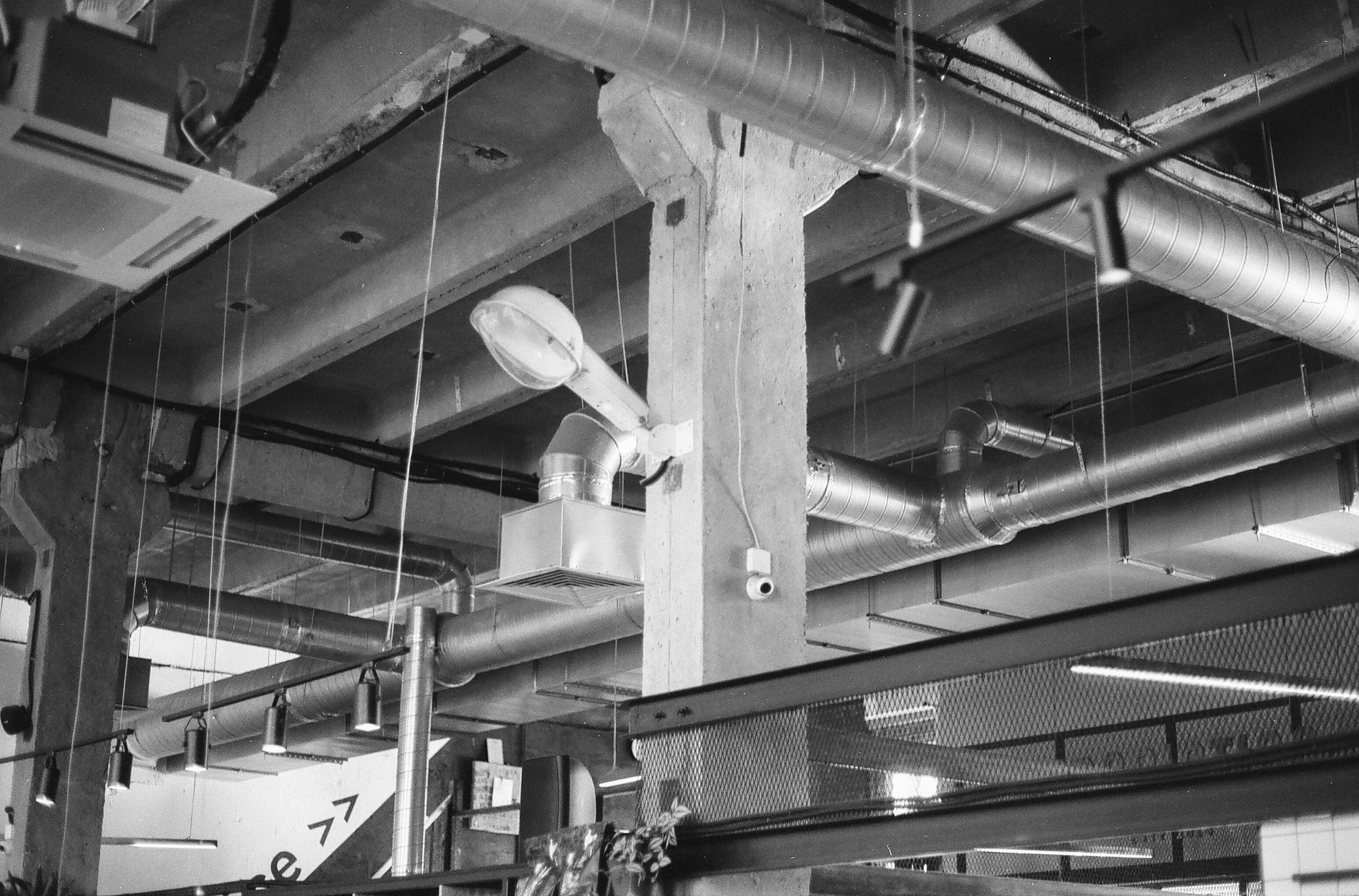
Image quality overhead has less to do with brochure resolution and more to do with standoff control. A crawler can stop, brace, and light a defect from nearly the same distance every time. In that same Sensors study, the crawler's LED-lit camera was useful at roughly 60 to 70 centimeters with a 60 degree field of view. That kind of repeatability matters when you are comparing moisture staining, corrosion, insulation gaps, loose hardware, or recurring damage at the same location month after month.
The follow-up false-ceiling study, published in 2022, reported 89.53 percent detection accuracy for deterioration mapping in a real false-ceiling environment. Drones can still produce valuable imagery, especially for broad surveys, but low-light and GPS-denied operation are real constraints. NIST reported in its 2023 indoor UAS challenge that seven of nine prototypes successfully navigated a simulated constrained indoor course. The technology is getting better, but dependable overhead footage still depends on the right airframe, sensors, lighting, and pilot discipline.
Dust and airflow can change the winner fast
Dust and airflow are where many facility teams misjudge the platform. A crawler mostly disturbs what it touches. A multirotor disturbs the air around everything it passes. That matters if the space holds loose insulation fibers, settled dirt, process residue, or any fine particulate you would rather leave undisturbed.
OSHA states that finely divided combustible material can become explosible if it is suspended in air at the right concentration, and the agency cites 281 combustible dust incidents from 1980 through 2005 that killed 119 workers and injured 718. Separate academic work on indoor aerial inspection in confined spaces warns about wall, ceiling, and ground effects from UAV airflow, plus low illumination and navigation difficulty. In plain terms, the drone is not just observing the plenum. It is changing the air inside it. In dusty ceiling voids, near return-air paths, or above active production, that pushes the decision toward a crawler unless the space has been cleaned and the airflow conditions are well understood.
Collision risk and retrieval do not fail the same way
Collision risk is not just about clipping a beam. Research on confined-space UAV inspection shows that operating close to walls and other objects distorts the craft's own aerodynamic currents and makes positioning harder. Guarded frames reduce the consequence of a bump, but they do not remove the two indoor drone headaches that matter most overhead: snagging on hanging wire or flex duct, and losing the aircraft where a clean retrieval path does not exist.
Crawler failures usually look different. A crawler can high-center on a runner, lose grip on a slick surface, or stop at a branch, but it tends to fail slowly and in place. That makes retrieval planning easier, especially if the unit is tethered or the route is mapped from a known tile opening. The tradeoff is that a crawler can only go where there is a path to carry it. If the overhead geometry breaks that path every few feet, the drone regains the edge.
- Stop and reassess if the overhead zone contains hanging wires, loose insulation, open sprinkler drops, or surfaces that cannot support a crawler and cannot safely tolerate a falling drone.
- Write the retrieval plan before launch or insertion. The right question is not can the robot get there, but how it comes back if power, comms, or traction fail.
What about flight rules and operator training?
For strictly indoor-only flights, the FAA says Part 107 does not apply because the operation is not in the National Airspace System. That removes one federal layer, not all restrictions. Building owners, insurers, safety teams, infection control staff, and environmental health personnel may still limit flight windows, battery handling, spotter requirements, and where a robot may be launched above occupied space.
Training also diverges. If your program may step outdoors, the FAA requires Part 107 remote pilots to keep aeronautical knowledge current every 24 calendar months. Indoor drone crews still need practice in low-light flight, hover discipline, battery swaps, emergency capture, and handoff between pilot and spotter. Crawler crews usually face a lower piloting burden, but they need strong insertion planning, tether handling, route logging, and defect documentation habits. One platform asks for finer motor skills. The other asks for tighter route discipline.
Where each platform usually wins
In the field, platform choice is usually asset-specific, not ideological. The overhead target tells you what matters most: coverage speed, repeatable imagery, disturbance, or recovery. That is why the same facility can rationally use one guarded indoor drone and one crawler without duplicating capability.
The hybrid approach is often the sober answer. Use the drone to find anomalies and reduce unnecessary tile pulls or lift moves. Then use the crawler where the defect needs a stable camera, a known measuring distance, or a low-disturbance revisit. That workflow keeps the fast platform fast and the precise platform precise.
- Rafters, joists, and open roof structure: drone first, because coverage speed usually matters most.
- Large ceiling plenums with open volume and limited access points: drone for survey, crawler for follow-up if defects need repeatable close shots.
- Suspended ceilings crowded with runners, wiring, and fixtures: crawler first, because the route is cluttered and lighting control matters.
- Interior duct inspection: crawler first in most cases, because the geometry is confined and the visual task is close range.
- Overhead utilities in warehouses and plants: drone for broad condition mapping, crawler for repeat inspections at known trouble spots.
Buy the inspection program, not just the machine
This is where buyer discipline matters more than platform hype. Many US operators begin with search terms like inspection robot rental, commercial robot rental, robot leasing for business, or robot as a service because they want proof before they commit. That instinct is sound. Overhead inspection is too site-specific for blind catalog buying.
Service Robot Co. fits this part of the problem well because it is a full-service commercial robot integrator for US businesses, not a single-brand seller. The company stays OEM-neutral, helps choose the right robots across manufacturers, then finances, deploys, integrates, trains, and services every unit through a nationwide US engineer network. For a ceiling inspection program, that means one partner can evaluate drone and crawler options, build the operating playbook, and support the fleet through the full lifecycle. One vendor for the whole lifecycle.