Key takeaways
- Cobots fit the repetitive end of cheese packing: case packing, pattern palletizing and light pick and place.
- Cold rooms are the deciding constraint, and published cobot low-temperature ratings are scarce.
- Get the cold-room rating for your exact model in writing before you compare quotes.
- ISO 10218:2025 puts integrator duties in play, so the risk assessment belongs before commissioning.
- Start with one cell on one shift, then add cells once the logs support it.
Which cheese packing tasks suit a cobot?
A cobot earns its place at the repetitive end of a cheese packing line. That means placing packs into cases, building a stored layer pattern on a pallet, and moving light product from a conveyor into trays. It does not run the whole line, and it will not by itself close a gap in peak-week staffing.
The deciding factor is the cold room. Condensation, wet packaging and frequent door cycles push an arm past the conditions it was tested for on a dry plant floor. Those conditions shape the cell layout, so they belong in the first conversation with an integrator, not the last.
Which packing and palletizing tasks go to the arm?
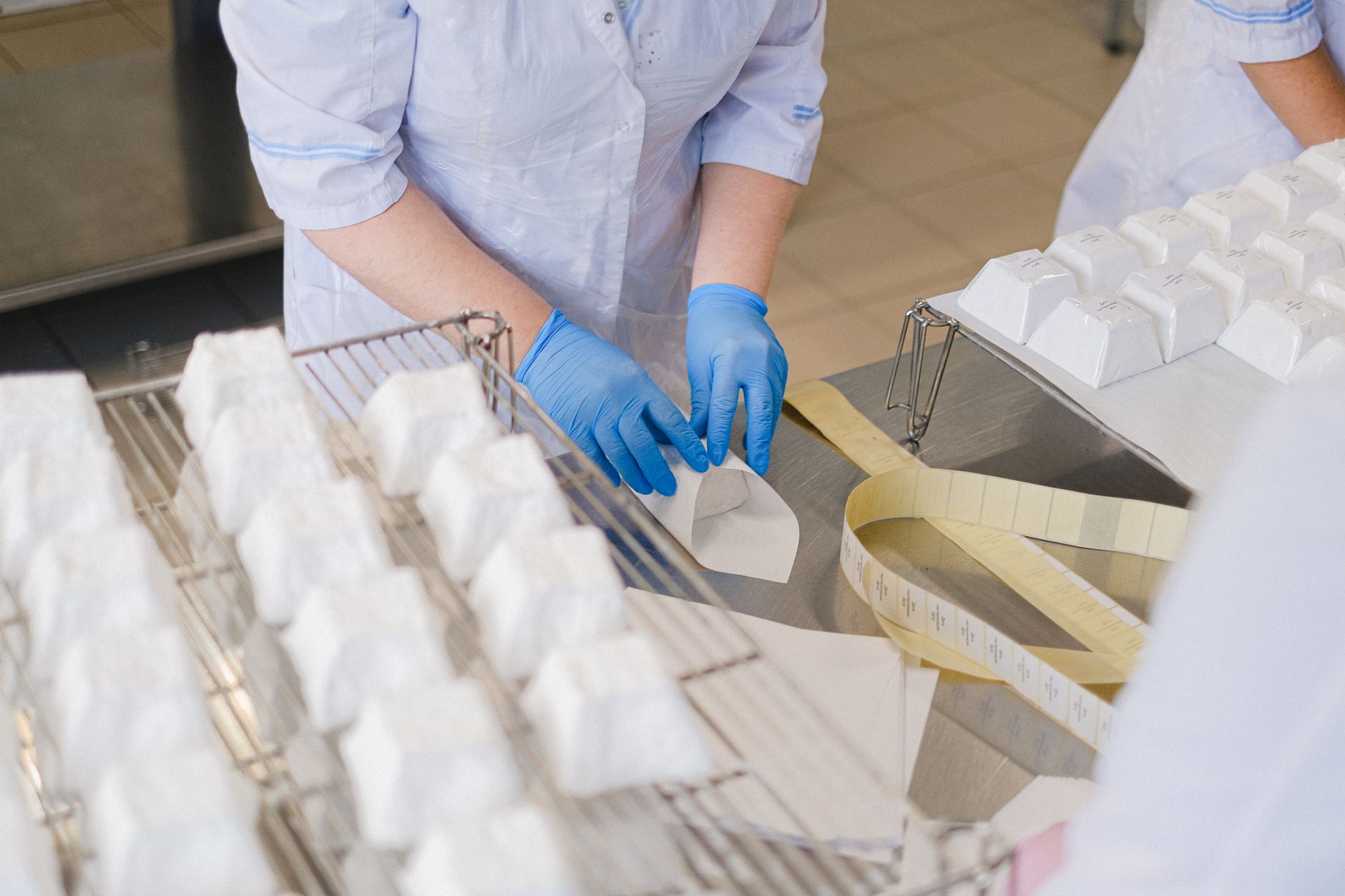
Dairy palletizing is already automated at scale, though not always with cobots. Packaging World reports that Sargento Foods replaced manual palletizing with robots, and a trade-press item on Laita's whipped cheese line describes a palletizing unit running downstream of filling. Neither report settles how many of those machines were cobots, so treat them as proof that the task is automatable, not as a cobot benchmark.
Four tasks tend to fit a cobot cell well, provided the product presents consistently. Tasks with frequent changeovers or mixed-SKU picking usually need more engineering and a longer pilot before they pay back.
- Case packing into a fixed carton pattern when case size changes rarely
- Layer building on a pallet from a stored recipe at a steady cadence
- Pick and place of packs from a conveyor into trays or cartons
- Feeding a labeler, sealer or checkweigher at a known rhythm
How does a cold-room cell layout work?
The clearest cold ratings so far belong to large palletizing arms, not cobots. KUKA's KR QUANTEC PA Arctic is rated down to -30 °C, with no protective suit and no heaters on the arm, according to the KUKA catalogue and a 2015 Food Processing report. Those are vendor claims for a heavier class of robot, so they show what the category can do, not what a cobot can take.
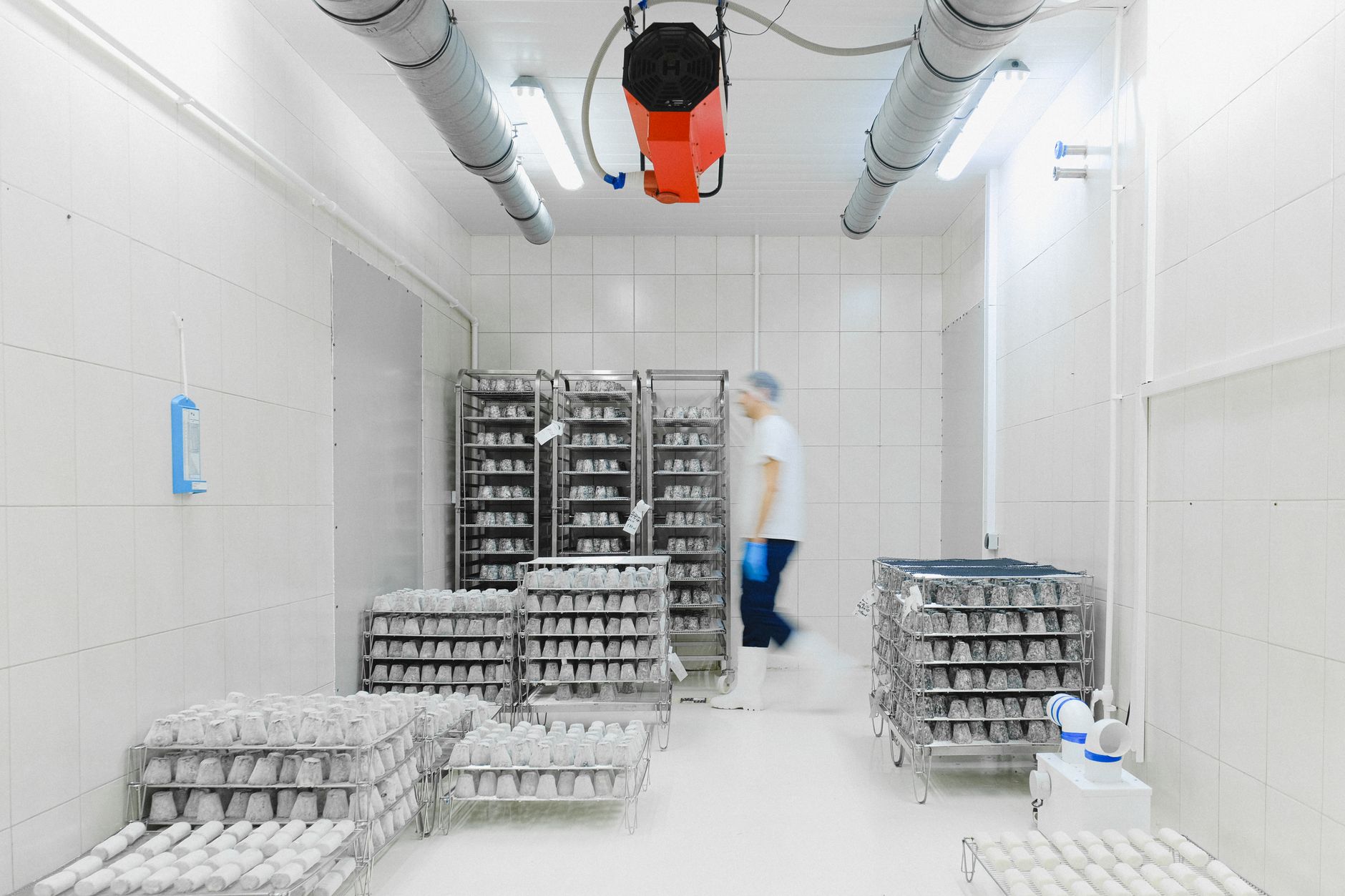
A workable layout keeps the controller, drives and power supply outside the cold space wherever the room allows, and passes packs through a sealed opening. Pallet staging sits at the cold room edge so pallet movers stay out of the robot's reach. Milk crate handling makes the case for automating this work: a KUKA and IPM case study, vendor-reported, says stacking milk crates in cold storage is not feasible for humans over the long run.
What cold-rating proof should you request in writing?
Published low-temperature datasheets for cobots were hard to find in our review as of November 2026. Treat any cold-room claim as incomplete until the maker answers the following for the exact model you would install.
Chilled sorting offers a useful reference point, though not a rating. Kerry Logistics Network reports a cobot arm sorting chilled food at a Hong Kong distribution center, with 20-hour shifts reported and sorting productivity up 20 percent. Those are company-reported figures, and the published material gave no temperature rating.
- Minimum and maximum operating temperature, and whether the rating covers the arm, controller and gripper
- Humidity and condensation limits, with the behavior when the arm moves from a warm dock into the cold
- Lubricant and seal specification for the joints at the rated temperature
- Cable and connector ratings for the cold run, and how the cable passes through the wall
- A written service response time for a fault during a cold-room shift
What does ISO 10218:2025 change for the integrator?
ISO 10218:2025 is the first major revision of the industrial robot safety standard since 2011. According to MM&H and The Robot Report, it folds in the collaborative robot requirements previously held in ISO/TS 15066, makes functional-safety requirements more explicit, adds cybersecurity requirements, and covers manual load and unload along with end-effector guidance.
Part 1 addresses manufacturers and Part 2 addresses integrators and applications, so the cell design, the gripper choice and the risk assessment fall on the integrator. In the US the standard is adopted as ANSI R15.06. A3 said revised R15.06 and CSA Z434 versions were expected later in 2025, but we did not confirm their final status, so check with A3 before you sign.
What must be verified before a cheese cell goes live?

Commissioning should test the conditions the robot will actually meet on a shift, not the ones printed on a datasheet. Run the cell at the coldest and wettest state the room reaches, with real packs, real cases and the actual pallet pattern.
Keep the test logs, the written operator access rules and the lockout steps in one folder. An integrator who cannot show logs for these items has not finished commissioning.
- Pinch and crush zones at case entry and at pallet exit, reviewed against the revised standard
- Grip stability on cold, wet or slightly greasy packaging across a full shift of cycles
- Condensation or frost on sensors, cameras and connectors after repeated door openings
- Stop and restart behavior after a power or network dropout during a run
- Pallet pattern accuracy at the real case dimensions and the top layer height
Where does Service Robot Co. fit a cheese cell?
We are OEM-neutral, so the arm is picked for its cold-room rating and the packing task, not by brand. Once the maker answers the questions above, we run a site assessment and then quote one fixed lease, on a 3-year lease.
Service Robot Co. then handles deployment and integration, operator training and service through a nationwide US engineer network. One partner covers the cell from the first floor walk to go-live support, so the cold-room questions stay with the people who answer for them.
Frequently asked questions
Want a robot working for you?
Tell us the job and the site. We will recommend the robot, quote the lease, and keep it serviced.
Sources
- MM&H: ISO updates industrial robot safety standards 2025
- The Robot Report: ISO 10218 industrial robot safety standard receives major overhaul
- A3: Updated ISO 10218 major advancements in industrial robot safety standards
- Packaging World: Robots replace manual palletizing at Sargento Foods
- Logistics Business: Laita palletizing
- Robotics and Innovation: Kerry Logistics Network cobot arm deployment
- Food Processing: KUKA KR QUANTEC PA Arctic palletising robots for low temperatures
- KUKA: Palletizing of food and beverages, IPM case study