
The question, in the buyer's words
I run a 90-acre Christmas tree farm where my cutting and hauling crew is cut in half every December when seasonal workers leave; could autonomous mobile robots haul cut trees from the rows to the sales lot over frozen, uneven ground?
Key takeaways
- A haul robot fits the flat, repeated lane from the rows to the sales lot, not the cutting itself.
- Vendor slope and clearance ratings are modest, so steep blocks and frozen lanes need a site test.
- Agriculture, forestry, fishing and hunting logged 3.7 nonfatal injury cases per 100 full-time workers in 2024, according to the Bureau of Labor Statistics.
- Start with one leased unit on one route and measure hours before adding units.
- The lease payment is quoted only after a free site assessment of your lanes and slopes.
Can mobile robots haul cut trees on a Christmas tree farm at all?
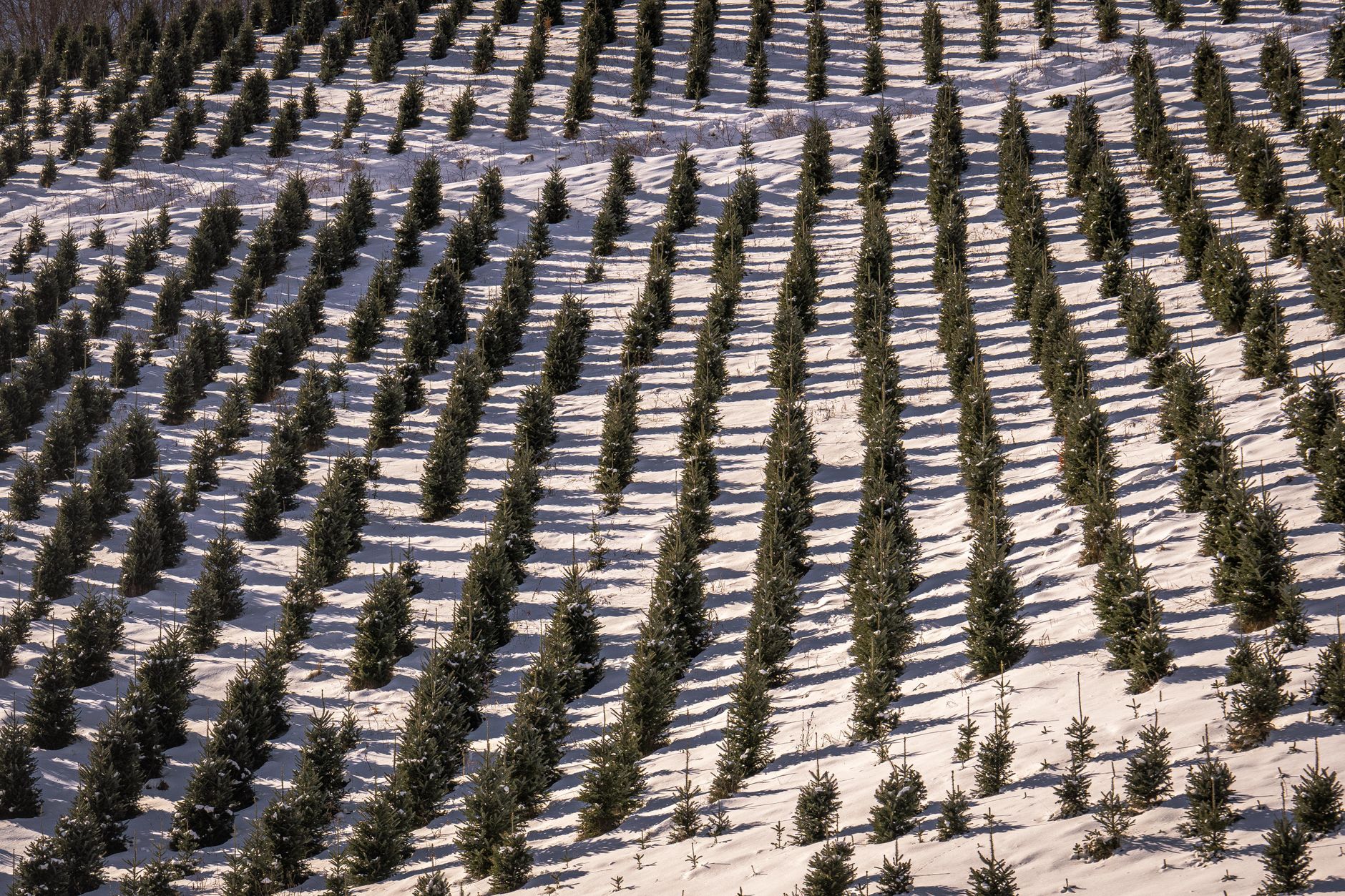
A Christmas tree farm has a short, intense December when cut trees move from the rows to the sales lot, and that haul is the most repeatable part of the season. The same route gets driven again and again on the same ground, which is the kind of work autonomous mobile robots handle well. They follow a mapped route and do not need a person steering each trip.
The question is narrower than robots versus people. Cutting, choosing which trees to take, bundling and loading a customer's vehicle still need hands. The real test is whether the haul leg from the rows to the sales lot is flat enough, firm enough and predictable enough for an autonomous unit to run while a smaller crew handles everything else.
Scale explains why the gap hurts. According to the USDA Ag Marketing Resource Center, which reports the USDA Census of Agriculture, 292,050 acres were in Christmas tree production in 2022, down from 295,162 acres in 2017. According to the USDA Economic Research Service, Christmas trees are grown commercially in all 50 states on about 16,000 US tree farms, and more than 14.5 million Christmas trees were cut in 2022. A 90-acre operation is part of a large, labor-dependent sector, so a December shortfall is a common problem.
Timing makes the gap worse. Trees cut early in the season sit in the rows while the sales lot is already open, so every day a bundle waits is a day the lot cannot sell it.
How big is the December labor gap on tree farms?
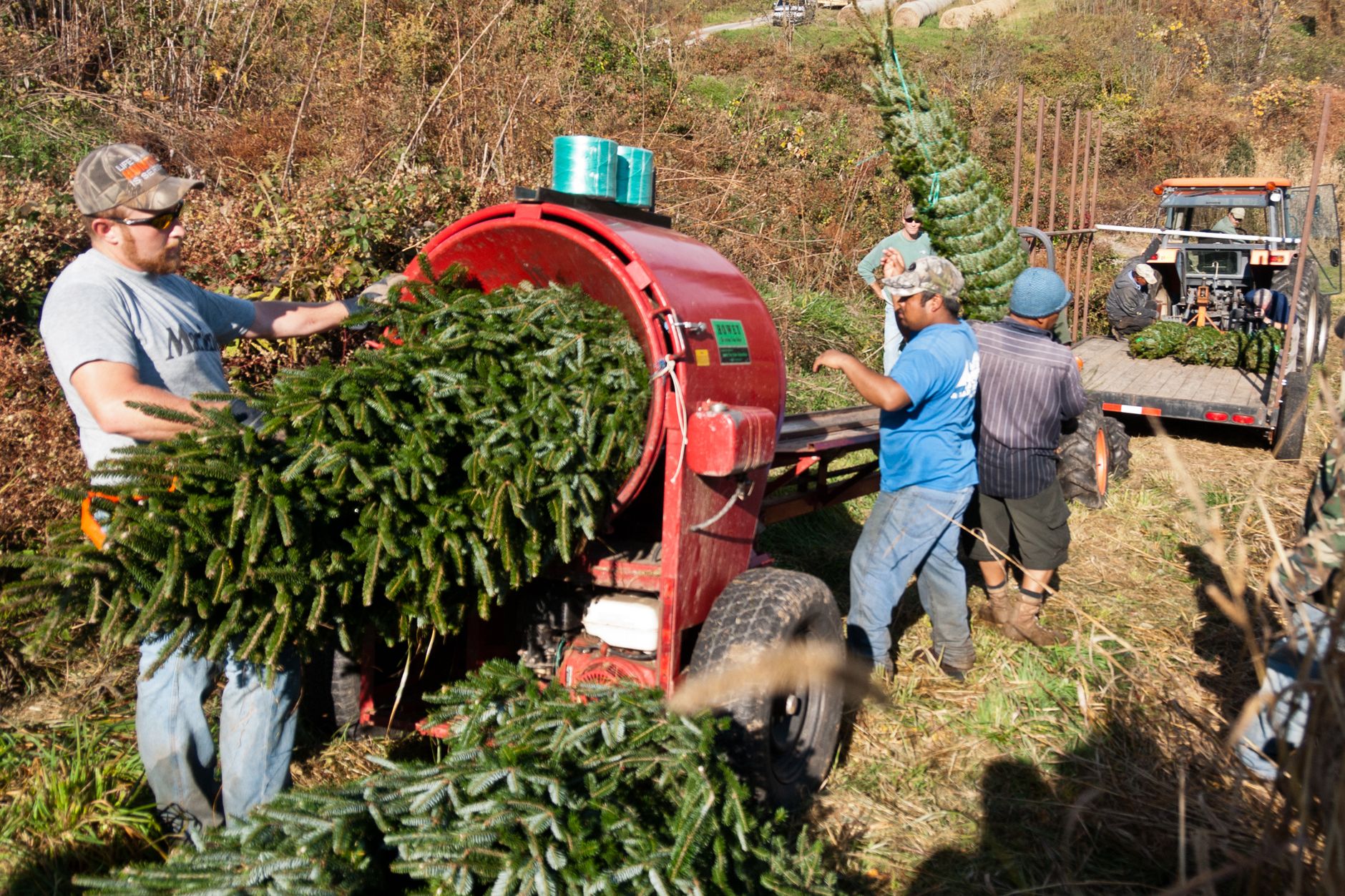
Harvest labor is the constraint growers describe most directly. According to Carolina Country, harvesting takes roughly 125 to 175 hours per acre, mostly in the harvest year, and it has to fit a narrow harvest window. The same article quotes a North Carolina grower calling finding harvest labor his biggest annual challenge, with 12 to 14 hour days at peak. That is one grower's account rather than a survey, but it matches the pattern you describe.
Scale the published range to your own ground with care. Applied to 90 acres, 125 to 175 hours per acre adds up to thousands of hours, which is far more than a short December crew can supply. The article describes one state's harvest, so use the figure as a sense of scale and replace it with your own crew logs: hours spent per row, trips per bundle, and trees that wait in the rows at the end of each day.
Hiring is the other side of the gap. Recent US Department of Labor seasonal job postings describe the work as hand cutting, baling and loading trees, which shows what a replacement worker is expected to do on the first day. The same Carolina Country article reports an Oregon grower saying most harvest workers there are foreign, and that immigration policy is a major concern for growers. That statement has no confirmed date, so treat it as context rather than a trend.
Can a hauling robot handle frozen, uneven, sloped ground?
This is where most tree farm plans succeed or fail. According to a vendor product listing for a tracked ground robot, that unit carries a 300 kg payload, has a 10 degree climbing rating, 160 mm of ground clearance and handles obstacles up to 120 mm high. Those are manufacturer ratings, and they describe a unit that manages gentle grades and small bumps, not a hillside.
Slope is the number to check first. According to a 2024 agricultural robotics poster, sloped farmland runs roughly 6 to 25 degrees of steep slope, along with hills and uneven terrain. Against that range, a 10 degree rating covers the gentler part of a field and leaves little margin on the steeper blocks. A slope limit for these robots does not come from a published standard in the material reviewed, so the number you rely on is the one a vendor writes into your agreement.
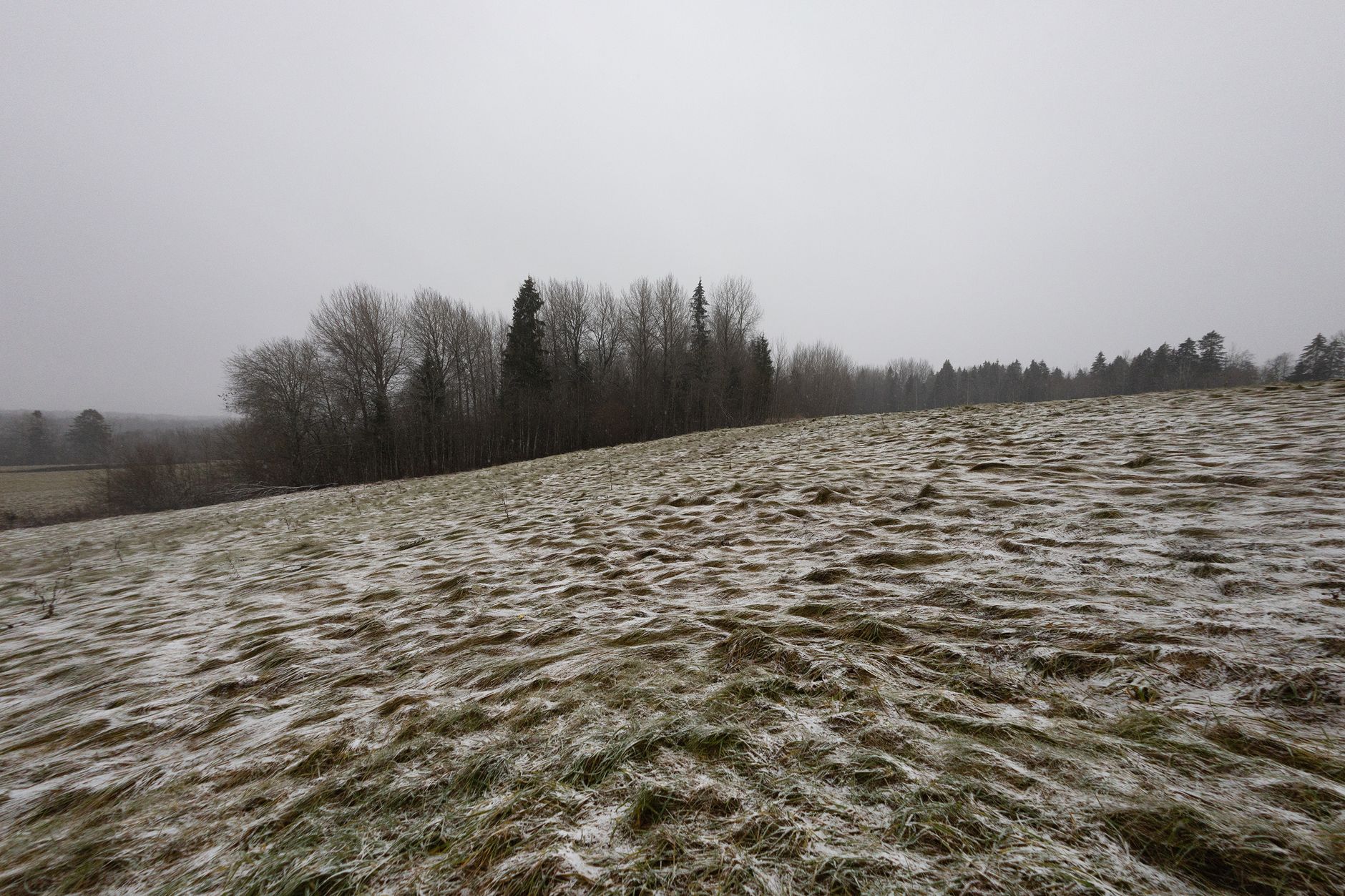
Frozen ground is a different test. The ratings above describe clearance and climbing, not traction on frost, iced soil or snow, and the vendor listing says nothing about those conditions. Ask for test data on the surfaces you actually run, and weigh a typical bundle on your own scale so the load is compared with the payload rating instead of a guess.
Wet ground deserves the same scrutiny. Thaw turns lanes into soft spots, and a unit that clears a dry bump can bog down in a rut that holds water. Walk the route after a thaw and again after a hard freeze before you commit.
- Ask for the slope rating on your steepest block, not the catalog maximum.
- Ask for traction results on frost, iced soil and wet clay.
- Weigh your largest typical bundle and compare it to the payload rating.
- Check the turning room at each row end where bundles stage.
Where would a haul robot work on the farm, and where would it not?
The best candidates are long, graded lanes running from the main rows to the sales lot, the same route driven every day in December. A unit running one loop can carry bundles from a staging spot near the rows and return empty, while a person loads the trailer at the lot. The more predictable the path, the more reliably the robot's schedule holds.
Poor candidates include rows cut into steep banks, ditches or drainage lines, any gate or low spot that floods during thaw, and sections where snow hides the lane edges. Do not expect a robot to pick trees from the rows; that step needs a person who can judge the tree and manage the cut. In practice the robot is a shuttle on one or two fixed legs, not a general farm hand.
The sales lot needs separate thought. Customers, vehicles and children share that space during open hours, so the robot's route should be marked and a person should be on watch while it moves. Many of the safety questions get easier once the route is fixed and the lot is laid out around it.
Most farms should start with one leased unit on one route. Measure the first season's hours, the number of trips that needed a person to step in, and the trees that waited in the rows. Those three numbers decide whether a second unit or a longer route makes sense.
Robot or seasonal crew: how do they compare on the haul?
Neither option is free of trade-offs, and a seasonal crew wins in several places a robot cannot match. The comparison below covers the haul task on a Christmas tree farm, not the whole operation.
The honest split is a hybrid. A robot takes the flat, repeated leg, while a smaller crew handles the cut, the selection and the sales lot. That keeps seasonal hires on the work where judgment matters and reduces the number of people walking long lanes with loaded bundles.
- Flat, graded haul lane
Autonomous Mobile Robot
Repeats the same mapped route all day without fatigue, once the lane is cleared and tested.
Staff
Works the same route, but tires and needs breaks through a long December day.
- Steep, rutted or snow-covered rows
Autonomous Mobile Robot
Limited by vendor slope and clearance ratings, with a weak margin on steep blocks.
Staff
Picks safer footing, stops, and adjusts to ground that changes from hour to hour.
- Cutting and selecting trees
Autonomous Mobile Robot
Cannot cut or judge tree quality.
Staff
Does the cut, the selection and the customer conversation.
- Early morning or late day starts
Autonomous Mobile Robot
Can run on a charged unit, subject to lighting and sensor limits on your lot.
Staff
Needs shifts, daylight and rest, and is the scarce resource in peak season.
- Staffing exposure
Autonomous Mobile Robot
Does not walk off in December, but a unit that goes down still needs a backup plan.
Staff
Can leave mid-season, which is the gap you already face.
- Injury exposure on the haul
Autonomous Mobile Robot
Takes a person out of repetitive hauling, but the lot still needs safe separation.
Staff
Carries exposure when lifting bundles and walking uneven ground.
What injury risk does the cutting and hauling work carry?
Agriculture carries real injury risk. According to the US Bureau of Labor Statistics, the agriculture, forestry, fishing and hunting sector recorded 3.7 nonfatal injury cases per 100 full-time workers in 2024, about 34,900 cases in total. That is a sector-wide rate rather than a Christmas tree figure, but it shows why any step that removes repetitive lifting and walking on uneven ground is worth weighing.
Another BLS page gives 3.9 total recordable cases per 100 full-time workers, but that page does not state the year, so do not set it beside the 2024 figure. Use the dated number when you compare years or talk with an insurer, and ask your carrier which tasks drive your own claims. Your own incident log will say more than any sector rate.
A robot does not remove the cutting exposure. Saws, lifting and footing on frozen ground stay with people, so training and protective equipment stay in the plan. What a unit on the haul leg removes is trips, and trips are where walking and loading add up across a long December.
How does a robot lease work for a Christmas tree farm?
We lease the robot through financing, so the farm does not have to commit its own capital to a unit that may sit idle outside peak season. The lease payment is quoted after a free site assessment. That visit maps your lanes, measures slope and checks winter conditions, because the route decides the equipment and the terms. No payment figure is given before that assessment is done.
After the quote, the work runs in steps: deployment and integration on your route, training for the staff who will supervise and load, go-live support during the first weeks, and service under our service plan. We are OEM-neutral, so we choose the unit that fits your ground rather than pushing one manufacturer's line. Service comes from regional service engineers in the states we cover, with on-site dispatch and remote triage for faults that can be cleared without a visit.
Ask whether a spare unit is available for peak weekends, since a single unit that goes down leaves the haul undone. Also ask what happens in a freeze, what the service level covers, and how many days a year the route is expected to be unusable. Those answers belong in the written quote, next to the lease payment and the term.
Phase the start. Begin with one leased unit on one route, measure the hours and the trees waiting in the rows, then decide whether a second unit fits. The term, the service level and the spare-unit arrangement are all set in the quote.
What should you check before you decide?
A few answers settle most of the decision before any quote. Walk your haul route in the worst month you expect, time how long a loaded bundle takes to reach the lot today, and mark every spot where a person currently steps in. Then decide whether the route is flat enough, firm enough and predictable enough to commit one unit.
The checklist below lists the items that change the answer. If two or more come back as problems, the right move is a smaller pilot, or a crew-only plan for the steep blocks, rather than a full commitment.
Ask for every answer in writing. A quote that states the route, the slope rating your site needs, the winter test data, the spare-unit terms and the service level gives you something to compare against the crew plan. A vague quote is a reason to ask again, not to sign.
Frequently asked questions
Want a warehouse robot at your Christmas tree farm rows?
Tell us about your site. We will recommend the robot, quote the lease, and keep it serviced.
Sources
- USDA Ag Marketing Resource Center, Christmas trees
- USDA Economic Research Service, Charts of Note
- Carolina Country, North Carolina Christmas trees
- US Department of Labor seasonal job posting, North Carolina
- US Bureau of Labor Statistics, nonfatal injuries by industry subsector
- Vendor product listing, tracked ground robot
- 2024 agricultural robotics poster